Remnant Cholesterol Levels at Diagnosis May Predict Acute Coronary Syndrome Occurrence During Follow-Up in Patients with Antineutrophil Cytoplasmic Antibody-Associated Vasculitis
Hyunsue Do, Oh Chan Kwon, Jang Woo Ha, Jihye Chung, Yong-Beom Park, Ji Hye Huh, Sang-Won Lee

TL;DR
Higher remnant cholesterol levels at diagnosis may predict future heart attacks in patients with a specific type of vasculitis.
Contribution
This study is the first to show that remnant cholesterol levels at diagnosis predict acute coronary syndrome in patients with antineutrophil cytoplasmic antibody-associated vasculitis.
Findings
Patients with the highest remnant cholesterol levels had significantly lower ACS-free survival rates.
Male sex and higher Birmingham vasculitis activity score were also independently associated with ACS occurrence.
Remnant cholesterol levels predicted ACS regardless of traditional cardiovascular risk factors.
Abstract
Background/Objectives: Previous studies have revealed the predictive potential of remnant cholesterol (RC) for acute coronary syndrome (ACS) occurrence in the general population. However, whether this association applies to patients with antineutrophil cytoplasmic antibody-associated vasculitis (AAV), in which a lipid paradox exists, remains unclear. We investigated whether RC levels at diagnosis could predict ACS occurrence during follow-up in patients with AAV. Methods: This study included 139 patients with AAV. ACS was defined as ST-elevation myocardial infarction (STEMI), non-STEMI, or unstable angina occurring after AAV diagnosis. RC levels were calculated as (total cholesterol)–(low-density lipoprotein cholesterol)–(high-density lipoprotein cholesterol). Patients were categorised into three groups by RC tertiles: highest (≥26.2 mg/dL), middle (19.1−26.1 mg/dL), and lowest (≤19.0…
Genes, proteins, chemicals, diseases, species, mutations and cell lines named across the full text — each resolved to its canonical identifier and authoritative record.
Click any figure to enlarge with its caption.
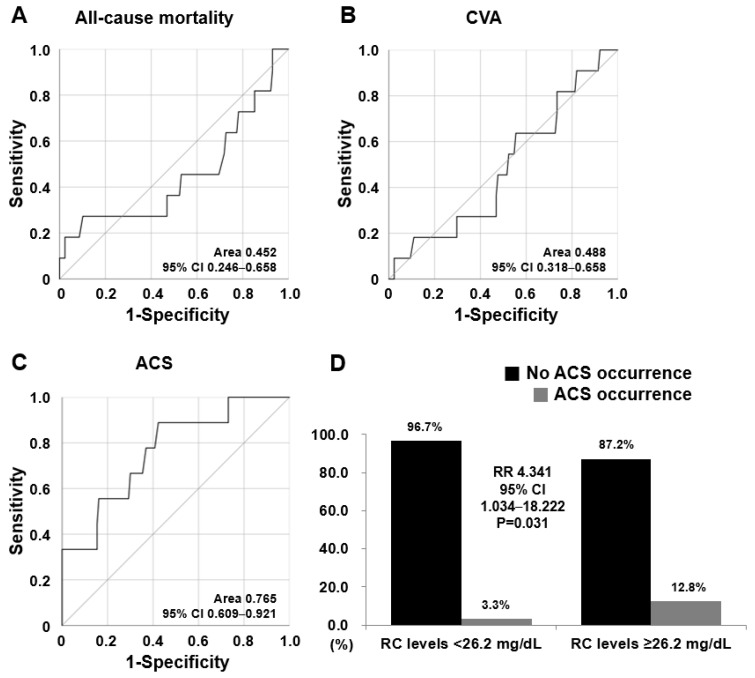 Figure 1
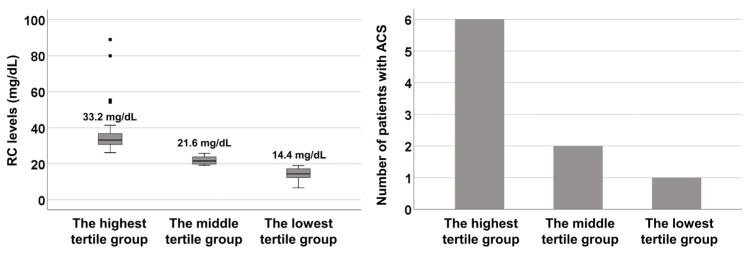 Figure 2
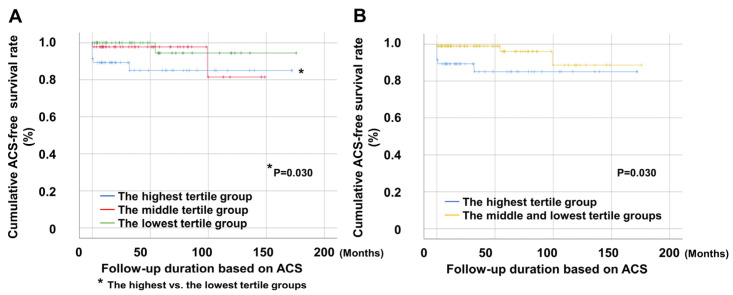 Figure 3
Peer Reviews
No public reviews on file for this paper yet. If you reviewed it on a platform where reviews are public (OpenReview, ICLR, NeurIPS, ICML), you can paste yours below so the community can read it here.
Videos
No videos yet. Explain this paper in a talk, walkthrough, or lecture? Add one.
Taxonomy
TopicsVasculitis and related conditions · Atherosclerosis and Cardiovascular Diseases · Coagulation, Bradykinin, Polyphosphates, and Angioedema