Synthesis, Characterization, and Preliminary In Vitro Anticancer Activity of Zinc Complexes Containing Amino Acid-Derived Imidazolium-Based Dicarboxylate Ligands
Carlos J. Carrasco, Antonio Pastor, María del Mar Conejo, Eleuterio Álvarez, José Manuel Calderón-Montaño, Miguel López-Lázaro, Agustín Galindo

TL;DR
This study creates zinc complexes with imidazolium ligands and tests their anticancer activity, finding some to be more selective than common chemotherapy drugs.
Contribution
The paper introduces new zinc complexes with amino acid-derived ligands and evaluates their selective anticancer potential.
Findings
The zinc complexes showed higher toxicity against cancer cells than non-cancerous cells.
Complex 2c had a selectivity index similar to gemcitabine against melanoma cells.
Compound 2a showed selective activity against lung cancer, while 2b was the most active but with low selectivity.
Abstract
Coordination polymers containing zinc and imidazolium-based dicarboxylate ligands, [LR]−, were synthesized by reacting zinc acetate with HLR compounds, 1. The resulting complexes were characterized and structurally identified using single-crystal X-ray diffraction, revealing polymeric structures for the complexes [Zn(LR)2]n (R = Gly, 2a; βAla, 2b) and [Zn(LLeu)2(H2O)2]n (2c). In these structures, the [LR]− ligands adopt a bridging monodentate μ-κ1-O1,κ1-O3 coordination mode, resulting in distorted tetrahedral (2a, 2b) or octahedral (2c) geometries around the zinc center. When the synthesis was carried out in the presence of amino acids, mixed ligand complexes [Zn(LR)(aa)(H2O)]n (R = aa = Val, 2d, and R = aa = Ile, 2e) were formed. Complexes 2d–2e were also structurally characterized using single-crystal X-ray crystallography, revealing that the ligand [LR]− maintained the same…
Genes, proteins, chemicals, diseases, species, mutations and cell lines named across the full text — each resolved to its canonical identifier and authoritative record.
Click any figure to enlarge with its caption.
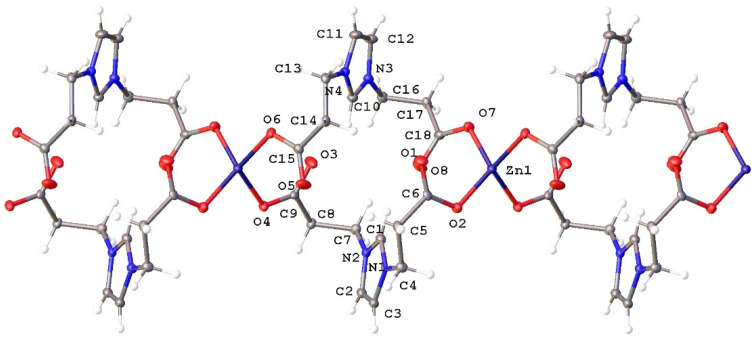 Figure 1
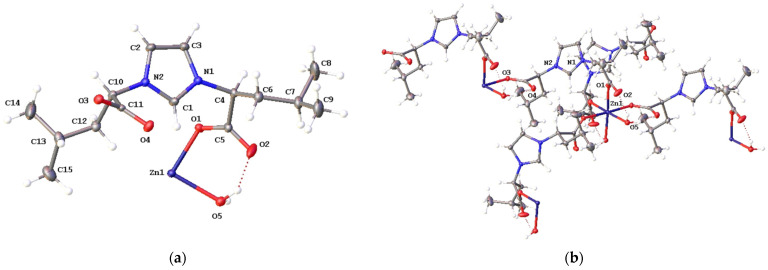 Figure 2
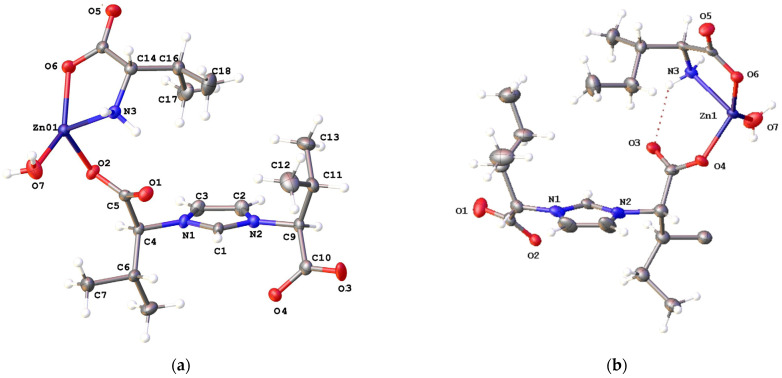 Figure 3
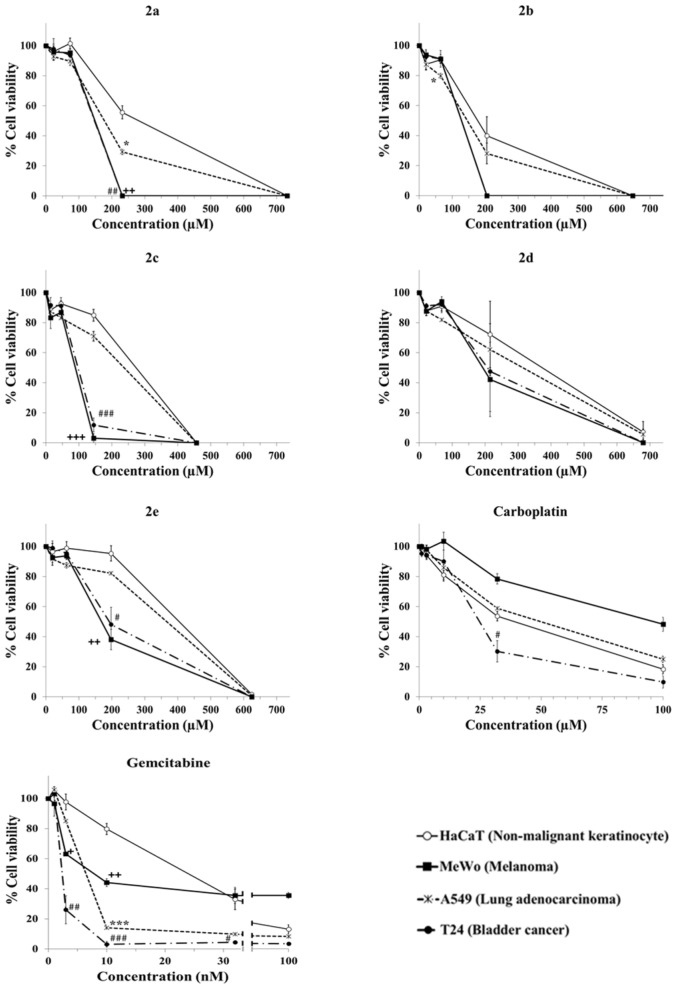 Figure 4
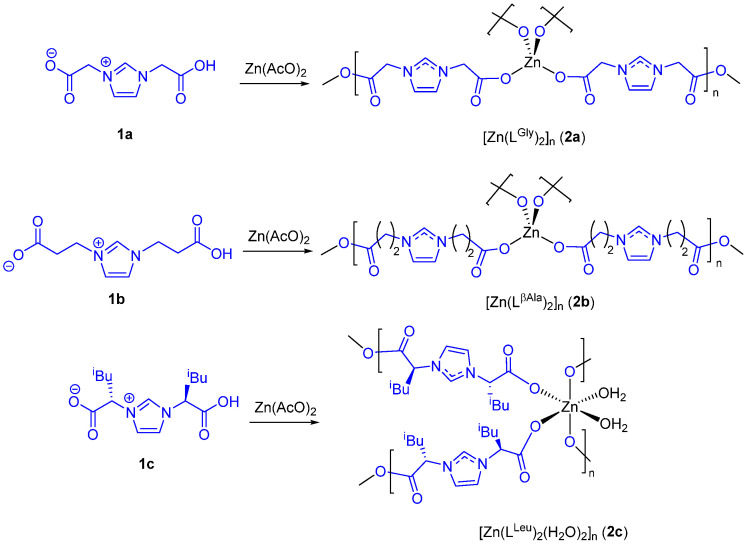 Figure 5
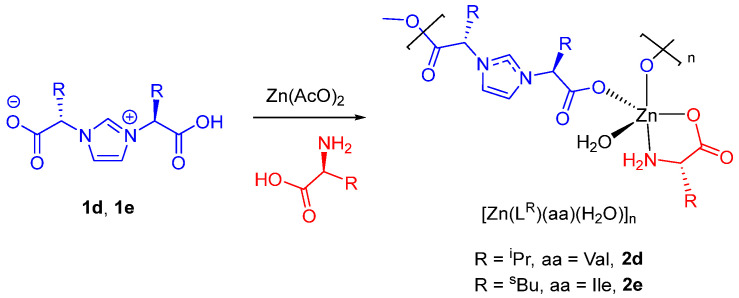 Figure 6
Peer Reviews
No public reviews on file for this paper yet. If you reviewed it on a platform where reviews are public (OpenReview, ICLR, NeurIPS, ICML), you can paste yours below so the community can read it here.
Videos
No videos yet. Explain this paper in a talk, walkthrough, or lecture? Add one.
Taxonomy
TopicsMetal complexes synthesis and properties · Metal-Organic Frameworks: Synthesis and Applications · Organometallic Compounds Synthesis and Characterization