Beyond Repetition: The Role of Gray Zone Alleles in the Upregulation of FMR1-Binding miR-323a-3p and the Modification of BMP/SMAD-Pathway Gene Expression in Human Granulosa Cells
Adriana Vilkaite, Xuan Phuoc Nguyen, Cansu Türkan Güzel, Lucas Gottschlich, Ulrike Bender, Jens E. Dietrich, Katrin Hinderhofer, Thomas Strowitzki, Julia Rehnitz

TL;DR
This study explores how gray zone alleles of the FMR1 gene affect miR-323a-3p and BMP/SMAD pathway gene expression in human granulosa cells, potentially contributing to ovarian dysfunction.
Contribution
The study reveals a CGG repeat number-dependent upregulation of miR-323a-3p and its impact on the BMP/SMAD pathway in granulosa cells.
Findings
miR-323a-3p is significantly upregulated in granulosa cells with gray zone FMR1 alleles.
Gray zone alleles lead to increased expression of BMPR2, SMAD1, SMAD4, and SMAD9.
Transfection of miR-323a-3p in COV434 cells downregulates several SMAD genes.
Abstract
The Fragile X mental retardation type 1 gene (FMR1) contains a CGG triplet cluster of varied length (30 repeats on average) located in its 5′ UTR. In its premutated state (54–200 repeats), FMR1 contributes to the pathogenesis of premature ovarian insufficiency (POI). Its gray zone alleles (41–54 repeats) are supposed to impair the ovarian function as well. In the case of a CGG repeat length > 200, Fragile X syndrome occurs. Post-transcriptional expression of FMR1 is regulated by microRNAs. Although miR-323a-3p overexpression suppresses FMR1 in various tissues, this relationship has not been evaluated in the human ovary. Additionally, this microRNA targets SMADs, which are suggested regulators of ovarian cell proliferation, growth, and function. This study investigated how FMR1 allele lengths with CGG repeat numbers n < 55 (normal and gray zone genotypes) relate to miR-323a-3p expression…
Genes, proteins, chemicals, diseases, species, mutations and cell lines named across the full text — each resolved to its canonical identifier and authoritative record.
Click any figure to enlarge with its caption.
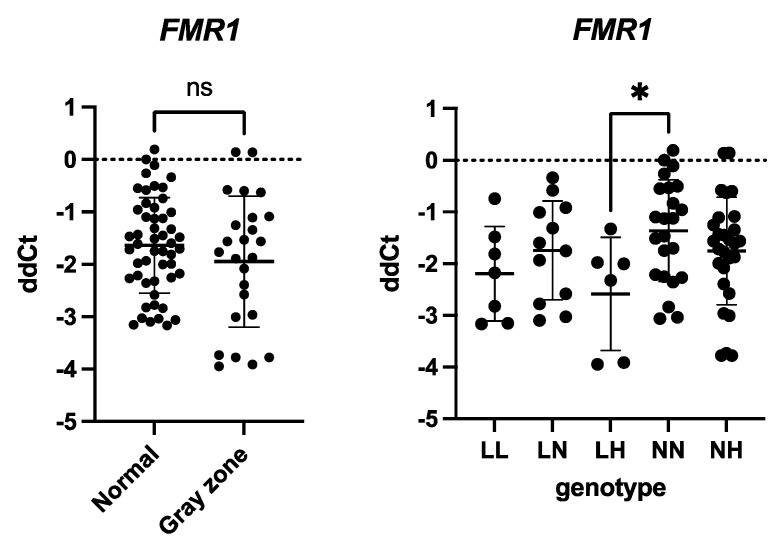 Figure 1
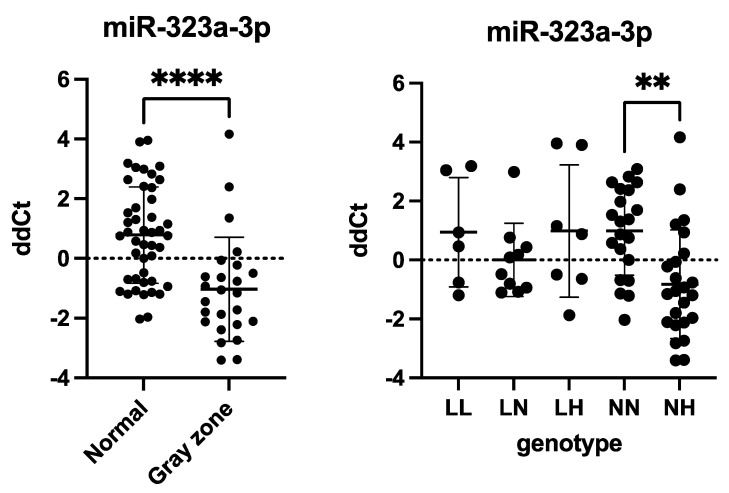 Figure 2
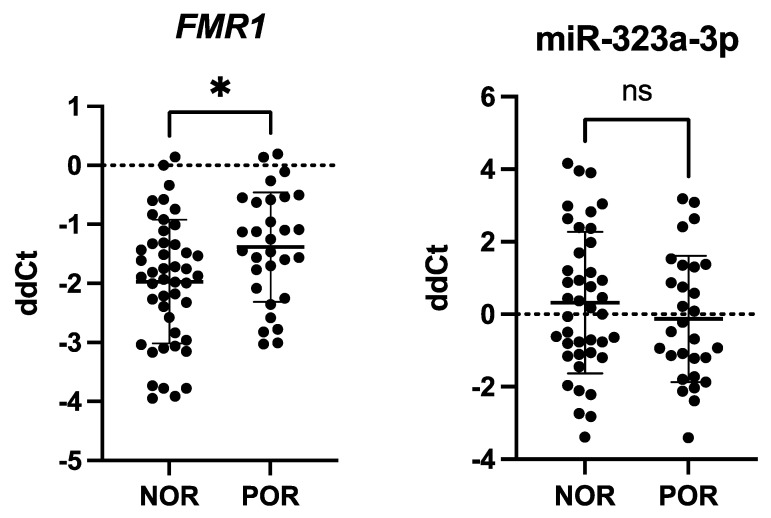 Figure 3
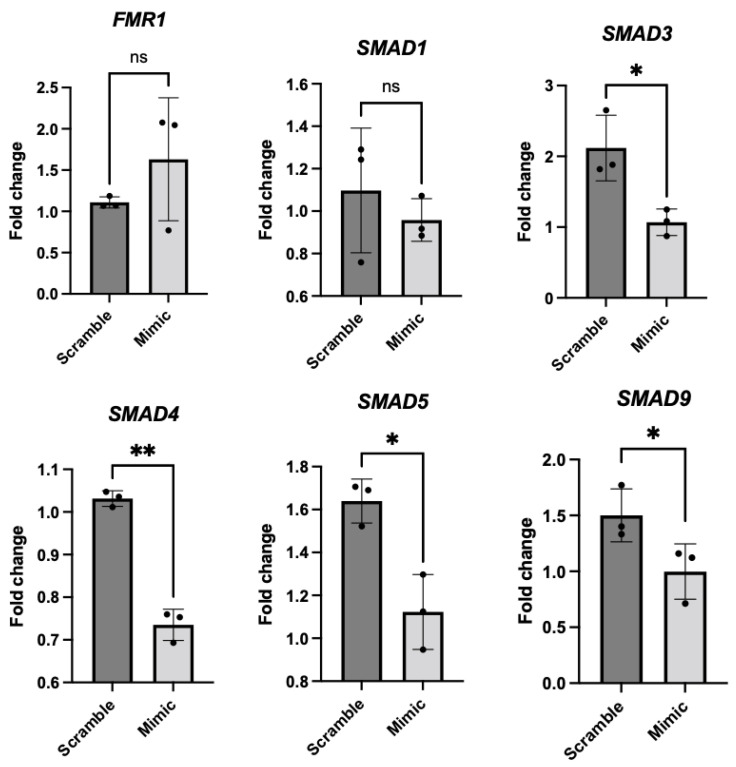 Figure 4
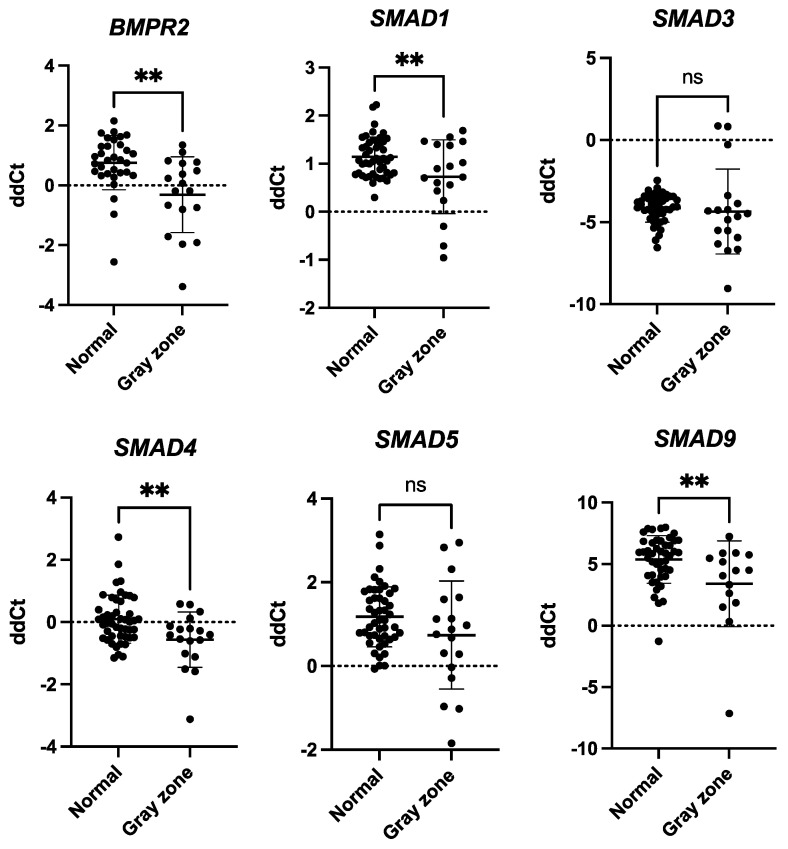 Figure 5
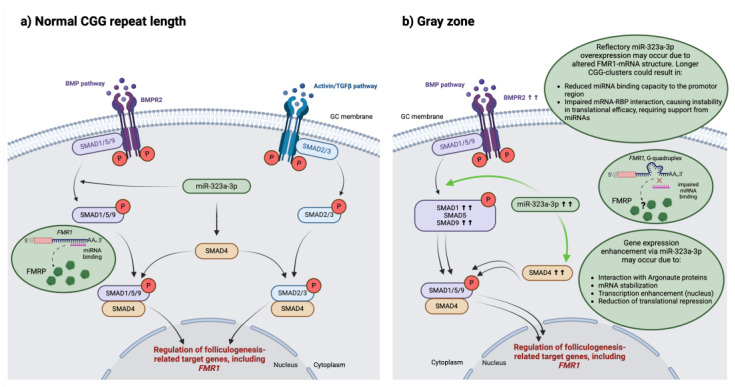 Figure 6
Peer Reviews
No public reviews on file for this paper yet. If you reviewed it on a platform where reviews are public (OpenReview, ICLR, NeurIPS, ICML), you can paste yours below so the community can read it here.
Videos
No videos yet. Explain this paper in a talk, walkthrough, or lecture? Add one.
Taxonomy
TopicsGenetics and Neurodevelopmental Disorders · Congenital heart defects research · Renal and related cancers