Genome-Wide Profiling of P450 Gene Expression Reveals Caste-Specific and Developmental Patterns in Solenopsis invicta
Ting Li, Feng Liu, Dylan J. Brown, Nannan Liu

TL;DR
This study explores how P450 genes are expressed in different stages and castes of fire ants, revealing their roles in development, reproduction, and social behavior.
Contribution
The study identifies caste- and development-specific P450 gene expression patterns in Solenopsis invicta, linking them to physiological and social functions.
Findings
CYP4, CYP6, and CYP9 genes are highly expressed in early larval stages and minim workers, supporting growth and colony maintenance.
CYP4AA1 is overexpressed in queens and female alates, indicating its role in pheromone production and reproductive dominance.
Halloween genes and CYP18A1 show dynamic regulation across stages, highlighting their roles in hormone production and balance.
Abstract
P450 enzymes are integral to insect physiology, metabolism, hormone regulation, and adaptation to environmental challenges. By leveraging transcriptomic and genomic data, this study characterized the expression of 68 unique P450 genes across developmental stages and castes in the red imported fire ant (Solenopsis invicta), uncovering stage- and caste-specific differential expression patterns. Genes from the CYP4, CYP6, and CYP9 families, known for metabolizing exogenous and endogenous compounds, were highly expressed in early larval stages and minim workers, underscoring their roles in supporting rapid growth, hormone metabolism, colony maintenance, and brood care. The overexpression of CYP4AA1—linked to pheromone production—in queens, female alates, and female alate pupae highlights its critical functions in reproductive dominance, social structure maintenance, and colony dynamics.…
Genes, proteins, chemicals, diseases, species, mutations and cell lines named across the full text — each resolved to its canonical identifier and authoritative record.
Click any figure to enlarge with its caption.
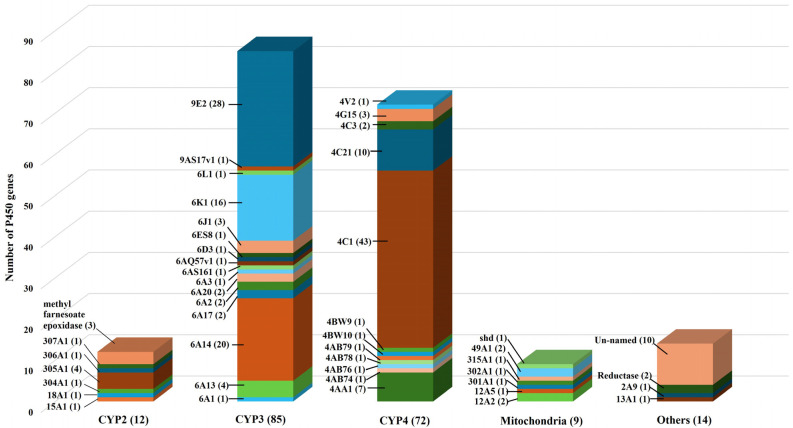 Figure 1
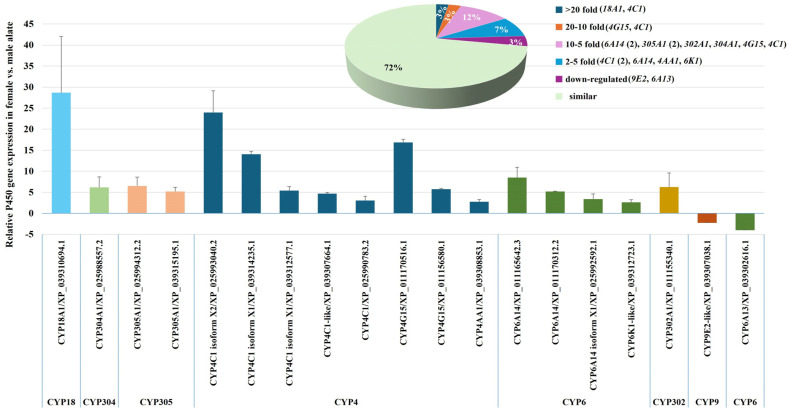 Figure 2
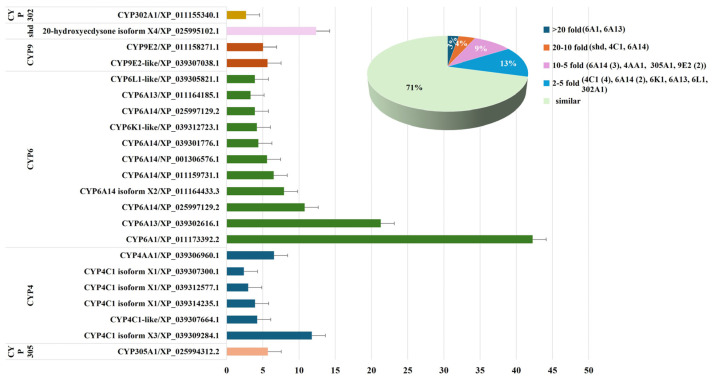 Figure 3
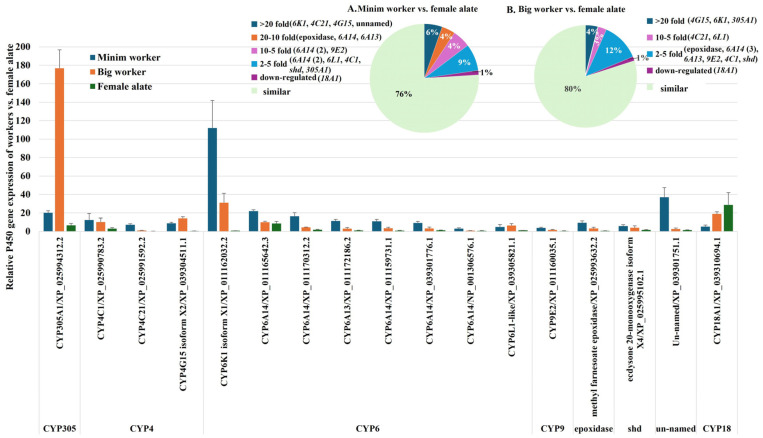 Figure 4
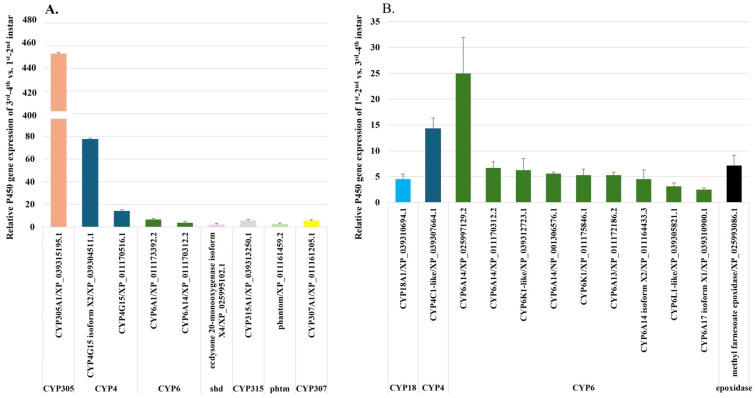 Figure 5
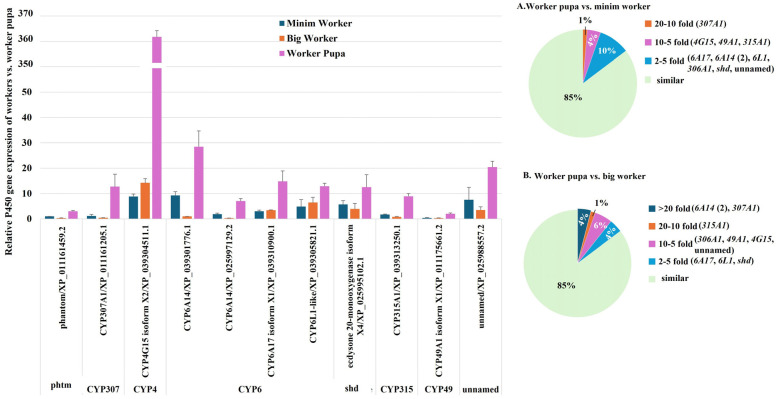 Figure 6
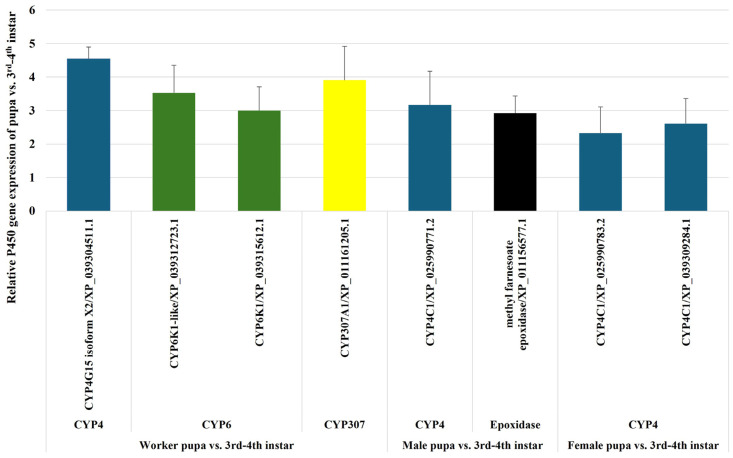 Figure 7
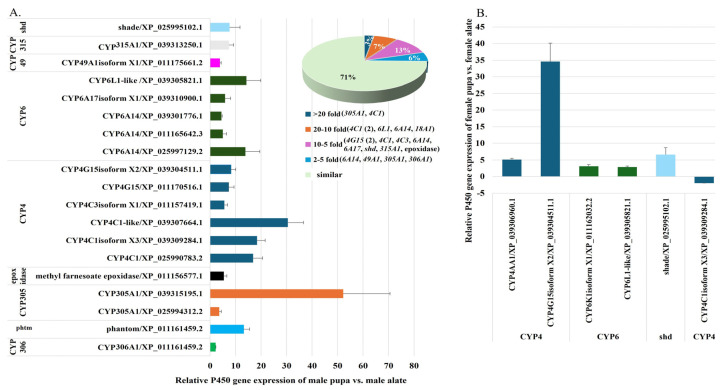 Figure 8
Peer Reviews
No public reviews on file for this paper yet. If you reviewed it on a platform where reviews are public (OpenReview, ICLR, NeurIPS, ICML), you can paste yours below so the community can read it here.
Videos
No videos yet. Explain this paper in a talk, walkthrough, or lecture? Add one.
Taxonomy
TopicsInsect and Arachnid Ecology and Behavior · Neurobiology and Insect Physiology Research · Insect and Pesticide Research