Ortholog Analysis and Transformation of Glycoside Hydrolase Genes in Hyperthermophilic Archaeal Thermococcus Species
Jun Won Lee, Jae Kyu Lim, Hyun Sook Lee, Sung Gyun Kang, Jung-Hyun Lee, Kae Kyoung Kwon, Yun Jae Kim

TL;DR
This study shows that integrating a gene cluster from one archaeal species into another can enhance its ability to break down complex sugars and produce hydrogen at high temperatures.
Contribution
The study demonstrates stable integration of a large GH gene cluster in hyperthermophilic archaea for enhanced biomass conversion.
Findings
T. onnurineus GH03 showed significantly higher growth when cultivated with laminarin.
The GH03 mutant produced more hydrogen compared to the wild-type strain.
Large-fragment DNA integration is feasible in hyperthermophilic archaea.
Abstract
Archaea thrive in extreme environments, exhibiting unique traits with significant biotechnological potential. In this study, we investigated whether Thermococcus onnurineus NA1 could stably integrate a large glycoside hydrolase (GH) gene cluster from T. pacificus P-4, enhancing β-linked polysaccharides degradation for hydrogen production. Among 35 Thermococcus genomes examined via OrthoFinder2 and OrthoVenn3, and selecting Tpa-GH gene clusters as the target, we cloned and integrated Tpa-GH into T. onnurineus NA1 using a fosmid-based system, creating the GH03 mutant. Cultivation in a modified MM1 medium supplemented with laminarin revealed significantly higher growth and hydrogen production in T. onnurineus GH03 than in the wild-type strain. Our findings demonstrate the feasibility of stable, large-fragment DNA integration in hyperthermophilic archaea and underscore the promise of T.…
Genes, proteins, chemicals, diseases, species, mutations and cell lines named across the full text — each resolved to its canonical identifier and authoritative record.
Click any figure to enlarge with its caption.
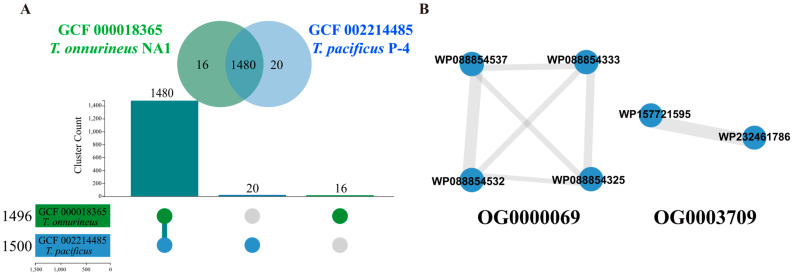 Figure 1
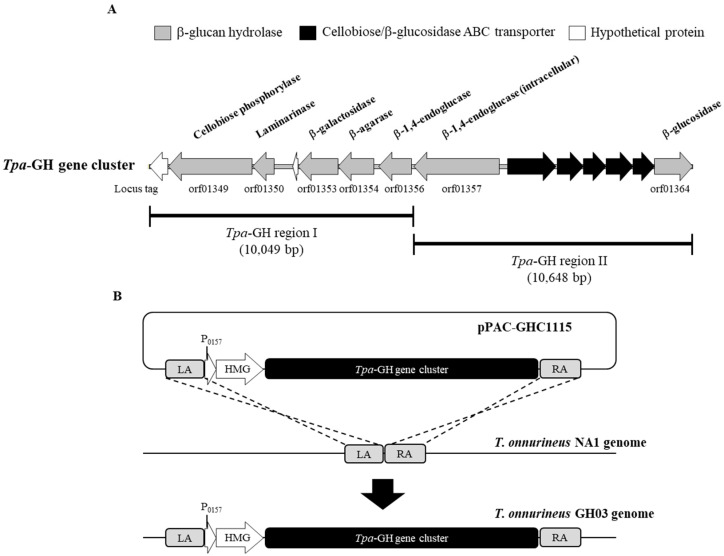 Figure 2
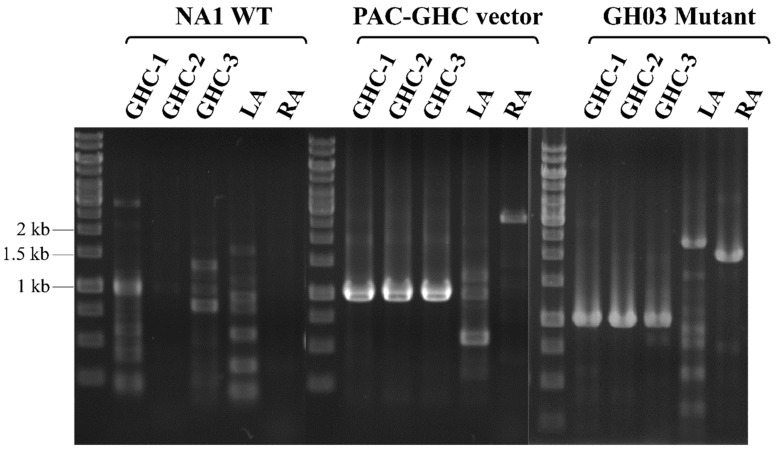 Figure 3
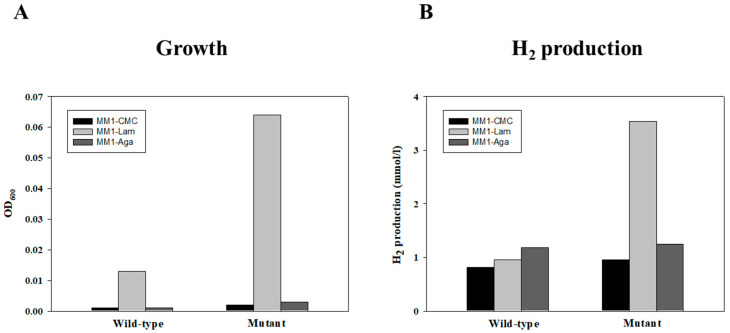 Figure 4
Peer Reviews
No public reviews on file for this paper yet. If you reviewed it on a platform where reviews are public (OpenReview, ICLR, NeurIPS, ICML), you can paste yours below so the community can read it here.
Videos
No videos yet. Explain this paper in a talk, walkthrough, or lecture? Add one.
Taxonomy
TopicsGenomics and Phylogenetic Studies · Microbial Community Ecology and Physiology · Microbial Metabolic Engineering and Bioproduction