Computational Comparison of Differential Splicing Tools for Targeted RNA Long-Amplicon Sequencing (rLAS)
Hiroki Ura, Hisayo Hatanaka, Sumihito Togi, Yo Niida

TL;DR
This paper compares four computational tools for analyzing splicing events in RNA long-amplicon sequencing data, finding that MAJIQ performs best overall while rMATS excels at detecting exon-skipping events.
Contribution
The study provides the first evaluation of splicing tool performance specifically for targeted RNA long-amplicon sequencing (rLAS) data.
Findings
MAJIQ detected all types of splicing events except one exon-skipping event.
rMATS detected all exon-skipping events but failed to detect other splicing event types.
MISO and SplAdder failed to detect any of the tested splicing events.
Abstract
RNA sequencing (RNA-Seq) is a powerful technique for the quantification of transcripts and the analysis of alternative splicing. Previously, our laboratory developed the targeted RNA long-amplicon sequencing (rLAS) method, which has the advantage of allowing deep analysis of targeted specific transcripts. The computational tools for analyzing RNA-Seq data have boosted alternative splicing research by detecting and quantifying splicing events. However, the performance of these splicing tools has not yet been investigated for rLAS. Here, we evaluated the performance of four splicing tools (MAJIQ, rMATS, MISO, and SplAdder) using samples with different types of known splicing events (exon-skipping, multiple-exon-skipping, alternative 5′ splicing, and alternative 3′ splicing). MAJIQ was able to detect all of the types of events, but it was unable to detect one of the exon-skipping events.…
Genes, proteins, chemicals, diseases, species, mutations and cell lines named across the full text — each resolved to its canonical identifier and authoritative record.
Click any figure to enlarge with its caption.
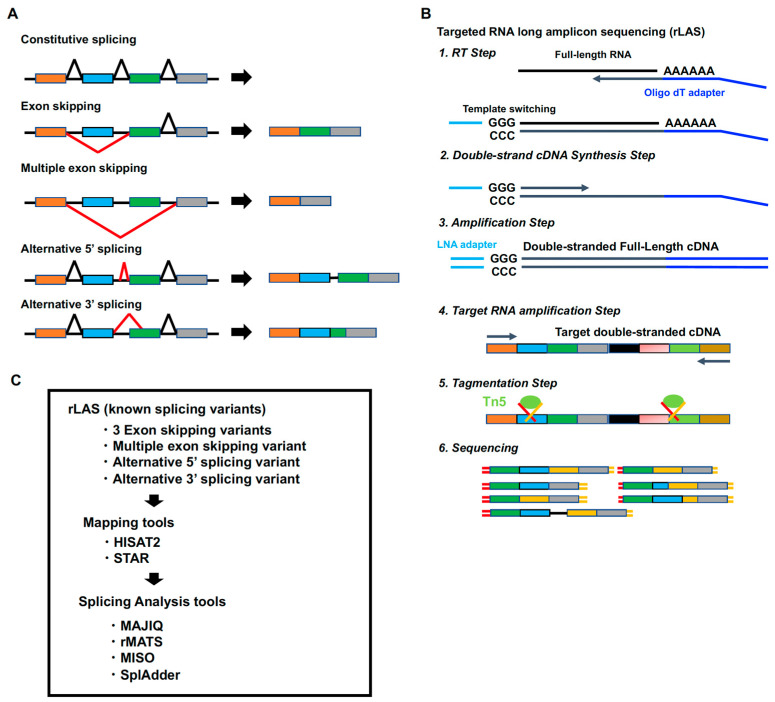 Figure 1
 Figure 2
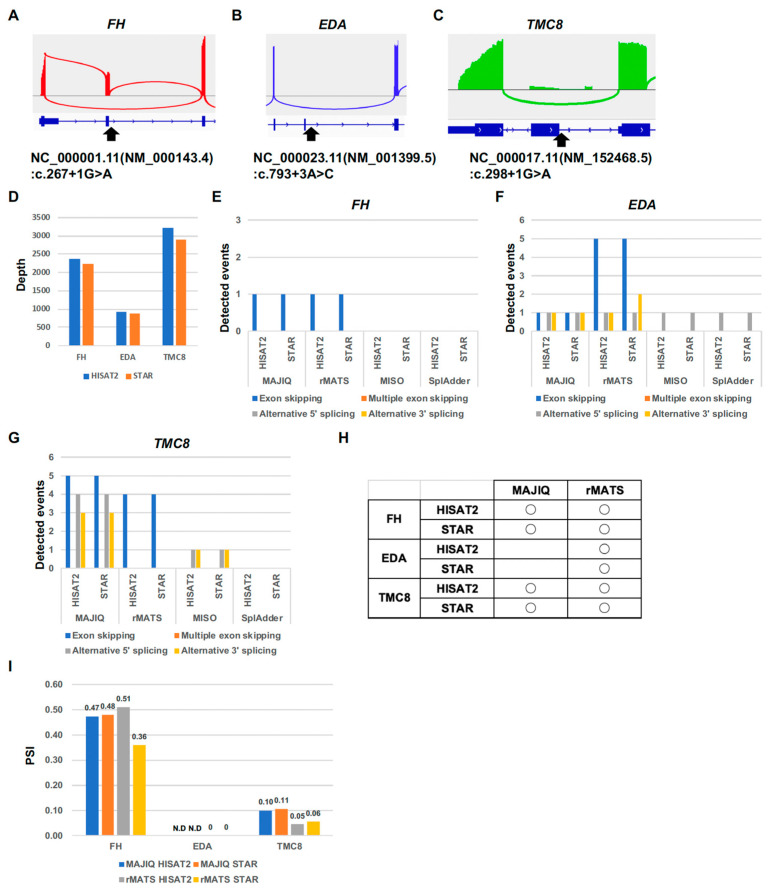 Figure 3
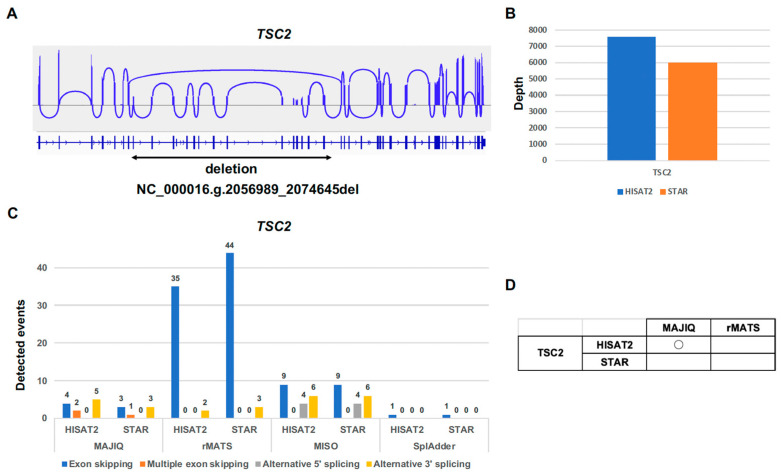 Figure 4
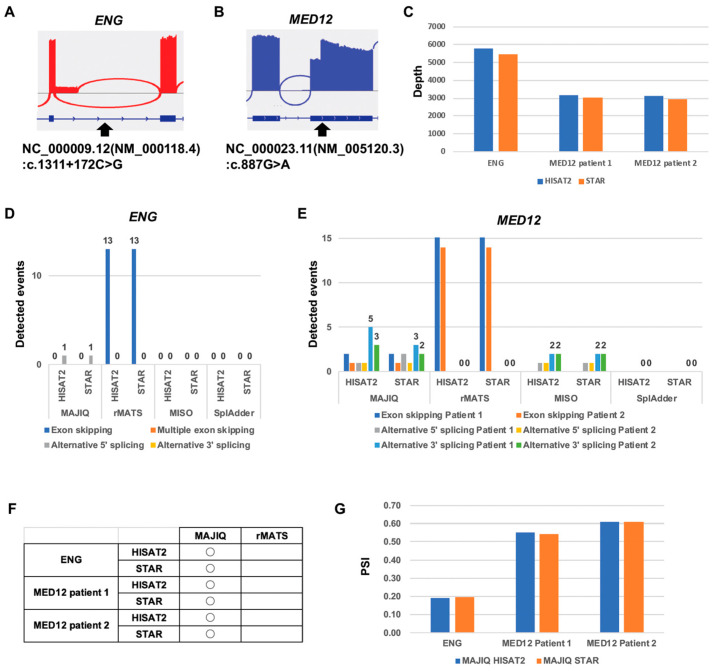 Figure 5
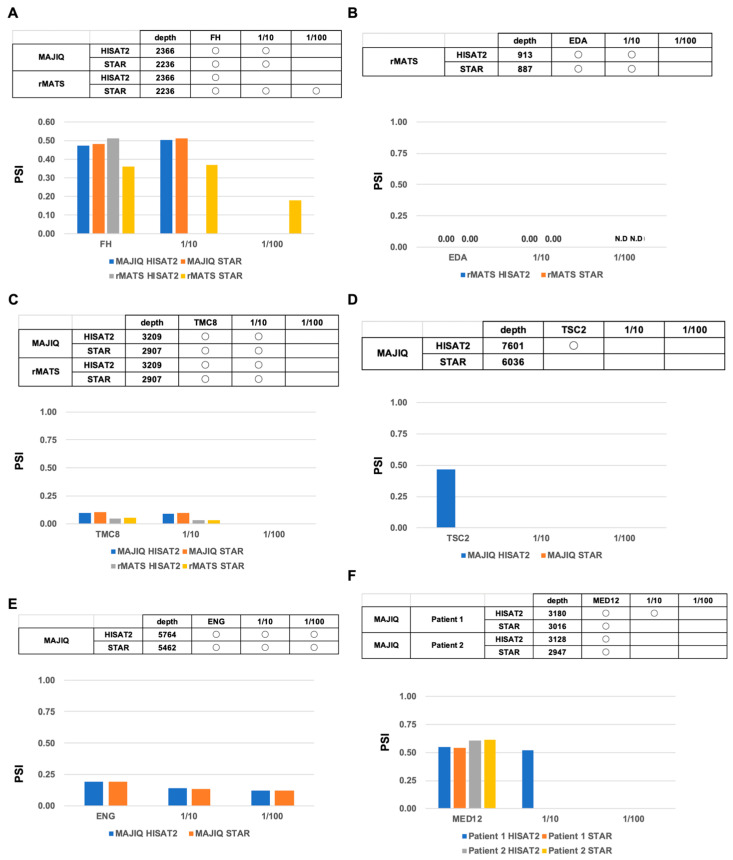 Figure 6
Peer Reviews
No public reviews on file for this paper yet. If you reviewed it on a platform where reviews are public (OpenReview, ICLR, NeurIPS, ICML), you can paste yours below so the community can read it here.
Videos
No videos yet. Explain this paper in a talk, walkthrough, or lecture? Add one.
Taxonomy
TopicsCancer-related molecular mechanisms research · RNA modifications and cancer · Genomics and Phylogenetic Studies