Transcription Factor p73 Is a Predictor of Platinum Resistance and Promotes Aggressive Epithelial Ovarian Cancers
Ahmed Shoqafi, Reem Ali, Ayat Lashen, Jennie N. Jeyapalan, Asmaa Ibrahim, Michael S. Toss, Emad A. Rakha, Mashael Algethami, Shatha Alqahtani, Nigel P. Mongan, Dindial Ramotar, Srinivasan Madhusudan

TL;DR
High p73 levels in ovarian cancer cells predict resistance to platinum chemotherapy and are linked to more aggressive cancer behavior, suggesting it could be a target for new treatments.
Contribution
This study identifies p73 as a novel predictor of platinum resistance and a potential therapeutic target in epithelial ovarian cancer.
Findings
High p73 protein expression correlates with advanced-stage ovarian cancer and shorter progression-free survival.
p73 overexpression in cancer cells increases proliferation, invasion, and DNA repair, while its deletion enhances platinum sensitivity and apoptosis.
Abstract
Resistance to platinum-based chemotherapy is a major clinical problem in ovarian cancers. The development of predictive biomarkers and therapeutic approaches is an area of unmet need. p73, a member of the p53 family of transcription factors, has essential functions during DNA repair, proliferation, invasion, and apoptosis. The role of p73 in ovarian cancer pathogenesis and response to therapy is largely unknown. The clinicopathological significance of p73 protein expression was evaluated in 278 human ovarian cancers. TP73 transcripts were investigated in publicly available clinical data sets (n = 522) and bioinformatics analysis was completed in the ovarian TCGA cohort (n = 182). Preclinically, p73 was overexpressed in A2780 platinum-sensitive ovarian cancer cells or depleted in platinum-resistant A2780cis cells and investigated for aggressive phenotypes, as well as platinum…
Genes, proteins, chemicals, diseases, species, mutations and cell lines named across the full text — each resolved to its canonical identifier and authoritative record.
Click any figure to enlarge with its caption.
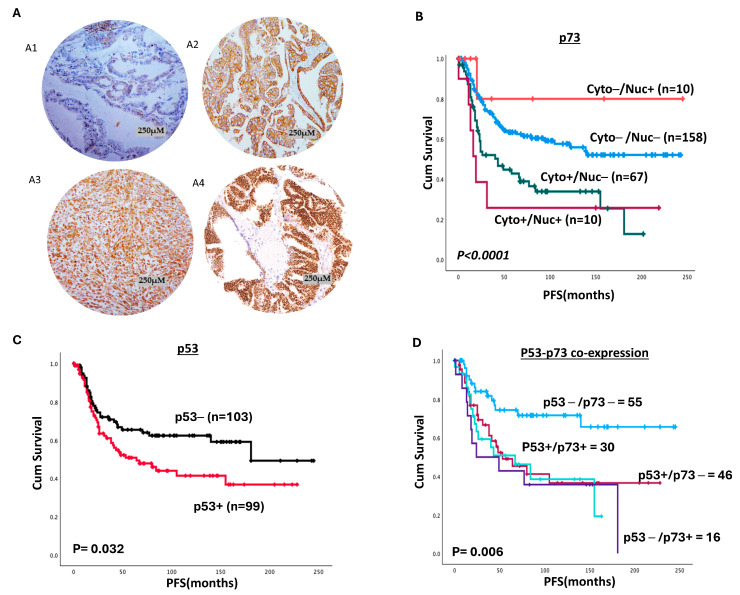 Figure 1
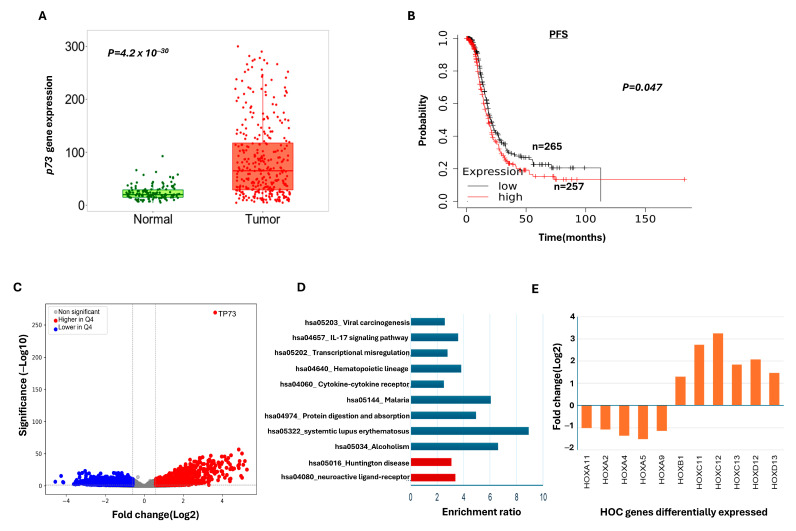 Figure 2
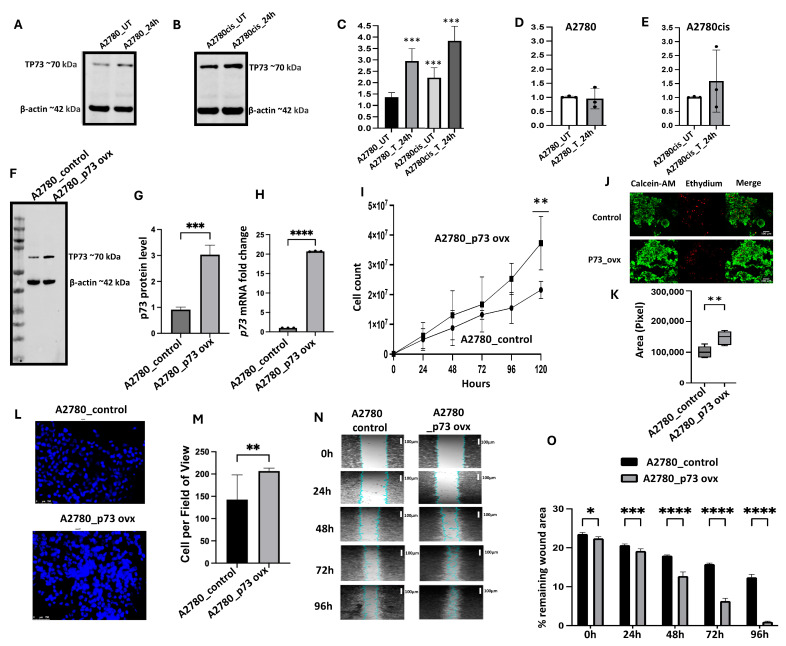 Figure 3
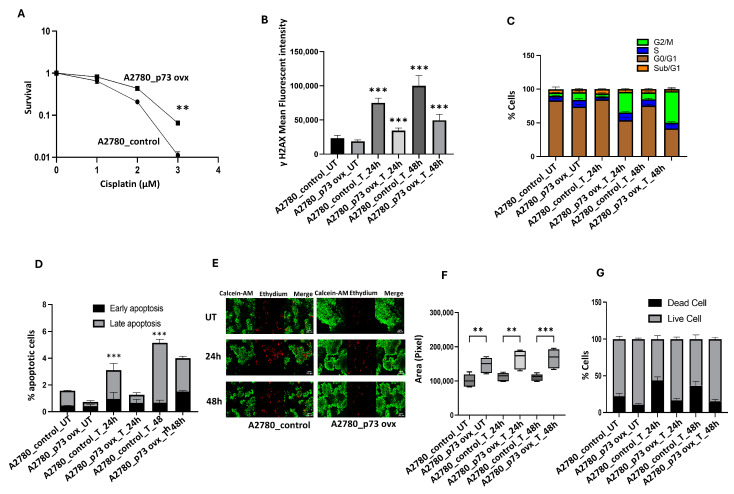 Figure 4
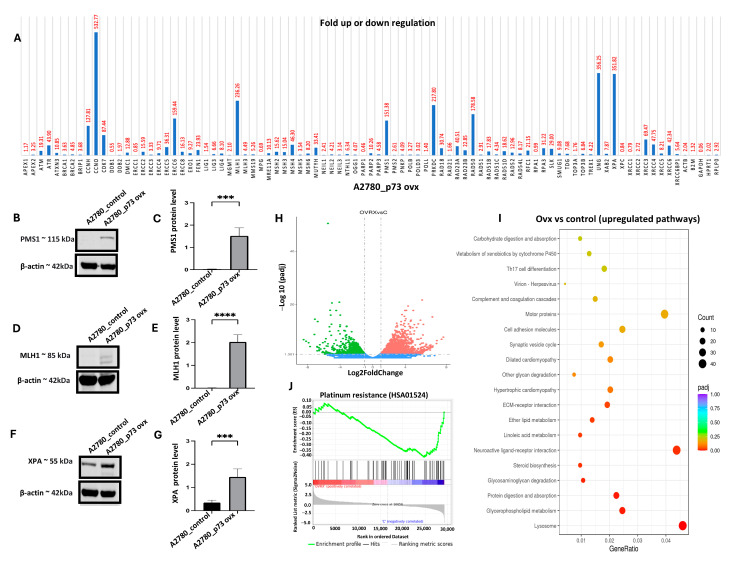 Figure 5
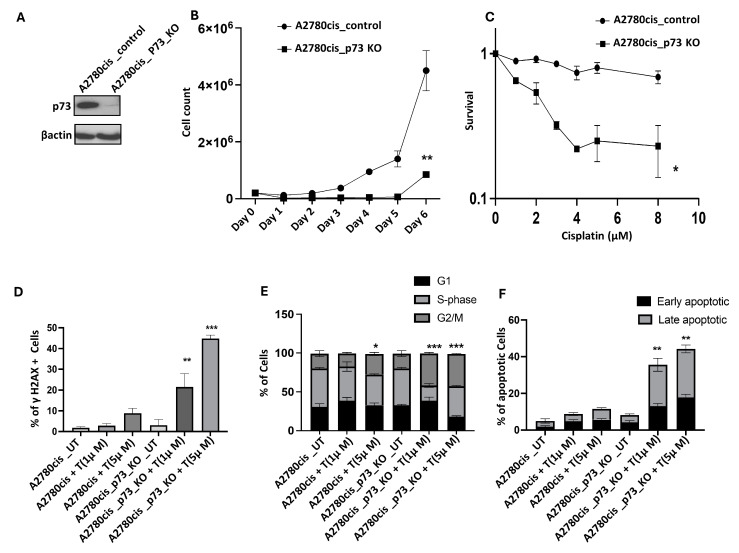 Figure 6
Peer Reviews
No public reviews on file for this paper yet. If you reviewed it on a platform where reviews are public (OpenReview, ICLR, NeurIPS, ICML), you can paste yours below so the community can read it here.
Videos
No videos yet. Explain this paper in a talk, walkthrough, or lecture? Add one.
Taxonomy
TopicsCancer-related Molecular Pathways · Cancer Genomics and Diagnostics · Ovarian cancer diagnosis and treatment