Prion-Dependent Lethality of sup35 Missense Mutations Is Caused by Low GTPase Activity of the Mutant eRF3 Protein
Nina P. Trubitsina, Olga M. Zemlyanko, Andrew G. Matveenko, Stanislav A. Bondarev, Svetlana E. Moskalenko, Evgeniia M. Maksiutenko, Anna A. Zudilova, Tatiana M. Rogoza, Galina A. Zhouravleva

TL;DR
This paper shows that certain missense mutations in the yeast Sup35 protein cause cell death when a prion is present due to reduced protein activity.
Contribution
The study identifies that missense mutations in the GTPase region of Sup35 lead to prion-dependent lethality through reduced translation termination activity.
Findings
sup35 missense mutations in the GTPase region cause [PSI+] prion-dependent lethality due to low eRF3 activity.
Mutant Sup35 proteins retain prion aggregation ability but fail to maintain cell viability.
The mutations D363N, R372K, and T378I reduce GTPase activity of the Sup35 protein.
Abstract
The essential SUP35 gene encodes yeast translation termination factor Sup35/eRF3. The N-terminal domain of Sup35 is also responsible for Sup35 prionization that leads to generation of the [PSI+] prion. Previously we isolated different types of sup35 mutations (missense and nonsense) and demonstrated that sup35 nonsense mutations (sup35-n) are incompatible with the [PSI+] prion, leading to lethality of sup35-n [PSI+] haploid cells. Here, we show that sup35 missense mutations (sup35-m) within conservative regions of the Sup35 C-domain result in lethality of [PSI+] cells because of weak activity of Sup35/eRF3 as a translation termination factor. Mutant Sup35 maintain their ability to be incorporated into pre-existing [PSI+] aggregates and to form amyloid aggregates in vitro, while sup35-m mutations do not influence the [PSI+] prion induction and stability. All these mutations (D363N,…
Genes, proteins, chemicals, diseases, species, mutations and cell lines named across the full text — each resolved to its canonical identifier and authoritative record.
Click any figure to enlarge with its caption.
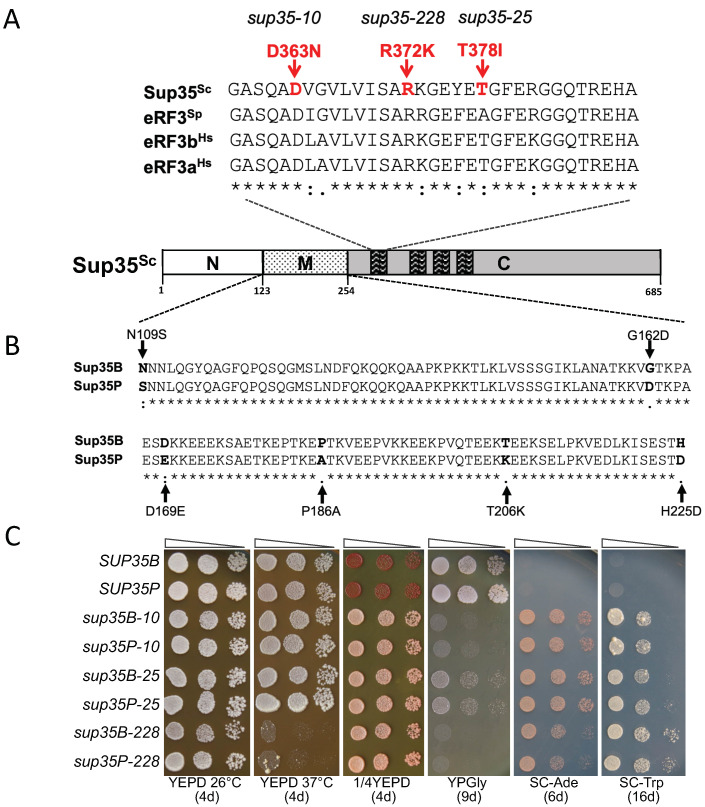 Figure 1
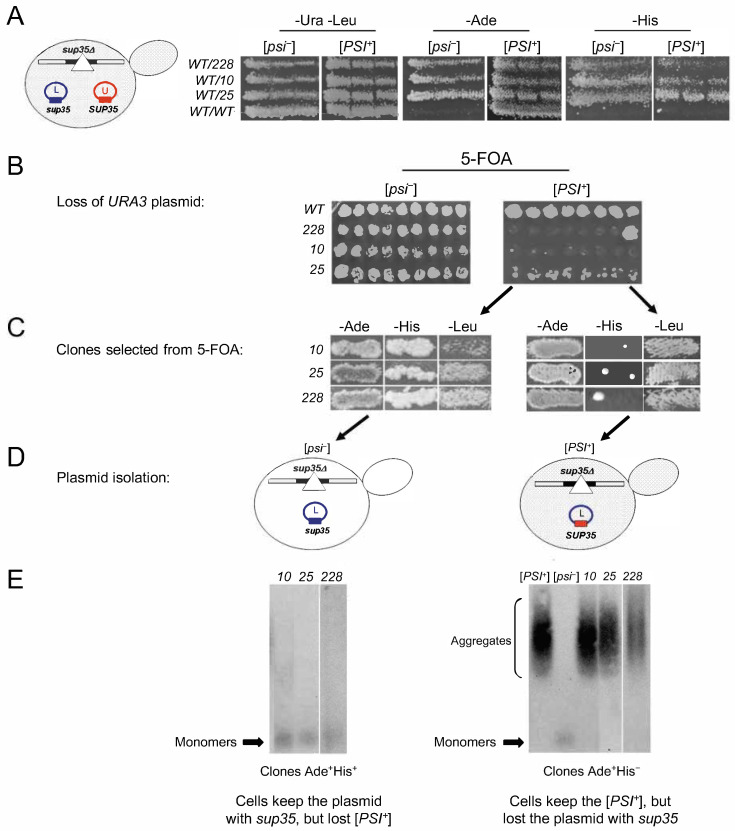 Figure 2
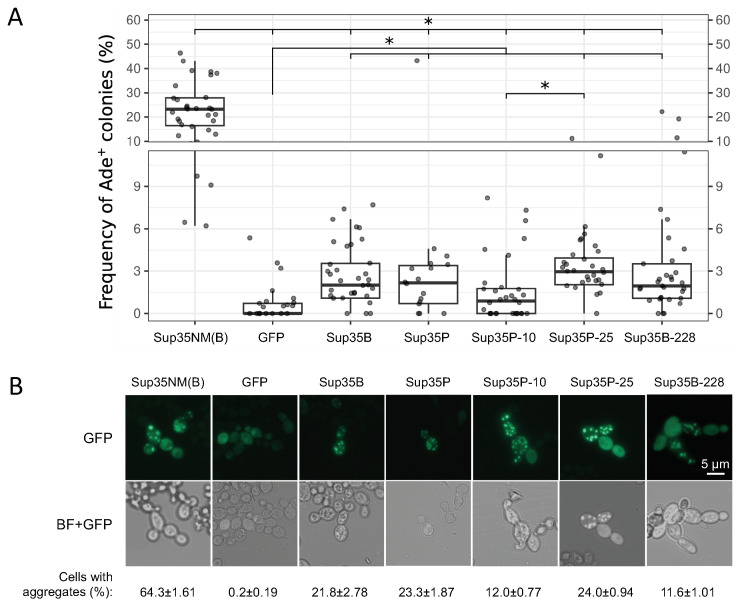 Figure 3
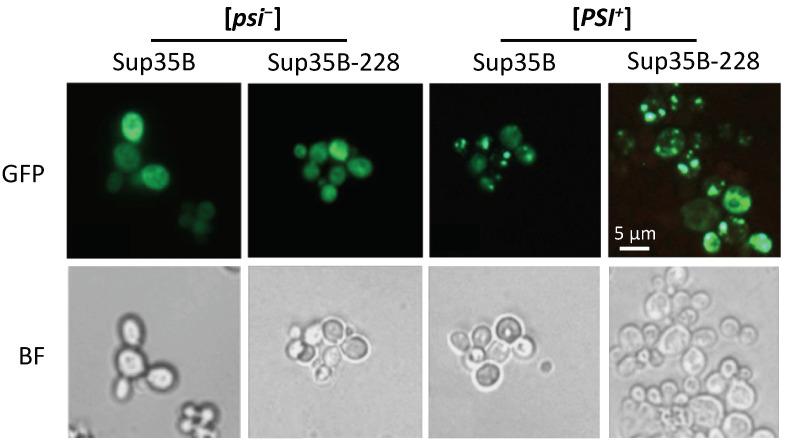 Figure 4
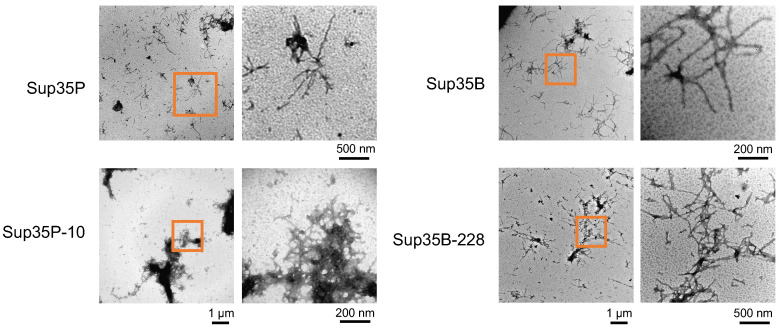 Figure 5
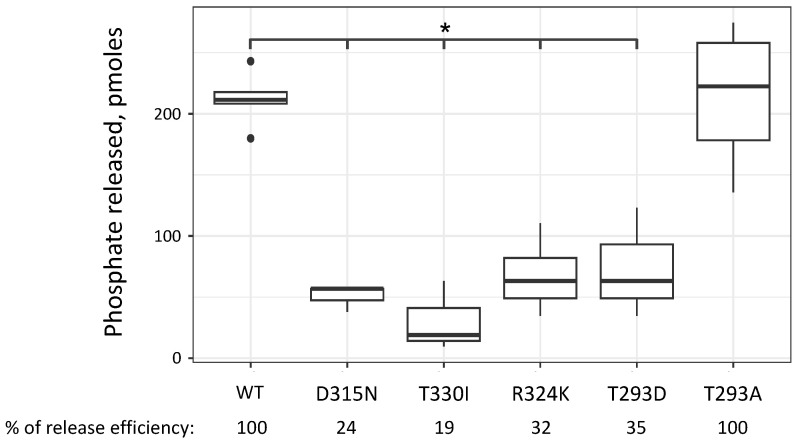 Figure 6
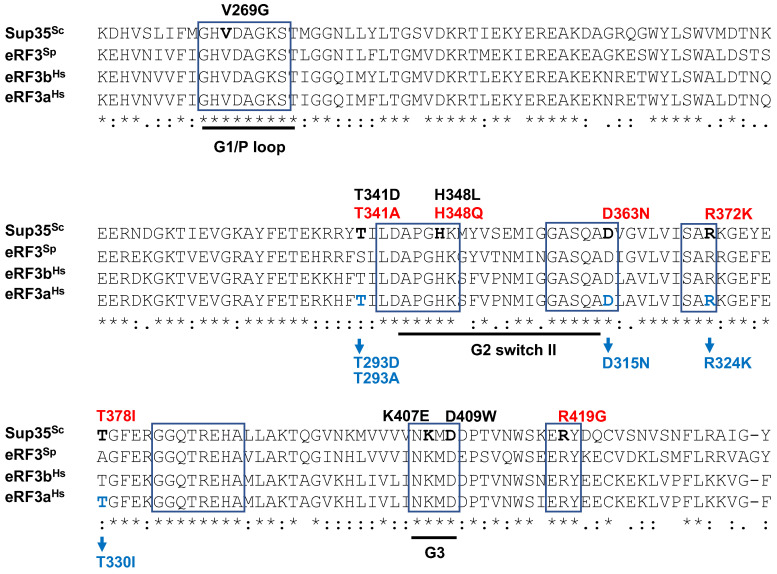 Figure 7
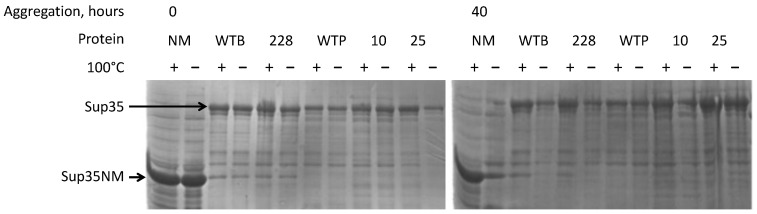 Figure 8
 Figure 9
Peer Reviews
No public reviews on file for this paper yet. If you reviewed it on a platform where reviews are public (OpenReview, ICLR, NeurIPS, ICML), you can paste yours below so the community can read it here.
Videos
No videos yet. Explain this paper in a talk, walkthrough, or lecture? Add one.
Taxonomy
TopicsPrion Diseases and Protein Misfolding · RNA Research and Splicing · RNA regulation and disease