Influence of Yield Stress and Material Area Ratio on Bondability and Formability in Drawing Processes of Bimetallic Rods
Yeong-Maw Hwang, Hiu Shan Rachel Tsui

TL;DR
This study uses simulations to explore how material properties and geometry affect the performance of bimetallic rods during manufacturing.
Contribution
The paper introduces a simulation-based analysis of how yield stress and core ratio influence bondability and formability in bimetallic rod drawing.
Findings
Higher yield stress in core or sleeve reduces drawing limits by causing stress concentrations and premature failure.
High core ratios lead to thin sleeves prone to fracture, while low core ratios cause thin cores to fail under high deformation.
A 50% core ratio provides uniform strain distribution but requires strong interfacial bonding to prevent delamination.
Abstract
Finite element simulations were conducted to investigate the drawing process of bimetallic rods, a key manufacturing technique used in aerospace, automotive, and advanced engineering applications. The study focused on how independent variations in the yield stress of the core and sleeve (150, 200, 250, 300 and 350 MPa) and differences in the initial core ratio (10%, 30%, 50%, 70% and 90%) affect bondability, formability, and fracture behavior. Simulations showed that the maximum achievable reduction ratio varied from approximately 50% to 55%, and hence, we focused on this range. By analyzing the maximum achievable reduction ratio and the distribution of effective strain, the simulations provided insights into the deformation mechanisms and failure modes of these composite structures. The results reveal that increasing the yield stress in either the core or the sleeve reduces the drawing…
Genes, proteins, chemicals, diseases, species, mutations and cell lines named across the full text — each resolved to its canonical identifier and authoritative record.
Click any figure to enlarge with its caption.
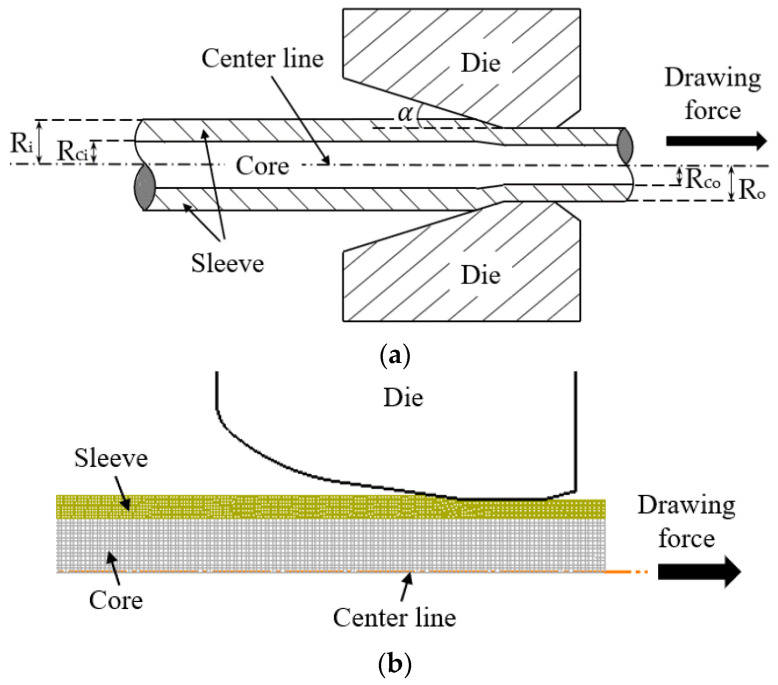 Figure 1
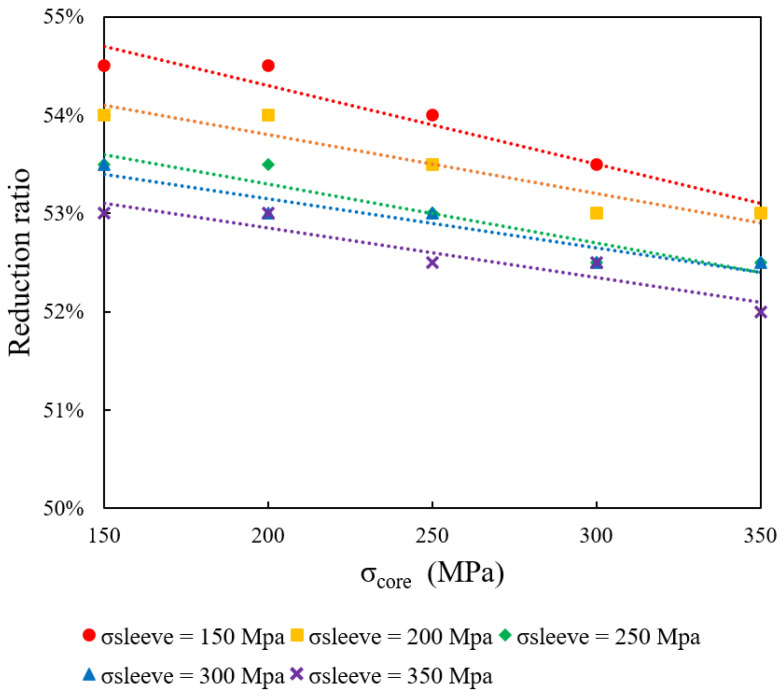 Figure 2
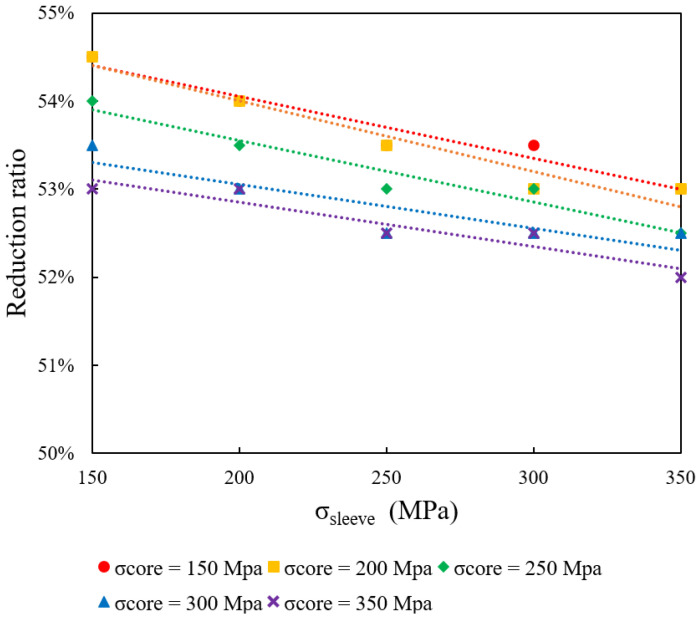 Figure 3
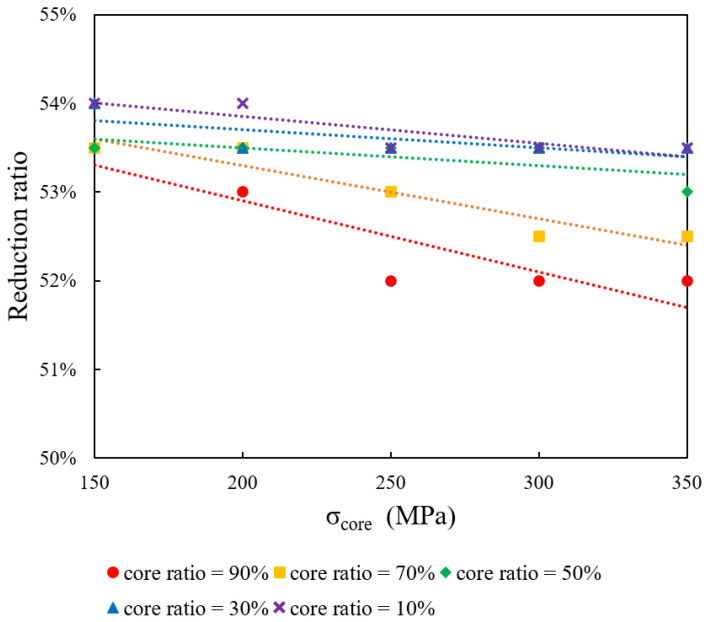 Figure 4
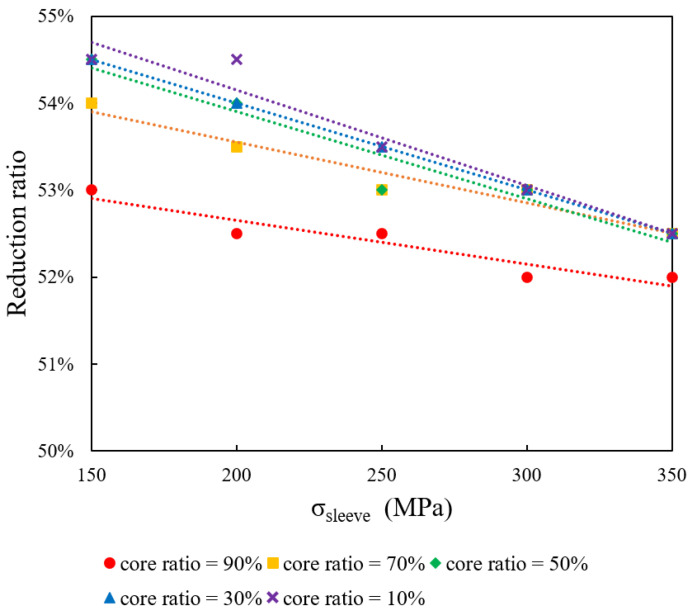 Figure 5
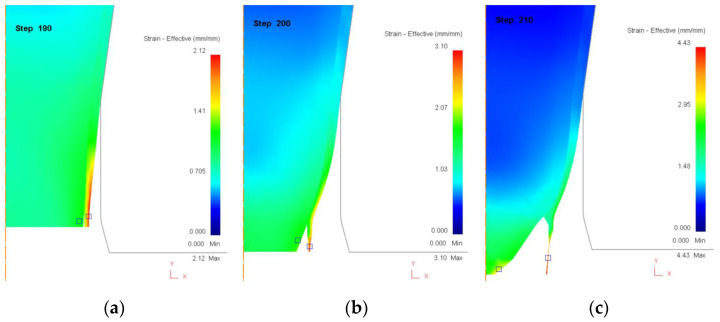 Figure 6
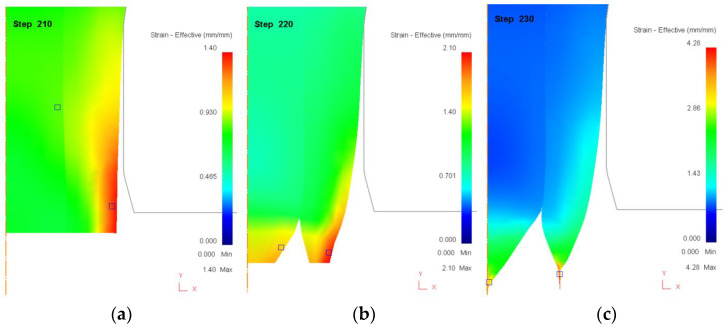 Figure 7
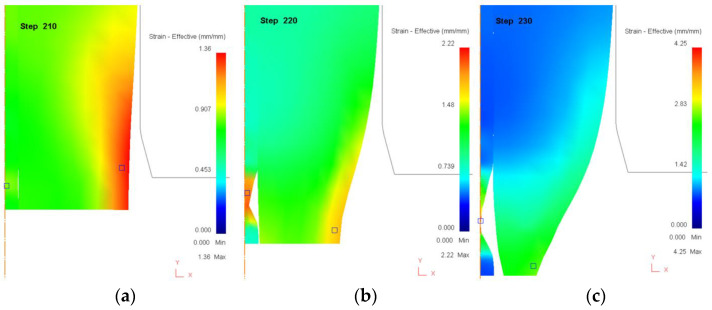 Figure 8
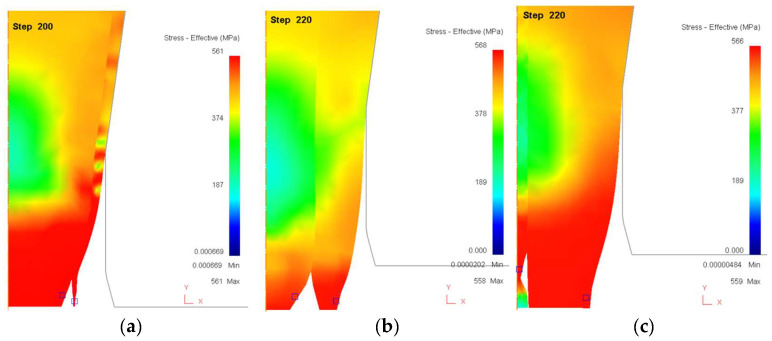 Figure 9
Peer Reviews
No public reviews on file for this paper yet. If you reviewed it on a platform where reviews are public (OpenReview, ICLR, NeurIPS, ICML), you can paste yours below so the community can read it here.
Videos
No videos yet. Explain this paper in a talk, walkthrough, or lecture? Add one.
Taxonomy
TopicsMetal Forming Simulation Techniques · Metallurgy and Material Forming · High-Velocity Impact and Material Behavior