Impact of Patient Profile on CDK4/6 Inhibitor Therapy Outcomes: A Real-World Data Analysis
Ioana-Miruna Stanciu, Maria-Cristina Orlov-Slavu, Andreea-Ioana Parosanu, Cornelia Nitipir

TL;DR
This study shows how patient age and tumor characteristics affect the success of CDK4/6 inhibitor treatments in breast cancer patients.
Contribution
The study identifies age-specific treatment responses to CDK4/6 inhibitors in metastatic breast cancer patients using real-world data.
Findings
Younger patients (<50 years) had more aggressive tumors and worse survival outcomes.
Ribociclib showed the highest survival benefit, especially in younger patients.
Older patients (>50 years) experienced more comorbidities and toxicity, with dose reductions improving survival.
Abstract
Cyclin-dependent kinase 4 and 6 (CDK4/6) inhibitors have transformed the treatment landscape for patients with hormone receptor-positive (HR+)/HER2-negative (HER2−) breast cancer. However, their efficacy is influenced by various clinical and biological factors, including patient age, tumor biology, and treatment-related toxicities. The aim of this study is to evaluate the impact of demographic, clinical, and tumor-related characteristics on the efficacy of CDK4/6 inhibitors in a cohort of patients with metastatic HR+/HER2− breast cancer. We conducted a retrospective cohort study analyzing the outcomes of 95 patients with metastatic ER-positive, HER2-negative breast cancer (BC) treated with CDK4/6 inhibitors (ribociclib, palbociclib, and abemaciclib) in combination with endocrine therapy. The patient demographics, tumor characteristics, and treatment regimens were examined, with a…
Genes, proteins, chemicals, diseases, species, mutations and cell lines named across the full text — each resolved to its canonical identifier and authoritative record.
Click any figure to enlarge with its caption.
 Figure 1
 Figure 2
 Figure 3
 Figure 4
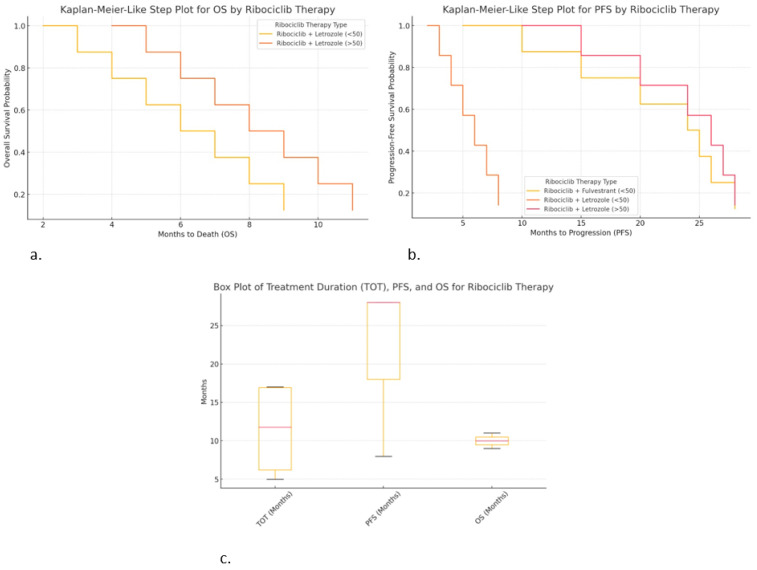 Figure 5
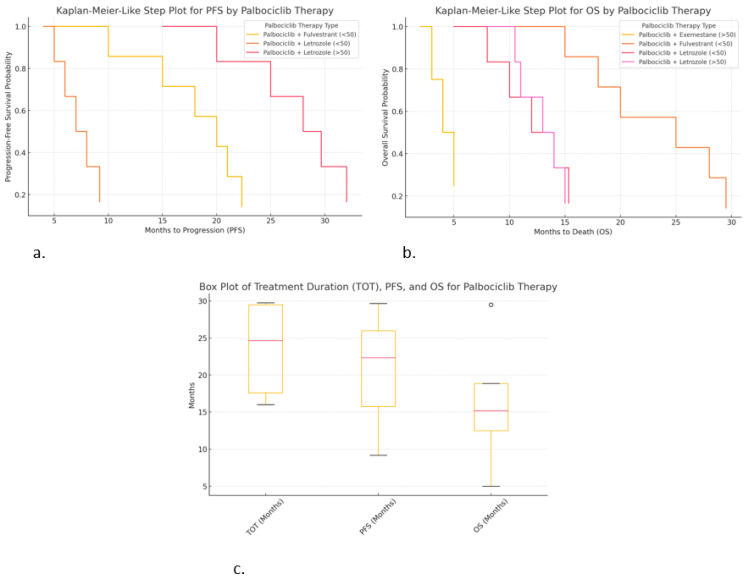 Figure 6
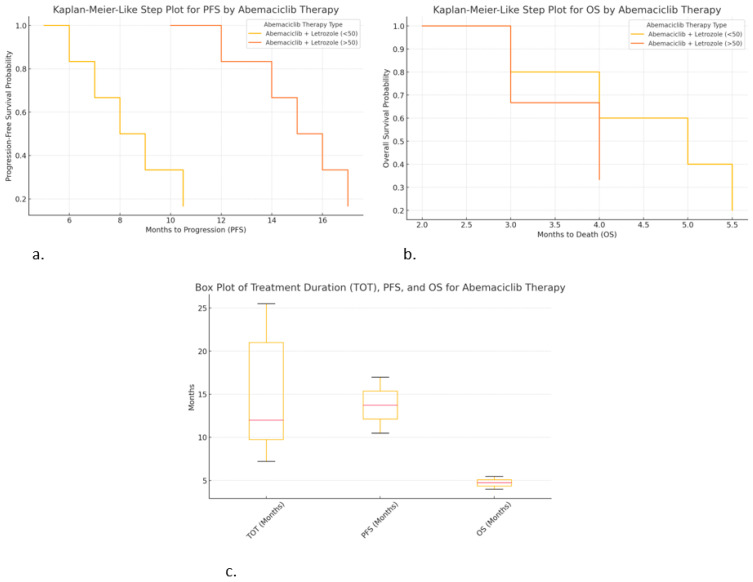 Figure 7
Peer Reviews
No public reviews on file for this paper yet. If you reviewed it on a platform where reviews are public (OpenReview, ICLR, NeurIPS, ICML), you can paste yours below so the community can read it here.
Videos
No videos yet. Explain this paper in a talk, walkthrough, or lecture? Add one.
Taxonomy
TopicsAdvanced Breast Cancer Therapies · Cancer-related cognitive impairment studies