Odor-Binding Protein 2 in Apis mellifera ligustica Plays Important Roles in the Response to Floral Volatiles Stimuli from Melon and Tomato Flowers
Jiangchao Zhang, Weihua Ma, Yue Zhang, Surong Lu, Chaoying Zhang, Huiting Zhao, Yusuo Jiang

TL;DR
This study explores how a protein in honeybees helps them detect floral scents from melon and tomato flowers, influencing their foraging behavior.
Contribution
The study identifies AmelOBP2 as a key protein involved in honeybee recognition of melon and tomato floral volatiles.
Findings
AmelOBP2 mRNA is highly expressed in honeybee antennae, especially in melon greenhouses.
AmelOBP2 binds more strongly to melon floral volatiles than tomato ones.
Knocking down AmelOBP2 reduced honeybee electroantennogram responses to specific floral compounds.
Abstract
Honeybee olfaction can influence foraging behavior and affect crop pollination. Odor-binding proteins play a vital role in honeybee olfactory perception. A previous study based on the antennal transcriptome of Apis mellifera ligustica in melon and tomato greenhouses revealed that AmelOBP2 is highly expressed. Therefore, we aimed to further investigate the olfactory recognition mechanism of honeybees by detecting the expression levels and binding ability of AmelOBP2 to floral volatiles of melon and tomato flowers. The results show that AmelOBP2 mRNA was highly expressed in the antennae of honeybees, and its protein expression was highest in the antennae at 20 days of age and was higher in the melon greenhouse. The binding ability of AmelOBP2 to floral volatiles of melon was stronger than that of tomato. AmelOBP2 had a stronger binding ability with aldehydes in melon floral volatiles and…
Genes, proteins, chemicals, diseases, species, mutations and cell lines named across the full text — each resolved to its canonical identifier and authoritative record.
Click any figure to enlarge with its caption.
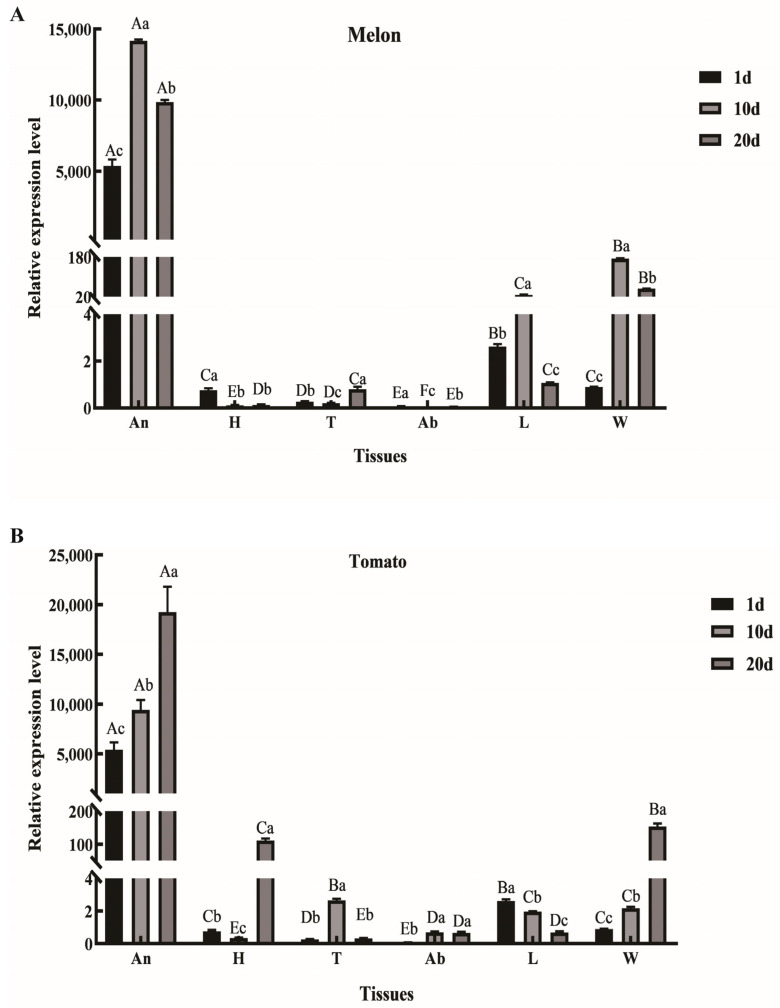 Figure 1
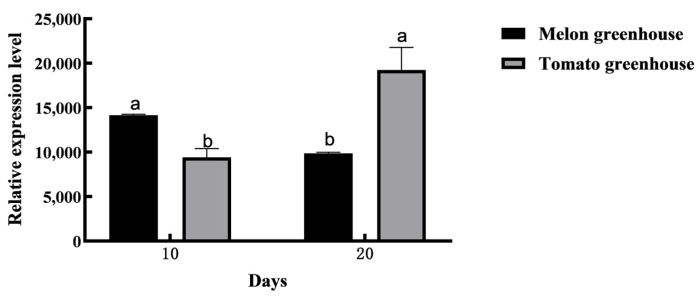 Figure 2
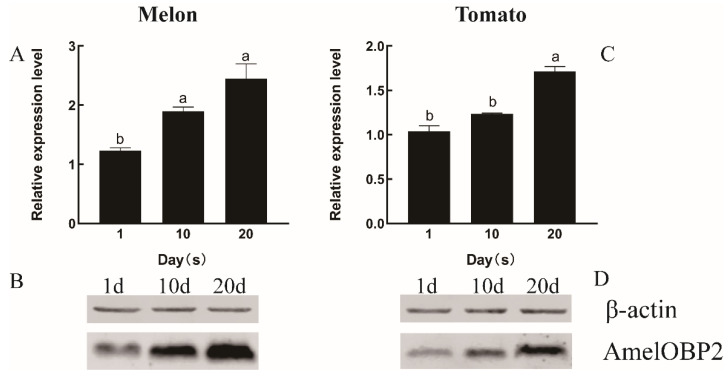 Figure 3
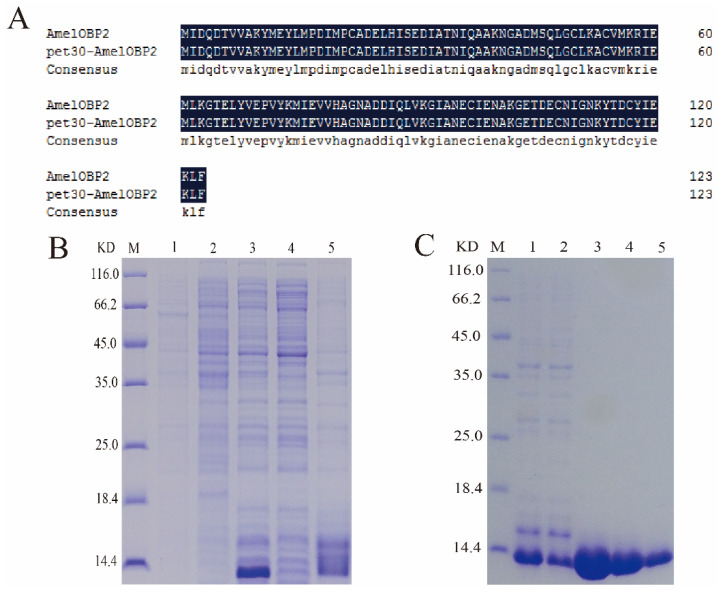 Figure 4
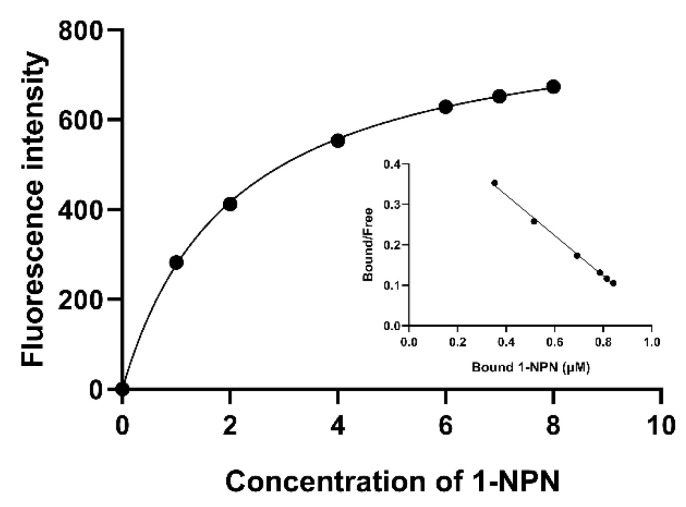 Figure 5
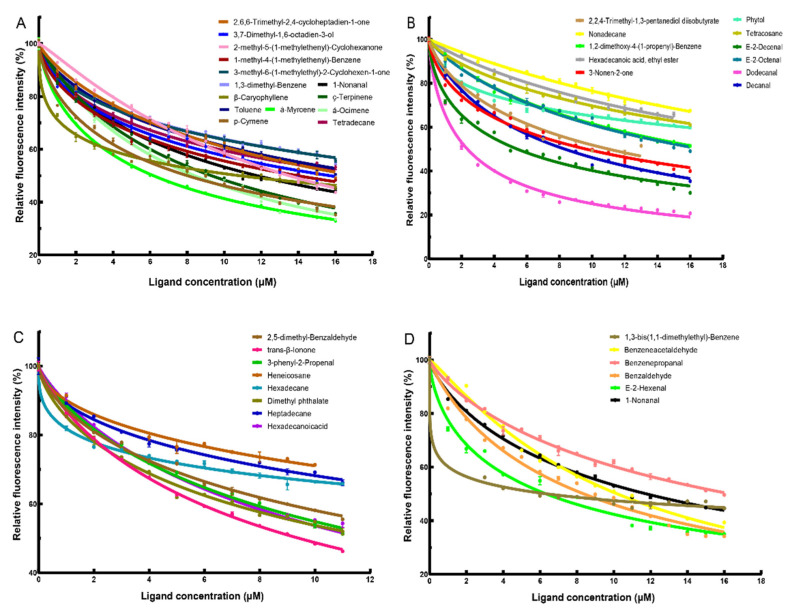 Figure 6
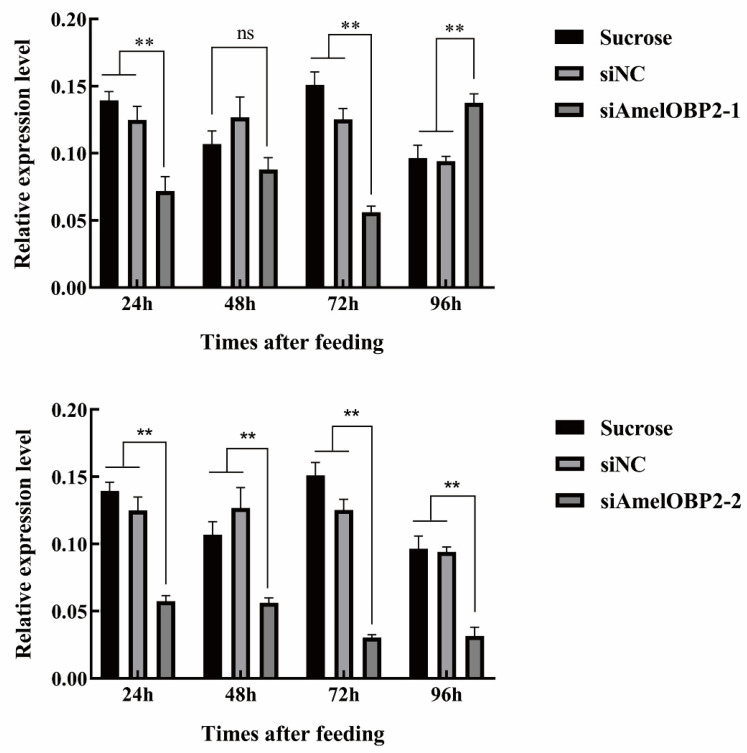 Figure 7
Peer Reviews
No public reviews on file for this paper yet. If you reviewed it on a platform where reviews are public (OpenReview, ICLR, NeurIPS, ICML), you can paste yours below so the community can read it here.
Videos
No videos yet. Explain this paper in a talk, walkthrough, or lecture? Add one.
Taxonomy
TopicsPlant and animal studies · Insect and Pesticide Research · Insect and Arachnid Ecology and Behavior