Molecular Investigation of Anaplasma spp. and Genotype Profile of A. ovis in Sheep from Different Farms in Türkiye
Özge Dülek, Çağrı Kandemir, Ecem Su Koçkaya, Ecem Sürgeç, Mervenur Güvendi, Muhammet Karakavuk, Aysu Değirmenci Döşkaya, Özlem Günay-Esiyok, Turgay Taşkın, Mert Döşkaya, Cemal Ün, Adnan Yüksel Gürüz, Ahmet Efe Köseoğlu, Sedef Erkunt Alak, Erkan Pehlivan, H. Deniz Şireli

TL;DR
This study found a high prevalence of Anaplasma spp., particularly A. ovis, in sheep across different regions of Türkiye, with variations based on farming systems and geographic location.
Contribution
The study provides new insights into the molecular prevalence and genotype diversity of A. ovis in Turkish sheep populations.
Findings
The overall molecular prevalence of Anaplasma spp. in sheep was 43.9%.
A. ovis was the only species identified in all sequenced positive samples.
Three sub-clusters of A. ovis were identified, with Sub-cluster 2 being the most prevalent.
Abstract
Anaplasmosis is a tick-borne disease which is caused by different Anaplasma species. Among Anaplasma species, A. ovis which can infect sheep and goats cause ovine anaplasmosis. In this study, the prevalence of Anaplasma spp. was investigated in 31 different breeds of sheep from different regions of Türkiye. Anaplasma spp. was investigated by PCR targeting MSP-4 gene in blood samples of sheep breeds (n = 366) collected from different regions of Türkiye. Also, some Anaplasma spp. positive samples were sequenced for species identification and sub-cluster analyses. The molecular prevalence of Anaplasma spp. was 43.9% (161/366). In Anatolian Merino (n = 10) and Akkaraman (n = 11) breeds, the molecular prevalence of Anaplasma spp. reached to 100%. Also, the highest molecular prevalence was detected in Black Sea region by 70% (28/40) and the lowest molecular prevalence was detected in…
Genes, proteins, chemicals, diseases, species, mutations and cell lines named across the full text — each resolved to its canonical identifier and authoritative record.
Click any figure to enlarge with its caption.
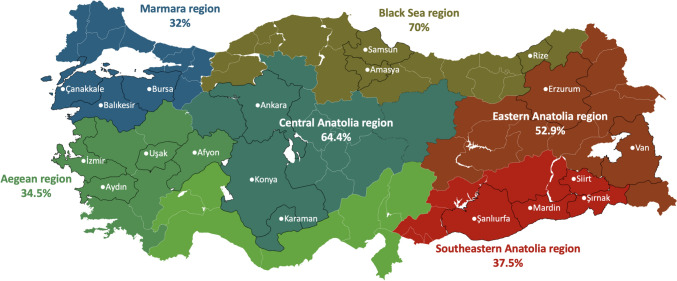 Figure 1
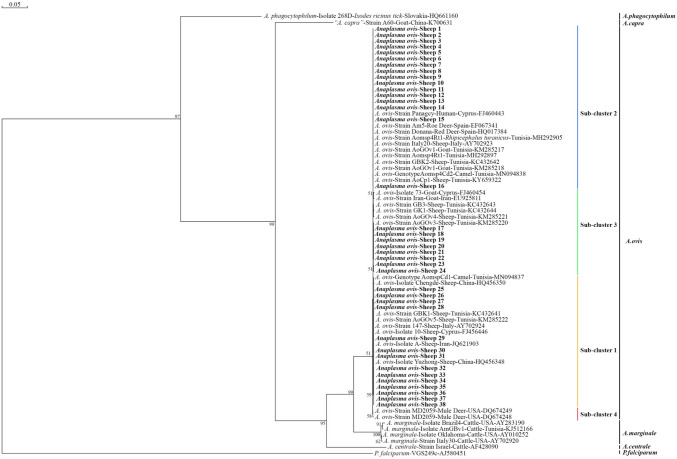 Figure 2
- —Ege University
Peer Reviews
No public reviews on file for this paper yet. If you reviewed it on a platform where reviews are public (OpenReview, ICLR, NeurIPS, ICML), you can paste yours below so the community can read it here.
Videos
No videos yet. Explain this paper in a talk, walkthrough, or lecture? Add one.
Taxonomy
TopicsVector-borne infectious diseases · Viral Infections and Vectors · Vector-Borne Animal Diseases
Introduction
Anaplasmosis is a tick-borne disease caused by Anaplasma marginale, A. centrale, A. phagocytophilum, A. bovis, A. ovis, and A. platys [1]. In addition to these Anaplasma species, new species, Candidatus A. odocoilei, Ca A. cinensis, Ca A. turritanum, A. capra, A. boleense, A. phagocytophilum like-1 have also been identified [2, 3]. Among these species, A. phagocytophilum and A. marginale cause the most significant clinical symptoms in animals. Anaplasma phagocytophilum is the causative agent of pasture fever or tick-borne fever (TBF) which is usually associated with high fever, loss of appetite, dullness, and decreased milk production in ruminants including sheep, goat, cattle and deer. A. marginale, the most prevalent causative agent of bovine anaplasmosis, causes various clinical signs such as fever, weight loss, calving difficulties, lethargy, icterus, and often death in animals older than 2 years [4]. On the other hand, A. ovis causes ovine anaplasmosis, which is usually associated with moderate pathogenicity with mild infections [5, 6]. In addition to sheep, A. ovis can infect goats, wild ruminants, rarely cattle and camels [5, 6]. Also, A. ovis has been reported in a single human case in Cyprus [7].
Although Dermacentor andersoni and Rhipicephalus bursa are the main vectors for A. ovis [8], A. ovis has also been detected in R. turanicus [9] and R. sanguineus [10] in Türkiye, Haemaphysalis longicornis in China [11] and D. nuttalli in Mongolia [12].
The prevalence of A. ovis in sheep is generally high and a study reported that the prevalence of A. ovis reached 91.7% in small ruminants in the northern part of Portugal by PCR targeting the MSP-4 gene [13]. In a study conducted in Türkiye, A. ovis was detected in sheep with a high prevalence of 89.32% using RT-PCR [14]. Genes such as MSP-4, 16S, gltA, groEL and OMP, which are targeted by PCR for diagnosing anaplasmosis are also used in genotyping A. ovis strains. For example, a study identified four distinct sub-clusters of A. ovis based on MSP-4 gene sequencing [5].
In Türkiye, several studies have investigated Anaplasma spp. in sheep using microscopy, serology, or molecular methods, reporting varying prevalence values. However, fewer studies have been conducted in Türkiye compared to other countries, and they do not provide information on the prevalence of Anaplasma spp. in different sheep breeds. Therefore, this study investigated the prevalence of Anaplasma spp. in 31 sheep breeds from various regions of Türkiye using PCR targeting the MSP-4 gene. Additionally, Anaplasma spp.-positive samples were sequenced to determine the genotype profile of Anaplasma strains through phylogenetic analysis.
Materials and Methods
Sheep Breeds
Sheep breeds were identified using the Livestock Information System (HAYBIS) manual from the Republic of Türkiye’s Ministry of Agriculture and Forestry [15]. This system classifies breeds based on tail shape (fine, fat, semi-fat) and breeding origins (imported or domestic) according to regional distribution in Türkiye [16].
A total of 366 sheep blood samples were collected from different regions of Türkiye. The breeds are Akkaraman (n = 11), Morkaraman (n = 24), Kıvırcık (n = 20), Merino (n = 10), Awassi (n = 20), Chios (n = 29), Hamdani (n = 20), Romanov (n = 20), Karayaka (n = 20), Dağliç (n = 15), Kangal Akkaraman (n = 10), Karacabey Merino (n = 10), Anatolian Merino (n = 10), Zom (n = 20), Hemsin (n = 10), Suffolk (n = 10), Eşme (n = 10), Norduz (n = 10), Gökçeada (n = 10), Karya (n = 5), Ramlıç (n = 7), Çine Çaparı (n = 5), Herik (n = 5), Koçeri (n = 4), Polatlı (n = 5), Berrichon du Cher (n = 9), Bafra (n = 5), Ile de France (n = 5), Tahirova (n = 15), Charollais (n = 5), Assaf (n = 5), and East Friesian (n = 2).
PCR and Sequencing
Genomic DNA was extracted from each blood sample collected from the sheep using a commercial DNA isolation kit (GeneMark, Taichung, Taiwan) according to manufacturer's instructions. A PCR targeting MSP-4 gene of Anaplasma spp. (A. ovis and A. marginale) was performed on each DNA sample using the primers MSP45 (5′-GGGAGCTCCTATGAATTACAGAGAATTGTTTAC-3′) and MSP43 (5′-CCGGATCCTTAGCTGAACAGGAATCTTTGC-3′) as previously described [17]. Briefly, 25 µl reaction volume consisted of 2 µl template DNA, 1 µl of each primer (10 µM working concentration), 5 µl 5X PCR master mix (GeneMark, Taichung, Taiwan), and 16 µl distilled water. The reaction was performed in a Thermal Cycler (Thermo, PX2) under the following conditions: 30 s initial denaturation at 94 °C, 35 cycles of 94 °C for 30 s, 60 °C for 30 s, 68 °C for 1 min, and a final elongation step at 68 °C for 7 min. The amplified PCR products were visualized on a 1 % agarose gel using Ethidium bromide. To obtain the sequence data for MSP-4 gene, a total of 29 PCR amplicons representing sheep from different regions of Türkiye were processed by the ABI 3500 DNA Sequencer (Applied Biosystems® Sanger Sequencing 3500 Series Genetic Analyzers, Hitachi, Japan) using MSP45 primer, and BLAST analysis was conducted using obtained sequence data for species identification. A phylogenetic tree was constructed by DNAMAN software (Version 5.2.2; Lynnon Biosoft, Que., Canada) using sequence data obtained from this study and reference sequences known to belong to A. ovis, A.marginale, and A. phagocytophilum. During the construction of the phylogenetic tree, genetic distance between A. ovis sequences from this study and previously used by Selmi et al. [5] was calculated by the maximum likelihood method and used to construct neighbor-joining trees. Branches of the phylogenetic tree were calculated with bootstrap test with 1000 replicates. Reference sequences including HQ661160.1, KJ700631.1, FJ460454.1, EF067341.1, HQ014384.1, MH292905.1, AY702923.1, KM285217.1, MH292897.1, KC432642.1, KM285218.1, MN094838.1, KY659322.1, FJ460443.1, EU925811.1, KC432643.1, KC432644.1, KM285221.1, KM285220.1, MN094837.1, HQ456350.1, KC432641.1, KM285222.1, AY702924.1, FJ460446.1, JQ621903.1, HQ456348.1, DQ674249.1, DQ674248.1, AY283190.1, KJ512166.1, AY010252.1, AY702920.1, AF428090.1, and AJ580451.1 were used to construct the phylogenetic tree [5].
Results
The molecular prevalence of Anaplasma spp. was found to be 43.9% (161/366) among sheep blood samples analyzed. As the molecular prevalence values were examined based on breeds, the molecular prevalence of Anaplasma spp. reached 100% in blood samples collected from Anatolian Merino and Akkaraman breeds while Anaplasma spp. was not detected in blood samples collected from Karacabey Merino, Koçeri, Berrichon du Cher, Romanov, Tahirova, and East Friesian breeds (Table 1). When molecular prevalence values were analyzed by region, the highest was observed in the Black Sea region at 70% (28/40), while the lowest was in the Marmara region at 32% (16/50) (Figure 1). The prevalence of Anaplasma spp. was 59.7% in sheep raised under an extensive system, compared to 39.2% in a semi-extensive system and 9.8% in an intensive system. According to BLAST results, all sequenced Anaplasma spp. positive samples (n = 29) were identified as A. ovis and showed 100% similarity with reference A. ovis isolates. The sequence data of the A. ovis positive samples were given in Supplementary File-1. Furthermore, sequence data showed the presence of mixed infections in 6 positive samples (Supplementary File-2). Among the mixed infections, sub-cluster 1, 2 and 3 or sub-cluster 1 and 2 were detected in the same positive samples. Due to mixed infections, although a total of 29 samples were sequenced, the phylogenetic tree was constructed with 38 sequence data. Accordingly, the phylogenetic tree showed the presence of A. ovis subcluster 1, 2, and 3 (Figure 2). Sub-cluster 2 was the most prevalent sub-cluster with 42.1% compared to other sub-clusters, followed by sub-cluster 2 with 36.8% and sub-cluster 3 with 21%.Table 1. Molecular prevalence of Anaplasma spp. in each breed of sheep and in different regions of TürkiyeSheep breedsNumber of blood samples testedNumber of Anaplasma spp. positive sheepAnaplasma spp. prevalence in each breed (%)ProvinceRegionExtensive/intensive livestock productionKıvırcık201050BalıkesirMarmara regionExtensiveKaracabey Merino10–0BursaMarmara regionIntensiveMerino10550BursaMarmara regionIntensiveGökçeada10110ÇanakkaleMarmara regionSemi-extensiveAwassi201890ŞanlıurfaSouth-eastern Anatolia regionExtensiveKoçeri4–0SiirtSouth-eastern Anatolia regionExtensiveZom20525MardinSouth-eastern Anatolia regionExtensiveHamdani2015ŞırnakSouth-eastern Anatolia regionExtensiveAnatolian Merino1010100AnkaraCentral Anatolia regionExtensiveAkkaraman1111100KaramanCentral Anatolia regionExtensiveKangal Akkaraman10660AnkaraCentral Anatolia regionSemi-extensivePolatlı5240AnkaraCentral Anatolia regionSemi-extensiveBerrichon du Cher9–0KonyaCentral Anatolia regionIntensiveHemsin10880RizeBlack Sea regionExtensiveKarayaka201785SamsunBlack Sea regionExtensiveBafra5120SamsunBlack Sea regionSemi-extensiveHerik5240AmasyaBlack Sea regionSemi-extensiveNorduz10440VanEastern Anatolia regionExtensiveMorkaraman241458,3ErzurumEastern Anatolia regionExtensiveIle de France5240İzmirAegean regionSemi-extensiveChios291758,6İzmirAegean regionSemi-extensiveDağlıç15960AfyonAegean regionExtensiveSuffolk10110İzmirAegean regionIntensiveEşme10110UşakAegean regionSemi-extensiveKarya5480AydınAegean regionExtensiveRamlıç7571,4AfyonAegean regionExtensiveÇine Çaparı5480AydınAegean regionExtensiveTahirova15–0İzmirAegean regionIntensiveCharollais5240İzmirAegean regionIntensiveRomanov20–0İzmirAegean regionIntensiveAssaf5120İzmirAegean regionSemi-extensiveEast Friesian2–0İzmirAegean regionIntensiveFig. 1The map shows the provinces where sheep samples were collected as well as the molecular prevalence values of Anaplasma spp. in each region of TürkiyeFig. 2The phylogenetic tree shows that sequenced Anaplasma spp.-positive samples are A. ovis and A. ovis sub-clusters. The examples in bold are from this study and the others are reference examples. A bootstrap value greater than 90% indicates that the branches are highly reliable, while values between 70 and 90% are considered acceptable. Bootstrap values below 70% suggest that the corresponding branches should be interpreted with caution
Discussion
In Türkiye, Anaplasma spp. has been investigated in sheep using microscopy, serological or molecular methods and different prevalence values for Anaplasma spp. have been reported. However, the prevalence of Anaplasma spp. in different sheep breeds in Türkiye is not well demonstrated. Furthermore, the genotype profile of Anaplasma spp. positive samples based on the MSP-4 gene is also not well known in Türkiye. Accordingly, this study has two different objectives. The first is to find out the molecular prevalence of Anaplasma spp. and the second is to reveal the genotype profile of Anaplasma spp. samples in Türkiye. In this study, the prevalence value for Anaplasma spp. was found as 43.9% in all samples analyzed, while the prevalence value reached 52.9%, 64.4%, and 70% in the Eastern Anatolia, Central Anatolia, and Black Sea regions, respectively. The high prevalence of Anaplasma spp. in sheep was consistent with previous studies conducted in Türkiye. For example, in a study on 1,979 samples from small ruminants, the prevalence of A. ovis was reported as 41.1% using the reverse line blot (RLB) hybridization assay and 63.3% by PCR. In the same study, the prevalence of A. ovis was found to be 68.7% in Central Anatolia by PCR [18]. In another study investigating the presence of A. ovis and A. phagocytophilum in sheep and goats in Eastern Anatolia, the prevalence of A. ovis was found to be 67.35% in sheep by PCR while the prevalence of A. phagocytophilum was 18.9% [19]. In a different study conducted in Southeastern Anatolia, the prevalence of A. ovis was reported to be 89.32% in sheep using RT-PCR while the prevalence of A. phagocytophilum remained at 42.97% [14]. These results, together with our results, show that sheep are frequently bitten by ticks infected with Anaplasma spp. in nature. However, this study differs from others. Anaplasma spp. was not detected in some sheep breeds (Karacabey Merino, Koçeri, Berrichon du Cher, Tahirova, Romanov and East Friesian) produced in intensive system except Koçeri breed. Accordingly, this study suggests that the production of sheep in the intensive system protects them from tick-borne diseases, which are of great economic importance.
Besides, in this study, all of the sequenced Anaplasma spp. positive samples were identified as A. ovis, although the PCR used can also detect A. marginale. Since A. marginale was detected in sheep in previous studies, it implements that increasing the number of samples sequenced in this study would have shown the presence of A. marginale among Anaplasma spp. positive samples. For example, in previous studies conducted in Pakistan, A. marginale which causes bovine anaplasmosis was detected in sheep [20–22] and in one of these studies, A. ovis was detected at a higher prevalence rate than A. marginale. In parallel with the results of our study, A. marginale was not detected among Anaplasma spp. positive samples sequenced in this study, but it was reported in cattle in Türkiye [23]. In addition, in a study performed in the Aegean region of Türkiye, A. marginale was detected in some tick species, including Hyalomma marginatum and Hyalomma excavatum [24]. Since A. marginale has been detected in sheep and ticks in different countries in Türkiye, it was thought that A. marginale should be also investigated in sheep in Türkiye in addition to A. ovis during epidemiological studies and clinical cases that may be associated with anaplasmosis in sheep.
According to the genotype profile results of A. ovis isolates, the presence of only MSP-4 based genotype I in sheep was reported in a study conducted in Türkiye [25]. However, 3 different sub-clusters (1, 2 and 3) were identified in this study by a phylogenetic analysis, and it was determined that sub-cluster 2 was more dominant among these sub-clusters. This finding is also important in terms of showing the presence of other sub-clusters of A. ovis in addition to genotype I detected in the previous study [25].
Conclusion
In this study, Anaplasma spp. was investigated in different sheep breeds in Türkiye. A very high prevalence value of 43.9% was determined for Anaplasma spp. According to the sequence data, all of the sequenced Anaplasma spp. positive samples were identified as A. ovis. In addition, MSP-4-based genotyping demonstrated for the first time the presence of three different subclusters (sub-cluster 1, 2 and 3) in sheep in Türkiye.
Supplementary Information
Below is the link to the electronic supplementary material.Supplementary file1 (DOCX 98 KB)Supplementary file2 (PDF 282 KB)
The reference list from the paper itself. Each links out to its DOI / PubMed record.
- 1Anonymous (2025 a) T.C. Tarım ve Orman Bakanlığı Hayvan Bilgi Sistemi. Accessed 17 January 2025. https://haybis.tarimorman.gov.tr/Isletme Giris.aspx
- 2Anonymous (2025 b) Türkiye evcil hayvan genetik kaynakları tanıtım kataloğu. T.C. Tarım ve Orman Bakanlığı. Accessed 17 January 2025. https://www.tarimorman.gov.tr/TAGEM/Belgeler/yayin/Katalog%20T%C 3%B Crk%C 3%A 7e.pdf