Genetic variants associated with physiological and biochemical indicators: A multi‐centre whole‐exome sequencing study of Chinese healthy participants
Zhe Wang, Zhiyan Liu, Guangyan Mu, Qiufen Xie, Shuang Zhou, Zining Wang, Yimin Cui, Qian Xiang

Abstract
Genes, proteins, chemicals, diseases, species, mutations and cell lines named across the full text — each resolved to its canonical identifier and authoritative record.
Click any figure to enlarge with its caption.
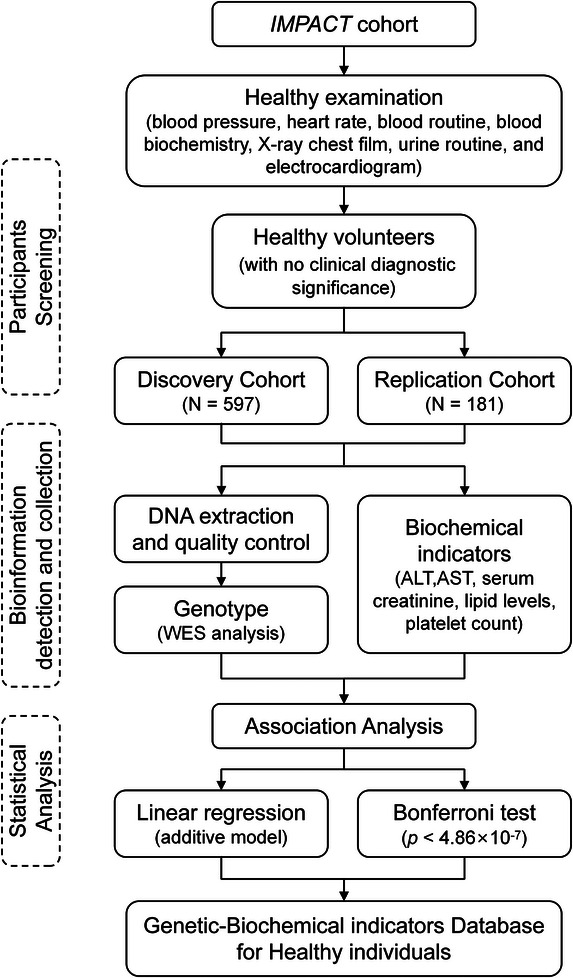 Figure 1
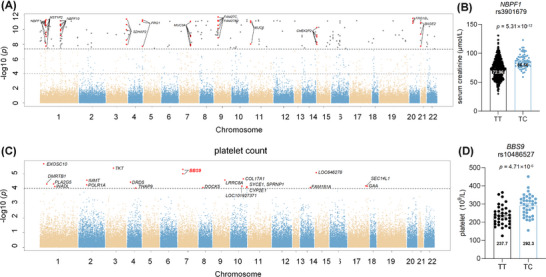 Figure 2
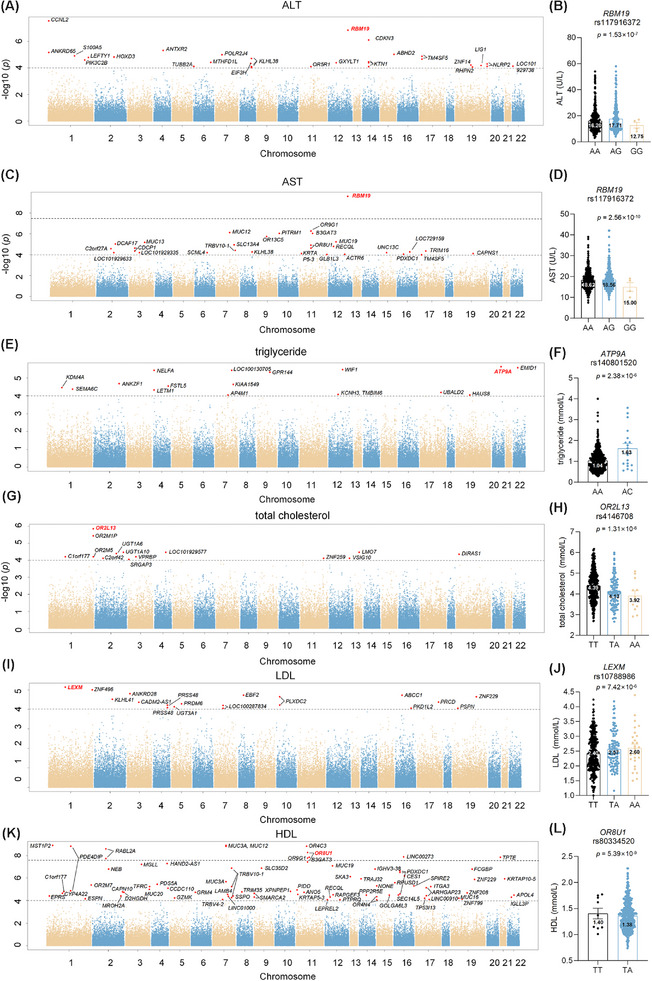 Figure 3
- —National High Level Hospital Clinical Research Fund (Peking University First Hospital Interdisciplinary Research Project)
- —National Natural Science Foundation of China 10.13039/501100001809
- —National Key R&D Program of China 10.13039/501100012166
- —National High Level Hospital Clinical Research Fund (Youth Clinical Research Project of Peking University First Hospital)
Peer Reviews
No public reviews on file for this paper yet. If you reviewed it on a platform where reviews are public (OpenReview, ICLR, NeurIPS, ICML), you can paste yours below so the community can read it here.
Videos
No videos yet. Explain this paper in a talk, walkthrough, or lecture? Add one.
Taxonomy
TopicsGenetic Associations and Epidemiology · Genomics and Rare Diseases · Diet and metabolism studies
Dear Editor,
Disease onset and progression manifest through quantifiable alterations in organ function biomarkers, including hepatic, renal and lipid profiles. Even within normal reference ranges, these indicators could predict disease risk.1 Physiological and biochemical profiles in Asians display distinct characteristics compared to those in Caucasians.2 Identifying factors that influence these markers in Asian populations may therefore enhance early disease prediction and intervention, improving clinical outcomes.
Given the heritability of physiological and biochemical indicators,3 linking genetic variations with these indicators differences through genome‐wide association studies (GWAS) has become a highly promising approach, particularly in lipid metabolism.4 However, databases such as UK Biobank and FinnGen present limitation due to ethnic diversity and lack of stringent screening. This study employed whole‐exome sequencing to analyse genes associated with key physiological indicators in clinically screened Chinese healthy participants, providing insights into their genetic correlations.
A total of 778 participants in IMPACT study were included in this cohort.5, 6, 7, 8 Briefly, healthy volunteers were enrolled in this study based on the absence of clinically significant abnormalities in blood pressure, heart rate, routine blood, blood biochemistry, chest X‐ray, urinalysis and electrocardiogram, as well as confirmation of no infectious diseases or non‐pregnancy status. Figure 1 shows the flow diagram. The physiological and biochemical indicators of participants are presented in Table 1. In discovery cohort, correlation analysis and linear regression were conducted to choose the covariates (Figure S1 and Table S1). Consequently, age, male proportion and body mass index were included as covariates in subsequent genetic association analyses. Identity‐by‐descent analysis excluded first‐degree relatives (Proportion of identity by descent: PI_HAT ≤ .5) prior to genetic modeling.
To investigate genetic variants associated with liver function, genetic association analysis was conducted in total cholesterol (TC), triglyceride (TG), low‐density lipoprotein (LDL), high‐density lipoprotein (HDL), alanine aminotransferase (ALT) and aspartate aminotransferase (AST). The Manhattan plot of discovery cohort is shown in Figure 2. Single nucleotide polymorphisms (SNPs) correlated with liver function and disease are listed in Tables S2‐S7. Notably, RBM19 rs117916372 was associated with both ALT and AST. Compared with AA carriers of rs117916372, homozygous GG carriers exhibited lower level of ALT (AA vs. GG: 16.20 ± 8.66 U/L vs. 12.75 ± 4.43 U/L, *p *= 1.53 × 10^−7^) and AST (AA vs. GG: 18.38 ± 4.61 U/L vs. 15.00 ± 4.24 U/L, *p = *2.56 × 10^−10^). Rs3851 on TM4SF5 exhibited a correlation with ALT and AST levels in both the discovery and replication cohorts (Table S8 ).
In the genome‐wide analyses of TG, ATP9A rs140801520 was most significantly associated with TG levels (*p = *2.38 × 10^−6^). UBALD2 rs712833 exhibited a correlation with TG levels in both the discovery and replication cohorts (Table S8). For TC, OR2L13 rs4146708 was primarily correlated with cholesterol variation (*p = *1.31 × 10^−6^). For LDL, LEXM rs10788986 showed a notable association with LDL (*p = *7.42 × 10^−6^). Regarding HDL level, multiple SNPs on OR8U1 were associated (*p = *5.39 × 10^−9^). Notably, OR8U1 also has a potential correlation with AST level (*p = *1.32 × 10^−5^). Compared with TT carriers of rs80334520, heterozygous TA carriers exhibited lower level of AST (TT vs. TA: 23.01 ± 9.35 U/L vs. 18.43 ± 4.63 U/L) and HDL (TT vs. TA: 1.41 ± .28 mmol/L vs. 1.38 ± .29 mmol/L). Elevated serum AST and HDL levels suggests hepatocyte damage or chronic inflammation.9 The association of OR8U1 with both AST and HDL levels indicted the potential role of olfactory receptor OR8U1 in liver metabolic‐inflammatory regulation, requiring further in vivo and in vitro validation.
Genetic association analysis of serum creatinine is shown in Figure 3. SNPs correlated with serum creatinine are listed in Table S9. Among them, multiple SNPs located on NBPF1, MST1P2, NBPF10, SDHAP2, FRG1, FRG1B, MUC3A and MUC6. A mutation in rs3901679 on NBPF1 from the T to C allele was associated with a significant increase in serum creatinine levels (TT vs. TC: 72.96 ± 16.31 µmol/L vs. 86.56 ± 12.21 µmol/L). In addition, rs80068592, rs140898464 and rs61734664 exhibited a potential correlation with creatinine in both the discovery and replication cohorts, as shown in Table S8.
To investigate genetic variants associated with hematopoiesis, genetic association analysis was conducted with platelet count (Table S10). Several SNPs on BBS9, POLR1A and SPRNP1 genes demonstrated significant correlations with platelet count in Figure 3. Specifically, allele change from T to C on rs10486527 was associated with an increased platelet count (TT vs. TC: 244.30 ± 50.36 × 10^9^/L vs. 292.83 ± 60.15 × 10^9^/L, *p *= 4.71 × 10^−6^).
We also conducted cross‐validation of SNPs reported in previous GWAS. No statistical significant associations was observed (Table S11). Potential significant associations were presented as follows: ZNF646 rs749671 with TG (*p = *.0017), TM6SF2 rs58542926 with ALT (p = .0058), DHODH rs2288002 with LDL (p = .0026) and PCNXL3 rs12801636 with TG (p = .044). Although prior findings were not fully replicated in this study, correlation analyses revealed concordant effect directions with published data. However, larger effect sizes (β and SE) were observed in this cohort, potentially attributable to its comparatively smaller sample size. Meanwhile, the inability of this study to replicate the majority of previously reported SNPs may be attributed to several factors. First, most prior cohorts included both patients and healthy controls, potentially introducing heterogeneity. Second, previous studies were predominantly conducted in European populations. Ethnic distinctions between Caucasian and East Asian groups, such as differences in minor allele frequencies, may account for the observed discrepancies.
This study has certain limitations. Baseline differences were observed between the discovery cohort and the validation cohort, potentially attributed to the limited sample size in the validation cohort. This potentially explain the inability to replicate discovery cohort results. This study did not account for participants' exercise habits or dietary patterns, which may introduce confounding effects on clinical indicators beyond genetic factors. Participants were healthy individuals with a younger average age and normal physiological and biochemical indicators compared to typical clinical patient populations. This study was conducted only among Chinese populations. Cross‐ethnic comparisons study and functional validation are needed to confirm the role of the genes.
CONCLUSION
1
This study established associations between genetic variants and biochemical indicators through a database of healthy individuals. Our cohort identified genes correlated with biochemical indicators, offering promising biomarkers and therapeutic insights for future clinical disease prediction, diagnosis and drug development.
AUTHOR CONTRIBUTIONS
Conception and design: Yimin Cui and Qian Xiang. Provision of participants and study materials: Zhe Wang, Zhiyan Liu, Qiufen Xie, Guangyan Mu, Shuang Zhou, Zining Wang and IMPACT study group. Collection of data: Zhe Wang and Zhiyan Liu. Data analysis and interpretation: Zhe Wang and Qian Xiang. Manuscript writing: Zhe Wang and Qian Xiang. All the authors have read and approved the final manuscript.
CONFLICT OF INTEREST STATEMENT
The authors declare they have no conflicts of interest.
ETHICS STATEMENT
All studies were approved by the independent ethics committee of Peking University First Hospital and all participating centres. Subjects were informed before study and provided written informed consent. This study was registered on ClinicalTrial.org with the registration numbers NCT03161496 and NCT03161002.
Supporting information
Supporting Information
Supporting Information
The reference list from the paper itself. Each links out to its DOI / PubMed record.
- 1Arpegård J , Viktorin A , Chang Z , de Faire U , Magnusson PK , Svensson P . Comparison of heritability of Cystatin C‐ and creatinine‐based estimates of kidney function and their relation to heritability of cardiovascular disease. J Am Heart Assoc. 2015;4(1):e 001467.25589536 10.1161/JAHA.114.001467 PMC 4330070 · doi ↗ · pubmed ↗
- 2Kim HK , Tantry US , Smith Jr SC , et al. The East Asian paradox: an updated position statement on the challenges to the current antithrombotic strategy in patients with cardiovascular disease. Thromb Haemost. 2021;121(4):422‐432.33171520 10.1055/s-0040-1718729 · doi ↗ · pubmed ↗
- 3Sorrentino V , Fouchier SW , Motazacker MM , et al. Identification of a loss‐of‐function inducible degrader of the low‐density lipoprotein receptor variant in individuals with low circulating low‐density lipoprotein. Eur Heart J. 2013;34(17):1292‐1297.23324548 10.1093/eurheartj/ehs 472 · doi ↗ · pubmed ↗
- 4Targher G . Elevated serum gamma‐glutamyltransferase activity is associated with increased risk of mortality, incident type 2 diabetes, cardiovascular events, chronic kidney disease and cancer‐a narrative review. Clin Chem Lab Med. 2010;48(2):147‐157.19943812 10.1515/CCLM.2010.031 · doi ↗ · pubmed ↗
- 5Xiang Q , Liu Z , Mu G , et al. Effect of genetic polymorphism including NUP 153 and SVEP 1 on the pharmacokinetics and pharmacodynamics of ticagrelor in healthy Chinese subjects. Clin Drug Investig. 2022;42(5):447‐458.10.1007/s 40261-022-01154-635501592 · doi ↗ · pubmed ↗
- 6Liu Z , Xie Q , Zhao X , et al. The pharmacogenetic variability associated with the pharmacokinetics and pharmacodynamics of rivaroxaban in healthy Chinese subjects: a national multicenter exploratory study. Clin Ther. 2024;46(4):313‐321.38553322 10.1016/j.clinthera.2024.02.009 · doi ↗ · pubmed ↗
- 7Xie Q , Li Y , Liu Z , et al. SLC 4A 4, FRAS 1, and SULT 1A 1 genetic variations associated with dabigatran metabolism in a healthy Chinese population. Front Genet. 2022;13:873031.35646073 10.3389/fgene.2022.873031 PMC 9136018 · doi ↗ · pubmed ↗
- 8Mu G , Xie Q , Liu Z , et al. Identification of genetic biomarkers associated with pharmacokinetics and pharmacodynamics of apixaban in Chinese healthy volunteers. Expert Opin Drug Metab Toxicol. 2023;19(1):43‐51.36867504 10.1080/17425255.2023.2184344 · doi ↗ · pubmed ↗