Mechanistic insights into proton-coupled substrate translocation of nucleoside proton symporters
Qingjie Xiao, Xinyi Chen, Chen Wang, Yingying He, Dong Deng, Bo Sun

TL;DR
This study reveals how protonation of a specific site in nucleoside proton symporters triggers structural changes that help transport nucleosides into cells.
Contribution
The study identifies a novel GXXXD motif and its role in proton-coupled substrate translocation in NHS proteins.
Findings
Deprotonation of Asp323 in NupG or Asp315 in YegT causes a conformational change in the TM10 region.
The GXXXD motif in TM10 is crucial for coordinating substrate release during transport.
These findings enhance understanding of the molecular mechanism of nucleoside transport in the major facilitator superfamily.
Abstract
The nucleoside proton symporter (NHS) family proteins are part of the major facilitator superfamily and are responsible for transporting nucleosides from the extracellular environment into the cell. Structural and biochemical analysis of NupG, a prototypical NHS member, have pinpointed the critical residues involved in substrate binding. However, the proton-coupled mechanism diving substrate translocation in NHS proteins has remained elusive. In previous research, we identified Asp323 in NupG as a potential protonation site. In this study, using X-ray crystallography, molecular dynamics simulations, and biochemical assays, we discovered that the deprotonation of Asp323 in NupG, or the equivalent Asp315 in YegT, (another NHS family member) triggers a local conformational change in the TM10 region of NHS transporters. Notably, this protonation site is part of a novel motif (GXXXD) located…
Genes, proteins, chemicals, diseases, species, mutations and cell lines named across the full text — each resolved to its canonical identifier and authoritative record.
Click any figure to enlarge with its caption.
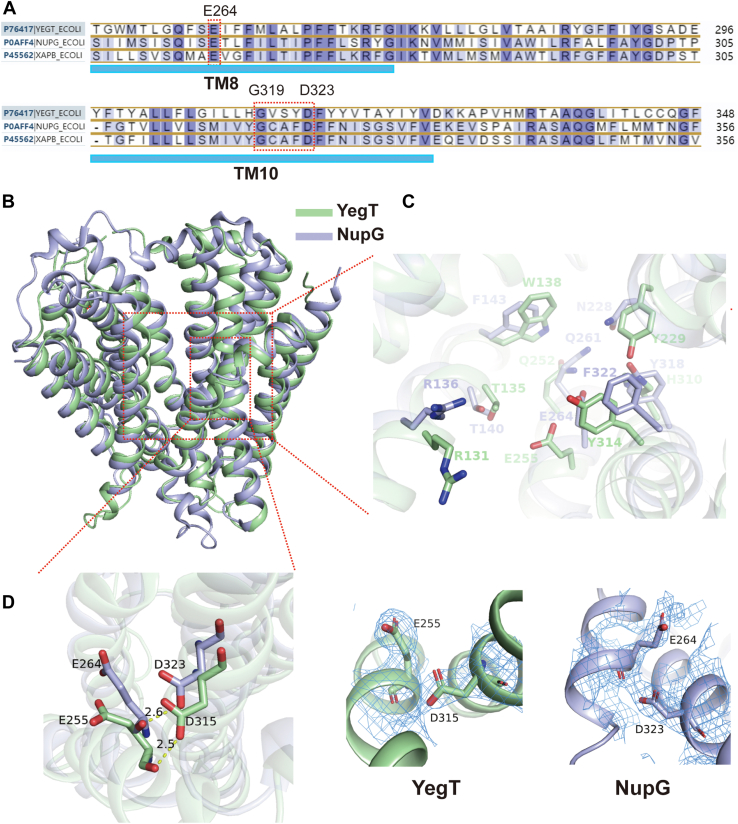 Figure 1
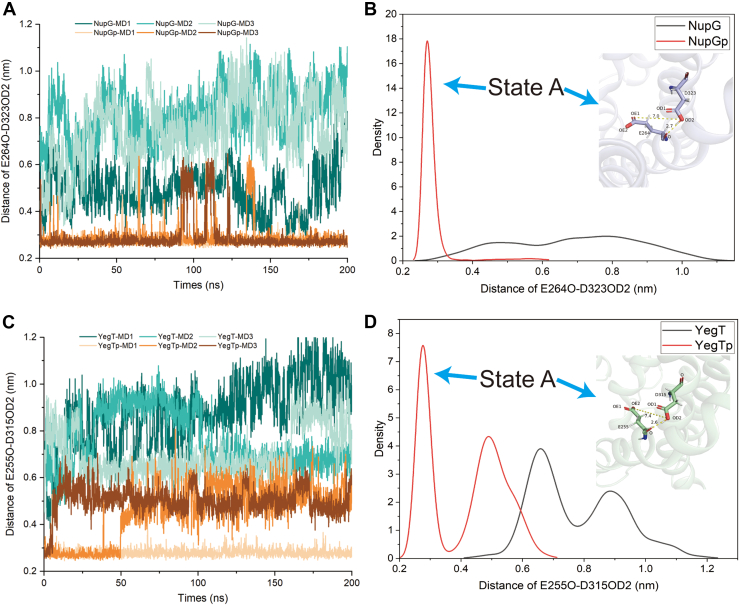 Figure 2
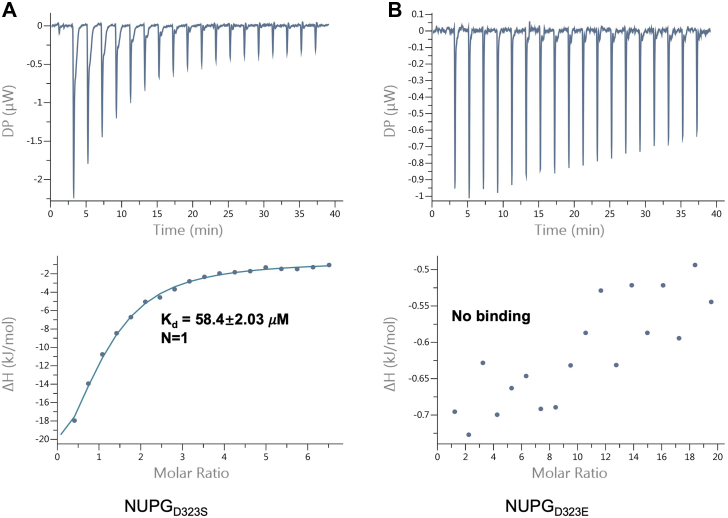 Figure 3
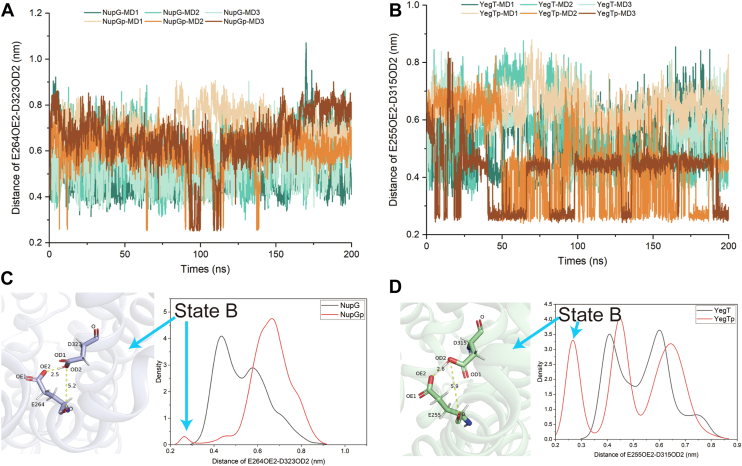 Figure 4
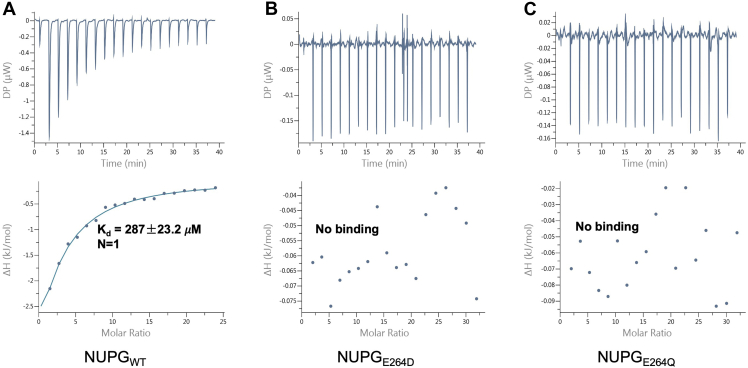 Figure 5
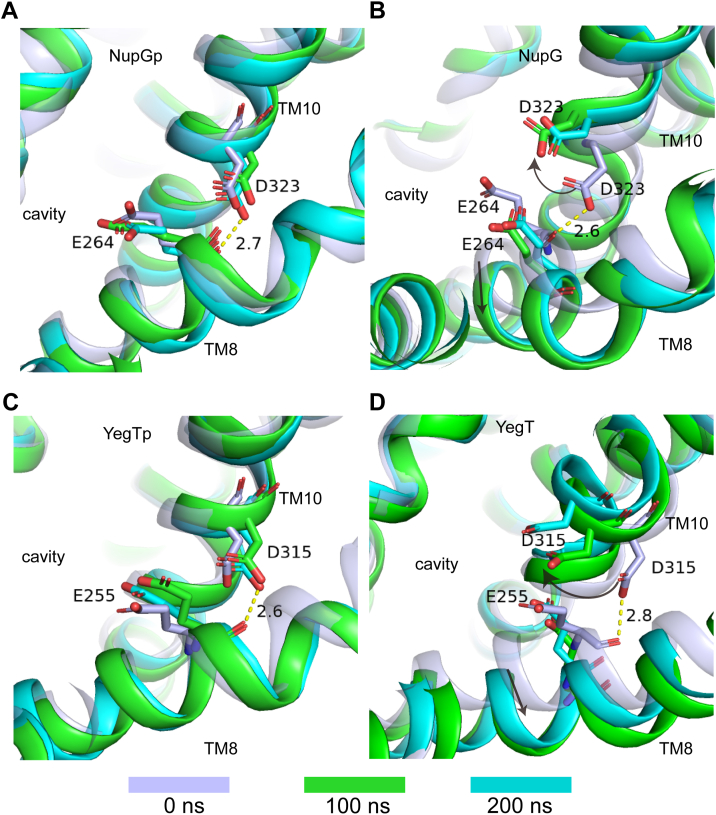 Figure 6
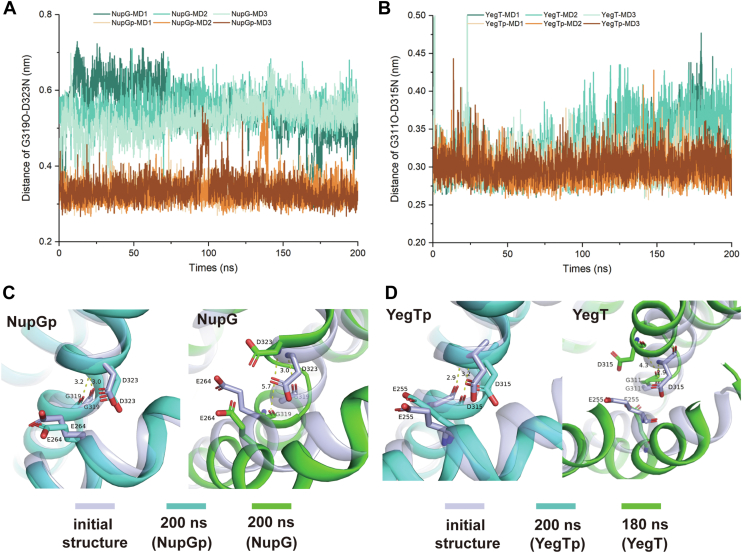 Figure 7
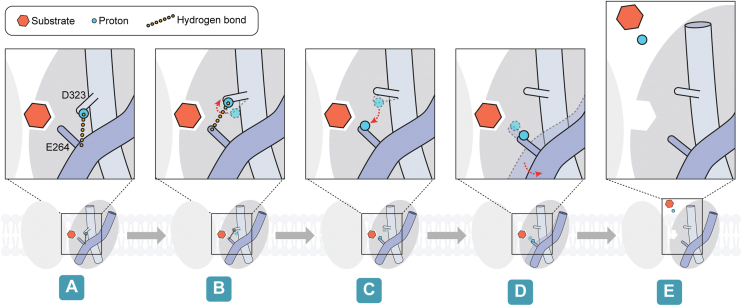 Figure 8
Peer Reviews
No public reviews on file for this paper yet. If you reviewed it on a platform where reviews are public (OpenReview, ICLR, NeurIPS, ICML), you can paste yours below so the community can read it here.
Videos
No videos yet. Explain this paper in a talk, walkthrough, or lecture? Add one.
Taxonomy
TopicsAdenosine and Purinergic Signaling · RNA Interference and Gene Delivery · DNA and Nucleic Acid Chemistry