Analgesia With Epidural Anesthesia in Lower-Leg Necrotizing Fasciitis: A Case Report
Tatsuya Fujihara, Yasuyuki Ochi, Takumi Gobara, Tetsuro Nikai

TL;DR
Epidural anesthesia helped manage pain during debridement for a patient with lower-leg necrotizing fasciitis, improving treatment outcomes.
Contribution
Demonstrates the effectiveness of epidural anesthesia for analgesia in necrotizing fasciitis debridement.
Findings
Epidural anesthesia alleviated pain and enabled effective debridement.
The patient's infection was controlled, leading to recovery.
Pain management improved procedural success in this case.
Abstract
Appropriate methods have not been established despite the necessity of analgesia for debridement in cases of necrotizing fasciitis. A 45-year-old woman was hospitalized for necrotizing fasciitis due to Streptococcus pyogenes. Rapid debridement and antibiotic treatment enabled the patient’s quick discharge from the intensive care unit. However, after discharge, she began experiencing considerable pain in the left lower leg, which hindered adequate debridement, resulting in the persistence of necrotic tissue. Epidural anesthesia was administered to alleviate pain and enable debridement. Epidural anesthesia was effective as analgesia in this case, facilitating infection control through debridement and alleviating procedural pain.
Genes, proteins, chemicals, diseases, species, mutations and cell lines named across the full text — each resolved to its canonical identifier and authoritative record.
Click any figure to enlarge with its caption.
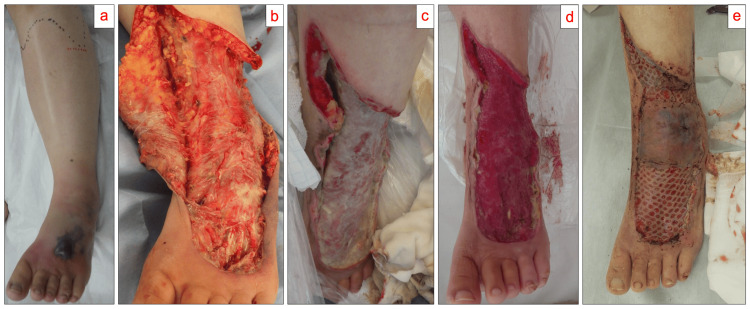 Figure 1
Peer Reviews
No public reviews on file for this paper yet. If you reviewed it on a platform where reviews are public (OpenReview, ICLR, NeurIPS, ICML), you can paste yours below so the community can read it here.
Videos
No videos yet. Explain this paper in a talk, walkthrough, or lecture? Add one.
Taxonomy
TopicsStreptococcal Infections and Treatments · Botulinum Toxin and Related Neurological Disorders · Antimicrobial Resistance in Staphylococcus