Predicting Therapy Outcomes in Patients With Stress-Related Disorders: Protocol for a Predictive Modeling Study
Ludwig Franke Föyen, Victoria Sennerstam, Evelina Kontio, Oskar Flygare, Magnus Boman, Elin Lindsäter

TL;DR
This study aims to predict therapy outcomes for stress-related disorders using traditional and machine learning methods to improve personalized treatment strategies.
Contribution
The study introduces a dual approach combining traditional prediction and machine learning to identify treatment response predictors in stress-related disorders.
Findings
The study will evaluate predictors like age, education, and baseline symptoms for treatment outcomes in stress-related disorders.
Machine learning models are expected to outperform baseline predictions with a balanced accuracy of at least 67%.
Findings may support more personalized and effective mental health treatments for adjustment and exhaustion disorders.
Abstract
While cognitive behavioral therapy has shown efficacy in treating stress-related disorders, such as adjustment disorder and exhaustion disorder, knowledge about factors contributing to treatment response is limited. Improved identification of such factors could enhance assessment procedures and treatment strategies. In addition, evaluating how traditional prediction methods and machine learning can complement each other may help bridge gaps in understanding and predicting treatment response. This study aims to (1) evaluate putative predictors of treatment response in patients with stress-related disorders using traditional prediction methods and (2) model treatment outcomes using a machine learning approach. This design combines the interpretability of traditional methods with the ability of machine learning to identify complex patterns. We will analyze data from a randomized…
Genes, proteins, chemicals, diseases, species, mutations and cell lines named across the full text — each resolved to its canonical identifier and authoritative record.
Click any figure to enlarge with its caption.
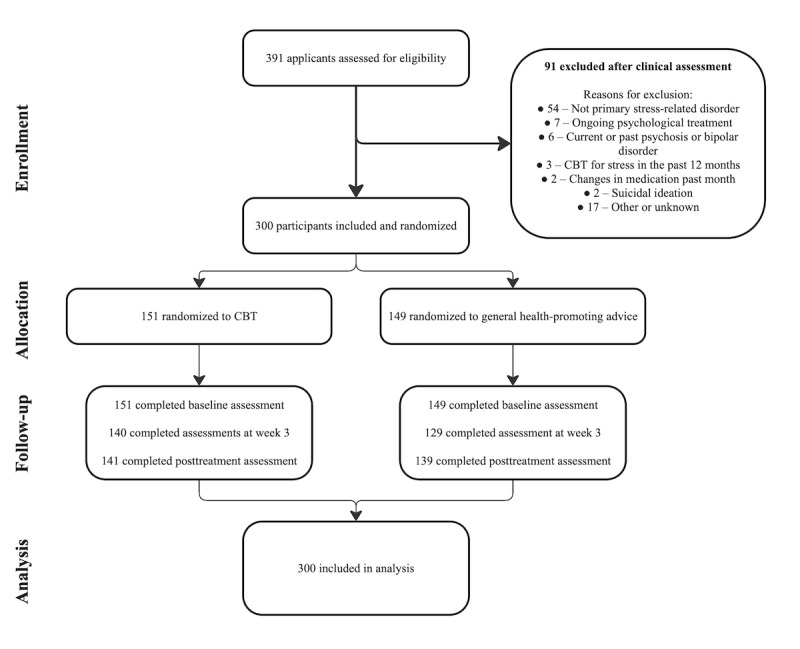 Figure 1
 Figure 2
 Figure 3
 Figure 4
Peer Reviews
No public reviews on file for this paper yet. If you reviewed it on a platform where reviews are public (OpenReview, ICLR, NeurIPS, ICML), you can paste yours below so the community can read it here.
Videos
No videos yet. Explain this paper in a talk, walkthrough, or lecture? Add one.
Taxonomy
TopicsMental Health Research Topics · Treatment of Major Depression · Mental Health Treatment and Access