Mitochondrial complex I deficiency in a 4-year-old boy due to compound heterozygous NDUFV1 mutation: a case report of a new pathogenic variant
Salim Haddad, Elie Salloum, Abdullah Silan, Gazel kalecioğlu, Maria Abdulnour, Sultaneh Haddad, Diana Alasmar, Mahmoud Alayash, Ahmed Noman Ghaleb

TL;DR
A 4-year-old boy with mitochondrial complex I deficiency had a new harmful mutation in the NDUFV1 gene, causing facial paralysis and balance issues.
Contribution
The paper reports a novel pathogenic variant in the NDUFV1 gene associated with mitochondrial complex I deficiency.
Findings
Compound heterozygous NDUFV1 mutations c.640G < A and c.248C < T were identified in a patient with mitochondrial complex I deficiency.
The variant c.248C > T in NDUFV1 was found to have a previously unknown pathogenic effect.
The patient exhibited left-sided facial paralysis and balance impairment linked to the genetic mutations.
Abstract
Mutations in the NDUFV1 gene are associated with mitochondrial complex I deficiency and have been linked to various clinical conditions such as Leigh syndrome, severe infantile lactic acidosis, newborn cardiomyopathy, progressive leukoencephalopathy, and other encephalomyopathies. Genetic alterations revealed mitochondrial complex 1 deficiency, nuclear type 4 |AR: two compound heterozygous missense mutations in the NDUFV1 gene, c.640G < A (p.E214K) chr11:67377981 (Exon 1) and c.248C < T (p.S83L) chr11:67376115 (Exon 3) gene. Our case identifies a previously unknown pathogenic effect of the variant ‘c.248C > T’ in the NDUFV1 gene, observed in a 4-year-old boy with left-sided facial paralysis and balance impairment. While this discovery is significant, further exploration of NDUFV1 gene variants is essential for a comprehensive understanding and effective treatment strategies.
Genes, proteins, chemicals, diseases, species, mutations and cell lines named across the full text — each resolved to its canonical identifier and authoritative record.
Click any figure to enlarge with its caption.
 Figure 1
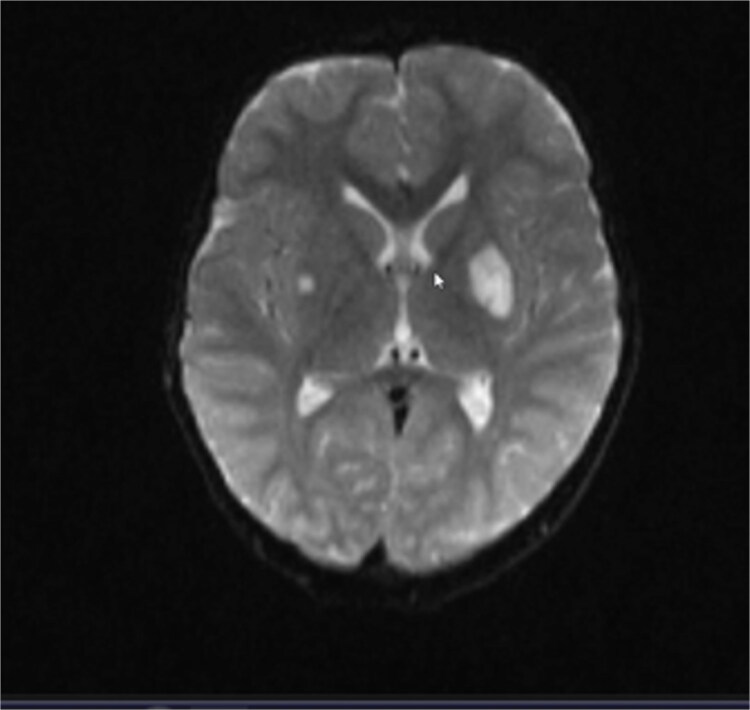 Figure 2
Peer Reviews
No public reviews on file for this paper yet. If you reviewed it on a platform where reviews are public (OpenReview, ICLR, NeurIPS, ICML), you can paste yours below so the community can read it here.
Videos
No videos yet. Explain this paper in a talk, walkthrough, or lecture? Add one.
Taxonomy
TopicsMitochondrial Function and Pathology · ATP Synthase and ATPases Research · Metabolism and Genetic Disorders