Clinical and molecular overlap between nucleotide excision repair (NER) disorders and DYRK1A haploinsufficiency syndrome
Nicolas Le May, Jérémie Courraud, Imène Boujelbène, Cathy Obringer, Tomoo Ogi, Alan R. Lehmann, Fanny Laffargue, Daphné Lehalle, Seiji Mizuno, Shehla Mohammed, Clothilde Ormières, Marjolaine Willems, Vincent Laugel, Nadège Calmels

TL;DR
This study shows that DYRK1A haploinsufficiency syndrome can mimic NER disorders like Cockayne syndrome, but has distinct features and molecular differences.
Contribution
The study identifies DYRK1A as a clinically and molecularly distinct condition that overlaps with NER disorders but lacks their DNA repair defects.
Findings
DYRK1A syndrome shares symptoms with Cockayne syndrome, such as intellectual disability and microcephaly.
DYRK1A patient-derived cells do not show NER defects or the transcriptomic signature of Cockayne syndrome.
Three novel DYRK1A variants were identified and confirmed to be pathogenic.
Abstract
Nucleotide excision repair (NER) disorders are genetic conditions caused by defects in the pathway responsible for repairing DNA lesions due to UV radiation. These defects lead to a variety of heterogeneous disorders, including Cockayne syndrome (CS) and trichothiodystrophy (TTD). In this study, we report 11 patients initially suspected of having CS or TTD who were ultimately diagnosed with DYRK1A haploinsufficiency syndrome using high-throughput sequencing. Comparing clinical presentations, we observed that DYRK1A symptoms overlapped with CS, with shared features such as intellectual disability and microcephaly, systematically present in both disorders and other common symptoms including feeding difficulties, abnormal brain imaging, ataxic gait, hypertonia, and deep-set eyes. However, distinctive features of DYRK1A syndrome, such as severely impaired language, febrile seizures, and…
Genes, proteins, chemicals, diseases, species, mutations and cell lines named across the full text — each resolved to its canonical identifier and authoritative record.
Click any figure to enlarge with its caption.
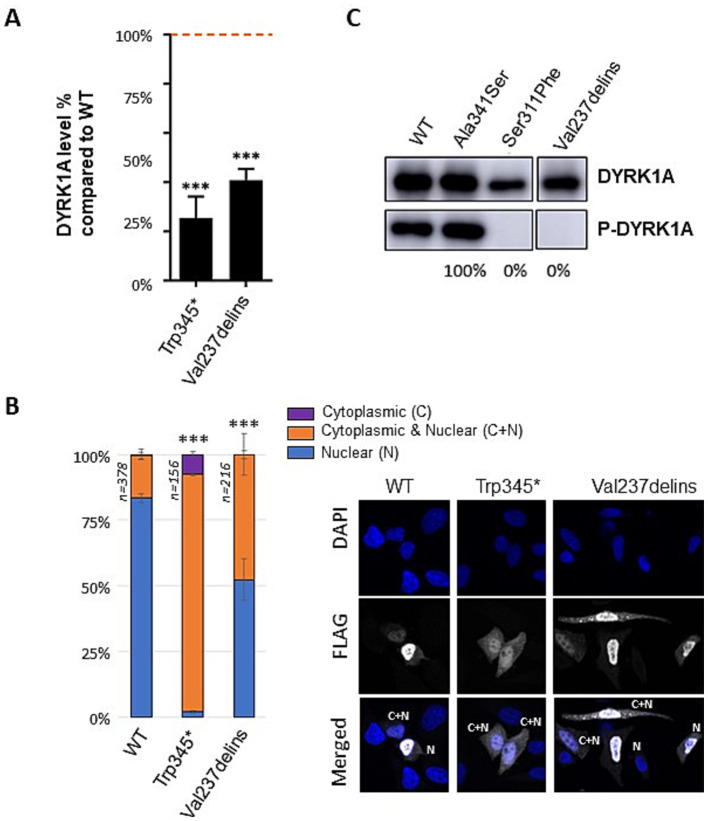 Figure 1
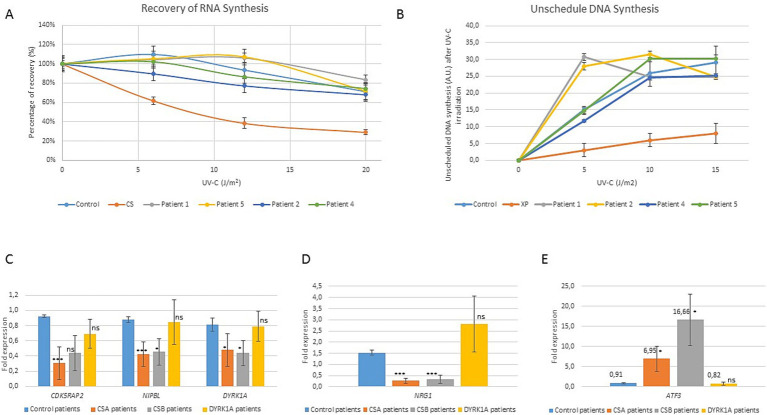 Figure 2
Peer Reviews
No public reviews on file for this paper yet. If you reviewed it on a platform where reviews are public (OpenReview, ICLR, NeurIPS, ICML), you can paste yours below so the community can read it here.
Videos
No videos yet. Explain this paper in a talk, walkthrough, or lecture? Add one.
Taxonomy
TopicsGenetics and Neurodevelopmental Disorders · Genomic variations and chromosomal abnormalities · Down syndrome and intellectual disability research