The efficacy of ophiopogonanone B in treating the cough in mice infected with Mycoplasma pneumoniae
Nan-Nan Liu, Bai-Hui Guo, Lei Wang, Xiao-Xi Wang, Xin Wang, Yan-Li Meng, Gui-Xin Tang, Wei-Ming Wang

TL;DR
This study shows that ophiopogonanone B, a compound from a traditional Chinese medicine, reduces cough in mice infected with Mycoplasma pneumoniae by lowering specific protein and gene expressions.
Contribution
The study demonstrates the novel efficacy of ophiopogonanone B in treating cough via TRPA1, SP, and CGRP modulation in MP-infected mice.
Findings
Ophiopogonanone B showed strong binding affinity to TRPA1 through molecular docking.
High and medium doses of ophiopogonanone B significantly reduced TRPA1, SP, and CGRP expression in lung tissue.
Lung tissue structure in treated mice resembled healthy controls, indicating reduced inflammation.
Abstract
Ophiopogonanone B is a potent component of Qinbai Qingfei-concentrated pills (Qinbai), a new traditional Chinese medicine developed by our hospital for the treatment of Mycoplasma pneumoniae pneumonia in children. We aim to study how ophiopogonanone B influences the expression of transient receptor potential anchor protein 1 (TRPA1), substance P (SP), and calcitonin gene-related peptide (CGRP) to treat coughing in MP-infected mice. Ultra-performance liquid chromatography coupled with quadrupole time-of-flight mass spectrometry (UPLC-Q-TOF-MS) was used to detect ophiopogonanone B. Molecular docking of ophiopogonanone B with TRPA1 was performed using Autodock Vina 1.1.2, and subsequent visualization and analysis of docking outcomes were facilitated using Pymol 2.1 and Discovery Studio. For the evaluation of the pathological structure and morphology, lung tissue sections from mice were…
Genes, proteins, chemicals, diseases, species, mutations and cell lines named across the full text — each resolved to its canonical identifier and authoritative record.
Click any figure to enlarge with its caption.
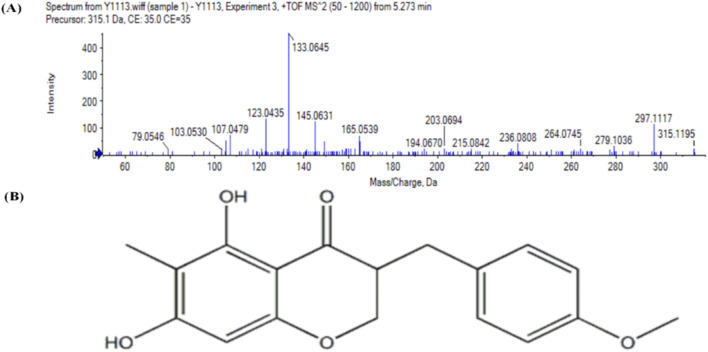 Figure 1
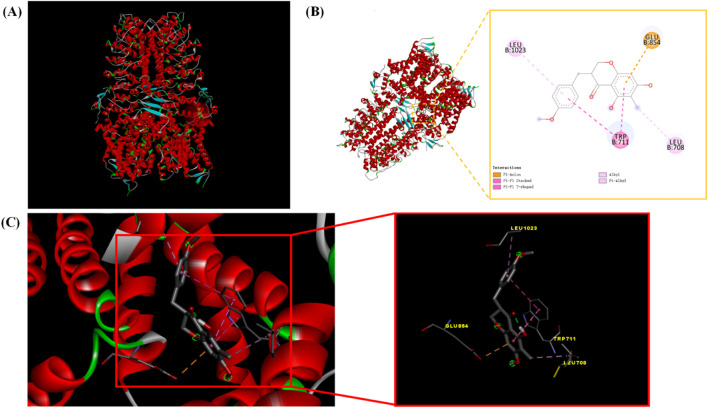 Figure 2
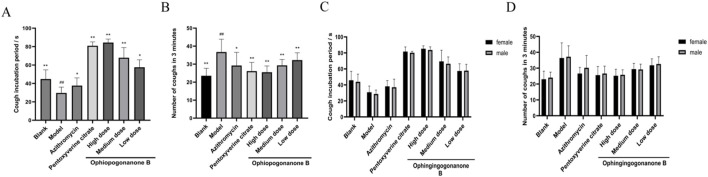 Figure 3
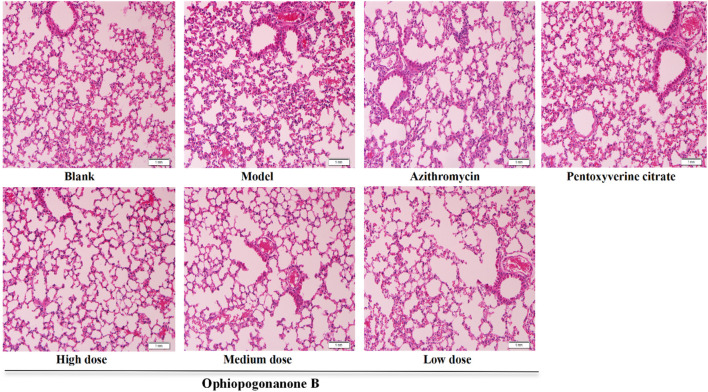 Figure 4
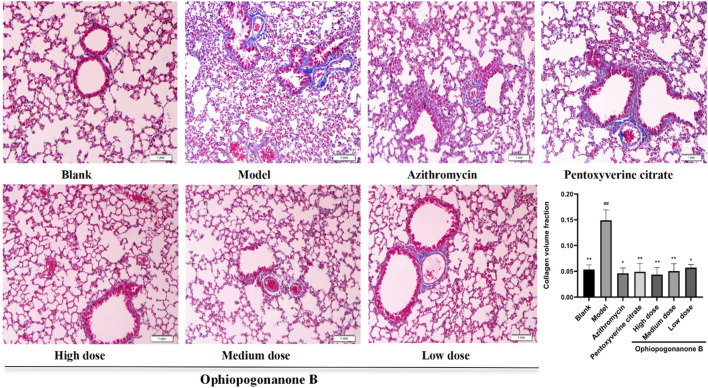 Figure 5
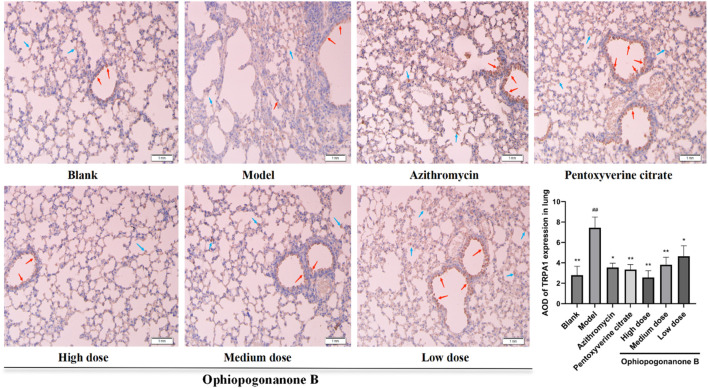 Figure 6
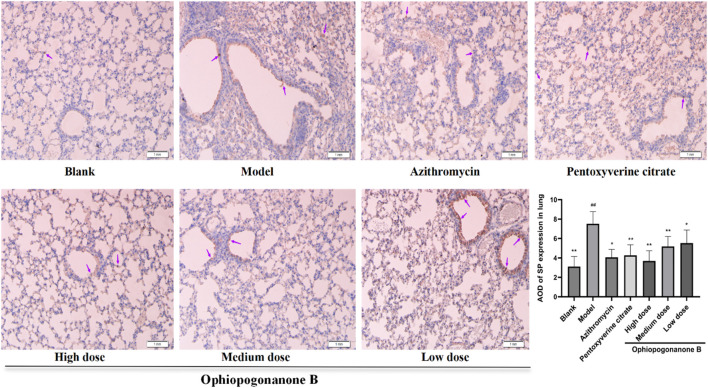 Figure 7
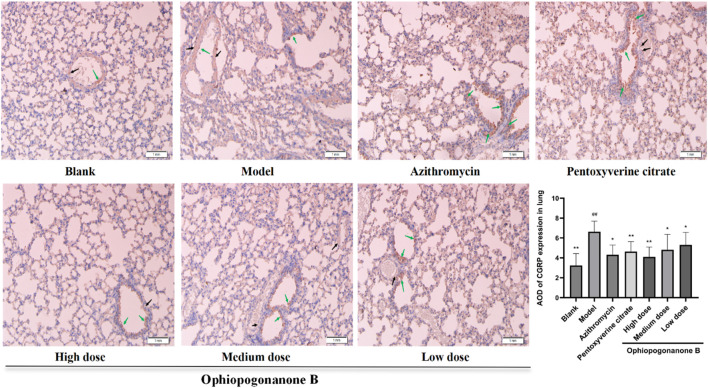 Figure 8
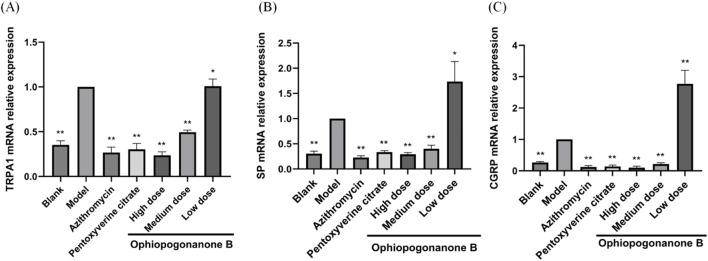 Figure 9
Peer Reviews
No public reviews on file for this paper yet. If you reviewed it on a platform where reviews are public (OpenReview, ICLR, NeurIPS, ICML), you can paste yours below so the community can read it here.
Videos
No videos yet. Explain this paper in a talk, walkthrough, or lecture? Add one.
Taxonomy
TopicsIon Channels and Receptors · Respiratory and Cough-Related Research · Toxin Mechanisms and Immunotoxins