Effect of physical exercise on white matter microstructure in chemotherapy-treated breast cancer patients: a randomized controlled trial (PAM study)
Emmie W. Koevoets, Sanne B. Schagen, Anne M. May, Mirjam I. Geerlings, Lenja Witlox, Elsken van der Wall, Martijn M. Stuiver, Gabe S. Sonke, Miranda J. Velthuis, Jan J. Jobsen, Job van der Palen, Michiel B. de Ruiter, Evelyn M. Monninkhof

TL;DR
A 6-month exercise program did not improve brain white matter in breast cancer patients who had chemotherapy, but had unexpected effects in those with high fatigue.
Contribution
The study is the first to investigate exercise effects on white matter in chemotherapy-treated breast cancer patients using DTI and TBSS.
Findings
Exercise did not significantly affect whole brain or voxel-wise fractional anisotropy or mean diffusivity.
Highly fatigued patients showed significant clusters of decreased FA in specific brain regions after the intervention.
The observed FA decrease in fatigued patients was not predictive of cognitive changes.
Abstract
Physical exercise is a promising intervention to improve brain white matter integrity. In the PAM study, exercise intervention effects on white matter integrity were investigated in breast cancer patients. Chemotherapy-treated breast cancer patients with cognitive problems were randomized 2–4 years post-diagnosis to an exercise (n = 91) or control group (n = 90). The 6-month exercise intervention consisted of four hours/week of aerobic and resistance training. White matter integrity was measured at baseline and 6-month follow-up with fractional anisotropy (FA) and mean diffusivity (MD), which were derived from magnetic resonance diffusion tensor imaging (DTI). Both DTI metrics were analyzed whole brain and voxel-wise with a modified tract based spatial statistics (TBSS) procedure. Other measurements included cognition and physical fitness. Exercise effects were analyzed with multiple…
Genes, proteins, chemicals, diseases, species, mutations and cell lines named across the full text — each resolved to its canonical identifier and authoritative record.
Click any figure to enlarge with its caption.
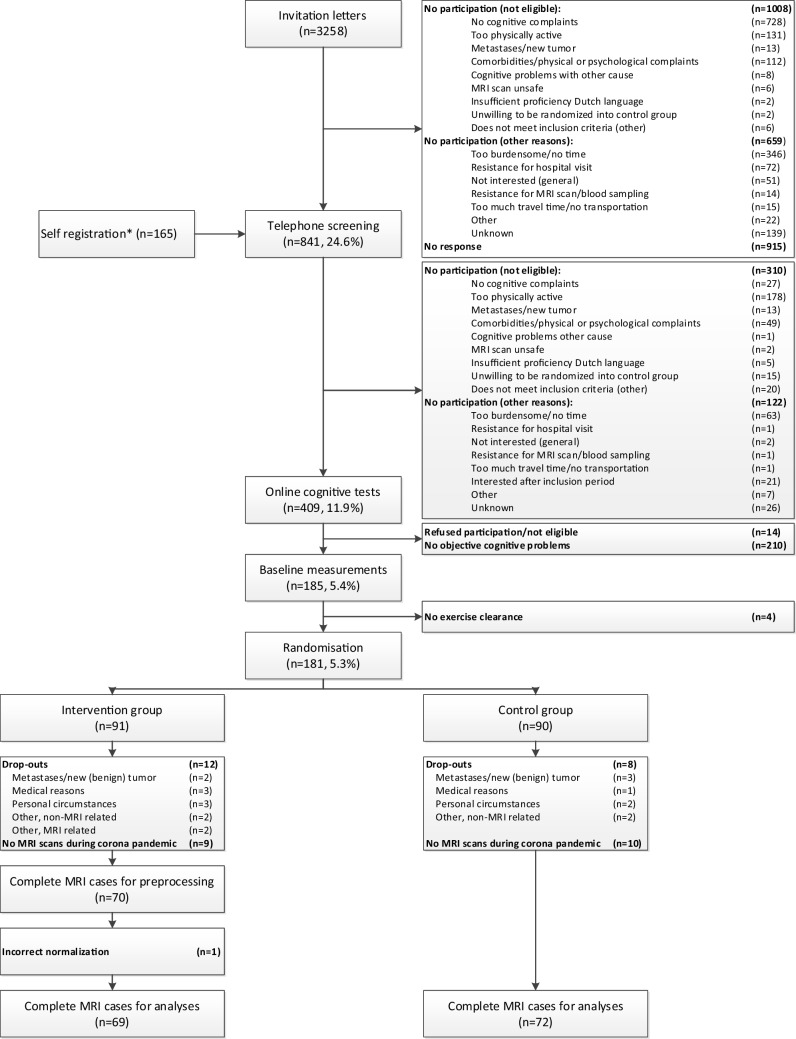 Figure 1
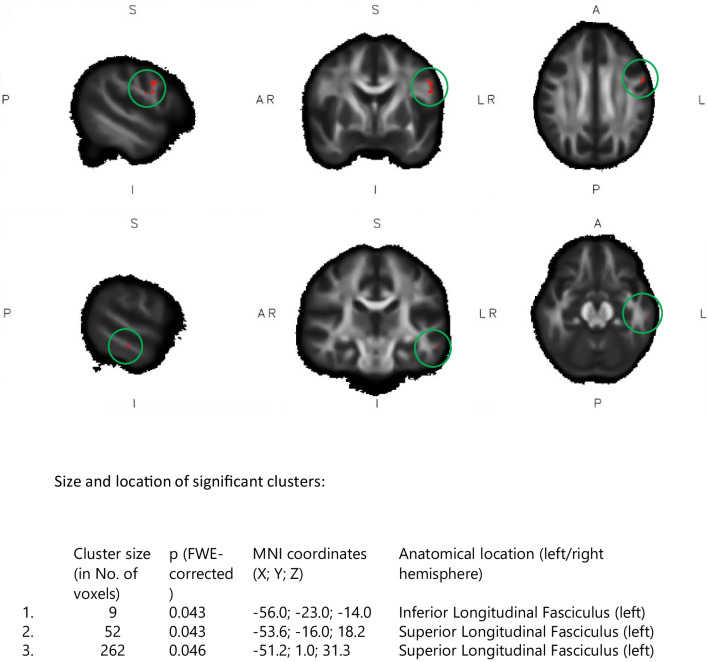 Figure 2
Peer Reviews
No public reviews on file for this paper yet. If you reviewed it on a platform where reviews are public (OpenReview, ICLR, NeurIPS, ICML), you can paste yours below so the community can read it here.
Videos
No videos yet. Explain this paper in a talk, walkthrough, or lecture? Add one.
Taxonomy
TopicsCancer-related cognitive impairment studies · Advanced Neuroimaging Techniques and Applications · Glioma Diagnosis and Treatment