Feasibility study on intracranial pressure and prognosis of patients with moderate and severe craniocerebral injury using the Rotterdam computed tomography score: an observational study
Juan Ni, Wei Zhao, Zhifeng Wang, Xuejian Wang

TL;DR
This study shows that the Rotterdam CT score can help assess coma severity and predict outcomes in patients with moderate to severe head injuries.
Contribution
The study demonstrates the Rotterdam CT score's feasibility and prognostic value in craniocerebral injury patients.
Findings
The Rotterdam CT score was significantly lower in patients with moderate coma compared to severe coma.
Patients with good prognosis had significantly lower Rotterdam CT scores than those with poor prognosis.
The Rotterdam CT score shows potential for guiding clinical applications in head injury cases.
Abstract
The Rotterdam computed tomography (CT) score was used to evaluate the degree of coma and the prognosis of patients with moderate and severe craniocerebral injury, to analyze its feasibility, and to assess its value in guiding further clinical applications. A total of 120 patients with moderate-to-severe craniocerebral injuries were selected as study participants, all of whom were treated at the Department of Neurosurgery of the Second Affiliated Hospital of Nantong University. All 120 patients underwent craniocerebral CT scans. The Glasgow Coma Scale was used to evaluate the degree of coma, and the Glasgow Outcome Scale was used to evaluate prognosis. The Rotterdam CT scores of patients with different degrees of coma and prognoses were compared. The Rotterdam CT score was significantly lower in patients with moderate coma than in those with severe coma (p < 0.05). The Rotterdam CT…
Genes, proteins, chemicals, diseases, species, mutations and cell lines named across the full text — each resolved to its canonical identifier and authoritative record.
Click any figure to enlarge with its caption.
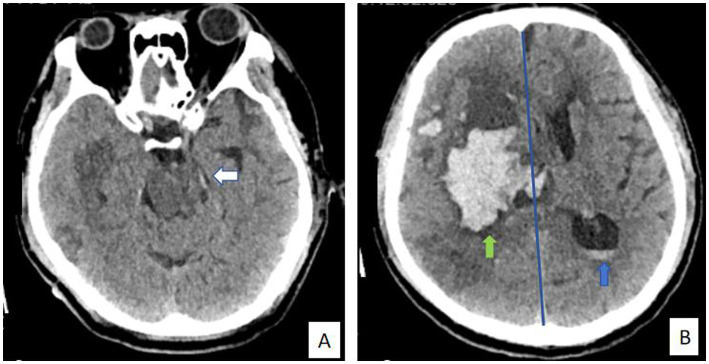 Figure 1
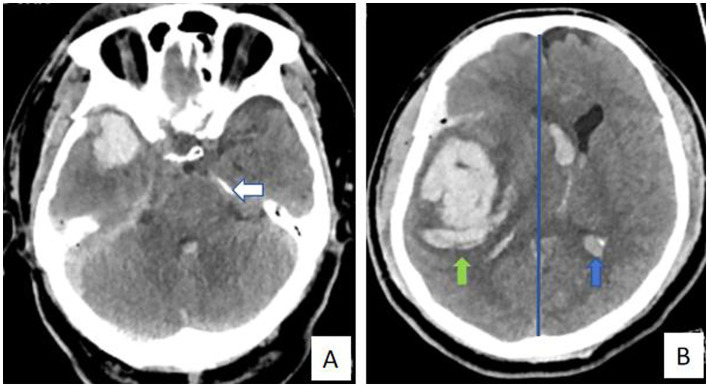 Figure 2
Peer Reviews
No public reviews on file for this paper yet. If you reviewed it on a platform where reviews are public (OpenReview, ICLR, NeurIPS, ICML), you can paste yours below so the community can read it here.
Videos
No videos yet. Explain this paper in a talk, walkthrough, or lecture? Add one.
Taxonomy
TopicsTraumatic Brain Injury and Neurovascular Disturbances · Cerebrospinal fluid and hydrocephalus · Spinal Fractures and Fixation Techniques