Integrating WHO’s digital adaptation kit for antenatal care into BornFyne-PNMS: insights from Cameroon
Miriam Nkangu, Brice Tangang, Arthur Pessa, Donald Weledji, Pamela Obegu, Mwenya Kasonde, Ngo V. Ngo, Franck Wanda, Ronald M. Gobina, Odette Kibu, Veronica Shiroya, Denis Foretia, Choolwe Jacobs, Armel Tassegning, Arone Wondwossen Fantaye, Fobellah Nkengfac

TL;DR
This paper describes how WHO's digital adaptation kit for antenatal care was integrated into a digital health system in Cameroon to improve maternal and child health.
Contribution
The paper presents a methodology for integrating WHO's ANC DAK into the BornFyne-PNMS system using participatory action research in Cameroon.
Findings
Up to 40% of DAK dictionary data content existed in BornFyne-PNMS version 1.0.
Stakeholder meetings identified the need to reorganize and align ANC service elements with DAK standards.
The DAK is shown to be a useful tool for guiding digital platform integration of ANC guidelines.
Abstract
Digital health innovations represent unique opportunities to address maternal, newborn, and child health challenges in Sub-Saharan Africa. In 2021, the World Health Organization (WHO) launched the Digital Adaptation Kits (DAKs) for antenatal care (ANC) as part of its Standards-Based, Machine-Readable, Adaptive, Requirements-Based, and Testable (SMART) guidelines approach. DAKs are operational and software-neutral mechanisms that convert WHO guidelines into standardized formats that can be easily integrated into digital systems by various countries. This article outlines the methodology for updating and integrating WHO DAK content into the BornFyne-prenatal management system (PNMS) version 2.0. This study, which employs a participatory action research approach, is part of a larger research study for the BornFyne-PNMS project. A review of the ANC DAK operational document and data…
Genes, proteins, chemicals, diseases, species, mutations and cell lines named across the full text — each resolved to its canonical identifier and authoritative record.
Click any figure to enlarge with its caption.
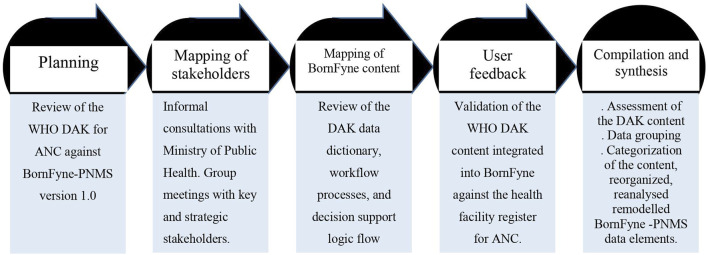 Figure 1
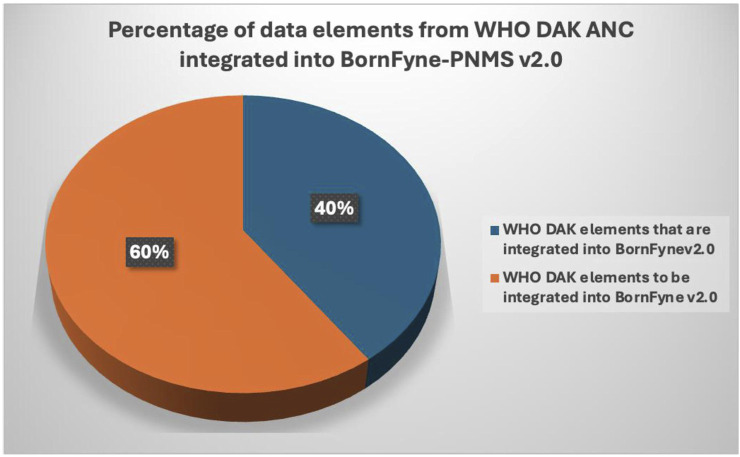 Figure 2
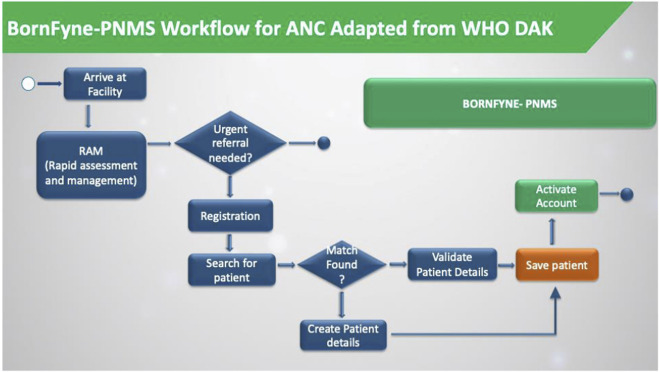 Figure 3
Peer Reviews
No public reviews on file for this paper yet. If you reviewed it on a platform where reviews are public (OpenReview, ICLR, NeurIPS, ICML), you can paste yours below so the community can read it here.
Videos
No videos yet. Explain this paper in a talk, walkthrough, or lecture? Add one.
Taxonomy
TopicsMobile Health and mHealth Applications · Electronic Health Records Systems · Data Quality and Management