Functional and vascular neuroimaging in maritime pilots with long-term sleep disruption
Lara J. Mentink, Matthias J. P. van Osch, Leanne J. Bakker, Marcel G. M. Olde Rikkert, Christian F. Beckmann, Jurgen A. H. R. Claassen, Koen V. Haak

TL;DR
Maritime pilots with long-term sleep disruption do not show early signs of Alzheimer's disease in brain scans compared to healthy controls.
Contribution
The study investigates neuroimaging biomarkers in maritime pilots with long-term sleep disruption to assess Alzheimer's risk, finding no preclinical signs.
Findings
Maritime pilots with long-term sleep disruption showed no altered co-activation in key brain networks.
No increased vascular damage or altered cerebral blood flow patterns were detected in sleep-disrupted pilots.
Findings suggest long-term sleep disruption may not strongly link to Alzheimer's disease as previously implied.
Abstract
The mechanism underlying the possible causal association between long-term sleep disruption and Alzheimer’s disease remains unclear Musiek et al. 2015. A hypothesised pathway through increased brain amyloid load was not confirmed in previous work in our cohort of maritime pilots with long-term work-related sleep disruption Thomas et al. Alzheimer’s Res Ther 2020;12:101. Here, using functional MRI, T2-FLAIR, and arterial spin labeling MRI scans, we explored alternative neuroimaging biomarkers related to both sleep disruption and AD: resting-state network co-activation and between-network connectivity of the default mode network (DMN), salience network (SAL) and frontoparietal network (FPN), vascular damage and cerebral blood flow (CBF). We acquired data of 16 maritime pilots (56 ± 2.3 years old) with work-related long-term sleep disruption (23 ± 4.8 working years) and 16 healthy controls…
Genes, proteins, chemicals, diseases, species, mutations and cell lines named across the full text — each resolved to its canonical identifier and authoritative record.
Click any figure to enlarge with its caption.
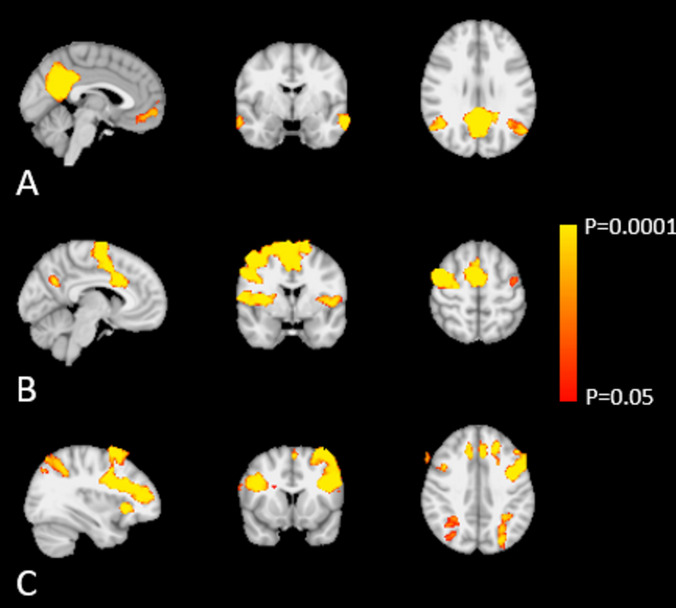 Figure 1
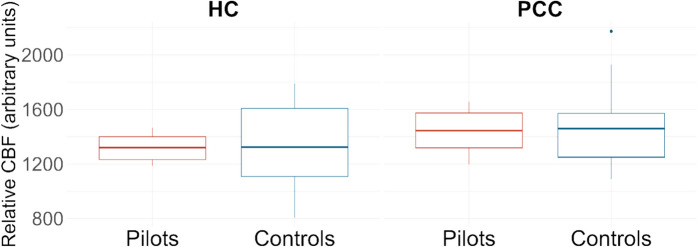 Figure 2
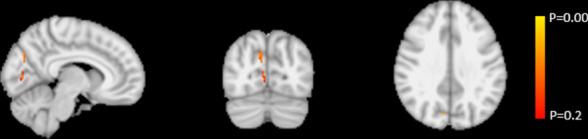 Figure 3
Peer Reviews
No public reviews on file for this paper yet. If you reviewed it on a platform where reviews are public (OpenReview, ICLR, NeurIPS, ICML), you can paste yours below so the community can read it here.
Videos
No videos yet. Explain this paper in a talk, walkthrough, or lecture? Add one.
Taxonomy
TopicsEEG and Brain-Computer Interfaces · Functional Brain Connectivity Studies · Heart Rate Variability and Autonomic Control