Strong and weak environmental perturbations cause contrasting restructure of ant transportation networks
Imre Sándor Piross, Valentin Lecheval, Scott Powell, Matina C. Donaldson-Matasci, Elva J. H. Robinson

TL;DR
This study shows how ant transportation networks respond differently to strong versus weak environmental disruptions, affecting their efficiency and resilience.
Contribution
The research introduces a dynamic simulation model validated with 10 years of empirical data to study how ant transportation networks restructure under environmental perturbations.
Findings
Strong targeted perturbations persistently decrease network efficiency, unlike random or weak ones.
Strong perturbations reduce network robustness and hinder recovery from future disruptions.
Transportation networks relying on key resources struggle to recover quickly after their loss.
Abstract
Dynamic transportation networks are embedded in all levels of biological organization. Ever-growing anthropogenic disturbances and an increasingly variable climate highlight the importance of understanding how these networks restructure under environmental perturbations. Polydomous wood ants provide a convenient model system to study the resilience of self-organizing multi-source, multi-sink transportation networks. We used 10 years of longitudinal empirical data on both unperturbed and experimentally manipulated colony networks to develop and validate a comprehensive dynamic simulation model to study network restructuring after resource removal. We performed simulation experiments to study the effects of excluding food sources with varying importance, either temporarily or permanently, imitating pulse and press perturbations of the networks. We found that removing heavily used…
Genes, proteins, chemicals, diseases, species, mutations and cell lines named across the full text — each resolved to its canonical identifier and authoritative record.
Click any figure to enlarge with its caption.
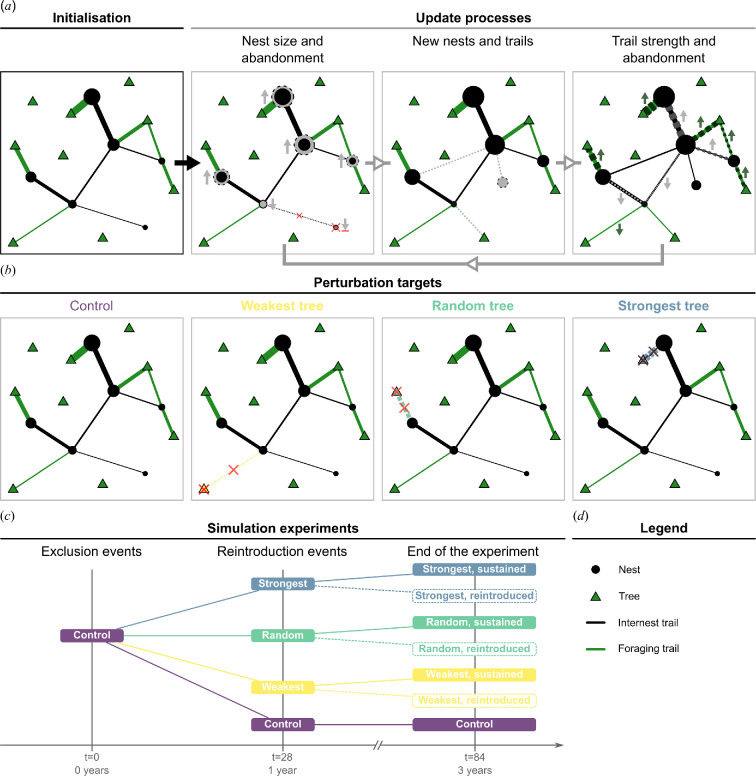 Figure 1
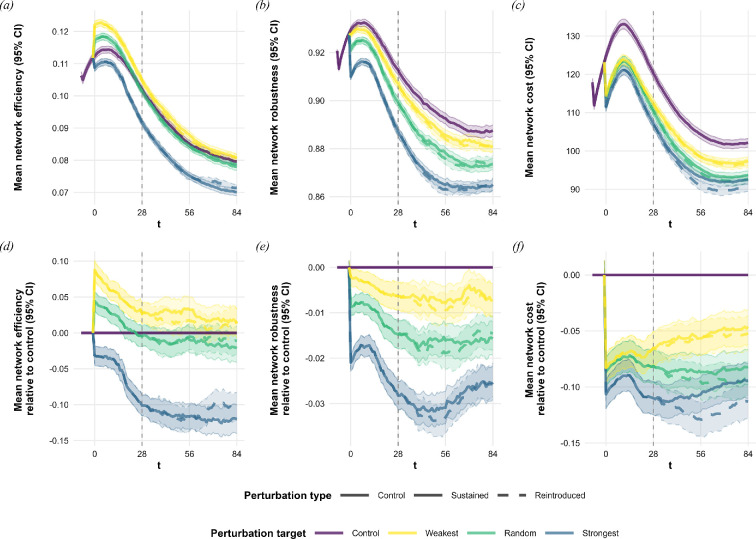 Figure 2
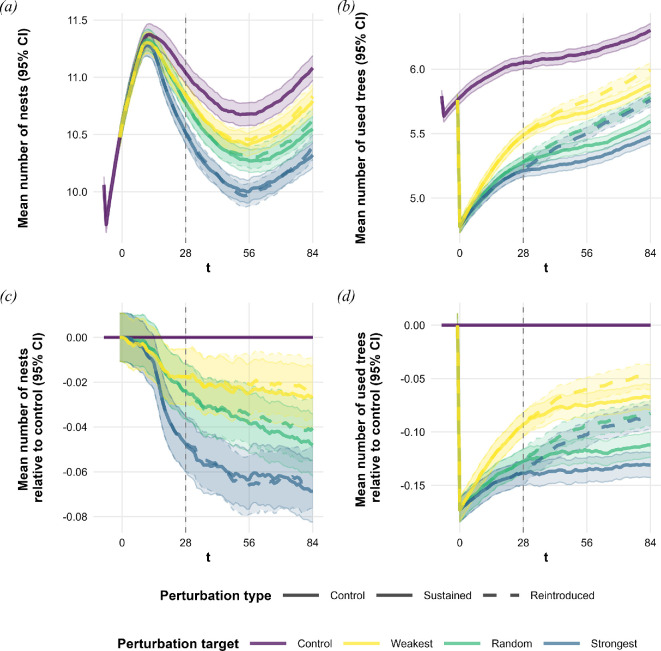 Figure 3
Peer Reviews
No public reviews on file for this paper yet. If you reviewed it on a platform where reviews are public (OpenReview, ICLR, NeurIPS, ICML), you can paste yours below so the community can read it here.
Videos
No videos yet. Explain this paper in a talk, walkthrough, or lecture? Add one.
Taxonomy
TopicsInsect and Arachnid Ecology and Behavior · Plant and animal studies · Slime Mold and Myxomycetes Research