A framework for analyzing EEG data using high-dimensional tests
Qiuyan Zhang, Wenjing Xiang, Bo Yang, Hu Yang

TL;DR
This paper introduces a statistical framework for analyzing EEG data that handles high dimensionality and temporal dependencies, improving the understanding of brain function.
Contribution
The study introduces RIHT and MPDe, novel statistical methods for EEG data analysis that relax distributional assumptions and handle temporal dependencies.
Findings
RIHT demonstrates high power in detecting changes in EEG mean vectors under unknown distributions.
MPDe effectively estimates and tests precision matrices in time-dependent EEG data.
Key EEG channels like PO3, PO4, and FT7 are identified as significant for human cognitive ability.
Abstract
The objective of EEG data analysis is to extract meaningful insights, enhancing our understanding of brain function. However, the high dimensionality and temporal dependency of EEG data present significant challenges to the effective application of statistical methods. This study systematically addresses these challenges by introducing a high-dimensional statistical framework that includes testing changes in the mean vector and precision matrix, as well as conducting relevant analyses. Specifically, the Ridgelized Hotelling’s T2 test (RIHT) is introduced to test changes in the mean vector of EEG data over time while relaxing traditional distributional and moment assumptions. Secondly, a multiple population de-biased estimation and testing method (MPDe) is developed to estimate and simultaneously test differences in the precision matrix before and after stimulation. This approach extends…
Genes, proteins, chemicals, diseases, species, mutations and cell lines named across the full text — each resolved to its canonical identifier and authoritative record.
Click any figure to enlarge with its caption.
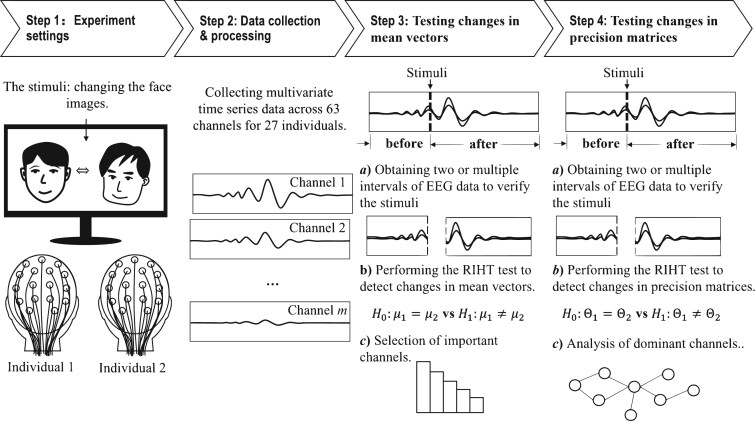 Figure 1
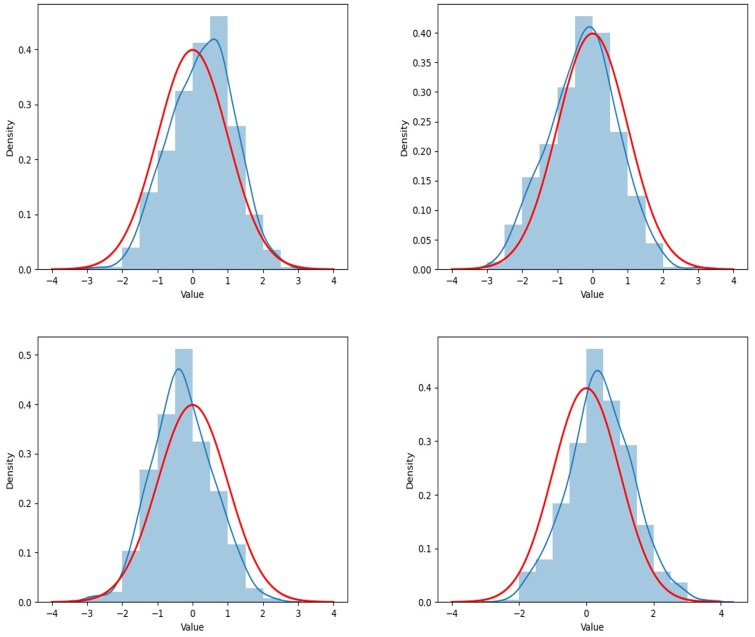 Figure 2
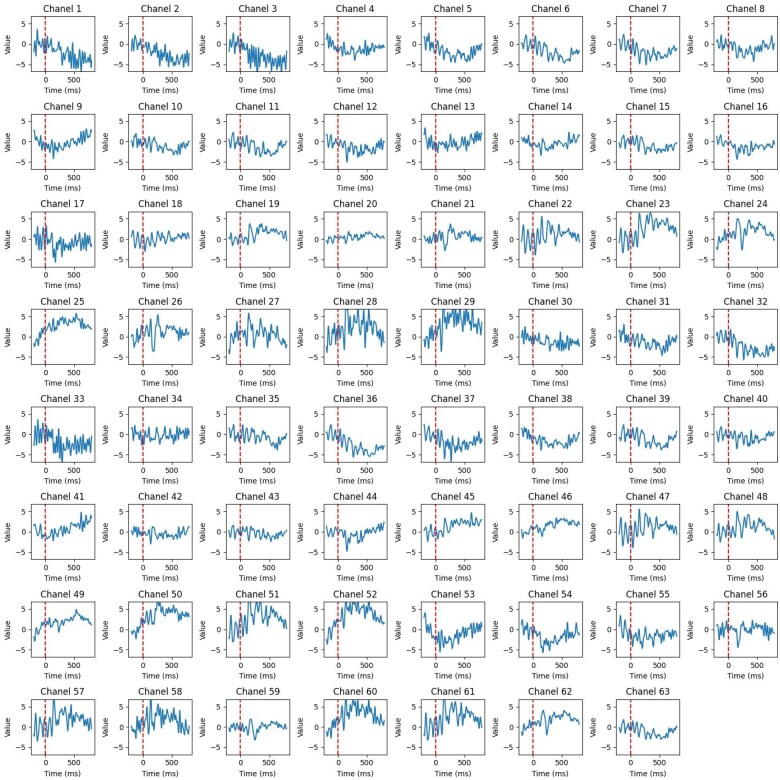 Figure 3
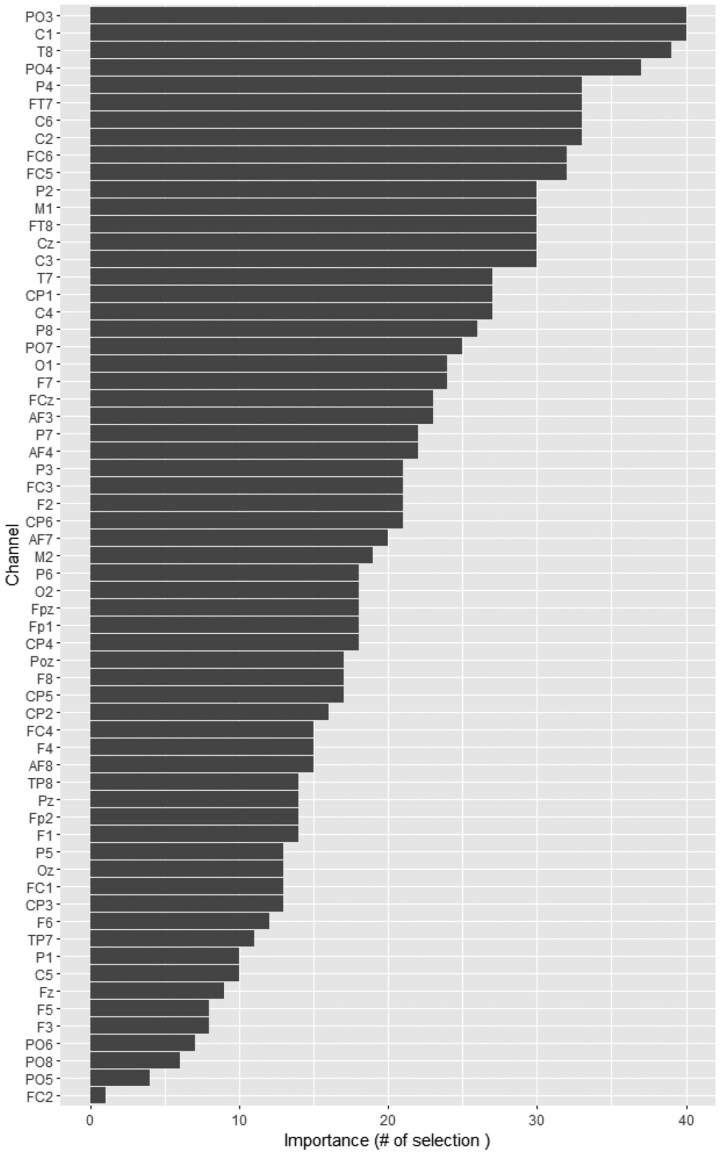 Figure 4
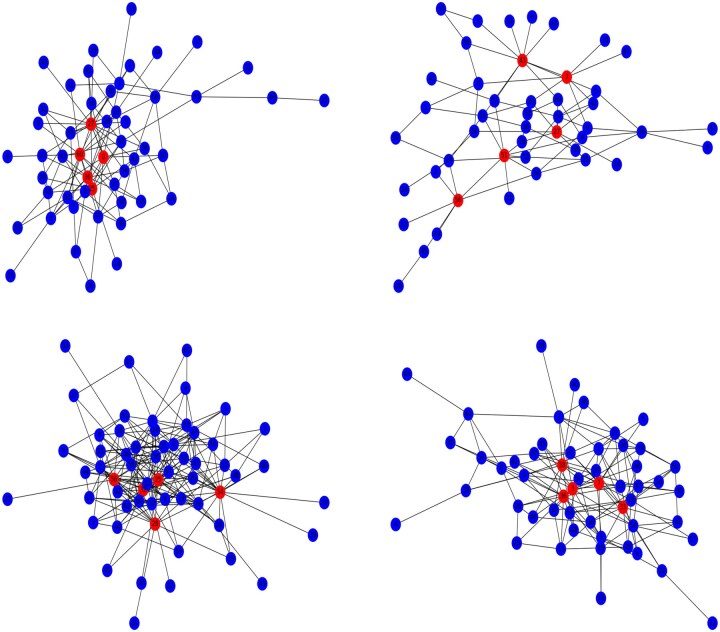 Figure 5
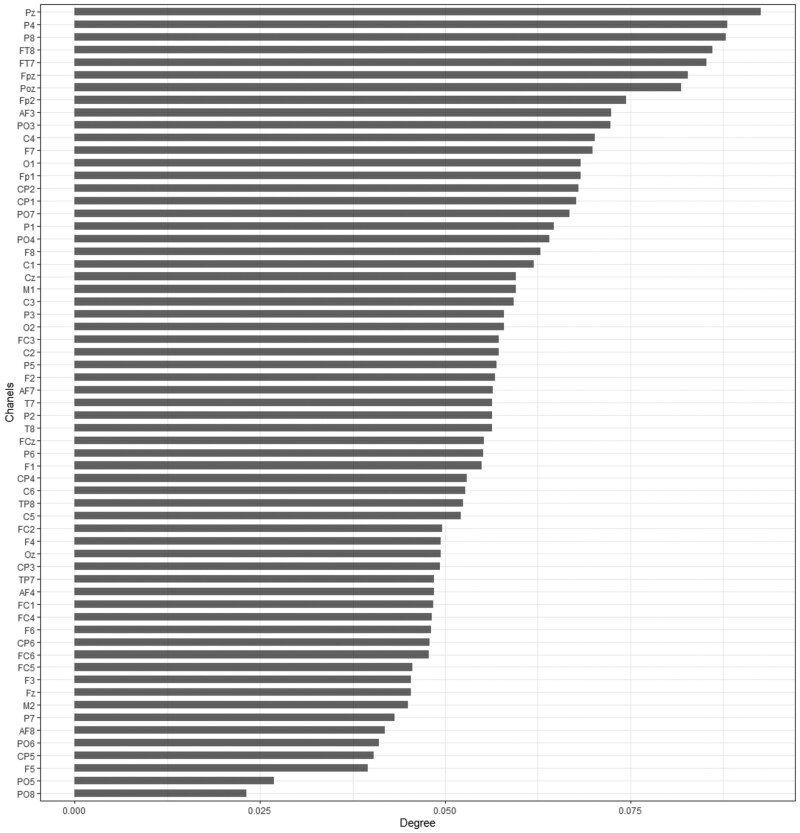 Figure 6
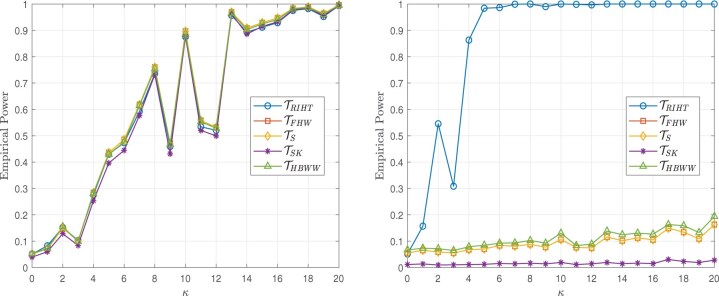 Figure 7
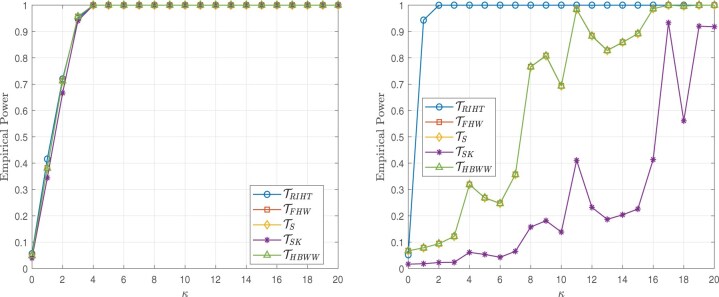 Figure 8
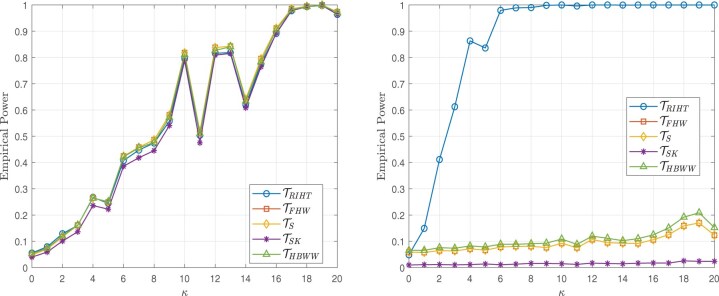 Figure 9
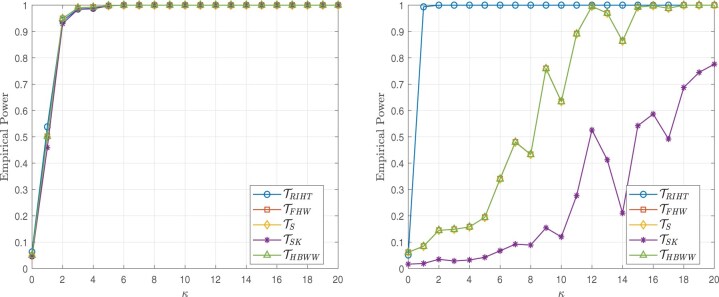 Figure 10
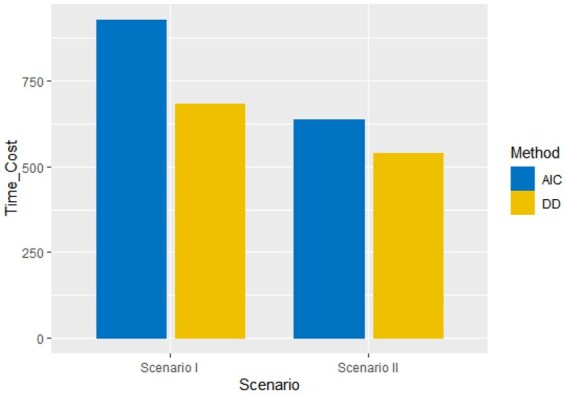 Figure 11
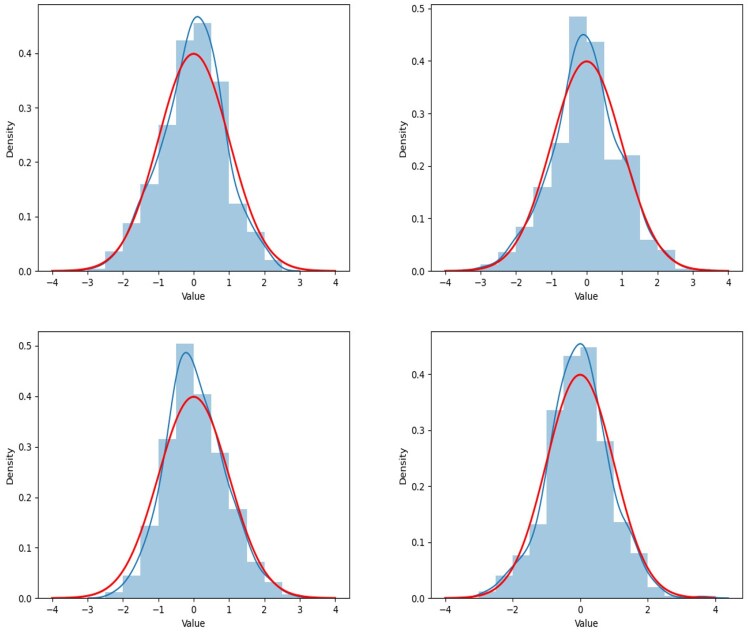 Figure 12
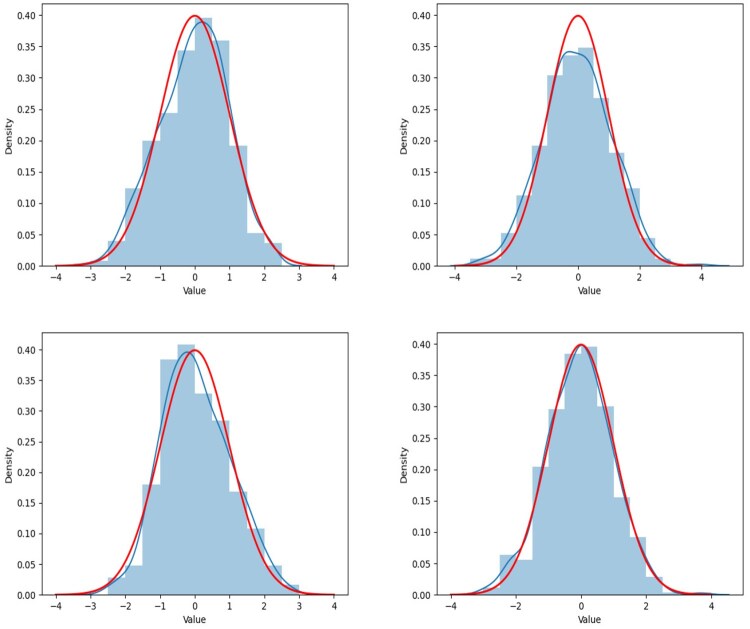 Figure 13
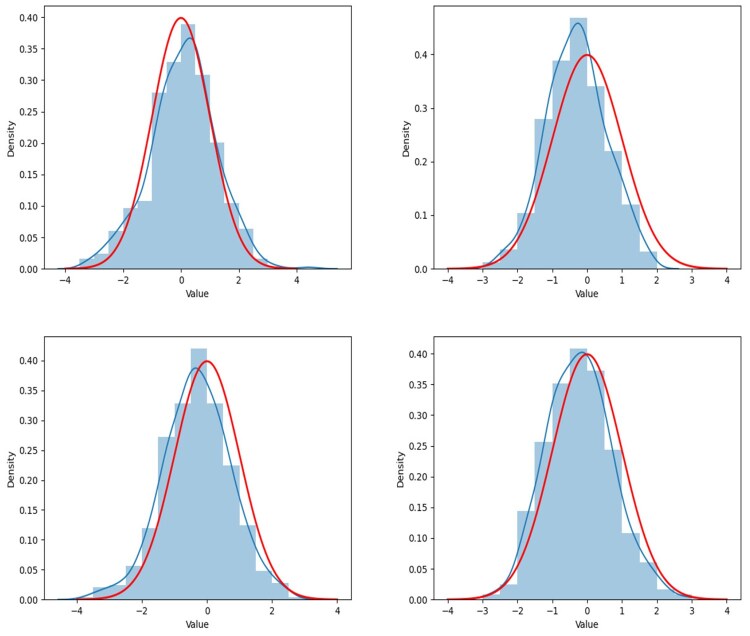 Figure 14
Peer Reviews
No public reviews on file for this paper yet. If you reviewed it on a platform where reviews are public (OpenReview, ICLR, NeurIPS, ICML), you can paste yours below so the community can read it here.
Videos
No videos yet. Explain this paper in a talk, walkthrough, or lecture? Add one.
Taxonomy
TopicsBlind Source Separation Techniques · EEG and Brain-Computer Interfaces · Neural dynamics and brain function