Evaluating prognostic block selection criteria in cervical medial branch radiofrequency neurotomy: A retrospective cohort study
Allison Glinka Przybysz, Enrique Galang, Christian A. Sangio, Christian Wirawan, Amanda N. Cooper, Alycia Amatto, Brook Martin, Robert Burnham, Aaron M. Conger, Zachary L. McCormick, Taylor R. Burnham

TL;DR
This study found that over 60% of patients undergoing cervical radiofrequency neurotomy reported significant pain and disability improvement, regardless of the selection criteria used.
Contribution
The study evaluates the effectiveness of different prognostic block selection criteria for cervical medial branch radiofrequency neurotomy and finds no significant differences in outcomes.
Findings
Over 60% of patients reported significant pain reduction at three months post-treatment.
No statistically significant differences in treatment success were found among different prognostic block paradigms.
Multiple block strategies may be used to determine eligibility for the procedure.
Abstract
Considerable variability exists in the literature record regarding patient selection criteria for cervical medial branch radiofrequency neurotomy (CMBRFN). Few prior studies have assessed the correlation between different prognostic block paradigms and treatment outcomes for this procedure. Examine the association between various prognostic block selection criteria and CMBRFN success rates. Retrospective cohort study of consecutive patients from two Canadian musculoskeletal pain management clinics who underwent first-time CMBRFN between 2016 and 2022 with a three-tined cannula utilizing a perpendicular approach. Patients were categorized according to prognostic block paradigms (single vs. dual), block type (medial branch block [MBB] vs. intraarticular block [IAB]), and percentage pain relief after blocks. Six block criteria were established: 1 = MBB/MBB≥80 %; 2 = MBB/MBB 50–79 %; 3 =…
Genes, proteins, chemicals, diseases, species, mutations and cell lines named across the full text — each resolved to its canonical identifier and authoritative record.
Click any figure to enlarge with its caption.
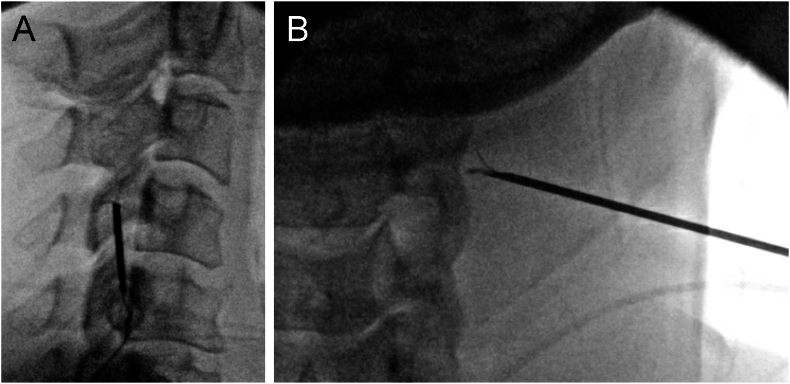 Figure 1
Peer Reviews
No public reviews on file for this paper yet. If you reviewed it on a platform where reviews are public (OpenReview, ICLR, NeurIPS, ICML), you can paste yours below so the community can read it here.
Videos
No videos yet. Explain this paper in a talk, walkthrough, or lecture? Add one.
Taxonomy
TopicsCervical and Thoracic Myelopathy · Spine and Intervertebral Disc Pathology · Nerve Injury and Rehabilitation