AI-imputed and crowdsourced price data show strong agreement with traditional price surveys in data-scarce environments
Julius Adewopo, Bo Pieter Johannes Andrée, Helen Peter, Gloria Solano-Hermosilla, Fabio Micale, Pradeep Paraman, Pradeep Paraman, Youssef El Khatib, Youssef El Khatib

TL;DR
AI and crowdsourcing can reliably track food prices in data-scarce regions like northern Nigeria, matching traditional methods.
Contribution
Demonstrates that AI-imputed and crowdsourced price data are reliable alternatives to traditional surveys in data-scarce environments.
Findings
Crowdsourced prices strongly correlate with enumerator-collected prices (r = 0.94–0.96 for maize and rice).
AI-imputed prices align closely with crowdsourced data (r = 0.99 for maize, r = 0.94 for rice).
Discrepancies between data sources are consistent with measurement error, not actual market differences.
Abstract
Continuous access to up-to-date food price data is crucial for monitoring food security and responding swiftly to emerging risks. However, in many food-insecure countries, price data is often delayed, lacks spatial detail, or is unavailable during crises when markets may become inaccessible, and rising prices can rapidly exacerbate hunger. Recent innovations, such as AI-driven data imputation and crowdsourcing, present new opportunities to generate continuous, localized price data. This paper evaluates the reliability of these approaches by comparing them to traditional enumerator-led data collection in northern Nigeria, a region affected by conflict, food insecurity, and data scarcity. The analysis examines crowdsourced prices for two staple food commodities, maize and rice, submitted daily by volunteers through a smartphone application over 36 months (2019–2021), and compares them…
Genes, proteins, chemicals, diseases, species, mutations and cell lines named across the full text — each resolved to its canonical identifier and authoritative record.
Click any figure to enlarge with its caption.
 Figure 1
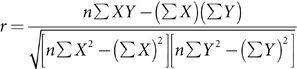 Figure 2
 Figure 3
 Figure 4
 Figure 5
 Figure 6
 Figure 7
 Figure 8
 Figure 9
 Figure 10
 Figure 11
 Figure 12
 Figure 13
 Figure 14
 Figure 15
 Figure 16
 Figure 17
 Figure 18
 Figure 19
 Figure 20
 Figure 21
 Figure 22
 Figure 23
 Figure 24
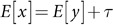 Figure 25
 Figure 26
 Figure 27
 Figure 28
 Figure 29
 Figure 30
 Figure 31
 Figure 32
 Figure 33
 Figure 34
 Figure 35
 Figure 36
 Figure 37
 Figure 38
 Figure 39
 Figure 40
 Figure 41
 Figure 42
 Figure 43
 Figure 44
 Figure 45
 Figure 46
 Figure 47
 Figure 48
 Figure 49
 Figure 50
Peer Reviews
No public reviews on file for this paper yet. If you reviewed it on a platform where reviews are public (OpenReview, ICLR, NeurIPS, ICML), you can paste yours below so the community can read it here.
Videos
No videos yet. Explain this paper in a talk, walkthrough, or lecture? Add one.
Taxonomy
TopicsCOVID-19 Pandemic Impacts