Early initiated noradrenaline versus fluid therapy for hypotension and shock in the emergency department (VASOSHOCK): a protocol for a pragmatic, multi-center, superiority, randomized controlled trial
Lasse Paludan Bentsen, Thomas Strøm, Jakob Lundager Forberg, Gerhard Tiwald, Peter Biesenbach, Malik Kalmriz, Jens Henning Rasmussen, Nikolaj Raaber, Sören Möller, Mette Løkke, Gitte Boier Tygesen, Hanne Nygaard, Josephine Hyldgaard Brok, Julie Westergaard Andersen

TL;DR
This study will test if starting noradrenaline early in the emergency department improves outcomes for patients with shock compared to fluid therapy.
Contribution
The trial investigates early noradrenaline use in a setting where it is not standard care, providing novel evidence for shock treatment.
Findings
The trial aims to determine if early noradrenaline improves blood pressure goals in shock patients.
It will assess whether early noradrenaline reduces ICU admission rates compared to fluid therapy.
The study will evaluate ICU-free days and 30-day mortality as secondary outcomes.
Abstract
Shock is a condition with high mortality even with early intervention and treatment. Usual care for shock and hypotension in the Emergency Department (ED) is intravenous fluid resuscitation which can lead to fluid overload and other complications. When fluid therapy fails or risk of complications are high, the next treatment step is the use of vasopressors for stabilisation. Noradrenaline therapy for hypotension and shock are commonly used in ED’s outside Scandinavia, but the evidence on the optimal initiation time is sparse. The lack of noradrenaline therapy in Scandinavia provides a unique environment to investigate the possible implications of early initiation. The aim of this trial is to investigate whether the use of early initiated noradrenaline compared to ED fluid therapy can improve blood pressure goals and by that, reduce the need for ICU admittance. This protocol describes a…
Genes, proteins, chemicals, diseases, species, mutations and cell lines named across the full text — each resolved to its canonical identifier and authoritative record.
Click any figure to enlarge with its caption.
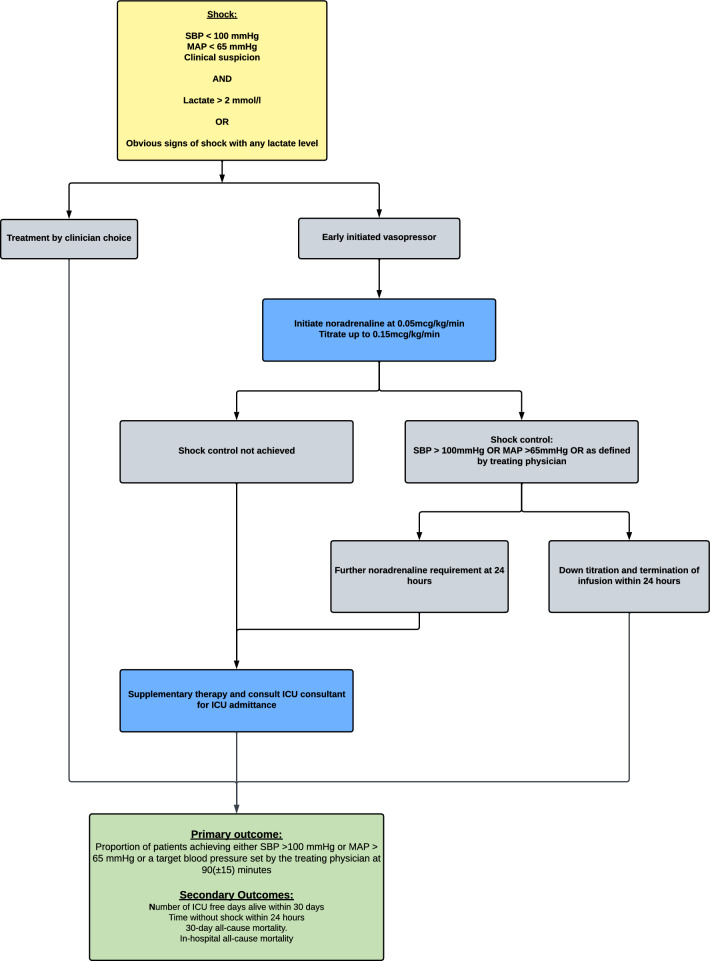 Figure 1
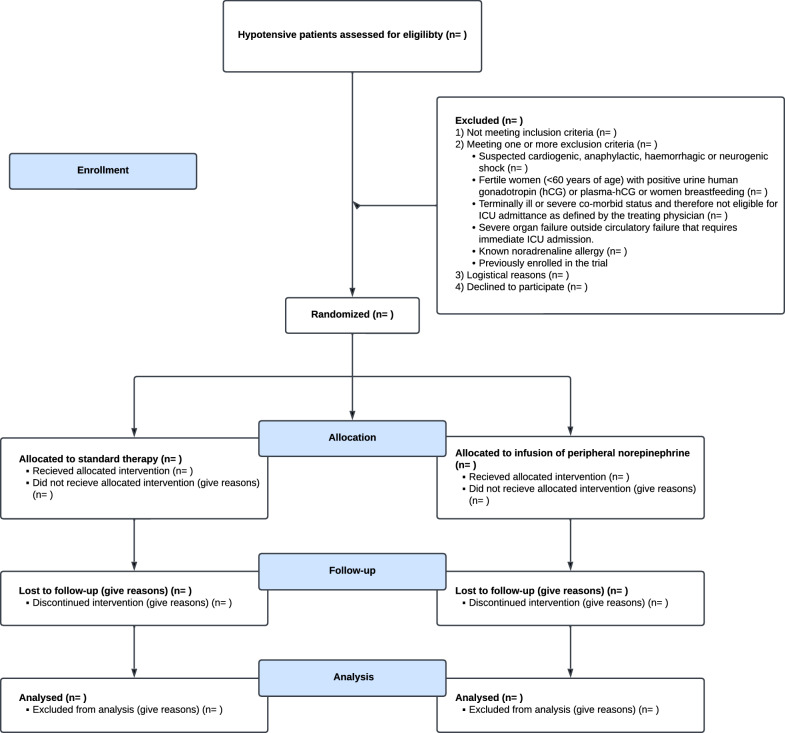 Figure 2
Peer Reviews
No public reviews on file for this paper yet. If you reviewed it on a platform where reviews are public (OpenReview, ICLR, NeurIPS, ICML), you can paste yours below so the community can read it here.
Videos
No videos yet. Explain this paper in a talk, walkthrough, or lecture? Add one.
Taxonomy
TopicsHemodynamic Monitoring and Therapy · Sepsis Diagnosis and Treatment · Cardiac Arrest and Resuscitation