Detection of motor-related mu rhythm desynchronization by ear EEG
Masaya Ueda, Keita Ueno, Takao Inoue, Misao Sakiyama, China Shiroma, Ryouhei Ishii, Yasuo Naito, Fali Li, Fali Li, Fali Li

TL;DR
This study shows that ear EEG can detect brain activity changes during hand movements, which could help improve rehabilitation strategies.
Contribution
The study demonstrates the feasibility of using ear EEG to detect mu rhythm desynchronization during motor tasks.
Findings
Significant difference in mu rhythm power between rest and movement conditions was observed.
Suppression in the 9–12.5 Hz frequency band during hand movement was detected.
Ear EEG is shown to be useful for monitoring motor-related brain activity.
Abstract
Event-related desynchronization (ERD) of the mu rhythm (8–13 Hz) is an important indicator of motor execution, neurofeedback, and brain-computer interface in EEG. This study investigated the feasibility of an ear electroencephalography (EEG) device monitoring mu-ERD during hand grasp and release movements. The EEG data of the right hand movement and the eye opened resting condition were measured with an ear EEG device. We calculated and compared mu rhythm power and time-frequency data from 20 healthy participants during right hand movement and eye opened resting. Our results showed a significant difference of mean mu rhythm power between the eye opened rest condition and the right hand movement condition and significant suppression in the 9–12.5 Hz frequency band in the time-frequency data. These results support the utility of ear EEG in detecting motor activity-related mu-ERD. Ear EEG…
Genes, proteins, chemicals, diseases, species, mutations and cell lines named across the full text — each resolved to its canonical identifier and authoritative record.
Click any figure to enlarge with its caption.
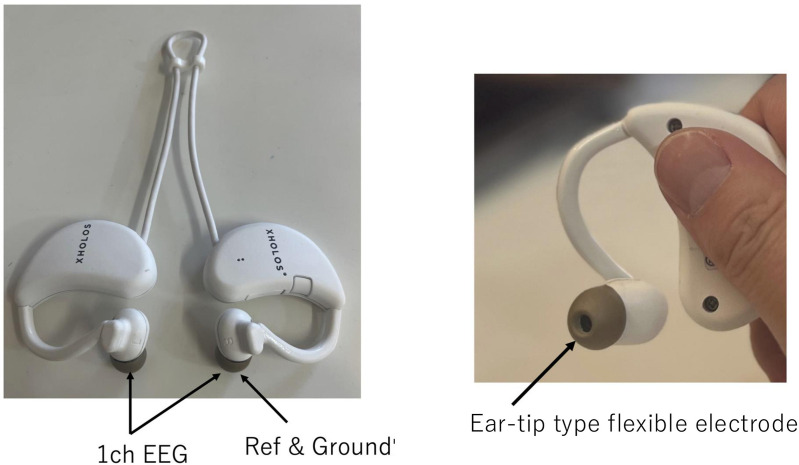 Figure 1
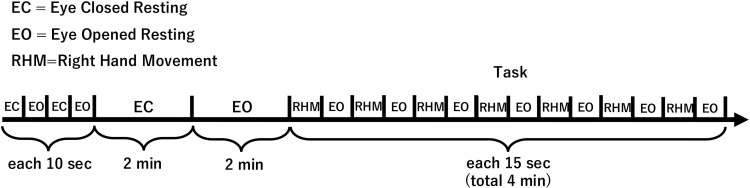 Figure 2
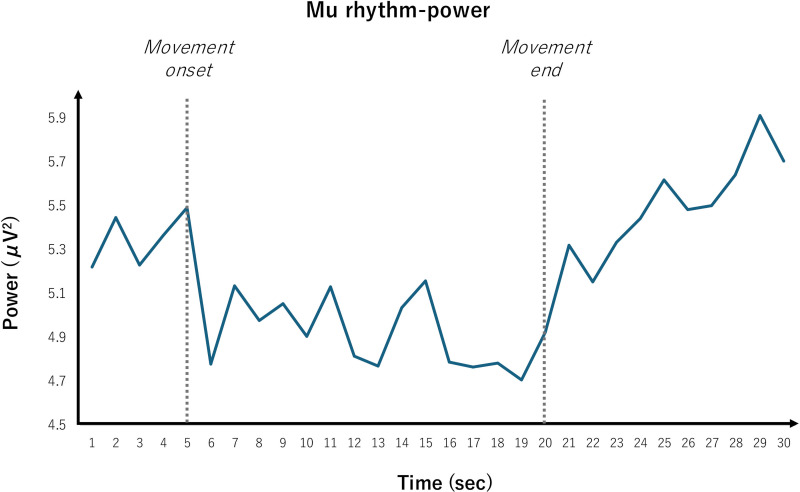 Figure 3
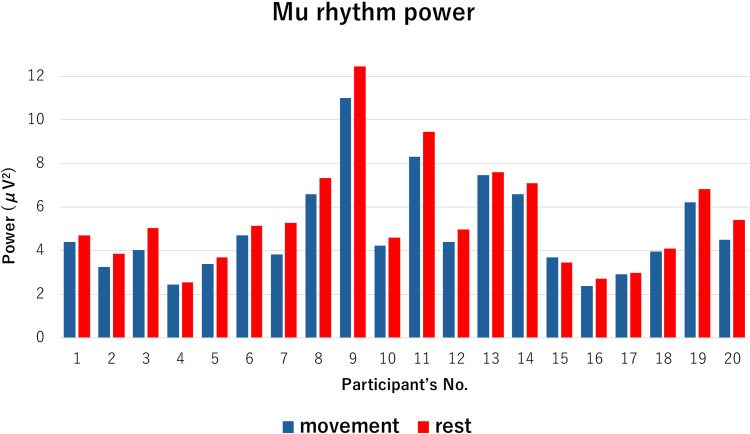 Figure 4
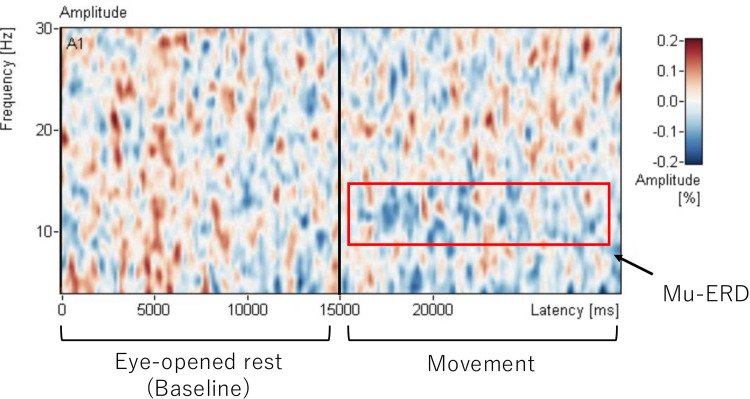 Figure 5
 Figure 6
Peer Reviews
No public reviews on file for this paper yet. If you reviewed it on a platform where reviews are public (OpenReview, ICLR, NeurIPS, ICML), you can paste yours below so the community can read it here.
Videos
No videos yet. Explain this paper in a talk, walkthrough, or lecture? Add one.
Taxonomy
TopicsEEG and Brain-Computer Interfaces · Functional Brain Connectivity Studies · Muscle activation and electromyography studies