Reliability of online, remote neuropsychological assessment in people with and without subjective cognitive decline
Katie A. Peterson, Adrian Leddy, Michael Hornberger, Haleh Ayatollahi, Haleh Ayatollahi

TL;DR
This study examines the reliability of online neuropsychological tests for people with and without subjective cognitive decline, finding some tests are reliable and could offer a cost-effective alternative to in-person assessments.
Contribution
The study evaluates the reliability of remote neuropsychological tests in people with and without subjective cognitive decline, identifying tests suitable for online monitoring.
Findings
Test-retest reliability of the NeurOn tests ranged from poor to good, with the strongest reliability for Sustained Attention to Response Test and Picture Recognition.
SCD participants scored better than Non-SCD on some baseline tests, but differences were not significant after Bonferroni correction.
No differences were found between SCD and Non-SCD in longitudinal change over six months.
Abstract
Online, remote neuropsychological assessment paradigms may offer a cost-effective alternative to in-person assessment for people who experience subjective cognitive decline (SCD). However, it is vital to establish the psychometric properties of such paradigms. The present study (i) evaluates test-retest reliability of remote, online neuropsychological tests from the NeurOn software platform in people with and without SCD (Non-SCD) recruited from the general population; and (ii) investigates potential group differences in baseline performance and longitudinal change. Ninety-nine participants (SCD N = 44, Non-SCD N = 55) completed seven tests from the NeurOn battery, covering visual and verbal memory, working memory, attention and psychomotor speed. Sixty-nine participants (SCD N = 34, Non-SCD N = 35) repeated the assessment six (+/- one) months later. SCD was classified using the…
Genes, proteins, chemicals, diseases, species, mutations and cell lines named across the full text — each resolved to its canonical identifier and authoritative record.
Click any figure to enlarge with its caption.
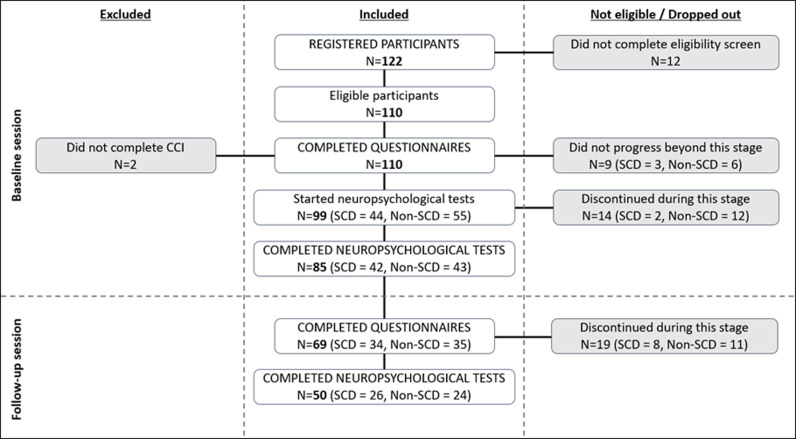 Figure 1
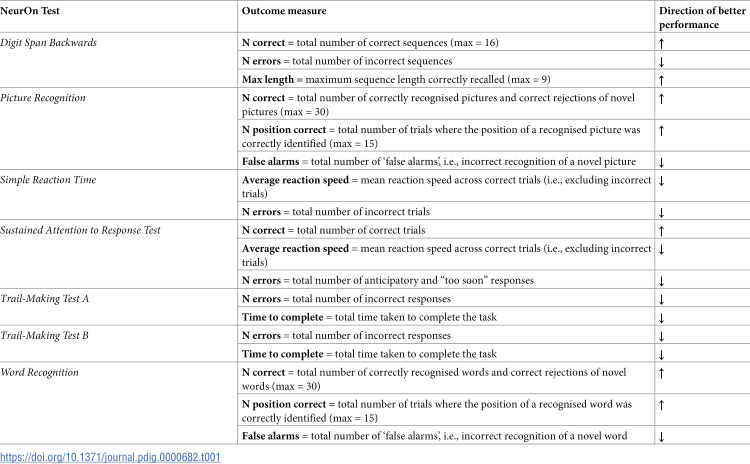 Figure 2
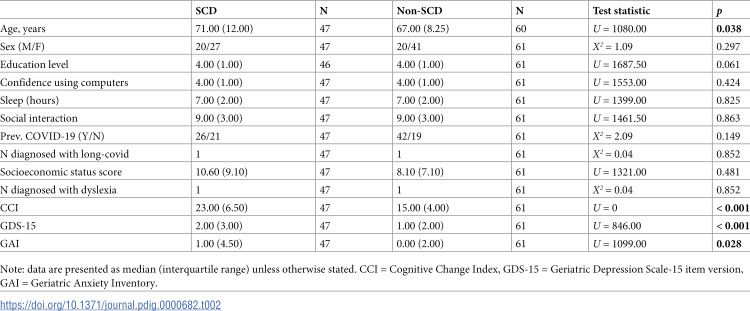 Figure 3
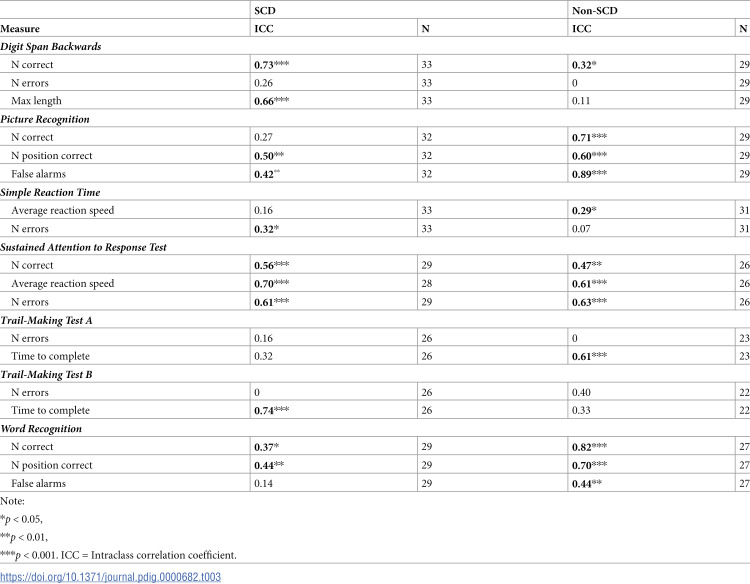 Figure 4
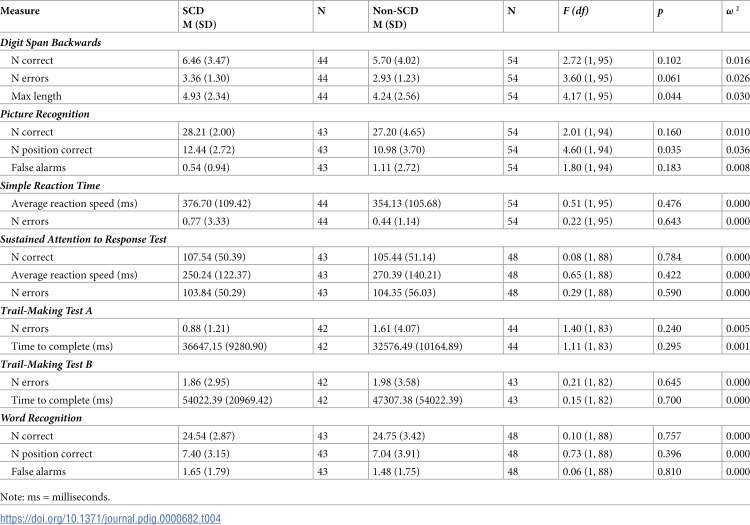 Figure 5
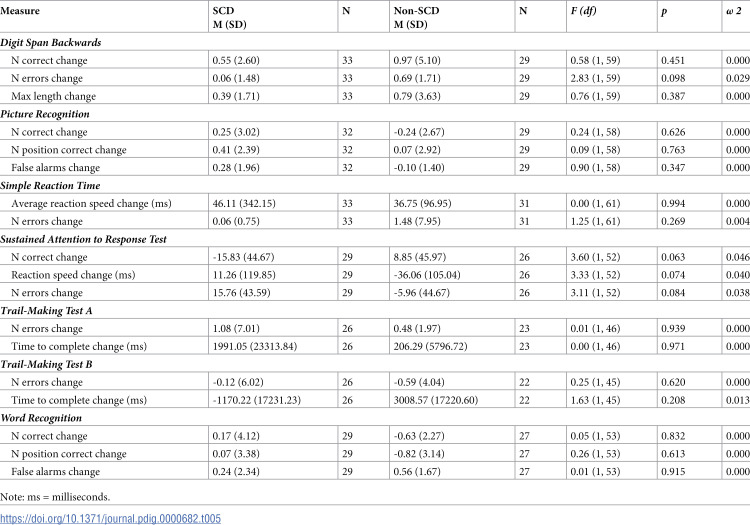 Figure 6
Peer Reviews
No public reviews on file for this paper yet. If you reviewed it on a platform where reviews are public (OpenReview, ICLR, NeurIPS, ICML), you can paste yours below so the community can read it here.
Videos
No videos yet. Explain this paper in a talk, walkthrough, or lecture? Add one.
Taxonomy
TopicsDementia and Cognitive Impairment Research · Cognitive Functions and Memory · Mind wandering and attention