Larval shell chemistry of the Olympia oyster (Ostrea lurida) in Puget Sound, WA to assess population connectivity and restoration planning
Megan Hintz, Bonnie J. Becker, Henry S. Carson, Verena H. Wang, Marco B. A. Hatch, Brian Allen, Brian Rusk, Vanessa Carels, Michael Schubert, Michael Schubert, Michael Schubert

TL;DR
This study explores using chemical fingerprints in oyster shells to track larval dispersal and improve restoration efforts for the Olympia oyster in Puget Sound.
Contribution
The study demonstrates the feasibility of using larval shell chemistry to assess regional population connectivity in Olympia oysters.
Findings
Shell chemistry can distinguish three geographic regions with ~75% accuracy.
Regional chemical signatures remain stable within a single reproductive season.
Current methods cannot confidently assign settlers to specific source regions due to limitations.
Abstract
The Olympia oyster (Ostrea lurida) is the only native oyster species along the west coast of North America and is culturally and ecologically important. However, Olympia oyster populations have been severely depleted, prompting ongoing restoration efforts in Puget Sound, WA, and beyond. Understanding population connectivity is vital for successful restoration planning to ensure resilience and genetic diversity. This study examined the potential for using trace elemental “fingerprints” in Olympia oyster shells to track larval dispersal and connectivity at regional scales within Puget Sound. Brooded larvae were collected via non-lethal sampling at eight sites grouped into three geographic regions. Shell chemistry analysis showed the ability to distinguish these regions from each other with approximately 75% accuracy, demonstrating feasibility for addressing connectivity questions among…
Genes, proteins, chemicals, diseases, species, mutations and cell lines named across the full text — each resolved to its canonical identifier and authoritative record.
Click any figure to enlarge with its caption.
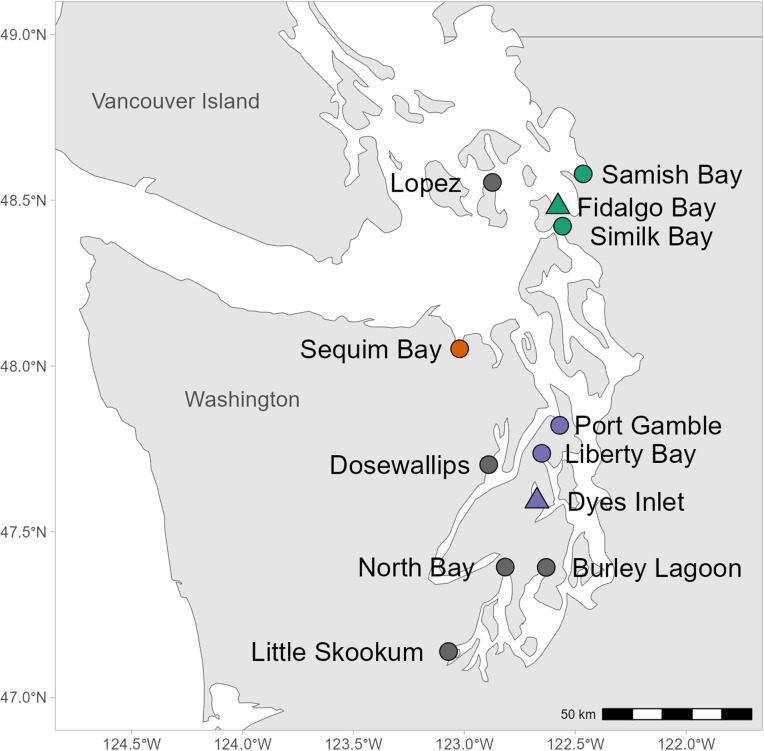 Figure 1
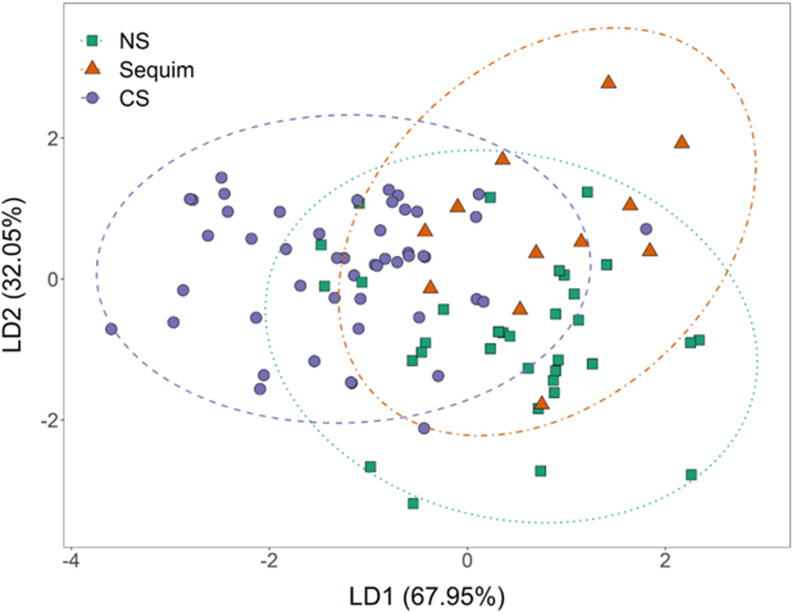 Figure 2
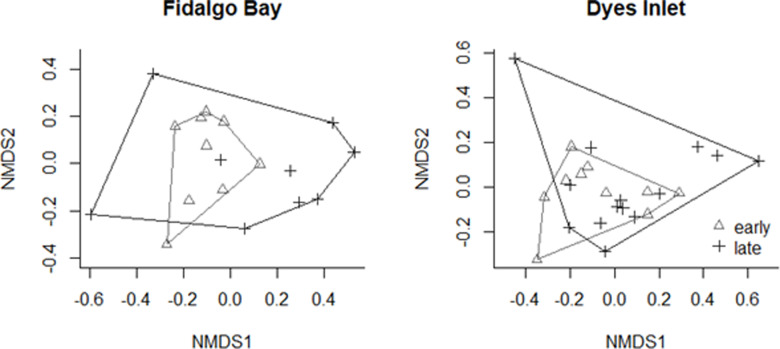 Figure 3
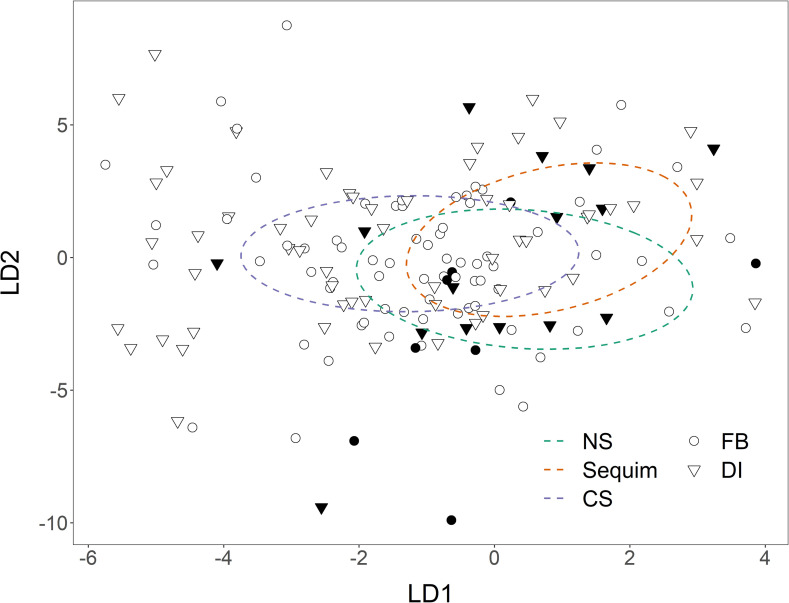 Figure 4
 Figure 5
Peer Reviews
No public reviews on file for this paper yet. If you reviewed it on a platform where reviews are public (OpenReview, ICLR, NeurIPS, ICML), you can paste yours below so the community can read it here.
Videos
No videos yet. Explain this paper in a talk, walkthrough, or lecture? Add one.
Taxonomy
TopicsMarine Bivalve and Aquaculture Studies · Marine Biology and Ecology Research · Aquatic Invertebrate Ecology and Behavior