Comparative genomics analysis of six Cutibacterium acnes strains isolated from contaminated platelet concentrates
Annika Flint, Dilini Kumaran, Kelly Weedmark, Franco Pagotto, Sandra Ramirez-Arcos

TL;DR
This study compares the genomes of six Cutibacterium acnes strains from contaminated platelet units to understand their genetic differences and potential risks to patients.
Contribution
The study provides whole-genome sequences of C. acnes isolates from contaminated platelets and compares them to clinical isolates.
Findings
The six isolates belong to four phylotypes: IA, IB, II, and III.
Genome comparisons revealed differences in virulence profiles among the isolates.
The study sets the stage for evaluating how the PC storage environment affects virulence factor expression.
Abstract
Cutibacterium acnes is a bacterial skin commensal that is often isolated during routine testing of blood products like platelet concentrates (PCs). Due to the slow-growing nature of this bacterium in culture media, C. acnes contaminated PCs are often transfused into vulnerable patients before retrieval of these units can be initiated. This study aimed at obtaining the whole-genome sequence of six C. acnes isolates derived from contaminated PCs, comparing and assessing their genetic backgrounds. Furthermore, the whole genomes of the PC isolates were compared to clinical isolates obtained from different sites and types of infection. The results indicate that these PC isolates assessed belong to four phylotypes, namely IA, IB, II and III. Whole-genome comparisons identified differences in the virulence profiles of the isolates and provide a foundation for future studies aimed at evaluating…
Genes, proteins, chemicals, diseases, species, mutations and cell lines named across the full text — each resolved to its canonical identifier and authoritative record.
Click any figure to enlarge with its caption.
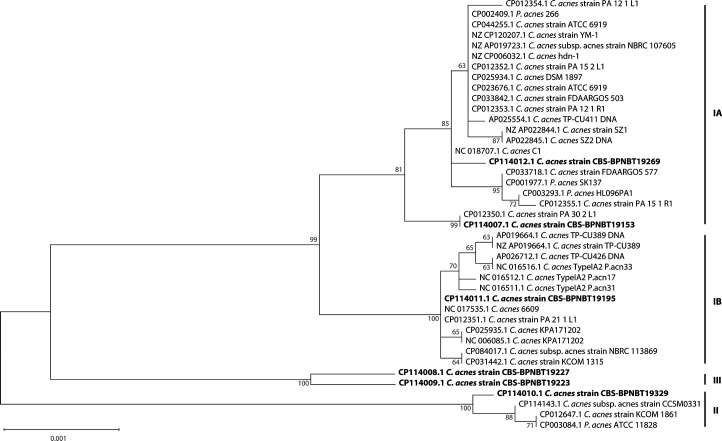 Figure 1
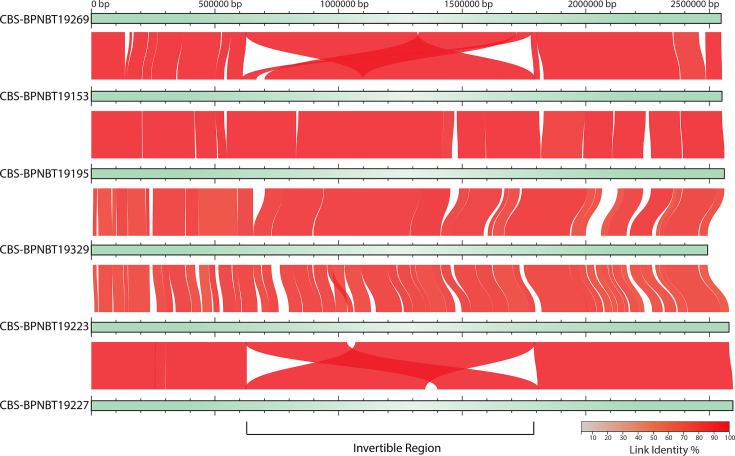 Figure 2
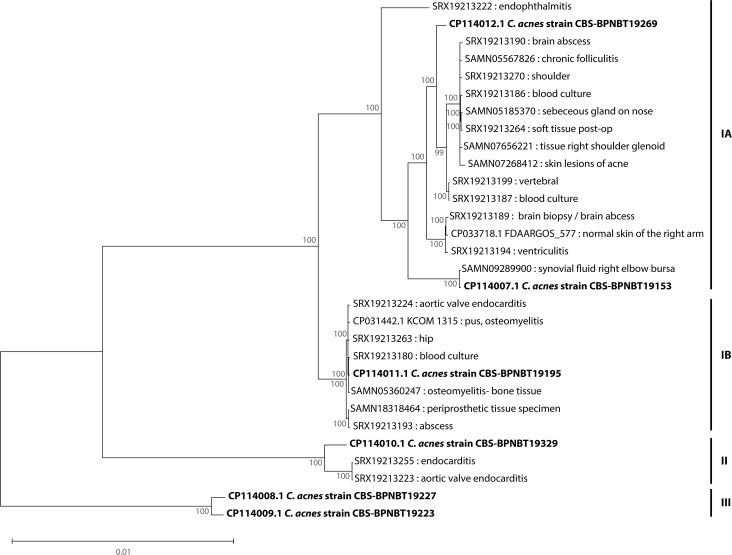 Figure 3
Peer Reviews
No public reviews on file for this paper yet. If you reviewed it on a platform where reviews are public (OpenReview, ICLR, NeurIPS, ICML), you can paste yours below so the community can read it here.
Videos
No videos yet. Explain this paper in a talk, walkthrough, or lecture? Add one.
Taxonomy
TopicsStreptococcal Infections and Treatments · Bacterial Identification and Susceptibility Testing · Microbial infections and disease research