2,3‐Epoxyamide‐alcohols in Domino Reactions: En Route to Molecular Diversity
Abderrahman El Bouakher, Jérôme Lhoste, Arnaud Martel, Sébastien Comesse

TL;DR
This paper introduces a new chemical method to create complex molecules with high stereochemical control using epoxyamides and domino reactions.
Contribution
A novel domino reaction approach using 2,3-epoxyamides to synthesize diverse polycyclic lactams with full stereocontrol.
Findings
Four different γ- and δ-lactam scaffolds were synthesized with good to high yields.
Up to four contiguous stereocenters were fully controlled in the reaction products.
The method offers high stereo- and chemoselectivity, enabling molecular diversity.
Abstract
The synthesis of polycyclic γ‐ and δ‐lactams bearing up to four contiguous fully controlled stereocenters is presented. For that purpose, we developed an original approach based on the use of 2,3‐epoxyamides in domino reactions by taking advantage of the nucleophilic nitrogen atom and electrophilic epoxide. In reaction with enol ethers bearing gem bis‐electrophiles on the double bond as Michael acceptors, four different reaction pathways were observed. They all started with a domino oxa‐Michael/aza‐Michael/epoxide opening sequence and depending on substrates engaged could be followed either by a lactonization or a hemiketalization/retro‐aldol cascade. Thus, four original fully‐substituted piperidine‐ or pyrrolidine‐2‐one scaffolds were selectively synthesized in good to high yields. Moreover, these polycyclic lactams were obtained in high stereo‐ and chemo‐selectively highlighting the…
Click any figure to enlarge with its caption.
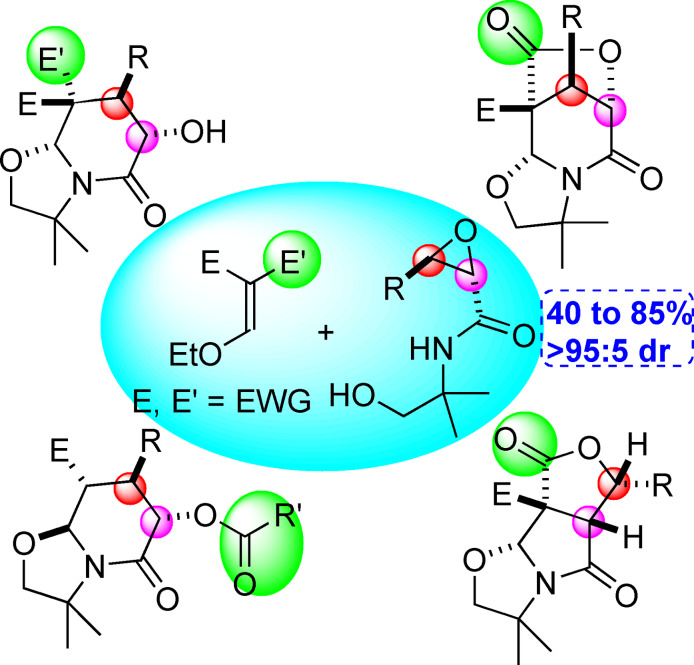 Figure 1
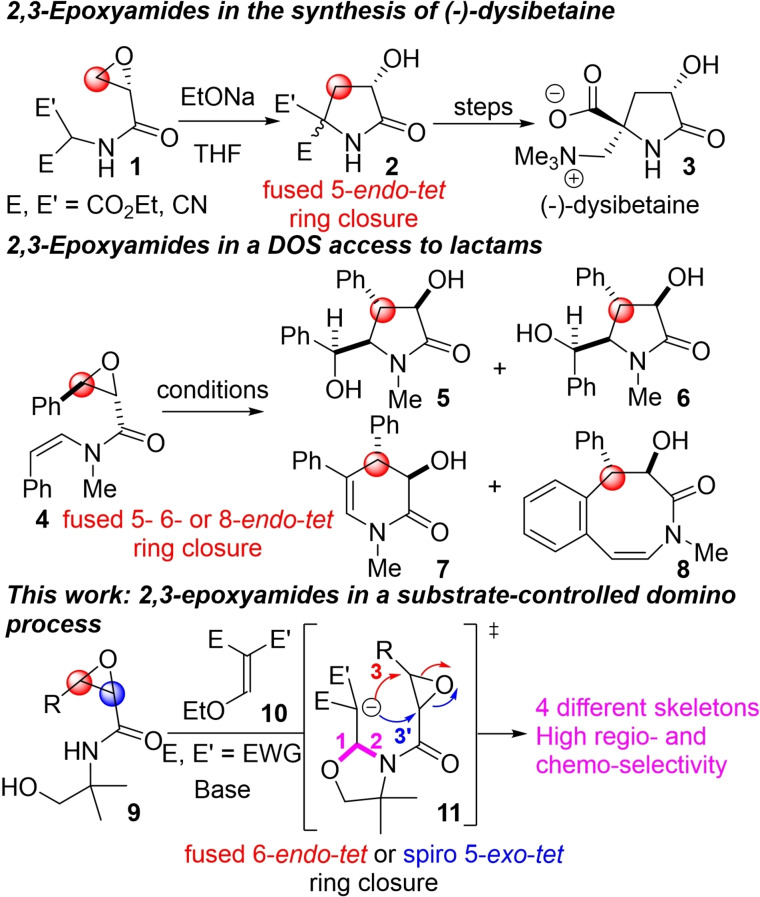 Figure 2
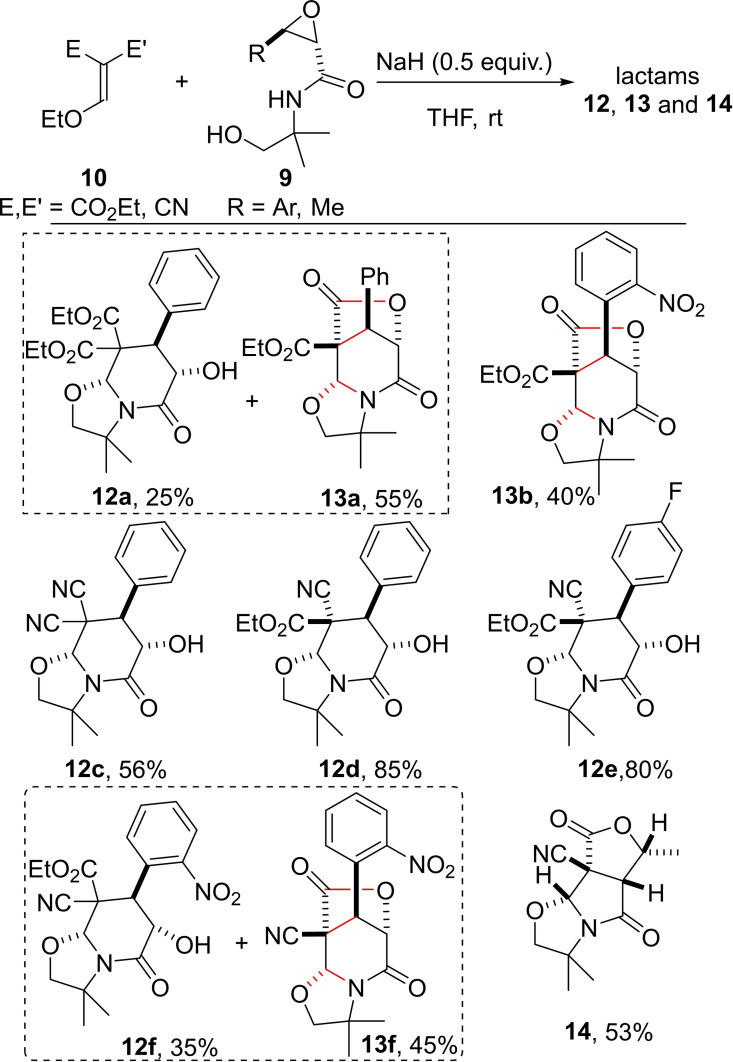 Figure 3
 Figure 4
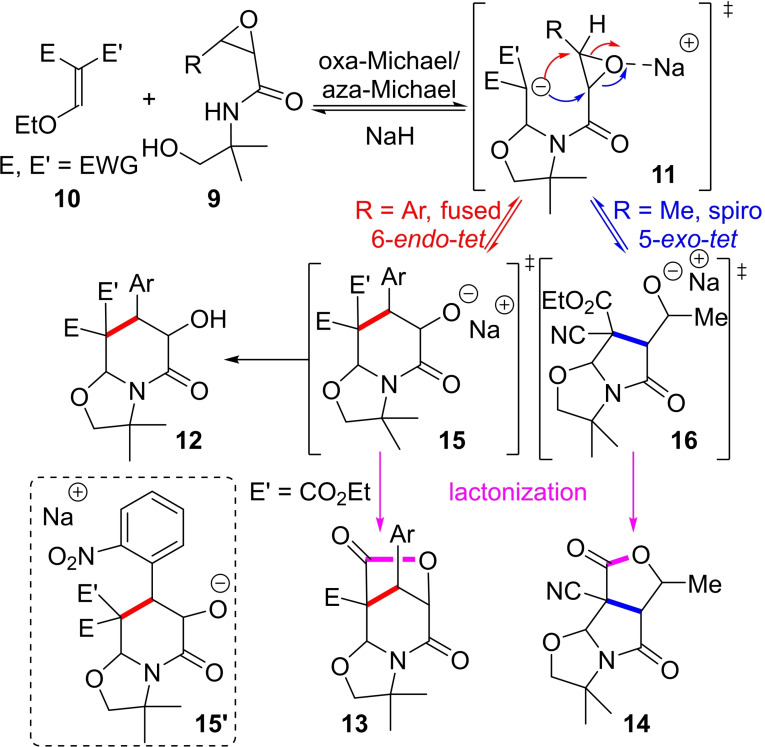 Figure 5
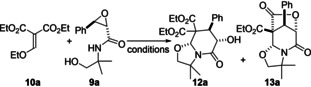 Figure 6
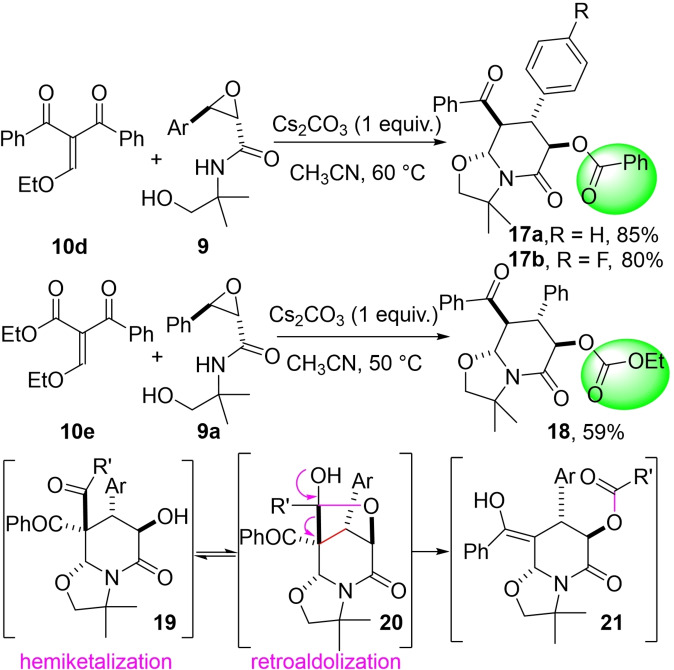 Figure 7
Peer Reviews
No public reviews on file for this paper yet. If you reviewed it on a platform where reviews are public (OpenReview, ICLR, NeurIPS, ICML), you can paste yours below so the community can read it here.
Videos
No videos yet. Explain this paper in a talk, walkthrough, or lecture? Add one.
Taxonomy
TopicsSynthetic Organic Chemistry Methods · Asymmetric Synthesis and Catalysis · Chemical Synthesis and Reactions