Eocene and modern entomofauna differ—a Cretaceous‐like larva in Rovno amber
Joachim T. Haug, Simon Linhart, Viktor Baranov, Carolin Haug

TL;DR
A 35-million-year-old insect larva found in Ukrainian amber shows that ancient insect forms survived much longer than previously thought.
Contribution
The discovery of a Cretaceous-like larva in Eocene amber challenges the assumption of a fully modern fauna at that time.
Findings
A lacewing larva with Cretaceous-like morphology was found in 35-million-year-old Rovno amber.
This morphology persisted for over 60 million years longer than previously believed.
The find indicates that the Eocene entomofauna was not as modern as commonly assumed.
Abstract
We report a 35 million‐year‐old lacewing larva from Ukrainian amber. This insect larva has a morphology up to now only known from 100 million‐year‐old amber. Therefore, this morphology survived more than 60 million years longer than previously assumed. Our find contradicts the common notion that the fauna 35 million years ago was already very modern.
Genes, proteins, chemicals, diseases, species, mutations and cell lines named across the full text — each resolved to its canonical identifier and authoritative record.
Click any figure to enlarge with its caption.
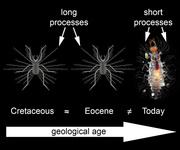 Figure 1
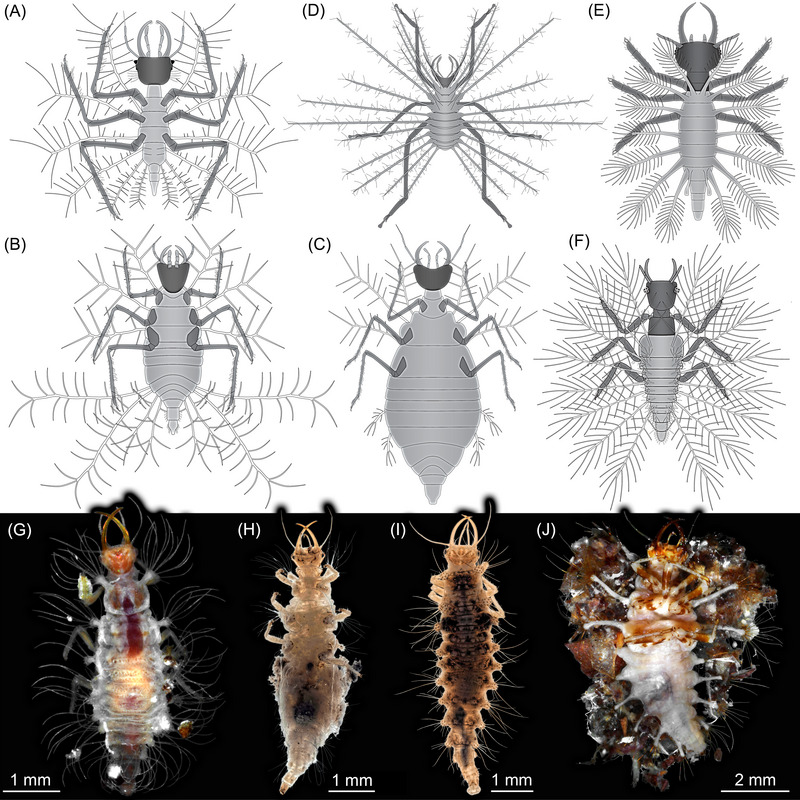 Figure 2
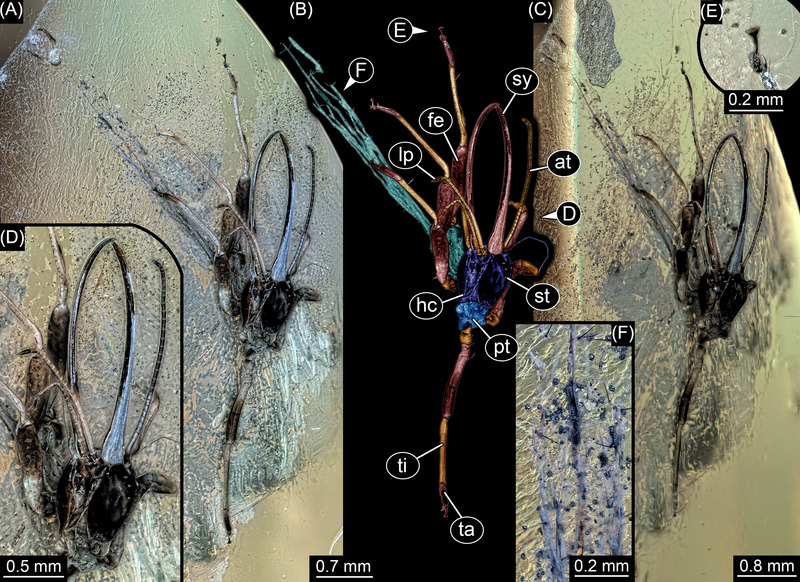 Figure 3
Peer Reviews
No public reviews on file for this paper yet. If you reviewed it on a platform where reviews are public (OpenReview, ICLR, NeurIPS, ICML), you can paste yours below so the community can read it here.
Videos
No videos yet. Explain this paper in a talk, walkthrough, or lecture? Add one.
Taxonomy
TopicsFossil Insects in Amber · Coleoptera Taxonomy and Distribution · Hymenoptera taxonomy and phylogeny