Whole-brain 3D imaging of dopaminergic neurons and glial cells in the mouse model of Parkinson’s disease induced by 6-OHDA
Mengqi Wang, Linglong Xiao, Yifeng Shi, Yaping Wu, Xinyuejia Huang, Yang Wu, Yangyang Xu, Lin Bai, Wei Pan, Jie Zhang, Wei Wang

TL;DR
This study uses 3D imaging to visualize brain changes in a mouse model of Parkinson’s disease, revealing altered neural networks and glial cell activity.
Contribution
The study introduces whole-brain 3D imaging of dopaminergic neurons and glial cells in a 6-OHDA-induced Parkinson’s model.
Findings
6-OHDA caused significant motor deficits and reduced TH signals in key brain regions.
3D imaging revealed structural changes in astrocytes, microglia, and blood vessels in the SN + VTA.
The study provides a foundation for creating whole-brain pathological maps of PD.
Abstract
Parkinson’s disease (PD) is the second most common neurodegenerative disease. Current understanding of the abnormal neural network in PD is limited, which may be one of the reasons for the lack of effective treatments. Tissue-clearing techniques allow visualization of neurons and gliocytes that form the structural basis of the abnormal neuronal network, thus enabling a deeper understanding of the pathological neuronal network in PD and contributing to the study of therapeutic strategies. The aim of this study was to create pathological maps of PD and perform 3D visualization of the neural network. We induced the PD model using 6-OHDA and a predesigned rotation test. We then performed tissue-clearing and 3D imaging of the whole-brain and brain slices of the mice using SHIELD and CUBIC. The rotation test showed that the 6-OHDA group had a significant increase than the sham group. SHIELD…
Genes, proteins, chemicals, diseases, species, mutations and cell lines named across the full text — each resolved to its canonical identifier and authoritative record.
Click any figure to enlarge with its caption.
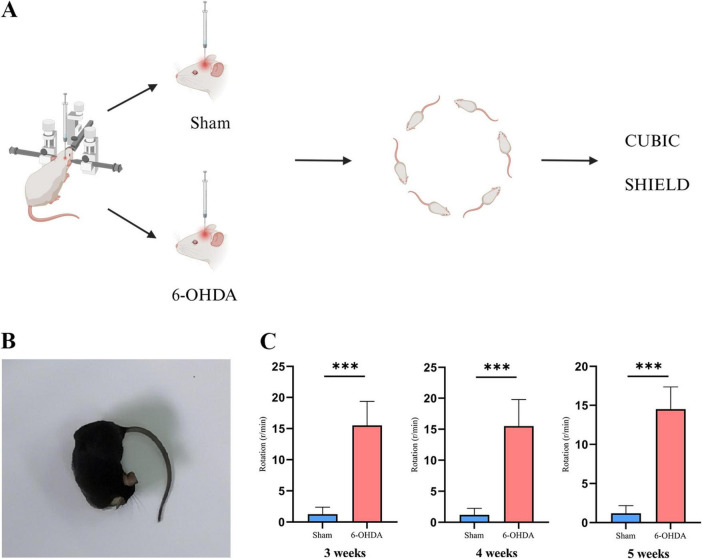 Figure 1
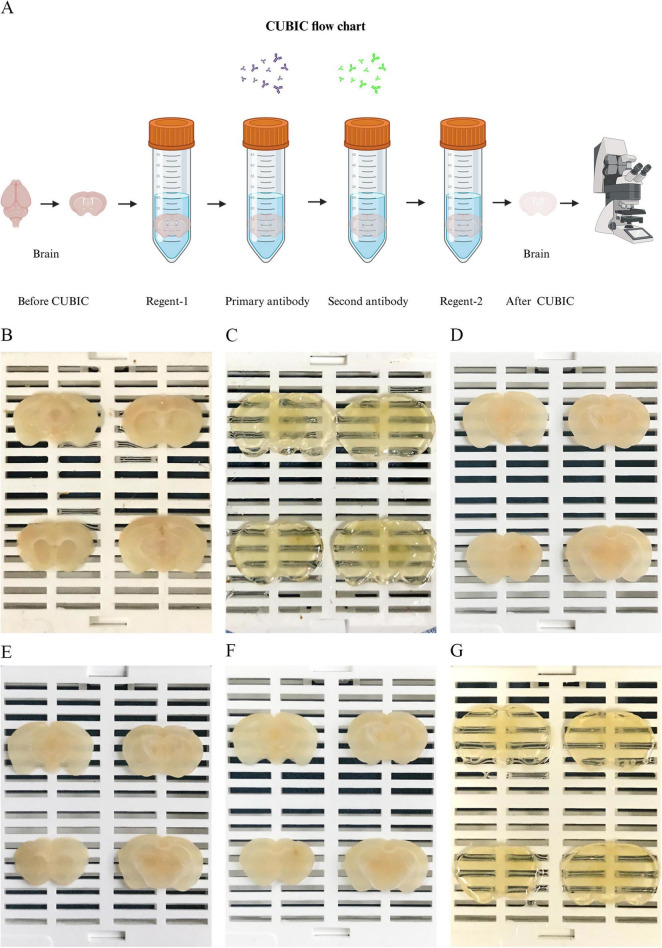 Figure 2
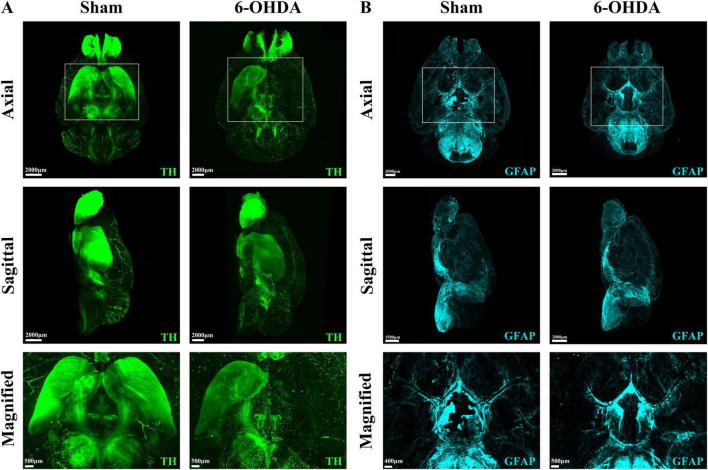 Figure 3
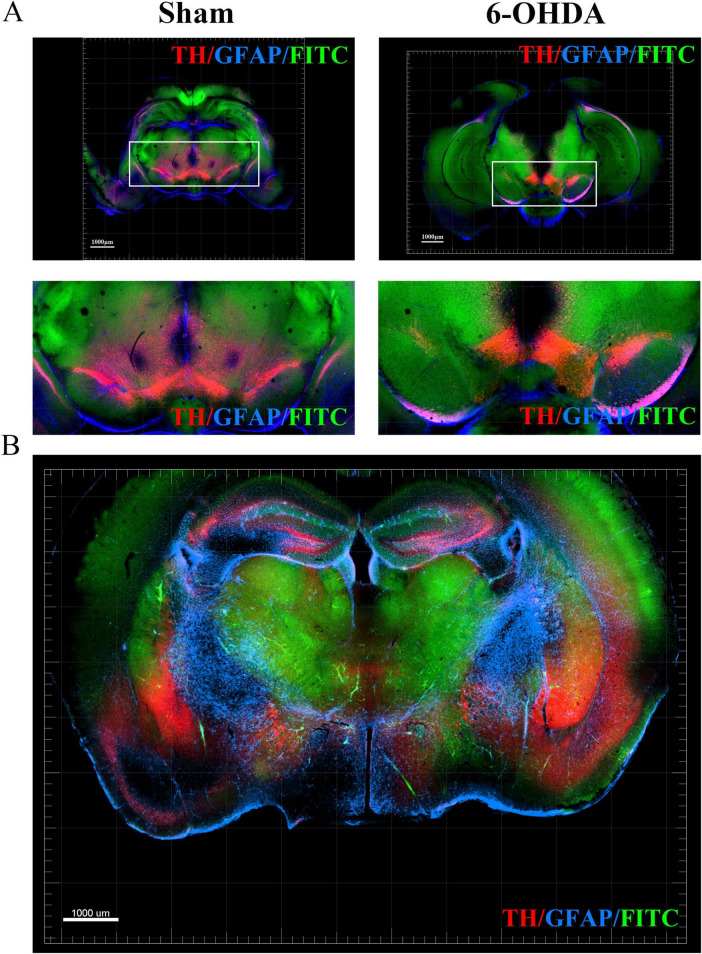 Figure 4
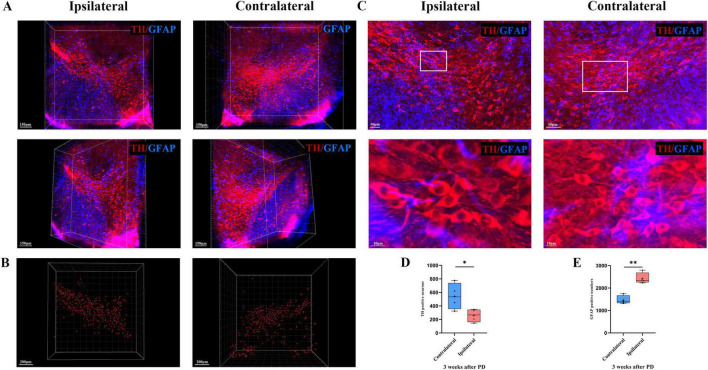 Figure 5
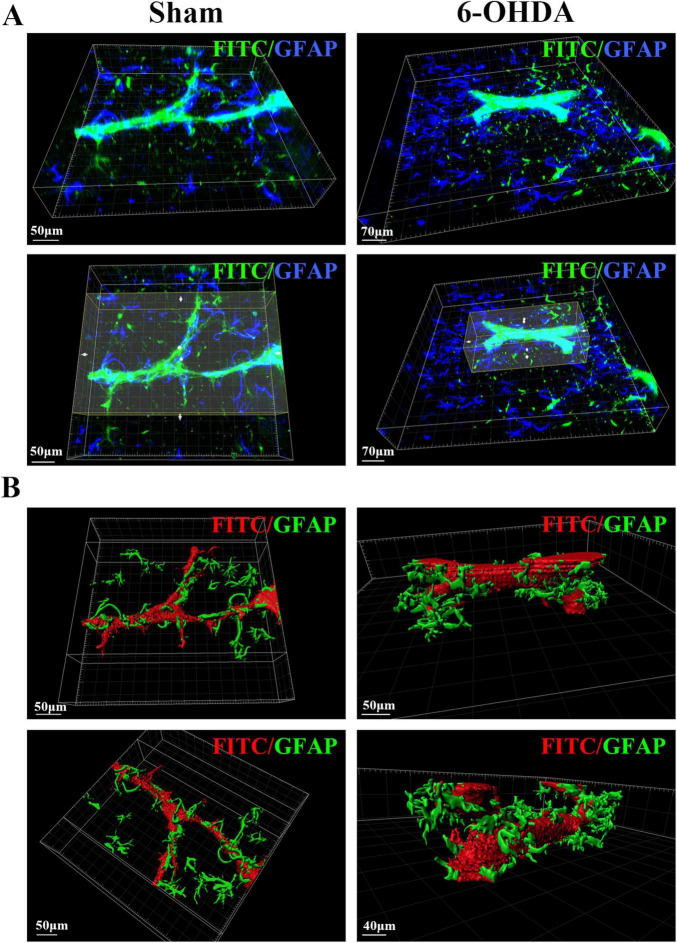 Figure 6
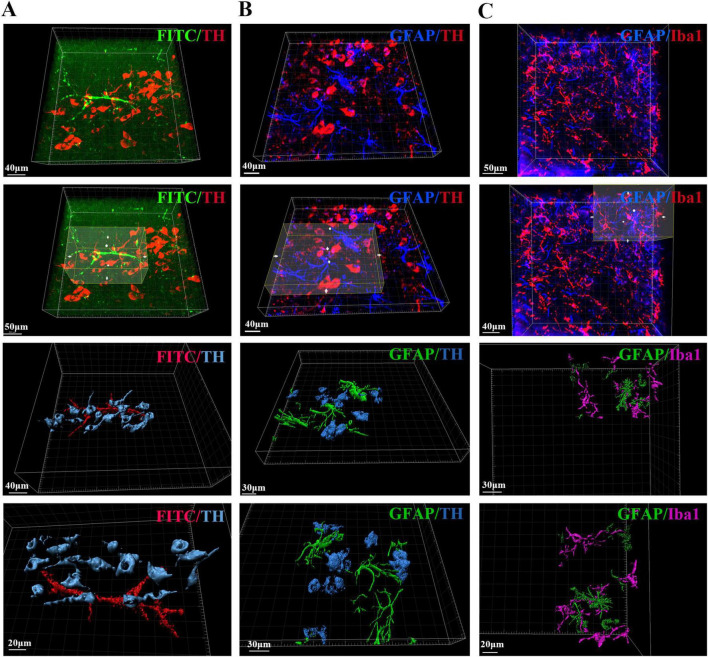 Figure 7
Peer Reviews
No public reviews on file for this paper yet. If you reviewed it on a platform where reviews are public (OpenReview, ICLR, NeurIPS, ICML), you can paste yours below so the community can read it here.
Videos
No videos yet. Explain this paper in a talk, walkthrough, or lecture? Add one.
Taxonomy
TopicsParkinson's Disease Mechanisms and Treatments · Neurological disorders and treatments · Nerve injury and regeneration