Commentary: Disulfidptosis-related gene signatures as prognostic biomarkers and predictors of immunotherapy response in HNSCC
Jihao Xue, Cheng Xue, Qijia Yin, Ligang Chen, Ming Wang

Abstract
Genes, proteins, chemicals, diseases, species, mutations and cell lines named across the full text — each resolved to its canonical identifier and authoritative record.
Click any figure to enlarge with its caption.
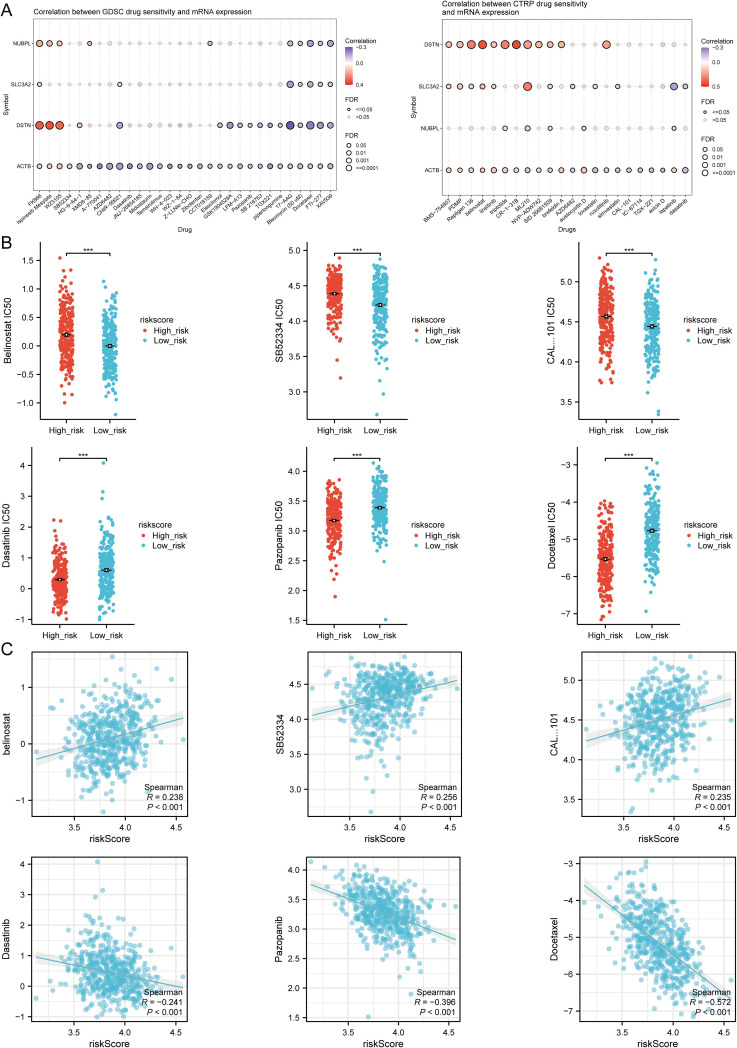 Figure 1
Peer Reviews
No public reviews on file for this paper yet. If you reviewed it on a platform where reviews are public (OpenReview, ICLR, NeurIPS, ICML), you can paste yours below so the community can read it here.
Videos
No videos yet. Explain this paper in a talk, walkthrough, or lecture? Add one.
Taxonomy
TopicsImmune Cell Function and Interaction · Asthma and respiratory diseases · Inhalation and Respiratory Drug Delivery
We read with great interest the research “Disulfidptosis-related gene signatures as prognostic biomarkers and predictors of immunotherapy response in HNSCC” by Qin et al. (1), which was recently published on Jan 17, 2025, in the Journal of Frontiers in Immunology. This article elucidated the potential significance of disulfidptosis-related genes (DRGs) in head and neck squamous cell carcinoma (HNSCC), as demonstrated through rigorous bioinformatics analysis and experimental validation. Through in-depth mechanistic investigations, they revealed the mechanisms by which these genes regulate tumor cell death and influence the functionality of immune cells within the tumor microenvironment. Additionally, the efficacy of these genes in forecasting patients’ responsiveness to immune checkpoint inhibitors was assessed, offering valuable insights for the advancement of novel therapeutic strategies. Although acknowledging the significant contribution of that study, Qin et al. had misunderstood Figure 11B in the section titled “TMB, MSI, mRNAsi, and Drug Sensitivity Analysis”—they believed that in high-risk HNSCC, the sensitivity of belinostat, SB52334, and CAL101 was significantly higher than in the low-risk group, while Dasatinib, Pazopanib, and Docetaxel showed higher sensitivity in low-risk HNSCC (1).
IC50, defined as the half maximal inhibitory concentration, signifies the concentration at which a drug or inhibitor diminishes the activity of a biological process (such as an enzyme, receptor, or cell) to half of its maximum level under specific experimental conditions. A lower IC50 value indicates that the drug can achieve a 50% inhibitory effect at a lower concentration, suggesting a higher potency and sensitivity of the drug (2, 3). Therefore, the correct interpretation of Figure 11B in the original text of Qin et al. (1) is that in HNSCC patients, the IC50 values for belinostat, SB52334, and CAL-101 are significantly higher in the high-risk group compared to the low-risk group, suggesting lower sensitivity of the high-risk group to these drugs. Conversely, the IC50 values for Dasatinib, Pazopanib, and Docetaxel are significantly lower in the high-risk group, indicative of higher sensitivity of this group to these drugs relative to the low-risk group.
In summary, readers should exercise caution when reading the appropriate chapters to ensure accurate comprehension.
The reference list from the paper itself. Each links out to its DOI / PubMed record.
- 1Qin H Xu J Yue Y Chen M Zhang Z Xu P. Disulfidptosis-related gene signatures as prognostic biomarkers and predictors of immunotherapy response in hnscc. Front Immunol. (2024) 15:1456649. doi: 10.3389/fimmu.2024.1456649 39896807 PMC 11782277 · doi ↗ · pubmed ↗
- 2Cer RZ Mudunuri U Stephens R Lebeda FJ. Ic 50-to-ki: A web-based tool for converting ic 50 to ki values for inhibitors of enzyme activity and ligand binding. Nucleic Acids Res. (2009) 37:W 441–5. doi: 10.1093/nar/gkp 253 PMC 270389819395593 · doi ↗ · pubmed ↗
- 3Srinivasan B Lloyd MD. Dose-response curves and the determination of ic(50) and ec(50) values. J Med Chem. (2024) 67:17931–4. doi: 10.1021/acs.jmedchem.4c 02052 39356832 · doi ↗ · pubmed ↗