Primates in Burrows: A Cause for Concern? Observations From a One Health Perspective at Niokolo Koba National Park, Senegal
Cédric Vermeulen, Jérôme Vandebos, Daelemans Virginie, Simon Lhoest

TL;DR
The paper reports that primates in Senegal's Niokolo Koba National Park are interacting with burrows, potentially coming into contact with bats, raising concerns about zoonotic disease transmission.
Contribution
The study highlights a novel observation of primates interacting with burrows, suggesting these sites may act as One Health hotspots.
Findings
Three primate species were observed near burrows in Niokolo Koba National Park.
Some primates entered burrows, potentially coming into contact with bats.
Burrows are identified as potential 'One Health hotspots' due to interspecies interactions.
Abstract
Burrows are places where many species cross paths and potentially exchange diseases. Primates are rarely frequenting burrows. However, this brief descriptive communication shows that three species of primates in the Niokolo Koba National Park (Senegal) frequent the vicinity of burrows, with some individuals even entering them. In particular, these primates come potentially into contact with bats. We aim to draw the scientific community's attention to the fact that burrows serve as critical interaction points for various taxa, some of which are reputed to carry zoonoses. As such, these burrows should be considered as potential “One Health hotspots” to be monitored, especially when frequented by primates in contact with rangers or tourists. Burrows are places where many species cross paths and potentially exchange diseases. Primates are not known to frequent burrows. However, in the…
Genes, proteins, chemicals, diseases, species, mutations and cell lines named across the full text — each resolved to its canonical identifier and authoritative record.
Click any figure to enlarge with its caption.
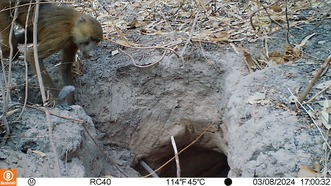 Figure 1
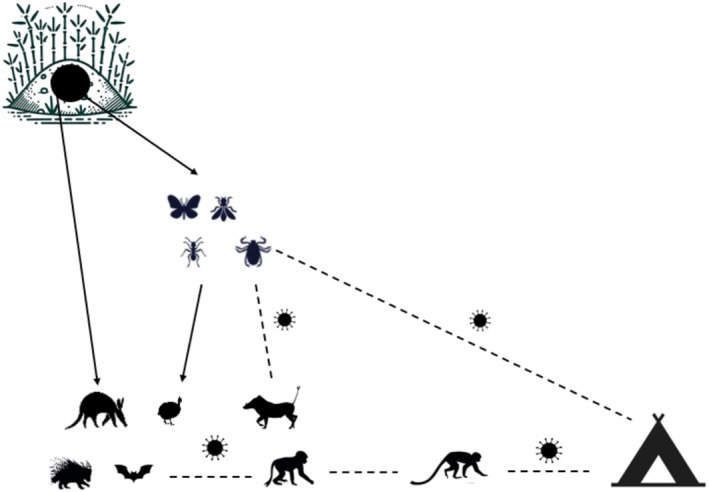 Figure 2
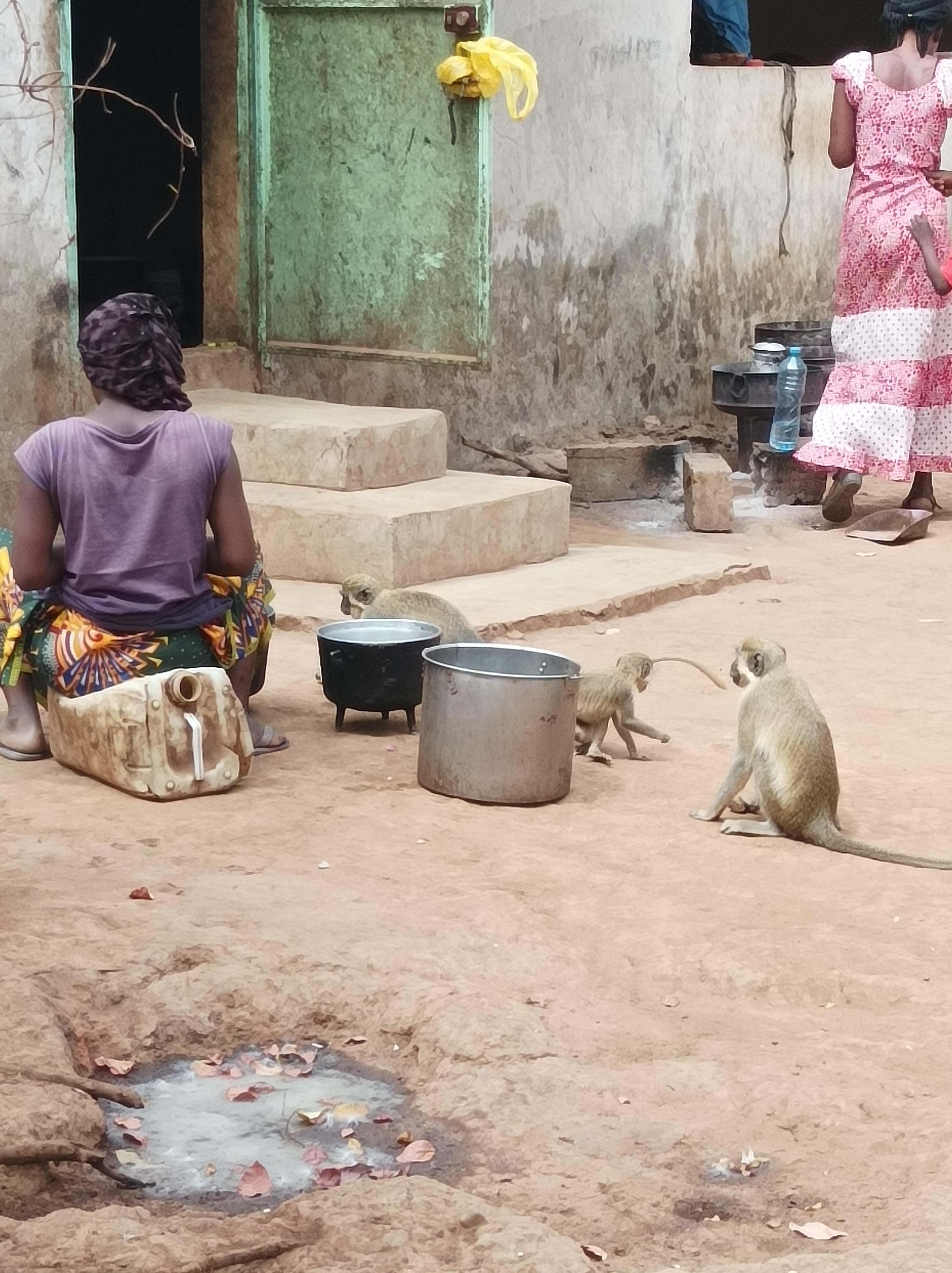 Figure 3
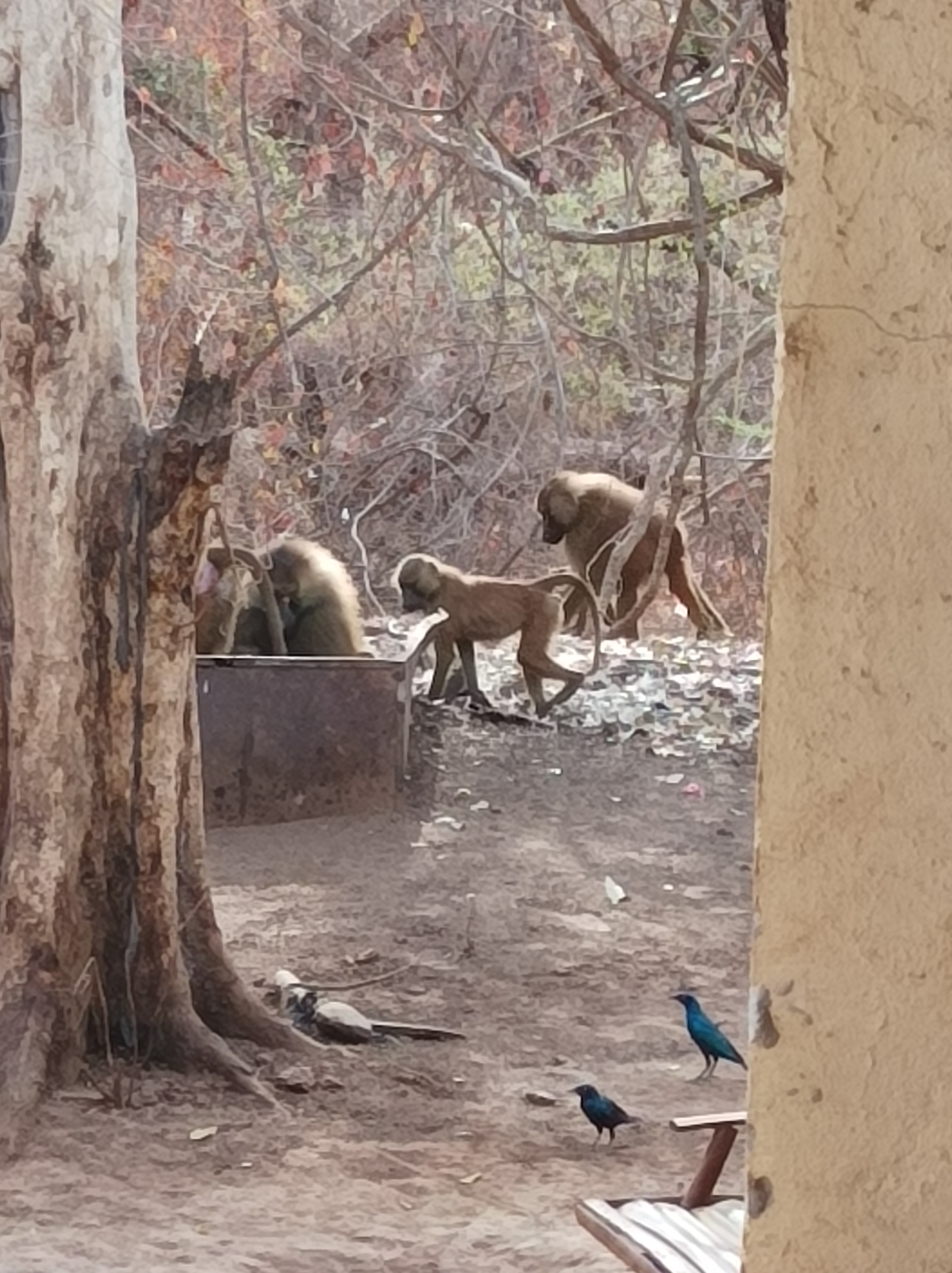 Figure 4
- —University of Liege
- —Niockolodge/Elleg Fondation
Peer Reviews
No public reviews on file for this paper yet. If you reviewed it on a platform where reviews are public (OpenReview, ICLR, NeurIPS, ICML), you can paste yours below so the community can read it here.
Videos
No videos yet. Explain this paper in a talk, walkthrough, or lecture? Add one.
Taxonomy
TopicsZoonotic diseases and public health · Yersinia bacterium, plague, ectoparasites research · Viral Infections and Vectors
Fifty‐eight percent of terrestrial mammals use burrows. Some species dig their own burrows, while others only occupy preexisting burrows (Kinlaw 1999). Burrows play a vital role in the survival of wildlife in arid and semi‐arid environments. They provide shelter from predators and during bushfires and maintain a wildlife‐friendly microclimate with more stable temperatures and humidity than outside (Kinlaw 1999; Whittington‐Jones et al. 2011).
Several species can cohabit within the same burrow. For example, aardvark ( Orycteropus afer Pallas, 1766) burrows can be used by more than 20 species of mammals, birds, and reptiles in a year (Whittington‐Jones et al. 2011). Lehmann et al. (2020) showed in Gabon that giant pangolins (Smutsia gigantea Illiger, 1815) share burrows with African brush‐tailed porcupines ( Atherurus africanus Gray, 1842), white‐bellied pangolins (Phataginus tricuspis Rafinesque, 1821), small rodent species (order Rodentia), genets (Genetta spp. Cuvier, 1816), mongooses (e.g., Atilax paludinosus Cuvier, 1829), and microbats (suborder Microchiroptera). However, these interspecies cohabitations within burrows remain poorly documented. This proximity increases the probability of disease transmission from one species to another, especially when they are also hosting ticks capable of transmitting various pathogens. Burrows can, therefore, be potential sites for interspecies contamination (Lehmann et al. 2020). Some of these diseases, known as zoonoses, can be transmitted to humans. Indeed, most infectious agents impacting humans are zoonoses, and 70% of these have wild animals as hosts (Kumar et al. 2013). Moreover, three main orders (rodents, bats, and primates) are collectively involved as carriers of the majority (76%) of zoonotic viruses described to date (Johnson et al. 2020). It is now recognized that a collaborative, multisectoral, and transdisciplinary One Health approach (Narrod et al. 2012) including improved knowledge and monitoring of ecosystem health, is required to achieve optimal health outcomes for people, animals, and ecosystems. Burrows, as a potentially important sites for the exchange of zoonotic diseases between wild species, deserve to be actively monitored. This is particularly true in Senegal, where zoonoses such as rabies are considered significant health issues (Msolo et al. 2020; Faye et al. 2022). The Niokolo Koba National Park, with the most diverse terrestrial mammal community in the country (Gueye et al. 2022), is therefore a prime study site from this perspective, especially given that the tourist camps it hosts are frequented by primates in regular interaction with rangers and tourists (Mediannikov et al. 2020).
This preliminary descriptive study aims to document the use of burrows by different species (especially primates) in Niokolo Koba National Park around the Niokolodge (an eco‐tourism facility).
We characterized and monitored 92 burrows within a 7 km radius of the Niokolodge (42 burrows from February to May 2023 and 50 burrows from March to April 2024), targeting camera traps at 105 burrow entrances. Camera traps have already been used to monitor various species of mammals occupying burrows, including bats (Kondo 2018). This is a particularly effective tool for monitoring rare and elusive species. Bushnell Core DS‐4 K cameras were used to monitor burrows. Camera parameters were adjusted: image size was set to “medium” to avoid saturation of SD cards, the “fast motion” option was activated to maximize detections, and video duration was set at 15 s, with a trigger delay of around 0.5 s after motion detection (Fonteyn et al. 2022). The sensor was set to “High”, as recommended in the recommendations of the Bushnell user guide (2021), this setting being suitable for conditions where air temperature exceeds 40°C to improve detection capability. The videos captured by the camera traps were manually sorted using the Timelapse software (version 2.3.0.6). For each video, the following information was recorded: the species identified, based on “The Kingdon Field Guide to African Mammals” (Kingdom, 2013), the time of day (night/day), the animal interest in the burrow, and penetration of a number of individuals. Two events were considered independent if they were separated by an interval of at least 30 min.
The burrows observed were all dug by aardvarks and measured around 60 cm diagonally at the entrance. The number of entrances per burrow was highly variable, with 1–8 entrances observed. For each burrow, we oriented the camera to face the most used entrances (determined based on animal tracks and traces). The cameras were mounted on a stake 1 meter from the burrow entrance to observe the interior and were protected from the sun using a small handmade roof. Between February and April 2023 and March and April 2024, we monitored each burrow entrance for 10–20 days using a single camera trap. The total sampling effort was 1460 camera days.
We analyzed the species occurrences in and around each burrow. We observed three species of terrestrial primates (patas monkey Cercopithecus patas Schreber, 1774, vervet monkey Cercopithecus sabaceus Linnaeus, 1766, Guinea baboon Papio papio Desmarest, 1820), demonstrating genuine interest in burrows occupied mainly by bats and warthogs (Table 1).
All three primate species are interested in burrows. They either forage in the entrance (Class 2, Table 1) or even penetrate the interior (Class 3, Table 1). These findings corroborate the observations of Turner et al. (2019) with grivet ( Chlorocebus aethiops Linnaeus, 1758), which use aardvark burrows to protect themselves from the heat. Observations of primates around and within burrows at Niokolo Koba are proportionally much less frequent than other taxa (Table 1), but the observations made are not just random captures of individuals passing in front of the camera; primates show interest in the burrows, foraging around and at the entrances, and sometimes entering, likely in search of insects and arthropods taking refuge inside during the dry season (see videos 1, 2, 3 and 4 in Supporting Information).
We also observed species co‐occurrences. A co‐occurrence is defined in this study as two species, each represented by at least one individual, entering the same entrance belonging to the same burrow during the observation period by cameras. We observed 13 burrows in which bats entered an entrance where the presence of baboons was recorded nearby (see for example videos 5 and 6 of baboons and chiropterans emerging from the same burrow 10 days apart). Bats roost indoors but enter and exit many times a night. Baboons and bats were recorded entering the same entrance in two burrows (Table 2). We also recorded several co‐occurrences between primates and other species, including two co‐occurrences of Guinea baboon Papio papio with the guinea fowl Numidia meleagris, one co‐occurrence of Papio papio with the common warthog Phacochoerus africanus , one co‐occurrence of Papio papio and the aardvark Orycteropus afer (see video 7, 8 and 9 where the warthog, aardvark and fowl emerges from the same entrance as the Baboons foraging in video 3 in Supporting Information), one co‐occurrence of Papio papio and stone partridge Ptilopachus petrosus , one co‐occurrence of the vervet monkey Cercopithecus sabaeus and Numidia meleagris, one between Cercopithecus sabaeus and the aardvark Orycteropus afer , and finally one co‐occurrence between Cercopithecus patas and Numidia meleagris. Even if primate penetration of burrows is not very frequent, the three species of primates in the park are confirmed to frequent burrows occupied by a wide variety of taxa.
These interspecies burrow visitations can potentially lead to interspecies transmission of pathogens common to the species involved, as already demonstrated by Alexander et al. (2015) concerning pathogen transmission between primates and bats. Among these, the most concerning for humans in Senegal are likely Cryptosporidium (an infectious agent causing severe diarrhea and a significant health issue to people in developing countries and carried in particular by cats, dogs, and cattle) and the rabies virus (notably carried by bats and terrestrial carnivores), which are considered significant health concerns (Faye et al. 2022; Msolo et al. 2020; Sow et al. 2016). Bats are known to harbor and transmit the most documented zoonoses to humans (Johnson et al. 2020), and their sharing of burrows with primates is a source of concern, especially if we remember that transmissions between primates and bats have already led to epidemics of deadly viruses such as Ebola (Alexander et al. 2015). Moreover, we observe the presence of chiropterans Nycteris macrotis in burrows. This species could present zoonotic risks, as it was identified in Guinea by Lacroix et al. (2020) as a carrier of β‐coronavirus (β‐CoV) belonging to the MerbeCoV subgenus, which also includes other coronaviruses similar to MERS‐CoV‐like viruses capable of being transmitted between humans and animals. These findings justify specific monitoring, particularly on the outskirts of the park, where wildlife‐human interactions are most significant. From a One Health perspective, monitoring the interactions of vervet monkeys with other species is critical. These monkeys are both crop predators frequently observed in human‐impacted environments and animals that interact with tourists and guides in the camps of Niokolo Koba National Park (see Photo S1 and S2 in Supporting Information). For instance, Mediannikov et al. (2020) demonstrated the presence of Treponema pallidum subsp. pertenue, a bacterium belonging to the same group as those responsible for human venereal syphilis in green monkeys within tourist camps of Niokolo Koba Park. This strain is the agent of pian disease, which causes chronic skin infections in humans characterized by warty tumors on the skin that develop into ulcers.
From the burrow to the tourist camp, a whole range of species interact (Figure 1), interactions that need to be documented and understood for the sake of prevention.
The limitations of this preliminary study suggest future research directions: ensuring the identification of all bat species through passive acoustic methods, accounting for Senegal's marked seasonality, and identifying pathogens shared between primates and bats.
We assume that this first descriptive contribution does not provide conclusive evidence of pathogen or zoonosis transmission in or around burrows. However, we aim to draw the scientific community's attention to the fact that burrows serve as critical interaction points for various taxa, some of which are reputed to carry zoonoses. As such, these burrows should be considered as potential “One Health hotspots” to be monitored, especially when frequented by primates in contact with rangers or tourists.
Author Contributions
Cédric Vermeulen: conceptualization (lead), funding acquisition (lead), investigation (supporting), methodology (equal), supervision (lead), validation (equal), writing – original draft (lead), writing – review and editing (lead). Jérôme Vandebos: data curation (lead), investigation (equal), writing – review and editing (supporting). Daelemans Virginie: data curation (equal), investigation (equal), writing – review and editing (supporting). Simon Lhoest: validation (equal), writing – review and editing (equal).
Ethics Statement
No animals were captured, handled, or disturbed during this study. The camera traps were installed to avoid disturbing the animals, and the observations are based on photos and videos taken in the absence of observers.
Conflicts of Interest
The authors declare no conflicts of interest.
Supporting information
Photo S1.
Photo S2.
Data S1.
The reference list from the paper itself. Each links out to its DOI / PubMed record.
- 1Alexander, K. A. , C. E. Sanderson , M. Marathe , et al. 2015. “What Factors Might Have Led to the Emergence of Ebola in West Africa?” P Lo S Neglected Tropical Diseases 9, no. 6: e 0003652. 10.1371/journal.pntd.0003652.26042592 PMC 4456362 · doi ↗ · pubmed ↗
- 2Faye, M. , O. Faye , N. di Paola , et al. 2022. “Rabies Surveillance in Senegal 2001 to 2015 Uncovers First Infection of a Honey‐Badger.” Transboundary and Emerging Diseases 69, no. 5: e 1350. 10.1111/tbed.14465.35124899 · doi ↗ · pubmed ↗
- 3Fonteyn, D. , J.‐L. Doucet , A. Fayolle , et al. 2022. Faune FAC: Boite à Outils Méthodologique Pour la Mise en Place D'inventaires Par Pièges Photographiques. U Liège/Gembloux Agro‐Bio Tech, PPECF. https://www.gembloux.ulg.ac.be/faunefac/.
- 4Gueye, M. , D. Cauteren , L. Mengual , et al. 2022. “Conflicts Between Large Carnivores and Local Pastoralists Around Niokolo Koba National Park, Senegal.” European Journal of Wildlife Research 68, no. 1: 9. 10.1007/s 10344-021-01556-5. · doi ↗
- 5Johnson, C. K. , P. L. Hitchens , P. S. Pandit , et al. 2020. “Global Shifts in Mammalian Population Trends Reveal Key Predictors of Virus Spillover Risk.” Proceedings of the Royal Society B 287: 20192736.32259475 10.1098/rspb.2019.2736 PMC 7209068 · doi ↗ · pubmed ↗
- 6Kinlaw, A. 1999. “A Review of Burrowing by Semi‐Fossorial Vertebrates in Arid Environments.” Journal of Arid Environments 41: 127–145.
- 7Kingdon, J. , D. Happold , T. Butynski , M. Hoffmann , M. Happold , and J. Kalina . 2013. Mammals of Africa (6 vols). Bloomsbury Publishing.
- 8Kondo, A. 2018. “Interspecific Burrow Sharing Between Mammals in Countryside in Japan.” Mammal Study 43, no. 3: 213–218.