The effect of deferring feedback on rule-based and information-integration category learning
Charlotte E. R. Edmunds, Kathryn Carpenter, Andy J. Wills, Fraser Milton

TL;DR
This study explores how delaying feedback affects learning categories based on rules versus integrating information, showing that the impact is more complex than previously thought.
Contribution
The study directly examines how category structure and stimulus type influence deferred feedback effects, revealing complexities not captured by existing theories.
Findings
Deferred feedback impairs information-integration learning more than conjunction tasks with original stimuli.
The deferred feedback effect is influenced by both category structure and stimulus type.
Results challenge existing dual-process and single-system theories of category learning.
Abstract
Previous work has shown that deferring feedback significantly impairs two-dimensional information-integration category learning, often thought to recruit an implicit learning system, but leaves intact unidimensional rule-based learning, commonly assumed to engage an explicit system. These results were taken to support the influential COmpetition between Verbal and Implicit Systems (COVIS) dual-process theory. This conclusion has subsequently been challenged by the finding that this dissociation disappears when the number of relevant dimensions is matched between tasks. However, as well as replacing a unidimensional rule-based task with a two-dimensional conjunction task, a different set of stimuli were used making it unclear which of these alterations was driving the difference in results. The current paper directly examined how both category structure and stimulus type influence the…
Genes, proteins, chemicals, diseases, species, mutations and cell lines named across the full text — each resolved to its canonical identifier and authoritative record.
Click any figure to enlarge with its caption.
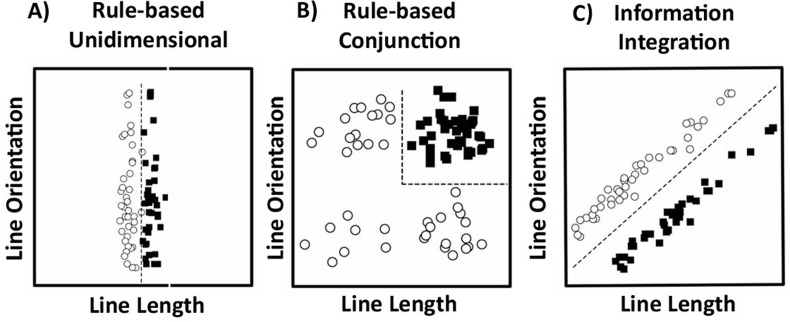 Fig 1
Fig 1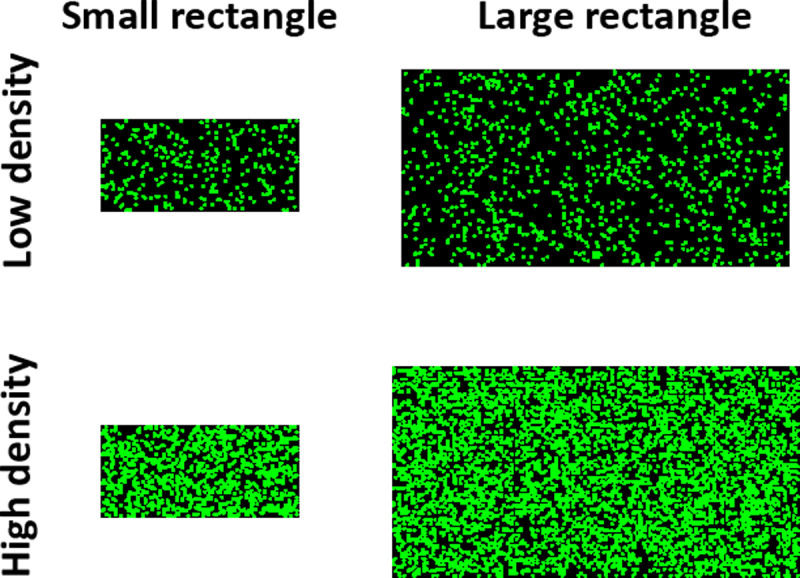 Fig 2
Fig 2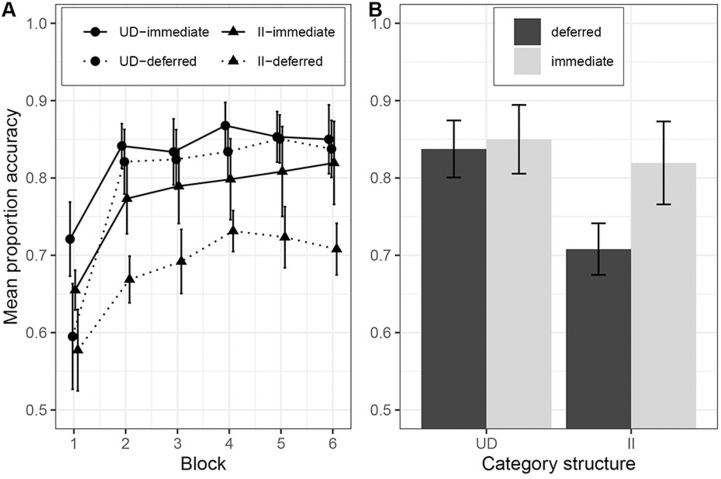 Fig 3
Fig 3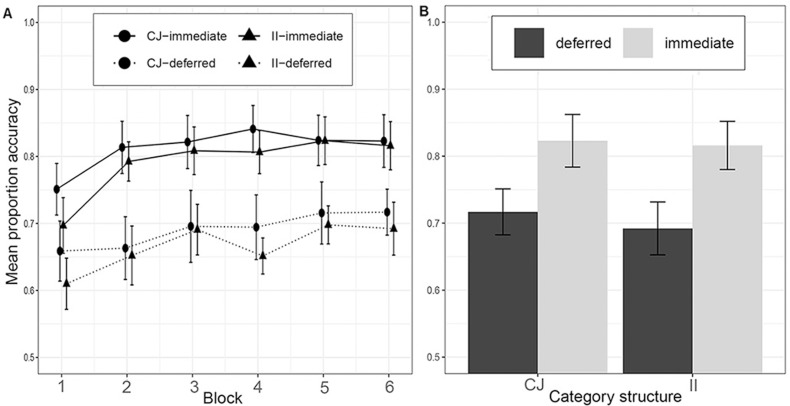 Fig 4
Fig 4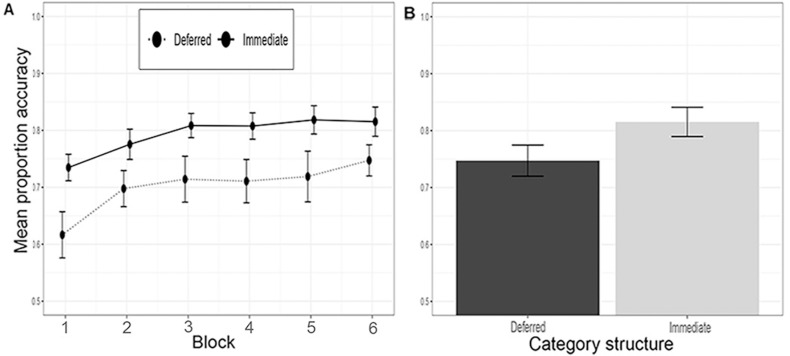 Fig 5
Fig 5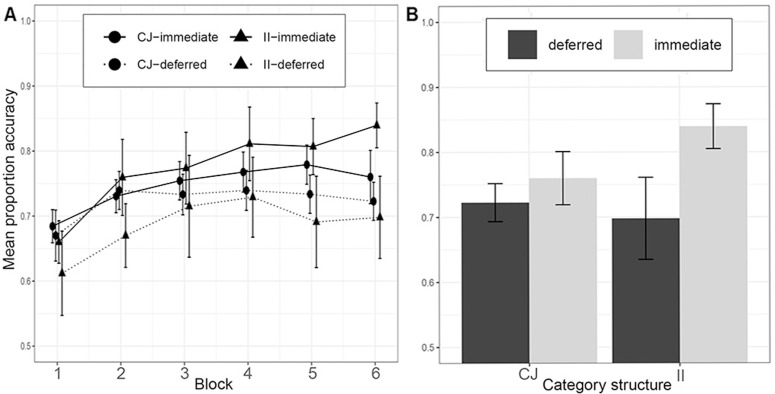 Fig 6
Fig 6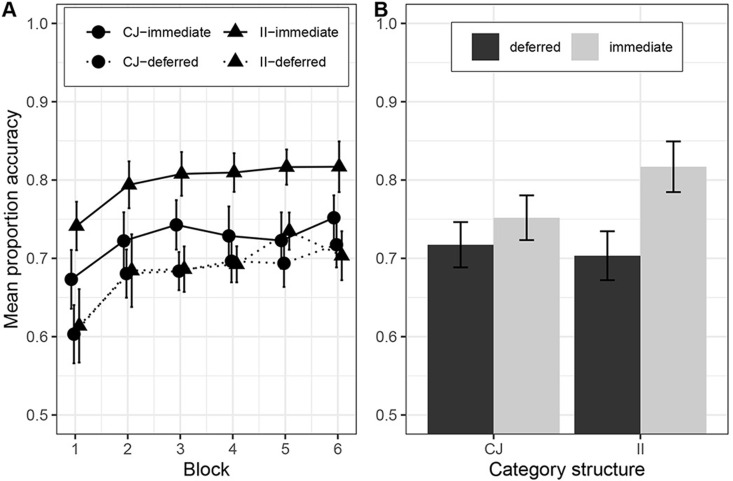 Fig 7
Fig 7- —http://dx.doi.org/10.13039/501100000269Economic and Social Research Council
Peer Reviews
No public reviews on file for this paper yet. If you reviewed it on a platform where reviews are public (OpenReview, ICLR, NeurIPS, ICML), you can paste yours below so the community can read it here.
Videos
No videos yet. Explain this paper in a talk, walkthrough, or lecture? Add one.
Taxonomy
TopicsChild and Animal Learning Development · Action Observation and Synchronization · Language and cultural evolution
Introduction
Category learning is a fundamental cognitive skill that enables us to function effectively in our everyday environment. Classifying items into meaningful groups enables us to react to the virtually infinite amount of novel items we come across in our daily lives in an appropriate manner rather than having to learn about every item individually. The importance of categorization to human functioning is reflected in the considerable amount of attention that has been paid in recent decades to the processes that underlie category learning. Perhaps the most enduring and contentious debate in the field is the question of whether category learning is best explained by dual process theories that propose categorization can be the result of both explicit and implicit learning systems [1,2] or single system accounts that argue that categorization can most parsimoniously be explained as the result of a single explicit system [3,4].
The COVIS (COmpetition between Verbal and Implicit Systems) model [1] is arguably the most influential dual process account of category learning. COVIS assumes that people have two parallel systems of category learning. The explicit system is rule-based and requires working memory to generate and test rules. The explicit system is consequently thought to be recruited for easy to verbalise rule-based (RB) category structures such as unidimensional (UD) or conjunction (CJ) rules, shown in Figs 1a and 1b. The implicit system combines information from multiple dimensions predecisionally through immediate feedback to create stimulus-response associations. The implicit system is therefore thought to be preferentially engaged when category structures are difficult or impossible to verbalize because the explicit system is not effective at learning these types of structures. COVIS research has typically used an information-integration (II) task as shown in Fig 1c to encourage use of the implicit system because the optimal diagonal decision boundary cannot easily be captured by a rule.
Examples of unidimensional, conjunction, and information-integration category structures.Each open circle represents one member of category A; each filled square represents one member of category B. Fig adapted from Wills et al. [5] and Zeithamova and Maddox [6].
These category structures have revealed a wide range of behavioral dissociations, which have been interpreted as evidence supporting COVIS (for reviews, see [7,8]). However, a number of these dissociations have subsequently been criticised either for being driven by methodological flaws [9] or for failing to replicate [10] which means that this debate is still far from settled.
The current work therefore aims to extend this previous research by evaluating a particularly intriguing behavioral dissociation. Smith et al. [11] looked at the effect of different forms of feedback on learning two different category structures. They presented participants with either a UD RB or an II category structure. Participants either received immediate feedback after every trial, or deferred feedback collectively presented after every six categorization trials. There was a significant interaction - II participants receiving deferred feedback were impaired compared to II participants who received immediate feedback, yet RB participants were unaffected by the feedback manipulation. Smith et al. argue that this dissociation provides some of the strongest evidence to date for the existence of separate explicit and implicit category learning systems.
COVIS explains this pattern of results by proposing that RB learning should remain intact when receiving deferred feedback as participants would optimally engage the explicit system which stores the responses made to each trial, as well as the category learning rule, in working memory. This enables the explicit system to hold category learning information for later use, and it is therefore unimpaired by deferred feedback as information can be stored until the later feedback presentation. This assumption led the authors to predict that RB learning would ‘flourish’ [11, p. 450] in deferred feedback conditions. However, COVIS also predicts that II learning would be disadvantaged by deferred feedback as optimal II learning is performed by the implicit system, which procedurally associates the representations of the perceived stimulus and the response made through a dopamine release initiated when presented with positive feedback. However, if feedback is delayed or deferred then the neural representation of the response made and the stimulus seen will have decayed, and therefore the representations cannot be associated when dopamine is released [1].
There has, however, been extensive debate on the merits of comparing an II task to a UD RB task. Dual-process proponents argue that these category structures act as “elegant mutual controls” [11, p. 249] as they are simple rotations of one another, matched in terms of category size and number of categories, as well as within-category similarity and between-category separation. On the other hand, critics point out that these structures are well matched on everything apart from the number of dimensions relevant for categorising. In the UD structure, only one dimension is relevant, whilst in the II structure both dimensions are relevant leading to the claim that the II task is more cognitively difficult than the UD task. This is consistent with the common finding that the II condition typically leads to poorer performance than the UD condition [2,12]which could potentially be the cause of dissociations found where this is the case. According to this view, a two-dimensional CJ RB structure (as in Fig 1b) provides a more suitable comparison to the two-dimensional II structure than a UD RB task. We note that COVIS proponents also believe that a CJ structure taps into the explicit system and have used it in their own research [6,13,14]. Previous work has shown that when a CJ structure is used instead of a UD structure, dissociations between RB and II category learning disappear [15,16].
This critique motivated Le Pelley, Newell, and Nosofsky [17] to provide a first evaluation of Smith et al.’s [11] experiment. In a between-subjects study, they compared the effect of immediate and deferred feedback on the learning of UD, CJ and II category structures. They replicated the original dissociation between the UD and II category structures. However, they also found a significant interaction between feedback type and the UD and CJ category structures: the negative impact of deferred feedback was significantly greater in the CJ condition than the UD condition. In contrast, there was no difference in the negative effect of deferred feedback between the CJ and II conditions. This is consistent with the idea that the original dissociation was driven by a difficulty effect. Deferred feedback disrupted the II condition, which they argued requires high memory demands to combine multiple dimensions and remember into which category such a combination has previously been assigned. In contrast, the UD condition involves lower memory demands to store the optimal one-dimensional rule. These results appear to pose a challenge to the dual process account proposed by COVIS.
However, there are grounds to believe that such a conclusion may be premature. One notable aspect of both the Smith et al. [11] and Le Pelley et al. [17] studies is that they each relied on a single unreplicated study. Given that in recent times there has been increased recognition of the importance of replicating results to ensure their robustness this seems a limitation in both studies. Whilst it is true that Le Pelley et al. provided a conceptual replication of Smith et al.’s dissociation between the UD and II category structures, they used a different type of stimuli. Specifically, Smith et al. used stimulus rectangles varying in size and dot density (see Fig 2) – which we call the “dot stimuli”. In contrast, Le Pelley et al. used simpler “line stimuli” varying in length and orientation. Whilst the stimuli Le Pelley et al. used have frequently been used in previous COVIS related research [e.g., 13,18,19] they are extremely different from the more perceptually complex dot stimuli used by Smith et al.. This means that there is a second potentially important difference between the studies outside of the introduction of the CJ category structure which potentially could be contributing to the difference in findings and which consequently arguably should have been more tightly controlled.
Examples of the stimuli used in Smith et al. [11] and Experiments 1 and 3.
This potential issue is underscored by the differing pattern of results for the II and UD conditions in the Smith et al. [11] and Le Pelley et al. [17] papers. Le Pelley et al. found that in the immediate feedback control conditions, overall accuracy was lower for the II structure than the UD structure. This is, as discussed above, consistent with past work showing that participants typically find the II structure more difficult to learn than the UD structure. However, Smith et al. found no significant difference in accuracy between II and UD learning under immediate feedback conditions. Their observing a greater effect of deferred feedback for II than UD category learning consequently appears contrary to the difficulty-based explanation outlined earlier. Le Pelley et al. plausibly argued that this difference may reflect that the greater number of participants they recruited in their study gave them greater power to detect subtle effects than Smith et al., but nonetheless it is also suggestive that the differing nature of the stimuli may have an influence on the results and this warrants further investigation. In summary, the question we hope to answer is, do the results of Le Pelley et al. and Smith et al. differ because they used different category structures, or because they used different physical instantiations of those structures? While the latter possibility would still speak to the generalizability of Smith et al.’s findings across stimulus types, the former possibility would support Le Pelley et al.’s stronger claim that Smith et al.’s results are an artefactual side effect of failing to match for the number of relevant stimulus dimensions.
Experiment 1
In Experiment 1, we directly replicated Smith et al.’s [11] experiment with participants learning either an II or UD category structure under either deferred or immediate feedback. The category structures were generated by sampling from two multivariate normal distributions, one for each category, rather than the category structures used by Le Pelley et al. [17] which sampled from two multivariate normal distributions for each category. Note that this difference in structure is unlikely to make a difference; however, in the efforts to run a literal replication [20] we tried to match Smith et al. as closely as possible. More importantly we used Smith et al.’s dot stimuli varying in size of rectangle and pixel density rather than the lines varying in length and orientation as in Le Pelley et al.
Methods
Participants and design.
Eighty-seven University of Exeter students completed the experiment (19 males, mean age 20.24 years, SD = 5.32). This sample size was chosen as being similar to that used in Smith et al.’s [11] study. One participant was excluded because they failed to complete the experiment. Participants received course credit or £5 for their participation. This and Experiments 2a, 2b and 3a received ethical approval from the University of Exeter Psychology Ethics Committee (Ref: 2013/509). Data was collected between 25^th^ February 2016 and 29^th^ April 2016.
The experiment had a 2 (Category structure: UD, II) x 2 (Feedback: Immediate, Deferred) between-subjects design. Participants were randomly assigned to each of the four conditions: UD-immediate (N = 20), UD-deferred (N = 21), II-immediate (N = 20), and II-deferred (N = 24).
Stimuli.
The stimuli were the ‘dot stimuli’ used by Smith et al. [11], see Fig 2. They were unframed rectangles of green dots displayed in a black background that varied in the size of the rectangle and the density of the green dots within the rectangle. In the UD conditions, the size of the rectangle was the relevant dimension for categorisation, but for the II conditions both dimensions were relevant. Following Smith et al., 600 stimuli were generated individually for each participant. Thus, whilst participants in each condition had stimuli generated from the same distributions (see Table 1), the precise visual stimuli presented varied between each individual. The values for the stimuli for each category were drawn from a bivariate normal distribution and rounded to the nearest whole number.
Table 1: Distributional characteristics of the unidimensional RB and II category structures in Experiment 1.
Procedure.
Participants were informed that on each trial they would see a novel stimulus which could be categorized as either A or B, and they were asked to learn into which of two categories a series of stimuli belonged through trial and error. Every trial began with a white fixation cross displayed for 500ms in the center of a black screen. This was followed by a stimulus that remained on the screen until the participant responded. Participants pressed the ‘Z’ key on the keyboard if they thought the stimulus belonged in Category A, or the ‘M’ key for Category B. In the immediate feedback conditions, participants received feedback after every trial. If the participant correctly categorized the stimulus, they heard a high-pitched tone and then proceeded to the next trial after a 500ms inter-trial interval. If the participant incorrectly categorized the stimulus, they heard a low pitched tone and proceeded to the next trial after a 4000ms inter-trial interval. Participants were able to take a self-paced break after every 6 trials. In total, participants completed 600 trials.
In the deferred feedback conditions, participants responded to a block of six stimuli, without feedback, with an inter-trial interval of 250ms. At the end of the block of six trials, the feedback was collectively presented. Participants received feedback for correct trials first, hearing a high-pitched tone for every correct categorization response made, each separated by 500ms. A low-pitched tone was then played for every incorrect response made, with each incorrect tone followed by a 4 second ITI. The tones presented were the same as in the immediate feedback condition. The next set of six trials followed after a self-paced break.
Data analysis.
All data analyses were conducted in R [21]. In Experiment 1, we first analysed the data using a 2x2 between-subjects ANOVA with the factors being category structure (UD/II) and feedback condition (Immediate/Deferred) and employed independent samples t-tests where appropriate to further characterize the nature of the effects. We used the same approach in subsequent experiments (except for Experiment 2b where a single independent samples t-test was conducted to explore specifically the effect of feedback on a CJ task). As in Smith et al. [11], in all experiments the proportion of correct responses in the last 100 trials was compared across conditions.
We also calculated Bayes Factors for the ANOVA results we present. This is because, in traditional null-hypothesis significance testing, non-significant results are ambiguous: they could either be due to insufficient statistical power or due to the null hypothesis being correct [22]. It is important to be able to distinguish between these two possibilities.
By convention, if the Bayes Factor is over three then the experiment has found evidence for the experimental hypothesis, whereas if the Bayes Factor is less than a third, the experiment finds evidence for the null hypothesis [23]. A Bayes Factor of one indicates that the evidence is exactly neutral with respect to the experimental and null hypotheses [22]. Values between a third and three are typically interpreted as indicating that the experiment was not sensitive enough and no conclusions can be drawn.
The Bayes Factors in this article were calculated according to the procedure recommended by Dienes [22] using the R script implemented by Baguley and Kaye [24]. The priors were two-tailed normal distributions and a standard deviation of half the mean. In Dienes [22], the standard deviation of the prior is typically defined as half the mean; this captures the belief that the true mean difference could plausibly take a range of values, but that an effect in the opposite direction to that previously observed is unlikely.
Experiments 1, 2a, and 3a used the means from Smith et al.’s [11] original study as the prior of our Bayes Factor calculations. In Experiments 2b and 3b, we utilized the means from Experiments 2a and 3a, respectively, as both served to replicate key elements of these earlier studies.
In all experiments we report the analysis of learning performance after excluding non-learners. There are two ways of excluding non-learners in the COVIS literature. Newell, Dunn, & Kalish [25] excluded participants who were not significantly above chance by the final block. In other words, those who scored less than 0.6 on the final 100 trials. An alternative approach is the method from Smith et al. [11] where participants were excluded if they performed significantly lower in the last 100 trials compared with the first 100 trials. Unfortunately, Smith et al. did not specify exactly how they calculated this, so here we used a chi-squared test as this seemed most appropriate. In all experiments, we report statistical analyses based on the participants that remain after using the Newell et al. exclusion criterion. In the Supplemental Information, we report the analyses using the Smith et al. exclusion criteria for each experiment reported in this paper. In all cases, the core pattern of results was the same no matter the exclusion criterion used. The raw data for all experiments is available at https://osf.io/m7gyj/
Results.
We excluded 11 participants: one from the UD-deferred condition, two from the II-immediate condition and eight from the II-deferred condition for failing to meet the Newell et al. [25] learning criterion. Fig 3 shows the results of Experiment 1. There was evidence of a significant interaction between category structure and feedback type, F(1*,71) = 5.53, p = .021, η_g_^2^ = 0.07, BF = 6.52. Welch independent samples t-tests revealed there was a significant drop in accuracy in the deferred feedback condition compared to the immediate feedback condition in the II conditions, Mimm = 0.82, SD = 0.11, Mdef = 0.71, SD = 0.06, t(27.4) = 3.74, p < .001, d = 1.24, but not in the UD conditions, Mimm = 0.85, SD = 0.10, Mdef = 0.84, SD = 0.08, t(39.2) = .45, p = .65, d = .14. There was a significant main effect of category structure on accuracy, F(1,71) = 14.47, p < .001, η_g_^2^ = 0.17, BF = 351.32, with participants in the UD conditions, M = 0.84, SD = 0.09, more accurate than II participants, M = 0.77, SD = 0.10. There was also a statistically significant main effect of feedback type, F(1,71) = 8.68, p = .004, η_g_^2^ = 0.11, BF = 45.67, with participants in deferred feedback conditions performing less accurately, M = 0.78, SD = 0.10, than participants in the immediate feedback conditions, M = 0.84, SD = 0.*10. Like Smith et al. [11], we found no significant difference in accuracy for UD and II categorization under immediate feedback, t(35.3) = .92, p = .36, d = .29. While there was no overall difference in accuracy between feedback conditions for UD category learning, an exploratory post-hoc analysis (Bonferroni corrected alpha = .008) revealed that there was a significant impairment of deferred feedback when considering Block 1 alone, t(34.81) = 3.15, p = .003, d = .99.
Learning performance in Experiment 1.A) across the experiment, where each block contains 100 trials, and B) in the last block. Category structures: UD = Unidimensional, II = Information-integration.
Discussion.
Experiment 1 successfully replicated the key results from Smith et al. [11] that were taken as providing strong support for COVIS. There was a significant interaction between category structure and feedback type, with II performance significantly impaired by deferring feedback whereas UD accuracy was statistically unaffected by feedback type. Additionally, unlike Le Pelley et al. [17] but as in Smith et al., we found no significant difference in UD and II accuracy in the immediate conditions. The comparable levels of accuracy between the II and UD conditions suggests that the dot stimuli are well controlled in terms of difficulty.
One somewhat unexpected result was that a post-hoc analysis revealed a significant impairment of deferred feedback for UD categorization in Block 1. It is unclear from Smith et al.’s [11] study whether they observed a similar effect. Whilst this result should be interpreted with caution given it was unanticipated and has not been replicated, it does suggest that deferred feedback may have a short-term impact on UD learning. Future work could explore whether feedback manipulations, such as providing information about how close a stimulus is to the decision boundary, previously shown to enhance rule-based learning [26], may increase the persistence of the deferred feedback effect for UD category learning. Nevertheless, this intriguing finding does not challenge Smith et al.’s central claim that deferred feedback impairs II learning to a greater extent than UD RB learning.
Experiment 2a
Having successfully replicated Smith et al.’s [11] finding of a dissociation in the effect that deferred feedback has on UD and II learning, in Experiments 2a and 2b we investigated whether we could replicate Le Pelley et al.’s [17] key result that for the line stimuli this effect is not present when a CJ category structure is compared to an II structure.
Method
Participants and design.
Eighty-six University of Exeter students completed the experiment (16 males, mean age = 19.15 years, SD = 2.77) between 10^th^ November 2015 and 19^th^ February 2016. Four participants were excluded due to a data error where their condition was not recoverable. Participants received course credit or £5 remuneration for participation in the study. The study employed a 2 (category structure) X 2 (feedback type) design creating four conditions which participants were randomly allocated to: CJ immediate (n = 21); CJ deferred (n = 20); II immediate (n = 20); and II deferred (n = 21).
Stimuli.
As in Le Pelley et al. [17], we used black line stimuli on a white background varying in length and orientation. We used sets of 600 conjunctive RB and II stimuli so that both dimensions were relevant for learning in the RB and II conditions. These stimuli were generated in the same way as in Le Pelley et al. (the distributions are shown in Table 2) and in Filoteo et al. [13]. The conjunction rule was “short, upright lines belong in category A, and the rest in category B” and the II condition was separated by a diagonal decision boundary. There was a 5% overlap between the categories so that for both the CJ and II tasks the maximum accuracy that could be achieved was 95%.
Table 2: Distributional characteristics of the conjunction RB and II category structures in Experiments 2a and 2b.
Procedure.
The procedure used was identical to Experiment 1.
Results.
We excluded one participant from the CJ-immediate condition, four participants from the CJ-deferred condition, and 7 participants from the II-deferred conditions for failing to meet the learning criterion [25]. The results of Experiment 2a are shown in Fig 4. We again assessed performance in the last 100 trials across conditions using a 2 x 2 ANOVA with the factors category structure (II/RB) and feedback type (immediate/deferred). We found no significant effect of category structure on accuracy (CJ, M = 0*.78, SD = 0.08; II, M = 0.77, SD = 0.09), F(1,66) = .77, p = .380, η_g_^2^ = .01, BF = .10. There was, however, a main effect of feedback type, F(1,66) = 40.43, p < .001, η_g_^2^ = .38, BF = 62.8^7^. with participants in deferred feedback conditions performing less accurately, M = 0.71, SD = 0*.*07, than participants in immediate feedback conditions, M = 0.82, SD = 0.08. However, as in Le Pelley et al., there was no evidence for the key interaction between category structure and feedback type, F(1,*66) = .24, p = .626, η_g_^2^ = .004, BF = .14, that we observed in Experiment 1 and Smith et al. [11] found in their study when comparing the II condition to the UD condition.
Learning performance in Experiment 2a.A) across the experiment, where each block contains 100 trials, and B) in the last block. Category structures: CJ = Conjunction, II = Information-integration.
Discussion.
This experiment successfully replicated the key result of Le Pelley et al. [17] by finding that deferred feedback similarly reduced learning performance in both the CJ and II tasks relative to the immediate feedback condition. Our results so far support the idea that the deferred feedback effect is present when the II category structure is compared to a UD structure but not a CJ structure. Nevertheless, given the pivotal role that the CJ condition has in this debate we decided in Experiment 2b to further confirm the result that CJ learning with the line stimuli is impaired by deferring feedback.
Experiment 2b
Methods
Eighty-six University of Exeter students completed the experiment (23 males, mean age = 20.64 years, SD = 4.04) between 28^th^ January 2015 and 8^th^ October 2015. Participants received course credit or £5 remuneration for participation in the study. A between-subjects design was implemented with two conditions: CJ learning with immediate feedback, and CJ learning with deferred feedback. The CJ category structure was the same as in Experiment 2a and we again used the line stimuli. The procedure was identical to the previous experiments.
Results.
We excluded 17 participants from the deferred feedback condition and three participants from the immediate feedback condition for not reaching the learning criterion. The results are displayed in Fig 5. There was a significant main effect of feedback type, F(1*,63) = 14.56, η_g_^2^ = 0.*19, *p < .001, BF = 442, with participants in the immediate condition more accurate, M = 0.82, SD = 0.08, than those in the deferred feedback condition, M = 0.74, SD = 0.*07.
Learning performance in Experiment 2b.A) across the experiment, where each block contains 100 trials, and b) in the last block. Category structures: CJ = Conjunction, II = Information-integration.
Discussion.
In Experiment 2b, we confirmed the finding that participants learning a CJ category structure performed significantly worse when receiving deferred feedback than did participants in the immediate feedback condition. Taken together with the results of Experiment 2a, this indicates that both CJ and II learning can be disrupted by deferred feedback which is consistent with the account put forward by Le Pelley et al. [17].
Experiment 3a
In Experiment 1, we replicated the original experiment of Smith et al. [11] using the dot stimuli. We found a significant interaction as deferring feedback impaired performance on a II task, but left learning of a UD task intact. In Experiments 2a and 2b, we replicated the work of Le Pelley et al. [17] using the line stimuli. There was no interaction and we found that deferring feedback reduces performance in both II and CJ tasks. In Experiments 3a and 3b, we examine whether our results from Experiments 2a and 2b extend to the dot stimuli used in Smith et al.’s study.
If we again find an absence of an interaction, with II and CJ learning being equally impaired by deferred feedback, then this would provide considerable support for Le Pelley et al.’s [17] proposal that Smith et al.’s [11] original finding was driven by the II task having two relevant dimensions and the UD task only one relevant dimension and that when this confound is removed the effect disappears. On the other hand if the pattern of CJ performance does not generalise to the dot stimuli employed by Smith et al. and II learning is more impaired than CJ learning under deferred feedback then this would be a striking demonstration of the critical influence the type of stimuli have on whether the effect is observed and add a level of complexity to this debate not captured in either the Smith et al. or Le Pelley et al. papers.
Methods
Participants and design.
Eighty-four University of Exeter students completed the experiment (between 29^th^ April 2016 and 8^th^ June 2017). Four participants were excluded due to a data error where their condition was not recoverable. Participants received course credit or £5 remuneration for participation in the study. The study employed a 2 (category structure) X 2 (feedback type) design with participants randomly allocated to one of the four conditions: CJ immediate (n = 21); CJ deferred (n = 21); II immediate (n = 22); and II deferred (n = 20).
Stimuli.
The stimuli were the dot stimuli used by Smith et al. [11] in their original experiment and in our Experiment 1. As in previous experiments there were 600 unique stimuli in the II and CJ conditions. The stimuli for each participant were randomly generated using the procedure outlined in Experiment 1 (the distributions are displayed in Table 3).
Table 3: Distributional characteristics of the conjunction RB and II category structures in Experiments 3a and 3b.
Procedure.
The procedure was identical to the preceding experiments.
Results.
One participant was excluded from the CJ-immediate condition, two participants from the CJ-deferred condition, four participants from the II-immediate condition and 11 participants from the II-deferred condition for failing to meet the learning criterion. Fig 6 shows the results of Experiment 3a. There was a significant interaction between feedback type and category structure, F(1*,65) = 7.15, p = .009, η_g_^2^ = 0.10, BF = 14.17. Welch independent samples t-tests revealed that deferred feedback reduced accuracy in II category learning relative to immediate feedback, Mimm = 0.84, SD = 0.07, Mdef = 0.70, SD = 0.09, t(15.4) = 4.37, p < .001, d = 1.83, but there was no significant effect of feedback on CJ category learning, Mimm = 0.76, SD = 0.09, Mdef = 0.72, SD = 0.06, t(35.3) = 1.55, p = .129, d = .48. There was a significant main effect of feedback condition, F(1,65) = 21.09, p < .001, η_g_^2^ = 0.24, BF = 13025, with participants learning better with immediate feedback, M = 0.80, SD = 0.09, than deferred feedback, M = 0.71, SD = 0.07. The main effect of category structure was not statistically significant, F(1,65) = 1.98, p = .164, η_g_^2^ = 0.*03. BF = .05 (II = .79, SD = .10; CJ = .74, SD = .08).
Learning performance in Experiment 3a.A) across the experiment, where each block contains 100 trials, and b) in the last block. Category structures: CJ = Conjunction, II = Information-integration.
Discussion.
In this experiment, we found that deferred feedback impaired II category learning to a significantly greater extent than CJ learning. This pattern of results is different from what we observed with the line stimuli in Experiments 2a and 2b and what Le Pelley et al. [17] found in their paper and suggests that the type of stimuli used appears to be driving the discrepancy in results between the two studies rather than whether the II structure is compared to a UD or a CJ task. In contrast, these results appear consistent with COVIS by demonstrating that the effect of deferred feedback is greater for II than RB category structures. Nevertheless, before drawing any strong inferences about these results we ran a direct replication of this study to see whether this result is reliable.
Experiment 3b
Method
Participants and design.
Eighty-four University of Plymouth students completed the experiment (between 11^th^ October 2018 and 30^th^ November 2018). The study employed a 2 (category structure) X 2 (feedback type) design creating four conditions: CJ immediate (n = 24); CJ deferred (n = 25); II immediate (n = 23); and II deferred (n = 24). This experiment received ethical approval from the University of Plymouth, Psychology Ethics Committee (Ref: 18/19-1006).
Stimuli and procedure.
The stimuli were generated in the same way as in Experiment 3a and the procedure was identical to all the previous experiments.
Results.
Two participants from the CJ-immediate condition, six participants from the CJ-deferred condition, and three participants from the II-deferred condition were excluded for being non-learners. The results of Experiment 3b are shown in Fig 7. As in Experiment 3a, there was a significant interaction between feedback type and category structure, F(1*,81) = 7.27, p = .009, η_g_^2^ = 0.08, BF = 18.01, indicating that the impairment of deferred feedback on II category learning, Mimm = 0.82, SD = 0.07, Mdef = 0.70, SD = 0.07, t (42.0 = 5.26, p < .001, d 1.58) was greater than on CJ category learning, Mimm = 0.75, SD = 0.06, Mdef = 0.72, SD = 0.06, t (38.8) = 1.77, p = .08, d = .55. There was also a significant effect of feedback condition, F(1,81) = 25.44, p < .001, η_g_^2^ = 0.24, BF = 97826, with participants learning better with immediate feedback (M = .79, SD = .08) than deferred feedback (M = .71, SD = .06). There was no significant main effect of category structure, F(1,81) = 3.03, p = .086, η_g_^2^ = 0.*04, BF = 3.11 (CJ, M = .74, SD = .06; II, M = .76, SD = .09).
Learning performance in Experiment 3b.A) across the experiment, where each block contains 100 trials, and b) in the last block. Error bars are 95% confidence intervals. Category structures: CJ = Conjunction, II = Information-integration.
Discussion.
Experiment 3b successfully replicated the results of Experiment 3a by again finding with the dot stimuli a significant interaction between category structure and feedback type – deferred feedback impaired learning of an II task but not a CJ task. These findings appear, at least on the surface, to challenge Le Pelley et al.’s [17] idea that the effect of deferred feedback on category learning observed in Experiment 1 and in Smith et al. [11] was driven by the greater number of relevant dimensions in the II task than the UD task. This is because in our experiments both the rule-based and information-integration tasks had two relevant dimensions and yet we have obtained the same dissociation of deferred feedback on II and RB category structures as Smith et al.
General discussion
This paper revisited Smith et al.’s [11] finding that deferred feedback significantly impaired learning of a two-dimensional II category structure but had no adverse effect on a UD RB category structure. Smith et al. took this result as providing some of the strongest evidence to date in support of the COVIS dual-process categorization model which proposes that there are separate implicit and explicit category learning systems. They argued that deferred feedback selectively impaired II categorization, as this is thought to engage the implicit learning system which requires prompt feedback, but left UD rule-based categorization intact, because this task is believed to recruit the explicit system which does not need immediate feedback. This claim has subsequently been challenged by Le Pelley et al. [17] who argued that this effect was driven by the II task being more cognitively demanding than the UD task, as whilst only one dimension was relevant for learning the UD task, the II task had two relevant dimensions. This account argues that deferred feedback simply impairs the more difficult task to a greater extent than the easier task. Le Pelley et al. provided support for this by demonstrating that deferred feedback impaired CJ RB learning and II learning, which are matched for the number of relevant dimensions, to the same extent.
In Experiments 1 and 2 we provided the first direct replication of the results of Smith et al. and Le Pelley et al. and confirmed that their results were reliable. However, one notable aspect of Le Pelley et al.’s study was that the stimuli they used – line stimuli varying in length and orientation – were very different from the “dot stimuli” that Smith et al. used – rectangles varying in size and the density of dots – raising the possibility that the reason for the discrepancy in findings between the two studies was not due to whether category structures were matched for the number of relevant dimensions but due to the characteristics of the stimuli used. To discriminate between these two possibilities, in Experiment 3 we used the same CJ and II structures as Le Pelley et al. but now with the dot stimuli that Smith et al. had used. With this approach, consistent with Smith et al., we found a significant interaction with deferred feedback impairing II learning to a greater extent than CJ learning.
This result might seem surprising given that previous evidence supports Le Pelley et al.’s [17] contention that COVIS-related effects can result from failing to match the number of dimensions across II and rule-based tasks [15,16] so there were good reasons for thinking that the same explanation might apply to Smith et al.’s [11] results particularly given Le Pelley et al.’s own findings. However, the results of our Experiment 3 indicate that the difficulty account cannot straightforwardly provide a complete explanation for Smith et al.’s results because the deferred feedback effect was present with the dot stimuli when the number of relevant dimensions was matched across the II and RB conditions. Instead, our results highlight the key role that the type of stimuli employed can have on whether Smith et al.’s deferred feedback effect is obtained.
In the COVIS literature, significant attention has been given to how different types of category structures influence the pattern of behavioral results. However, there has been little exploration of whether the type of stimuli might similarly affect these outcomes. We suspect part of the reason for this is that most COVIS-related experiments use very similar and simple stimuli such as the line stimuli we have used here or Gabor patches varying on bar width and orientation. Indeed, outside Smith et al.’s study, the dot stimuli have seldom been used in COVIS-related work or indeed categorization research more generally. There are valid reasons for focusing on the same type of highly controlled stimuli, but this work raises the question of whether results from such stimuli will generalize to other types, even when using the same category structures. Our findings suggest that while replicating results within the same stimulus set is important, greater emphasis should be placed on ensuring that effects also transfer to other stimulus sets in order to better establish their generality.
Whilst we consider the primary contribution of our paper is highlighting the key role that the type of stimuli play in whether the deferred feedback effect is observed, it is worth considering the implication of our results to the multiple category learning systems debate. Dual process theorists would likely see our results as being consistent with the idea that there are separate explicit and implicit category learning systems. However, the deferred feedback effect occurs in more limited conditions than those described in Smith et al.‘s [11] paper. Furthermore, COVIS currently does not appear to consider stimulus-specific effects so it may need some revision to explain why the deferred feedback effect emerges for the dot stimuli but not the line stimuli.
On the other hand, single process theorists would likely question how compelling this evidence is for dissociable category learning systems by raising concerns about the dot stimuli. One notable aspect of the dot stimuli is that they appear much more perceptually complex than the line stimuli and indeed other stimuli commonly used in COVIS research. There is, of course, nothing wrong with the use of perceptually complex stimuli and one can certainly argue, as we have done above, that it is informative to use a rich mix of stimuli but equally whilst the line stimuli have a straightforward physical-to-psychological mapping, the properties of the novel dot stimuli are not well understood given how little they have been used in past research. Le Pelley et al. [17] raised the concern that the dot stimuli may be susceptible to an emergent dimension. Similarly, it may just be harder to detect precisely what the relevant dimensions are for the perceptually complex dot stimuli. In either case this may encourage people to use what would be a suboptimal UD strategy for the CJ structure. If participants are favouring a UD strategy for the CJ structure then this would provide an explanation for why the CJ/dot stimuli show the same pattern of results as the UD/dot stimuli under deferred feedback but the CJ/line stimuli, where using both dimensions might be an easier strategy to apply, do not. In many previous COVIS-related studies, decision bound analysis has been conducted to provide insight into categorization strategies that participants are using. However, in recent years research has highlighted the poor validity of decision bound analysis in this regard [27,28]. As a result, we chose not to conduct strategy analyses, given the high likelihood of misclassifying participants’ strategies and then drawing incorrect inferences. One limitation of this explanation, though, is if the dot stimuli encourage a UD strategy for the CJ structure then by the same reasoning they might be expected to encourage a UD strategy for the II structure so it remains unclear from the difficulty account why deferred feedback would more markedly affect II category learning. Consequently, the results presented here appear to pose a challenge to the single system account.
One possibility that appears potentially compatible with COVIS is that the deferred feedback effect may require both an II category structure and perceptually complex stimuli, such as the dots used in this study. It has commonly been argued that generating effective rules for an II structure can be challenging [1], and it may potentially be the case that perceptually complex stimuli also complicate rule generation. The combination of using perceptually complex stimuli with an II structure may potentially encourage use of the implicit system, which might not occur with either factor alone. However, it is essential to investigate whether this effect arises with perceptually complex stimuli that are not susceptible to the criticisms outlined in the previous paragraph before this can be considered a robust explanation for the observed results.
These findings not only have significant theoretical implications but also offer valuable insights into optimizing learning in educational settings. Our results suggest that for learning simple, unidimensional rules, the timing of feedback – whether immediate or deferred - does not appear to significantly affect performance. However, for more complex multidimensional rule learning, and for information-integration learning in real-world contexts (e.g., radiologists learning to diagnose brain tumors) immediate feedback appears critical for optimal learning. That being said, the current research design somewhat confounds deferred feedback with the absence of trial-specific feedback and further research is needed to determine the most effective form of feedback to provide. In line with Smith et al. [11] and Le Pelley et al. [17], we only indicated whether a response was correct or incorrect, but other types of feedback [26] may help further enhance learning. These appear important questions for future research.
In summary, the current paper provides a striking example of how the type of stimuli can have a critical influence on whether a behavioral effect is observed in a category learning task. We found that deferred feedback impaired II learning to a greater extent than CJ learning with one set of stimuli but this effect disappeared when a different set of stimuli were used. Previous COVIS-related work has focused on the differential impact that different category structures have on categorization performance under various manipulations. Whilst this work does not challenge the view that this is an important consideration, it does highlight that the nature of the stimuli employed in COVIS research needs more attention. Our results suggest that to avoid effects that are only valid under specific conditions, future research should ensure that effects are tested across a variety of stimuli to establish their generality and increase confidence in their robustness.
Supporting information
S1 FileSupplemental Information.(ODT)
The reference list from the paper itself. Each links out to its DOI / PubMed record.
- 1Ashby FG, Alfonso-Reese LA, Turken AU, Waldron EM. A neuropsychological theory of multiple systems in category learning. Psychol Rev. 1998;105(3):442–81. doi: 10.1037/0033-295x.105.3.442 9697427 · doi ↗ · pubmed ↗
- 2Ashby FG, Maddox WT, Bohil CJ. Observational versus feedback training in rule-based and information-integration category learning. Mem Cognit. 2002;30(5):666–77. doi: 10.3758/bf 03196423 12219884 · doi ↗ · pubmed ↗
- 3Newell BR, Dunn JC, Kalish M. Systems of category learning: Fact or fantasy? In: Ross BH, Editor. The psychology of learning and motivation. 2011:54:167–215. San Diego, CA: Academic Press. doi: 10.1016/B 978-0-12-385527-5.00006-1 · doi ↗
- 4Wills AJ, Edmunds CER, Le Pelley ME, Milton F, Newell BR, Dwyer DM, et al. Dissociable learning processes, associative theory, and testimonial reviews: A comment on Smith and Church (2018). Psychon Bull Rev. 2019;26(6):1988–93. doi: 10.3758/s 13423-019-01644-3 31410739 · doi ↗ · pubmed ↗
- 5Wills AJ, Milton F, Longmore CA, Hester S, Robinson J. Is overall similarity classification less effortful than single-dimension classification?. Q J Exp Psychol (Hove). 2013;66(2):299–318. doi: 10.1080/17470218.2012.708349 22897383 · doi ↗ · pubmed ↗
- 6Zeithamova D, Maddox WT. Dual-task interference in perceptual category learning. Mem Cognit. 2006;34(2):387–98. doi: 10.3758/bf 03193416 16752602 · doi ↗ · pubmed ↗
- 7Ashby FG, Maddox WT. Human category learning 2.0. Ann N Y Acad Sci. 2011;1224:147–61. doi: 10.1111/j.1749-6632.2010.05874.x 21182535 PMC 3076539 · doi ↗ · pubmed ↗
- 8Smith JD, Church BA. Dissociable learning processes in comparative psychology. Psychon Bull Rev. 2018;25(5):1565–84. doi: 10.3758/s 13423-017-1353-1 28799092 PMC 5809245 · doi ↗ · pubmed ↗