Metabolomic Approach in Anticancer Biomarker Discovery from Foliose Lichens
Chintya Permata Zahky Sukrisno Putri, Dinar Mutia Rani, Ludmilla Fitri Untari, Banun Kusumawardani, Anang Kurnia, Paul A. Keller, Ari Satia Nugraha

TL;DR
This study uses metabolomics and computational methods to identify anticancer compounds in Indonesian lichens, finding a promising biomarker from Parmelia caroliniana.
Contribution
A novel metabolomic and computational approach for discovering anticancer biomarkers in lichens is presented.
Findings
Seven lichen extracts showed varying levels of cytotoxicity against HeLa cells.
13 compounds from Parmelia caroliniana and 12 from Physcia cf. millegrana were identified as anticancer biomarker candidates.
Compound 4 from P. caroliniana showed high binding affinity to multiple cancer-related proteins.
Abstract
Lichens are well-known as a source of pharmacologically active compounds. This includes anticancer compounds which have biomass constraints including using traditional techniques of lichen bioprospecting. This current study reports the use of cutting-edge metabolomics and a computational approach to discover anticancer biomarkers from Indonesian lichens. Seven lichen crude extracts were evaluated against cervical cell lines HeLa using a MTT assay and secondary metabolites were profiled and recorded via a gas chromatography-mass spectrometry (GC-MS) protocol. A multivariate analysis orthogonal partial least-squares-discriminant analysis (OPLS-DA) was employed to determine anticancer biomarker of the lichens. A structure-based computational study against the HeLa cancer cell related protein targets (BCL-2 (4MAN), AKT-1 (4GV1), MCL-1 (5FDO), and BRAF (5VAM)) was used to determine the most…
Genes, proteins, chemicals, diseases, species, mutations and cell lines named across the full text — each resolved to its canonical identifier and authoritative record.
Click any figure to enlarge with its caption.
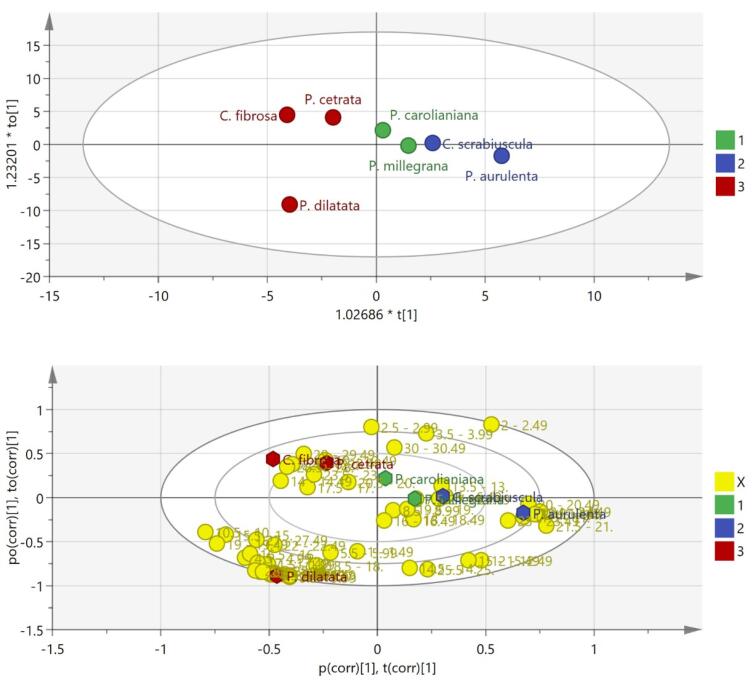 Figure 1
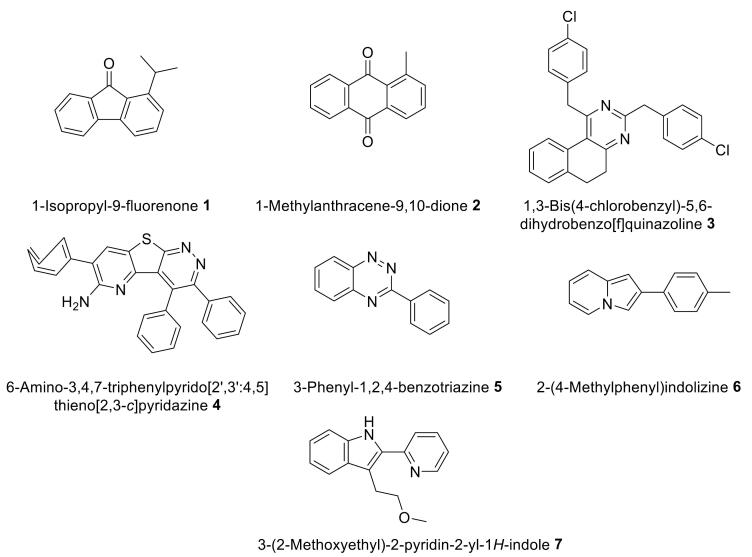 Figure 2
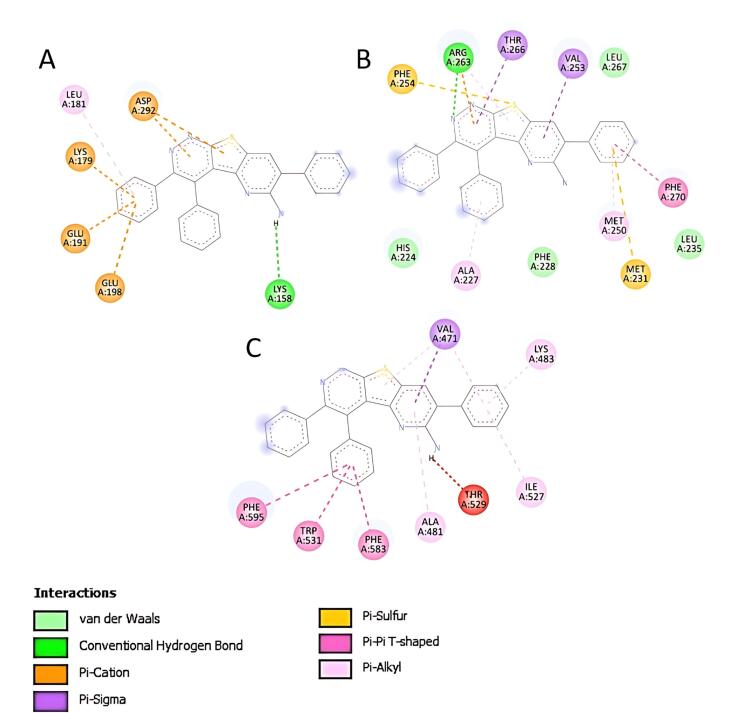 Figure 3
|
|
|
|
|
| 137 | 1 |
|
| 328 | 1 |
|
| 476 | 2 |
|
| 552 | 2 |
|
| 733 | 3 |
|
| 751 | 3 |
|
| 981 | 3 |
|
|
|
| |||
|
|
|
|
| ||
|
| |||||
| 1 | 5-methyl-1 | -5.5 | -6.5 | -5.8 | -6.6 |
| 2 | ethyl 5-(1 | -6.7 | -8.2 | -6.3 | -7.5 |
| 3 | 1-isopropyl-9-fluorenone | -8 | -8.6 | -8.2 | -9.4 |
| 4 | 1-methylanthracene-9,10-dione | -8.2 | -9.1 | -8.6 | -9.6 |
| 5 | 3-methoxy-2,4-dimethoxycarbonyl-5-(methoxypropyl)phenol | -5.7 | -6.2 | -6 | -6.8 |
| 6 | 1,3-bis(4-chlorobenzyl)-5,6-dihydrobenzo[f]quinazoline | -9.4 | -8.8 | -8.9 | -10 |
| 7 | 6-amino-3,4,7-triphenylpyrido[2',3':4,5]thieno[2,3- | -10 | -11.6 | -10.4 | -12.6 |
| 8 | 6-[ | -5.9 | -7 | -6.2 | -6.6 |
| 9 | 2-(4-hydroxy-3-methoxyphenyl)acetic acid | -5.6 | -6.6 | -5.8 | -6.2 |
| 10 | 1,2-benzothiazol-3-amine | -5.9 | -6.1 | -5.8 | -6.1 |
| 11 | 3-phenyl-1,2,4-benzotriazine | -7.8 | -7.5 | -8.8 | -8.8 |
| 12 | 2-(4-methylphenyl)indolizine | -7.6 | -7.5 | -9.2 | -8.6 |
| 13 | 3-(2-methoxyethyl)-2-pyridin-2-yl-1 | -7.2 | -7.7 | -7.6 | -8.2 |
|
| |||||
| 1 | propane-1,2,3-triol | -3.4 | -3.9 | -3.1 | -4.5 |
| 2 | butane-1,2,3-triol | -3.7 | -4.5 | -3.6 | -5.1 |
| 3 | (2 | -4 | -4.7 | -3.6 | -4.9 |
| 4 | butane-1,2,3,4-tetraol | -3.9 | -4.8 | -3.6 | -5.5 |
| 5 | ( | -5 | -5 | - | -5.1 |
| 6 | ( | -4.3 | -5.3 | -4.4 | -5 |
| 7 | ( | -4.8 | -5.7 | -4.7 | -4.9 |
| 8 | 4-(2-chloroethyl)-1-(2,4-dinitrophenyl)-3,5-dimethyl-1 | -6.8 | -7.2 | -7 | -7.2 |
| 9 | cyclohexane-1,2,3,4,5,6-hexol | -4.6 | -5.1 | -4.4 | -5.6 |
| 10 | (3 | -4.4 | -5.7 | -4.5 | -5 |
| 11 | (2 | -4.2 | -5.5 | -4.2 | -5.8 |
| 12 | ( | -5.6 | -6.6 | -4.8 | -5.2 |
Peer Reviews
No public reviews on file for this paper yet. If you reviewed it on a platform where reviews are public (OpenReview, ICLR, NeurIPS, ICML), you can paste yours below so the community can read it here.
Videos
No videos yet. Explain this paper in a talk, walkthrough, or lecture? Add one.
Taxonomy
TopicsLichen and fungal ecology · Microbial Natural Products and Biosynthesis · Fungal Biology and Applications
Introduction
Cervical cancer is a life-threatening disease with a total of 662 301 cases resulting in 348 874 deaths in 2022.^1^ Complications and side effects of currently available therapeutic agents demand new strategies for the development of new treatments, including the discovery of new anticancer agents with less side effects and minimal cost.^2^ Natural products are known as the source for 60% of the currently available anticancer drugs and these include bleomycin sulfate and topotecan hydrochloride, both natural product derivates used in cervical cancer treatment.^3^ A diversity of organisms have been subjected to anti cervical cancer bioprospecting including the cosmopolitan composite organism, the lichens, which have been used traditionally to treat cancer within numerous cultures around the world.^4^ Numerous lichen secondary metabolites have been isolated and evaluated for their bioactivities against an array of malignant cell lines.^5^
However, lichen bioprospecting remains a challenging task due to its limited biomass availability.^6^ This restraint traditional bioassay guided phytochemical investigation unsuitable. Therefore, a new mean metabolomic approach is necessary as this requires a relatively small amount of sample.^7^ In this study, a multivariate technique, orthogonal partial least-squares-discriminant analysis (OPLS-DA) was adopted to identify bioactive compounds from selected lichen species which are responsible for their cytotoxicity against HeLa cell line. An in-silico study was performed to confirm the anticancer biomarkers.
Material and Method
Lichen collection and extraction
Seven foliose lichen samples were collected from East Java, Indonesia including Parmelia aurulenta Tuck. from Jember district, Parmelia caroliniana Nyl. from Pasuruan district, Parmelia cetrata Ach., Parmelia dilatata Vain., Cladonia scabriuscula(Duby) Leight, Candelaria fibrosa (Fr.) Müll. Arg., and Physcia cf. millegrana Degel. from Bondowoso district. Samples were stored and labelled at the Drug Utilisation and Discovery Research Group (DUDRG), Faculty of Pharmacy, University of Jember, Indonesia. Dried lichen samples were ground in the presence of liquid nitrogen and were then extracted with methanol followed by vacuum drying to produce crude methanol extracts.
Anticancer bioassay
Cytotoxicity was measured using a standard MTT assay.^8^ HeLa (ATCC CRM-CCL-2) cells were treated with serial concentrations of lichen extracts (1024, 512, 256, 128, 64, 32 µg/mL).
Metabolomics experiment
Metabolomic profiles were generated based on a standard gas chromatography-mass spectrometry (GC-MS) protocol developed by Lisec at al.^9^ Compound annotation was generated from spectral data comparison against the mass spectra library, NIST version 2.2.
Metabolomic studies were conducted using the multivariate analysis software SIMCA by MKS UMETRICS. The data used comprised of the x-axis representing the area at a specific retention time with the y-axis defining the lichen species. Chromatograms were pre-processed to produce 58 binned data and the lichens were classified into 3 groups based on cytotoxicity (IC_50_ values). Multivariate analysis was performed using the OPLS-DA method.
Computational study
Biomarker candidates were investigated using AutoDock Vina v1.2.3 on the HeLa related protein targets BCL-2 (PDB ID: 4MAN), MCL-1 (PDB ID: 5FDO), AKT-1 (PDB ID: 4GV1) and BRAF (PDB ID: 5VAM) with respective positive controls, 1Y1, 5X2, 0XZ and 92J. Molecular energy minimisation and format conversion into pdbqt were performed using ChemBio and MGLTools software 1.5.7., respectively. The best docking conformations were imported and their interactions were evaluated using BIOVIA Discovery Visualizer v21.1.0.20298.
Results and Discussion
Lichen secondary metabolites were extracted from seven foliose lichen species using methanol with molecule derivatisation conducted using N-methyl trifluoroacetamide (MSTFA) to enable robust molecular detection in the GC-MS. The cytotoxicity bioassay indicated HeLa cell lines to possess various sensitivities against the seven-lichens with P. millegrana showing the highest activity (Table 1).
A multivariate analysis using OPLS-DA produced good separation between the classified groups as depicted in both 2D score plots (Figure 1). The least active groups (red) including C. fibrosa, P. cetrata and P. dilatata were all gathered in the left quadrant with the medium (blue dots) and active groups (green dots) in the right quadrant (Figure 2, top). Further analysis based on a biplot diagram, an overlayed score and loading plot, displayed a distinct distribution of loading plot (yellow dots, represents the retention time generated from GC-MS chromatogram) around P. caroliniana and P. millegrana plots (Figure 2, bottom). This biplot analysis facilitated in determining important variables (retention time) which contribute to the anticancer activity of P. caroliniana (13.5-13.99; 20.5-20,99; 30-30.49 min) and P. millegrana (7.5-7.99; 8.5-8.99; 11.5-11.99; 13.5-13.99; 16-16.49; 18-18.49; 19.5 min). GC-MS compound annotation led to molecular identification of 13 secondary metabolites of P. carolinianaand 12 secondary metabolites of P. millegranawhich correlated to cytotoxicity.
**
**
The in-silico investigation on 25 compounds of P. millegrana and P. caroliniana generated from OPLSDA multivariate analysis was performed using a docking approach with proteins related to cervical cancer, B-cell lymphoma-2 protein (BCL-2, PDB ID: 4MAN), alpha kinase threonin-1 protein (AKT-1, PDB ID: 4GV1), myeloid cell leukemia-1 protein (MCL-1, PDB ID: 5FDO), and V-raf murine sarcoma viral oncogene homolog B1 protein (BRAF, PDB ID: 5VAM) (Table 2). The docking experiment revealed 12 metabolites of P. millegranato possess insignificant binding energy towards all four proteins compared to the binding affinity of corresponding endogenous ligands. In contrast, compounds 1-7 of P. caroliniana showed binding affinities comparative to the endogenous ligands that bind 4GV1, 5FDO and 5VAM proteins. None of the secondary metabolites produced significant interactions against the BCL-2 (4MAN) protein.
The high binding affinity of compound 4 against AKT-1 (4GV1) resulted from π and conventional hydrogen bond interactions with amino acid residues (Figure 3A). Compound **4 **also showed π, van der Waals and conventional hydrogen bonds against MCL-1 protein (5FDO) (Figure 3B). In addition, π binding was responsible for the interaction between compound **4 **and BRAF protein (5VAM) (Figure 3C). Overall these interactions and the molecular size of compound 4 followed Lipinski’s rule, thus providing reasonable values for pharmacokinetic parameters in drug development.^10^
**
Conclusion
The study successfully determined secondary metabolites of P. caroliniana and P. millegranato have significant cytotoxicity contributions based on OPLS-DA analysis. Computational approaches suggested compound 4 of P. caroliniana as a biomarker compound responsible for the cytotoxicity against HeLa-cell protein marker. This straightforward protocol can be applied in biomarker discovery in other medicinal plants without excessive phytochemical experiments.
Competing Interests
None.
Ethical Approval
Not applicable.
The reference list from the paper itself. Each links out to its DOI / PubMed record.
- 1International Agency for Research on Cancer (IARC). Global Cancer Observatory: Cancer Today [Internet]. IARC; 2024. Available from: https://gco.iarc.who.int/today. Accessed October 14, 2024.
- 2Thapa N Maharjan M Xiong Y Jiang D Nguyen TP Petrini MA Impact of cervical cancer on quality of life of women in Hubei, China Sci Rep 2018811199310.1038/s 41598-018-30506-630097622 PMC 6086893 · doi ↗ · pubmed ↗
- 3Newman DJ Cragg GM Natural products as sources of new drugs over the nearly four decades from 01/1981 to 09/2019 J Nat Prod 202083377080310.1021/acs.jnatprod.9b 0128532162523 · doi ↗ · pubmed ↗
- 4Nugraha AS, Lam TH, Wongso H, Firli LN, Keller PA. Lichens: a source of anticancer drugs. In: Das AK, Sharma A, Kathuria D, Ansari MJ, Bhardwaj G, eds. Chemistry, Biology and Pharmacology of Lichen. West Sussex, UK: John Wiley & Sons Ltd; 2024. p. 193-229. 10.1002/9781394190706.ch 14. · doi ↗
- 5SolárováZ Liskova A Samec M Kubatka P Büsselberg D Solár P Anticancer potential of lichens’ secondary metabolites Biomolecules 20201018710.3390/biom 1001008731948092 PMC 7022966 · doi ↗ · pubmed ↗
- 6Oksanen I Ecological and biotechnological aspects of lichens Appl Microbiol Biotechnol 20067347233410.1007/s 00253-006-0611-317082931 · doi ↗ · pubmed ↗
- 7Santiago KAA Edrada-Ebel R Dela Cruz TEE Cheow YL Ting ASY Biodiscovery of potential antibacterial diagnostic metabolites from the endolichenic fungus Xylariavenustula using LC-MS-based metabolomics Biology (Basel)202110319110.3390/biology 1003019133806264 PMC 8000601 · doi ↗ · pubmed ↗
- 8Stévigny C Block S De Pauw-Gillet MC de Hoffmann E Llabrès G AdjakidjéV Cytotoxic aporphine alkaloids from Cassytha filiformis Planta Med 200268111042410.1055/s-2002-3565112451500 · doi ↗ · pubmed ↗