Influencing Factors for the Acceptability of Accessing HIV Pre‐exposure Prophylaxis via Community Pharmacies in Wales
David Gillespie, Adam D. N. Williams, Richard Ma, Zoe Couzens, Kerenza Hood, Dyfrig A. Hughes, Efi Mantzourani, Eleanor Cochrane, Fiona Wood

TL;DR
This study explores whether people in Wales would accept getting HIV PrEP from community pharmacies instead of clinics.
Contribution
The study provides new insights into public acceptability of PrEP access through community pharmacies in Wales.
Findings
PrEP access via community pharmacies is likely to be acceptable to users.
Uncertainties remain about the structure of pharmacy-based PrEP services.
Participants expressed concerns about integrated healthcare and data sharing.
Abstract
HIV prevention methods, such as pre‐exposure prophylaxis (PrEP), have been a significant contributing factor to a global decline in HIV transmission. PrEP has been available through the NHS in Wales since 2017. However, access is exclusively via sexual health clinics, and those accessing PrEP do not reflect those being diagnosed with HIV. Widening access beyond sexual health clinics may be one approach to encourage more equitable uptake, and there is growing interest in offering PrEP services in community pharmacies. We, therefore, aimed to explore the acceptability of PrEP services being delivered through community pharmacies among prospective service users. We conducted a qualitative interview study of people living in Wales who either (i) currently access, (ii) previously accessed or are (iii) considering accessing PrEP via a sexual health clinic. Participants were recruited via…
Genes, proteins, chemicals, diseases, species, mutations and cell lines named across the full text — each resolved to its canonical identifier and authoritative record.
Click any figure to enlarge with its caption.
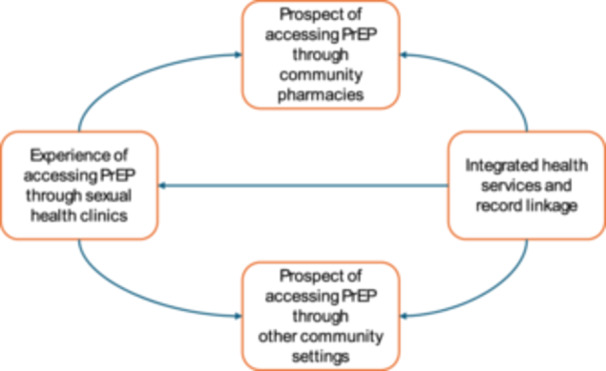 Figure 1
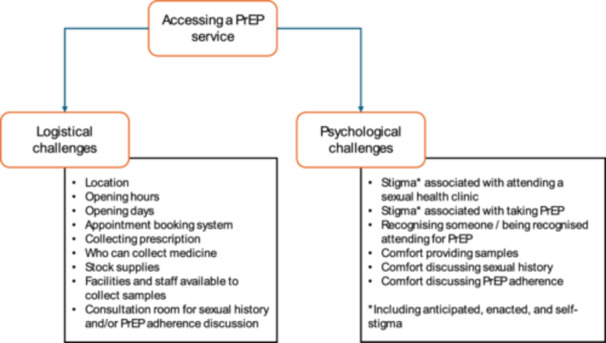 Figure 2
| Question | Response | Frequency | % |
|---|---|---|---|
| PrEP experience | Currently accessing PrEP in Wales | 9 | 45 |
| Previously accessed PrEP in Wales | 7 | 35 | |
| Aware that they may benefit from PrEP but not yet accessed in Wales | 4 | 20 | |
| Region of Wales | Cardiff | 14 | 70 |
| Outside Cardiff | 6 | 30 | |
| Age group | 18–24 years | 0 | 0 |
| 25–30 years | 10 | 50 | |
| 31–40 years | 7 | 35 | |
| 41+ years | 2 | 10 | |
| Missing | 1 | 5 | |
| Gender identity | Man (including trans man) | 14 | 70 |
| Woman (including trans woman) | 4 | 20 | |
| Missing | 2 | 10 | |
| Ethnicity | White | 9 | 45 |
| Non‐white | 9 | 45 | |
| Missing | 2 | 10 | |
| Sexual orientation | Heterosexual | 10 | 50 |
| Gay or bisexual | 9 | 45 | |
| Missing | 1 | 5 |
- —This study is funded by the Health and Care Research Wales, Grant/Award Number: Hf‐17‐1411. 10.13039/100012068
Peer Reviews
No public reviews on file for this paper yet. If you reviewed it on a platform where reviews are public (OpenReview, ICLR, NeurIPS, ICML), you can paste yours below so the community can read it here.
Videos
No videos yet. Explain this paper in a talk, walkthrough, or lecture? Add one.
Taxonomy
TopicsHIV/AIDS Research and Interventions · HIV, Drug Use, Sexual Risk · Sex work and related issues
Introduction
1
While HIV remains a global health concern [1], the increase in the availability of pharmacological HIV prevention methods over the past decade, such as pre‐exposure prophylaxis (PrEP), has been a significant contributing factor to a global decline in HIV transmission [2].
PrEP involves the use of antiretroviral medication to prevent HIV acquisition. It is highly effective in preventing HIV acquisition in several populations [3, 4, 5, 6]. Oral PrEP (Tenofovir disoproxil fumarate) has been available through the NHS in Wales since 2017 [7]. Since then, it has been prescribed to > 3000 individuals (correct as of the end of 2022) exclusively through sexual health clinics. Most individuals being prescribed PrEP in Wales are male (99%), of white ethnicity (69%) and identified as men who have sex with men (81%).
There is a mismatch between the demographics of people being diagnosed with HIV and those accessing PrEP [8]. Difficulties with access and stigma associated with sexual health clinics are often cited as reasons for not engaging in sexual healthcare [9, 10, 11]. There is growing interest in alternative options, such as remote options and primary care services like general practice and community pharmacies [12].
The HIV Action Plan for Wales aims to implement a shared care model for PrEP access between primary care and sexual health services [13]. Community pharmacies contribute to the health and well‐being of the population by delivering clinical services. NHS Contracted Services delivered through community pharmacies in Wales include (among others) the common ailments scheme, emergency contraception services, seasonal flu vaccination, urinary tract infection service and the sore throat test and treat service [14]. Some of these services have shown sharp increases over the years since their introduction, and evidence suggests that these services are acceptable to users [15, 16]. While there are several examples of sexual healthcare delivery via community pharmacies to complement those delivered by sexual health clinics, we do not know if PrEP provision is feasible and acceptable to individuals and why they might choose community pharmacies over other services. This study aims to address these questions.
Materials and Methods
2
Study Design and Theoretical Framework
2.1
We used a phenomenological approach for this semi‐structured interview study of people living in Wales who currently, previously or may in the future access PrEP.
We drew on Levesque's conceptual framework of access to healthcare (2013) and defined access as ‘the opportunity to reach and obtain appropriate healthcare services in situations of perceived need for care’ [17]. Within this framework, there are five dimensions of accessibility (approachability, acceptability, availability and accommodation, affordability, and appropriateness) and five dimensions of abilities that potential service users require (ability to perceive, seek, reach, pay and engage).
The study was reviewed and approved by the Cardiff University School of Medicine Research Ethics Committee (Reference Number: 23/91).
Participant Selection
2.2
Drawing on the 2023 PrEP need framework, which identifies eight different forms of need associated with PrEP [18], we interviewed individuals who: (i) currently access PrEP through a sexual health clinic in Wales (Group 1); (ii) have previously accessed PrEP through a sexual health clinic in Wales (Group 2); (iii) are resident in Wales, aware that they might benefit from PrEP (through awareness that it is an HIV prevention option and their own self‐assessment of risk and/or need), but had not accessed it through a sexual health clinic in Wales (Group 3). Inclusion criteria were those who were over 18 years old, belonged to one of the three target populations above, were able to communicate fluently in English (though English did not need to be their first language) and gave consent.
Setting and Data Collection
2.3
Participants were recruited from the community via social media advertising and other social networks (e.g., Fast Track Cymru [19], THT Cymru [20], PrEPster [21], local councils and networks of PrEP users from associated research). We advertised the study in NHS settings (e.g., sexual health clinics, GP practices and community pharmacies) using posters, but we did not recruit directly from these services. To acknowledge their time, participants were offered a £20 digital gift voucher.
The lead researcher (D.G.) sent an information sheet and consent form to prospective participants. With consent, online interviews were conducted by either D.G. or A.W. using a topic guide that covered PrEP access history and acceptability of PrEP services delivered via community pharmacy and other potential community settings. The topic guide can be viewed in Appendix 1.
We interviewed 24 individuals but planned for 45 (15 per target population group), based on the information power model proposed by Malterud (2016) [22]. We used maximum variation sampling to incorporate views from individuals of different genders, ethnic groups, ages and individuals from different parts of Wales.
Data Analysis
2.4
All transcripts were checked against the recording for accuracy and anonymised. We conducted a reflexive thematic analysis to analyse our interview data [23]. Following familiarisation with the data, codes were developed by inspecting transcripts line by line, with an initial coding framework developed. Double coding was supported by F.W. and R.M. for the first five interviews to agree on the initial coding framework, accounting for alternative perspectives. Subsequently, a further five interviews were double coded to assess coding consistency. Themes were developed using the ‘One Sheet of Paper’ or ‘OSOP’ technique and were reviewed, refined and subsequently named.
During our recruitment process, we suspected that we may be prone to so‐called imposter participants (i.e., participants pretending to meet eligibility criteria) [24]. We (D.G., A.W. and F.W.) therefore reviewed the timing of expressions of interest, consent forms, audio from interviews and interview transcripts. If concerns were present across all four of these elements (e.g., the expression of interest was sent near in time to others, consent forms were completed almost identically, cameras would not or could not be used for the interview and answers were vague), participants were considered imposters and excluded from the analysis. Where there were concerns around some but not all elements, these were discussed, and a consensus was reached about how their data would be handled.
Research Team and Reflexivity
2.5
All four researchers directly involved in data collection and analysis are experienced in research around PrEP. The team was supported by others with expertise in community pharmacy practice, public health policy and lived experience of accessing PrEP in Wales. Our core data collection and analysis team consisted of males and females, straight and gay, clinicians and non‐clinicians, and those with an age range of 27–55. Our team‐based approach to developing the topic guide and codes encouraged alternative views and perspectives. This study was conducted in response to both stakeholder engagement work, which highlighted the role that community pharmacies could play in expanding access to PrEP, and an action within the Wales HIV Action Plan, which indicated that access to PrEP would be expanded beyond sexual health clinics in Wales.
Results
3
Participants
3.1
We interviewed 24 participants between February and June 2024. Four participants were deemed imposters by the research team and were discarded from our analysis. The remaining five participants were considered potential imposters but retained following agreement that the guarded nature of their responses could be explained by the nature of the research. Data from these five interviewees were given less weight in our analysis. We therefore included 20 participants in our analysis. Our sample included people with varying levels of experience of accessing PrEP as well as diversity in terms of age, gender identity, ethnic group and area of residence in Wales (Table 1).
We generated four themes, the most pertinent capturing the experiences of accessing PrEP via sexual health clinics, the perceived influences on and acceptability around accessing PrEP via a community pharmacy, as well as other community‐based settings. However, an additional theme was identified covering the integration of health services and associated data. Figure 1 illustrates the generated themes and their conceptual links. Thematic matrices can be viewed in Appendix 2.
Themes generated around the acceptability of accessing PrEP via community pharmacies in Wales.
Experiences Accessing PrEP Through Sexual Health Clinics
3.1.1
For participants who recognised that HIV transmission in Wales is primarily through sexual contact, the sexual health clinic was deemed an appropriate setting in which PrEP would be available. However, difficulties and inconsistencies in access across health boards were noted. Some participants felt more comfortable than others accessing PrEP from sexual health services. Our first theme is therefore divided into two sub‐themes: the first covering the process of accessing the sexual health clinic itself and the second covering anticipated and enacted stigma and discrimination around PrEP access via sexual health clinics.
Process of Getting PrEP Through a Sexual Health Clinic
3.1.2
Participants described a mixture of routes to accessing PrEP, including opportunistic signposting from the sexual health clinic, friends/family who knew about PrEP and their own research. One participant described signposting from their GP, as an indicator of the willingness of these settings to refer people to PrEP services should the request arise.‘I'm a sex worker. So, I need to protect myself, because I do have a lot of clients with several requests. And in my line of work, I have a very high risk of contracting the virus (HIV). So, I have to take tests to protect myself, and one of these tests was getting PrEP. I have unprotected sex with my clients, and this was readily available to me when I do have sex, through my local community Sexual Health Clinic.’PID 3, Group 2, Outside Cardiff, Aged 25–30, non‐White, Man, Straight
Difficulties in accessing PrEP were noted. These included the operating hours of clinics being challenging for those with 9–5 jobs and pathways being cumbersome. The latter was exacerbated by the knowledge that pathways differed across health boards.‘…the hardest thing for me was being able to attend the clinic, because I work Monday to Friday basically nine until five and I think the clinic is open nine until three and it's not open five days a week, or it wasn't at the time. The only way for me to actually be able to attend in‐person was to take time off work.’PID 1, Group 2, Cardiff, Aged 25–30, White, Man, Gay or bisexual ‘I had to go to one hospital to have the check‐up and to have the request for it, and all of those things…they gave me a prescription, but then I had to go to another hospital (to) their pharmacy to collect it…they were giving three months' supply, so…every three months I have to go through the same process.’PID 5, Group 1, outside Cardiff, Aged 41–50, White, Man, Gay or bisexual
However, some participants described the process of accessing PrEP services as positive.‘I think trying to get (access to) the service…from finding (out) about it and researching and booking the call and being able to find appointments, the process was not stressful so that's kind of a positive.’PID 14, Group 1, outside Cardiff, Aged 31–40, non‐White, Man, Gay or bisexual
Stigma and Discrimination Around PrEP Access via Sexual Health Clinics
3.1.3
There was a mixture of views regarding the stigma around accessing PrEP via a sexual health clinic. This seemed to focus on the level of comfort participants had with sharing details of their sexual practices and sexual orientation with sexual health clinic staff, with participants describing initial encounters with staff as particularly discomforting.‘I don't like to go there and get lots of questioning, it's one of the barriers, that's kind of, hindering me.’PID 4, Group 2, Cardiff, Aged 25–30, non‐White, Woman, Straight ‘I didn't enjoy the whole communication in seeking out (information) because they made me really focus on so many personal things such as my sexuality…I think the whole process of the referral from a sexual health clinic shouldn't be necessary because they (clinic staff) see it as an opportunity to ask a whole lot of questions that I don't think is necessary.’PID 2, Group 2, Cardiff, Aged 25–30, non‐White, Man, Straight
While this was not the case for all participants, those who experienced less discomfort sharing this information with clinic staff still reflected that this may influence access to PrEP for others.‘I know that there is still a stigma attached to sexual health clinics. I don't know whether having to get PrEP through a sexual health clinic would put people off. Not wanting to just…(share) their sexual orientation, or the fact that they are engaging in sexual experiences that might require PrEP.’PID 19, Group 1, Cardiff, Aged 25–30, White, Man, Gay or bisexual
Despite any discomfort when discussing sex or being directly asked about their sex lives, there was an acceptance that HIV was primarily acquired through sexual contact and that, therefore, sexual health clinics were able to support people to access PrEP by employing staff who were trained to provide relevant testing and medication.‘Well, it's (having access to PrEP in a sexual health clinic) positive because…I would assume the most common way for the virus to be transmitted is through sexual means. So, it absolutely makes sense that the PrEP medication would be available at the Sexual Health Clinic.’PID 3, Group 2, outside Cardiff, Aged 25–30, non‐White, Man, Straight
Prospect of Accessing PrEP Through Community Pharmacies
3.1.4
Turning attention to the primary aim of this study, our analysis developed three sub‐themes covering recognition of community pharmacy as a healthcare setting, experiences of service delivery through community pharmacy and the acceptability of a PrEP service delivered through community pharmacy. To date, PrEP in Wales has been delivered through sexual health services, so discussions about community pharmacy PrEP services were hypothetical.
Awareness of Community Pharmacies as a Healthcare Setting
3.1.5
Participants had a clear understanding of the role of community pharmacies. Primarily, participants identified the dispensing of medication as their primary function, though some also identified other clinical services provided, such as influenza vaccinations. Some participants were aware of a ‘shift’ in clinical services from other primary care settings.‘I've noticed recently that services that I would normally have gone to my GP for have been deferred to my pharmacy…I would think it's (community pharmacy) where I go to get my prescription, it's where I could go for some advice if I don't need to go to A&E and I don't feel like I desperately need to see a doctor, but I probably wouldn't go there for much else.’PID 20, Group 3, Cardiff, Aged 31–40, White, Man, Gay or bisexual
A notable distinction was made between community pharmacies and other NHS‐based healthcare settings with regard to it being a ‘business’. This business model of healthcare service implied that it could be regarded as a retail setting. There could also be implications for the trust placed in certain pharmacies owing to their ‘business‐like’ nature (e.g., the perception of there being a conflict between giving health advice and selling over‐the‐counter treatments and personal care products).‘I do have a distinction between community pharmacy and the NHS…The NHS is a public service. Whereas the community pharmacy is a private sector…If I wanted a quality service from a community pharmacy, I would go to (major high‐street community pharmacy). I trust (major high‐street community pharmacy) more than the community pharmacy I use… …Community pharmacy to me…it's a shop that sells things.’PID 6, Group 1, Cardiff, Aged 41+, White, Man, Gay or bisexual
Experience of Service Delivery Through Community Pharmacies
3.1.6
There was a strong sense of ‘easy access’ in terms of location, opening hours and days of the week on which community pharmacies are open. The ‘walk‐in’ nature was appealing when compared to other settings, and it meant that the service fitted in with peoples' lives rather than vice versa.‘The one closest to me is open on a Saturday, so if I can't get there Monday to Friday, I can at the weekends.’PID 1, Group 2, Cardiff, Aged 25–30, White, Man, Gay or bisexual
However, concerns were raised regarding medication stock supplies. Participants drew on experiences where they were told the medication was not in stock. With regularity, this can create issues of trust in a service's ability to deliver. For PrEP, stock issues could mean that people had an insufficient supply to cover periods of risk exposure, thus reducing PrEP's effectiveness.‘…then you come and it's (medicine) not available. This was I think last month. I came to get a particular medication, and they didn't have it. They are usually out of medication really quick.’PID 14, Group 1, outside Cardiff, Aged 31–40, non‐White, Man, Gay or bisexual
Despite this, there was a sense that the familiarity of staff in a local pharmacy, in addition to the varied nature of attendance (which could include visiting a pharmacy to make retail purchases), made it a relaxed healthcare setting relative to others. This familiarity created a sense of implicit trust and increased the salience of using community pharmacies.‘I think a pharmacy has less people and…being somewhere you go for a different purpose, you might feel much more comfortable in that kind of place…I think the familiarity is there and it makes it easier to feel much more comfortable.’PID 11, Group 1, outside Cardiff, Aged 31–40, non‐White, Man, Straight
Delivery of a ‘PrEP Service’ Through Community Pharmacies
3.1.7
When discussions turned to the delivery of a ‘PrEP service’ via community pharmacies, there were mixed views from participants, and this tended to stem from the varied understanding of what a ‘PrEP service’ comprised.
In terms of a PrEP collection service from a community pharmacy, this was viewed as both acceptable and a welcome change compared to travelling to pick up a prescription from a sexual health clinic or, in some cases, travelling between sexual health clinics to receive a complete PrEP service. The key features which made this acceptable were the convenience of accessing a community pharmacy for this purpose and the varied and confidential nature of collecting a prescription from a pharmacy meaning that this could be done with anonymity. These aspects were thought to enable wider access to PrEP.‘If it (PrEP) were to be delivered from pharmacies…people would be able to access it easily.’PID 16, Group 3, Cardiff, Aged 25–30, non‐White, Woman, Straight
Participants noted a difference between collecting PrEP medications and getting sexual health and/or PrEP advice from pharmacists, with the latter being more challenging for some.‘…that's different to going to the pharmacy to pick up a prescription, that's understood, known, dispensed, and you're just picking up a package, because you could be picking up anything then, it doesn't really matter. If I was to go to the pharmacy and try to have a conversation I might be having at the sexual health clinic in the pharmacy, I think that might be challenging.’PID 5, Group 1, outside Cardiff, Aged 41+, White, Man, Gay or bisexual
Participants highlighted that the drawback of the ‘local’ nature of community pharmacies is that you are in your local community. In this context, sharing information about your sexual activity in such a setting may be unacceptable to some.‘I wouldn't feel so comfortable having an STI screening in a community pharmacy. Mainly because of the proximity…I'd prefer to go a 30 minutes' drive to get my STI screening than walk into a pharmacy.’PID 14, Group 1, outside Cardiff, Aged 31–40, non‐White, Man, Gay or bisexual
Some participants raised concerns regarding the willingness of pharmacists to positively engage in PrEP services, drawing on reluctance around emergency contraceptive services. This perceived reluctance was considered to stem from religious beliefs and anticipated PrEP‐related stigma.‘I worry that there might be some pharmacists that wouldn't do the training because of the stigma associated with HIV…there are some pharmacists that refuse to do the morning after pill because if they're Catholic or Muslim it goes against religion…And I worry that would happen with PrEP as well, because it could be seen as men having sex with men…’PID 8, Group 2, Cardiff, Aged 31–40, White, Man, Gay or bisexual
There were concerns that certain facilities are not available in community pharmacies to enable a complete PrEP service inclusive of STI testing, other testing (e.g., liver/kidney function) and space for sexual health and adherence counselling. This perceived lack of facilities would lead some to avoid accessing PrEP services in community pharmacy, even components of a service, in favour of a complete service in a single less‐convenient setting.‘I would want to know how it would work, because the first time I went on PrEP, I had the blood test taken and I don't feel that can be done at a pharmacy…it was useful for me to go to the sexual health clinic because I was able to knock out everything at once. I could see that being an issue at pharmacy, where you couldn't get everything integrated….as well I was able to pick up contraceptives at the (sexual health) clinic too after I'd had all the tests…It'd be like here's your PrEP, here's your condoms, have a great time.’PID 19, Group 1, Cardiff, Aged 25–30, White, Man, Gay or bisexual
However, among others, provided that the facilities were available, they would be willing to undertake services in their community pharmacy.‘I can't think I'd have a problem with that (STI testing services) being in a pharmacy setting. It comes back to the same thing if you trust the practitioner who is helping you and you need the service, just do it…It would be a little awkward sometimes but you just get on with it for the sake of your health.’PID 20, Group 3, Cardiff, Aged 31–40, White, Man, Gay or bisexual
The training of community pharmacy staff in the delivery of a PrEP service was highlighted as an important issue. While it was mentioned that this training should cover knowledge and skills (e.g., about PrEP and how to conduct necessary tests), emphasis was also placed on training staff to deliver a non‐judgemental service sensitive to the needs of its recipients. The ability to create this ‘welcoming environment’ was considered to engender trust in the service, which would make people more willing to access it. Linking back to the first theme around PrEP services in sexual health clinics, this ‘environmental’ aspect was considered a key differentiating feature of the expectation of the type of service a recipient would receive in a community pharmacy compared to a sexual health clinic. Specifically, sexual health clinics have staff who are trained and primed to have non‐judgemental and inclusive discussions about sexual health, whereas community pharmacies are a more general setting and may be less primed.‘I wouldn't have a problem with having that conversation (about PrEP) with somebody there (a community pharmacy) as long as I had faith that they (were) trustworthy and non‐judgemental and gave me a private space to have that conversation openly.’PID 20, Group 3, Cardiff, Aged 31–40, White, Man, Gay or bisexual
Prospect of Accessing PrEP Through Other Community Settings
3.1.8
Several other community settings were suggested as places where PrEP services could be delivered. These are split into four types: general practice, other healthcare settings, non‐health community settings and digital or de‐centralised services.
PrEP Delivered via General Practice
3.1.9
In addition to community pharmacies, some participants discussed the prospect of receiving a PrEP service via their general practice. It was surprising that this was not being actively pursued as an option, particularly given its similar nature to community pharmacy in terms of location and recognised availability of important facilities. Participants also proposed the idea of a primary care pathway which integrated general practice (e.g., for consultation and testing) and community pharmacy (for collection).‘…it feels a bit backwards, the fact you can get the contraceptive pill through GP, whereas you can't get PrEP through GP. Blood test wise you, you can get that easily through the GP surgery…so it (PrEP) could easily be retrieved from the community pharmacy’PID 8, Group 2, Cardiff, Aged 31–40, White, Man, Gay or bisexual
Other Specialist Health Services
3.1.10
In terms of other specialist health services, participants proposed PrEP delivery via gender identity clinics. The salient feature of a service via this route was the expectation of a service that had staff who were trained in trans‐inclusivity, with the implication being that trans individuals may have concerns about accessing services where this is lacking.‘…for a lot of trans‐people, talking to a clinician that you know is well‐trained in trans‐identity is possibly the only way that some trans‐people might consider accessing PrEP…other less specialist services, whether it is your GP or your sexual health clinic, or your pharmacy, it does always feel like more of a risk of putting yourself out there in a position where you might have to educate the people that are supposed to be more educated than you about that kind of medical thing that you're seeking support with.’PID 1, Group 2, Cardiff, Aged 25–30, White, Man, Gay or bisexual
Another proposal was for PrEP to be delivered via mental health services. A useful feature of such a service was the ability to receive counselling and consultation, which could identify potential sexual risks.‘Sometimes someone that is suffering from a sexual illness can have mental sickness or mental issues that affect his or her thinking……apart from the PrEP services they can give an avenue for counselling, consultation and examination.’PID 10, Group 1, Cardiff, Aged 31–40, non‐White, Man, Straight
Community‐based organisations, such as hubs/libraries or supermarkets, were additional settings suggested for the delivery of PrEP services. It was felt that these settings would inherently de‐medicalise PrEP, which may be appealing to some prospective users. Key motivations underpinning these suggestions appeared to be improved access (in terms of geography) and precedents set around other medications used to enhance sexual health and well‐being.‘Supermarkets…I mean there are many precedents, if you think about erectile dysfunction and you can now buy Viagra or the equivalent off the shelf. And, I believe Viagra can have some adverse side effects, particularly those that have blood pressure issues, or those that combine use of Viagra with recreational drugs…But I assume that somehow they've overcome that barrier by selling them on supermarket shelves*…if, PrEP is safe, which I think it is, and if PrEP can result in improvement or safeguard the individual health and general collective public health, why wouldn't you make it as open and accessible to everyone?’PID 6, Group 1, Cardiff, Aged 41+, White, Man, Gay or bisexual
*NB. In the United Kingdom, Viagra is classified as Pharmacy Medicine and can be bought only from pharmacies (including supermarkets with on‐site pharmacies) and under a pharmacist's supervision.
A final area mentioned during interviews was digital services and the broader notion of decentralised PrEP services. Two specific examples of this were given during interviews: digital services and the concept of a ‘home‐based’ PrEP service, as well as mobile or travelling clinics. Key advantages of these were that they brought services to people and may be useful to individuals in remote areas.‘You (could) do it (access PrEP) in the convenience of your home and order the drug to your home address…So more like test kits being posted to your home address, conveniently would help. It would ensure that you're always on track about your PrEP medication. It will increase aspects of healthcare and eliminate waste, waiting times…the advantages outweigh the disadvantages.’PID 2, Group 2, Cardiff, Aged 25–30, non‐White, Man, Straight ‘…banks have closed down and in my small village, a bank van comes out once a week and you know what time it gets there, it stops in the layby, and for two hours it's there, and you could quite easily have a sexual health van.’PID 6, Group 1, Cardiff, Aged 41+, White, Man, Gay or bisexual
Integrated Health Services and Record Linkage
3.1.11
A potential structural barrier to the expansion of PrEP services was the fragmentation of healthcare records and services. These aspects manifested in worries participants had about undergoing tests which would not be joined up with other health data and the need to repeat tests. Participants also expressed concern about how there is not a standard process which underpins the journey from consultation to prescription collection. The latter aspect was highlighted as being particularly problematic for people with multiple health conditions.‘If I'm going to have a load of tests done at one point, I want to know that they are being integrated (into healthcare records) eventually, and that I'm not going to have records at one pharmacy where I'd had a sexual health check, or access PrEP or a vaccine or something, and it's not being sent over to my main sexual health clinic…I don't want to have to be chasing individual pharmacies for results. Or like when I was going away, for a vaccine, not having someone that has my full medical history, and then having to try to remember what I have had done.’PID 19, Group 1, Cardiff, Aged 25–30, White, Man, Gay or bisexual ‘I've got ADHD…so I have three different prescribers, same health authority, three different places, three different regimes of how to collect and get the prescriptions…none of them are joined up…I feel like I am three patients. I feel like a patient with my GP, I feel like a patient with the sexual health clinic, I'm a patient with my mental health team…’PID 5, Group 1, outside Cardiff, Aged 41+, White, Man, Gay or bisexual
Discussion
4
Summary of Main Findings
4.1
This is the first study from Wales, and one of the first across the United Kingdom, to explore prospective user views of a PrEP service in community pharmacies before implementation. We found broad acceptance of the idea of a PrEP service being delivered in community pharmacies. The key appealing features of such a service would be improvements in access—both in terms of the varied operating hours of community‐based services (e.g., evenings and weekends) and the broad use of such services reducing the stigma attached to attending. These were important barriers to access highlighted when descriptions were given of PrEP access via sexual health clinics. Thus, ‘access’ to PrEP services, regardless of setting, comprised two aspects—logistical challenges of gaining access to a health service (e.g., location and opening hours) and the psychological challenges associated with accessing a service (e.g., varying components of stigma, including anticipated, enacted and self‐stigma) (see Figure 2). Important positive aspects were noted regarding PrEP services delivered via sexual health clinics. These included well‐trained staff experienced in having sexual health discussions, the holistic nature of the sexual health service (e.g., PrEP prescription, STI testing, blood tests, other STI prevention or treatment services) and a sense of comparative anonymity when attending a sexual health clinic due to its location (e.g., out of a person's local area). Participants expressed uncertainty around the capacity and capability of community pharmacies and pharmacists to conduct certain aspects of healthcare (e.g., blood sampling) necessary for a full PrEP service and wondered whether the convenience of a local PrEP service may be offset by the entirety of their sexual healthcare (and accompanying data) becoming fragmented. Therefore, while considered acceptable, there were several uncertainties and concerns expressed by participants which may need addressing before the successful rollout of any service.
Decomposition of ‘access’ to PrEP services.
Strengths and Limitations
4.2
Globally, there are ambitions to widen access to PrEP to increase uptake and reach, particularly in traditionally underserved groups [25]. Differences in policy decisions regarding ways in which PrEP has been rolled out (e.g., universally vs. through a programme of research) may have led to differences in access. Our community‐based sampling approach has allowed us to include a diverse sample, incorporating views and experiences from individuals across Wales, different age groups, gender identities, sexualities and ethnic groups. We incorporated established frameworks to both include views of individuals at different stages of PrEP need and provide a structure around the study of access to healthcare. These informed the interviews and analysis and supported the justification for including individuals who have a self‐identified PrEP need but have not yet accessed it. Views from these individuals were important to incorporate if this study is to inform service provision for new as well as established PrEP users.
An important drawback to our community‐based sampling strategy was that it attracted so‐called ‘imposter participants’. The phenomenon of imposter participants has received increasing attention in qualitative research recently and seems to have coincided with an increase in the normalisation of remote interviews.
Comparisons to Existing Literature
4.3
Our findings are largely in line with a recent publication of community members' views of the barriers and facilitators of community pharmacy PrEP delivery conducted in England, the United Kingdom, and a wider scoping review of barriers and facilitators of community pharmacy PrEP delivery [26, 27]. Key differences include the choice of models/framework used (COM‐B [28] vs. PrEP need framework and Levesque framework for healthcare access [17]), geographical variation (e.g., healthcare is devolved in Wales) and policy contexts within which studies were conducted both in terms of how PrEP was rolled out and how community pharmacies operate. For example, PrEP was initially made available in England as part of a research study with a cap on the numbers of those who could access it, whereas, in Wales, it was available without any cap on numbers to those who met initial clinical indications. Additionally, community pharmacies in Wales have offered clinical services for more than a decade, whereas the structure underpinning this across is more of a recent initiative in England [14, 29]. Additional differences are present in the respective topic guides, with the work by Harrison et al. [26] including more direct questions and fewer questions about interviewees' experiences of PrEP access via sexual health clinics and broader experiences of healthcare access via community pharmacy. Importantly, in our findings, we found that the acceptability of a community pharmacy PrEP service is likely to be differential and depend on both an individual's wider healthcare needs and psychological concerns regarding sexual healthcare access. Thus, these studies are likely to be complementary and give some understanding of the role of context (particularly around PrEP rollout and community pharmacy set‐up) on influencing factors around any new PrEP services.
Implications
4.4
There is a need for an ongoing understanding of the acceptability of the expansion of healthcare services to community pharmacies. As new services are rolled out, they need to be subject to ongoing training, monitoring and evaluation (including economic evaluation), which also captures the experiences of those accessing services. Furthermore, the nature of community pharmacies as both a healthcare setting and a business may have implications with regard to client/customer expectations and trust. As the focus of this paper is on the prospective users' influencing factors, we did not consider the structural context of service delivery such as commissioning and primary care drug delivery costs. Additionally, the deployment of remote community‐based qualitative research requires safeguards against imposter participants. This is particularly problematic for topics such as sexual health, as participants particularly value anonymity and may be more guarded (or unwilling to participate) if verification of inclusion criteria is seen to be overly intrusive. Care is required for the use of data collection methods which do not limit the inclusion of underserved populations. For practice, any rollout of a PrEP service via a community pharmacy, or any other setting outside of a specialist sexual healthcare service, must be twinned with a communication strategy which informs people what PrEP is, where it can be accessed and what to expect as part of any access (including how data are communicated to relevant parties). Furthermore, staff delivering the PrEP service must be trained to engage in sexual health discussions in a non‐judgemental manner, displaying cultural competency, sensitivity and inclusivity across a range of gender identities and ethnic groups. A rollout that does not include the type of communication and training outlined here will have limited impact and likely only lead to a partial displacement of PrEP users from current services.
Conclusion
5
In our study, we found that PrEP access via community pharmacy is likely to be an acceptable option for potential users. It would reduce current barriers for some—particularly those who find it difficult to access sexual health clinics due to their location, operating hours or stigma. There are uncertainties surrounding what a PrEP service should and could look like in community pharmacies, and any successful rollout should be accompanied by clear communication to maximise its impact.
Author Contributions
David Gillespie: conceptualization, investigation, funding acquisition, writing – original draft, methodology, writing – review and editing, formal analysis, project administration, data curation. Adam D. N. Williams: conceptualization, investigation, writing – review and editing, formal analysis, data curation, methodology, visualization. Richard Ma: funding acquisition, writing – review and editing, formal analysis, data curation, conceptualization. Zoe Couzens: conceptualization, funding acquisition, writing – review and editing. Kerenza Hood: conceptualization, funding acquisition, writing – review and editing. Dyfrig A. Hughes: conceptualization, funding acquisition, writing – review and editing. Efi Mantzourani: conceptualization, writing – review and editing, methodology, investigation. Eleanor Cochrane: writing – review and editing, methodology. Fiona Wood: conceptualization, investigation, funding acquisition, writing – review and editing, methodology, formal analysis, data curation.
Ethics Statement
The study was reviewed and approved by the Cardiff University School of Medicine Research Ethics Committee (Reference Number: 23/91).
Conflicts of Interest
D.G. reports receiving funding from Health and Care Research Wales during the conduct of this study. K.H. also reports a leadership role for Cardiff University on the Fast Track Cardiff & Vale leadership group. A.W. reports a role on the Fast Track Cardiff & Vale steering group, as does D.G., who also reports a role on the Fast Track Cymru Advisory Council along with Z.C. These groups are local branches of the Fast Track Cities initiative aiming at eradicating HIV by 2030. D.G. and Z.C. are also members of the Wales HIV Action Plan Implementation group.
The reference list from the paper itself. Each links out to its DOI / PubMed record.
- 1World Health Organization . HIV and AIDS. https://www.who.int/news-room/fact-sheets/detail/hiv-aids.
- 2UNAIDS . “Global AIDS Strategy 2021–2026 End Inequalities. End AIDS,” 2021: 16, https://www.unaids.org/en/Global-AIDS-Strategy-2021-2026.
- 3R. M. Grant , J. R. Lama , P. L. Anderson , et al., “Preexposure Chemoprophylaxis for HIV Prevention in Men Who Have Sex With Men,” New England Journal of Medicine 363, no. 27 (2010): 2587–2599, 10.1056/NEJ Moa 1011205.21091279 PMC 3079639 · doi ↗ · pubmed ↗
- 4S. Mc Cormack , D. T. Dunn , M. Desai , et al., “Pre‐Exposure Prophylaxis to Prevent the Acquisition of HIV‐1 Infection (PROUD): Effectiveness Results From the Pilot Phase of a Pragmatic Open‐Label Randomised Trial,” Lancet 387, no. 10013 (2016): 53–60, 10.1016/S 0140-6736(15)00056-2.26364263 PMC 4700047 · doi ↗ · pubmed ↗
- 5J. M. Molina , I. Charreau , B. Spire , et al., “Efficacy, Safety, and Effect on Sexual Behaviour of On‐Demand Pre‐Exposure Prophylaxis for HIV in Men Who Have Sex With Men: An Observational Cohort Study,” Lancet HIV 4, no. 9 (2017): e 402–e 410, 10.1016/S 2352-3018(17)30089-9.28747274 · doi ↗ · pubmed ↗
- 6K. Choopanya , M. Martin , P. Suntharasamai , et al., “Antiretroviral Prophylaxis for HIV Infection in Injecting Drug Users in Bangkok, Thailand (the Bangkok Tenofovir Study): A Randomised, Double‐Blind, Placebo‐Controlled Phase 3 Trial,” Lancet 381, no. 9883 (2013): 2083–2090, 10.1016/S 0140-6736(13)61127-7.23769234 · doi ↗ · pubmed ↗
- 7V. Gething . Written Statement: Availability of Pre‐Exposure Prophylaxis (Pr EP) to Prevent HIV. Welsh Government. 2020, accessed May 9, 2021, https://gov.wales/written-statement-availability-pre-exposure-prophylaxis-prep-prevent-hiv.
- 8Public Health Wales . Trends in the Prevention, Diagnosis and Treatment of HIV in Wales. 2024, accessed January 10, 2025, https://phw.nhs.wales/publications/publications 1/annual-hiv-report-2024/.