Chronic Testicular Pain and Foreign Object in Penis: Cultural and Clinical Insights on Artificial Penile Implants
Lauren Elizabeth Damon, Mithu Molla

Abstract
Genes, proteins, chemicals, diseases, species, mutations and cell lines named across the full text — each resolved to its canonical identifier and authoritative record.
Click any figure to enlarge with its caption.
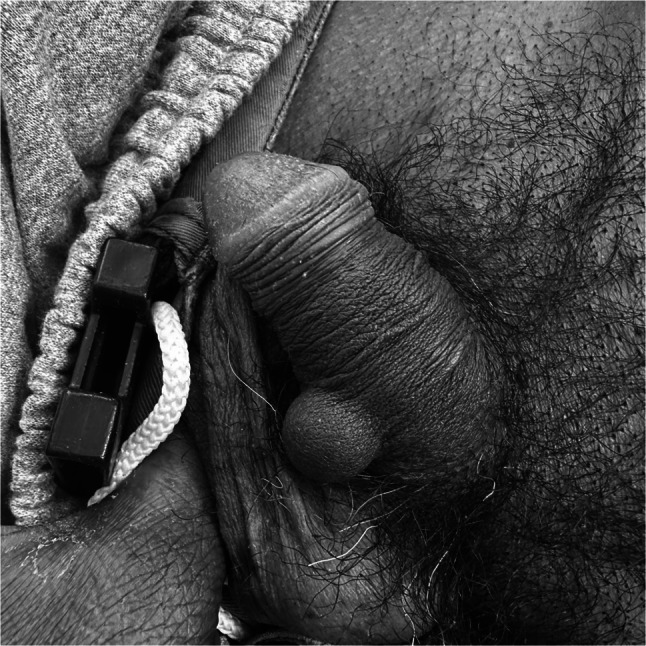 Figure 1
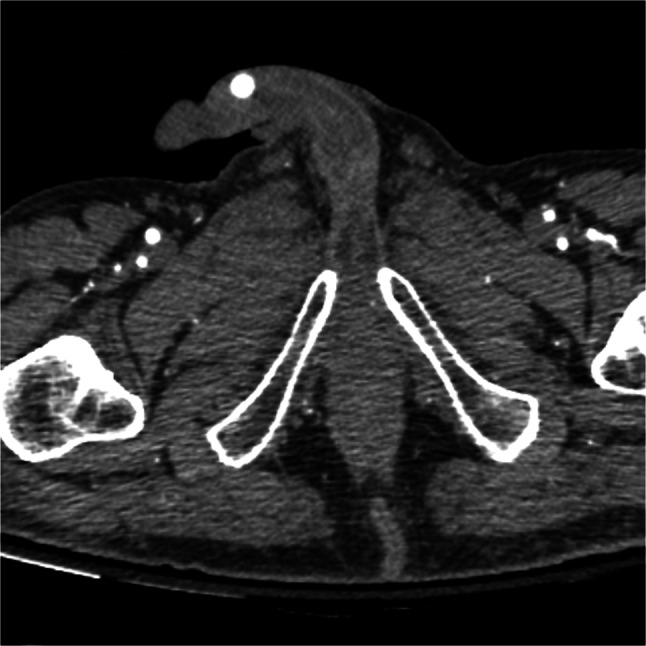 Figure 2
Peer Reviews
No public reviews on file for this paper yet. If you reviewed it on a platform where reviews are public (OpenReview, ICLR, NeurIPS, ICML), you can paste yours below so the community can read it here.
Videos
No videos yet. Explain this paper in a talk, walkthrough, or lecture? Add one.
Taxonomy
TopicsSexual function and dysfunction studies · Hormonal and reproductive studies · Genital Health and Disease
A 55-year-old man presented with several months of progressive testicular pain. Physical exam was notable for a freely mobile, firm subcutaneous nodule in the shaft of the penis tender to palpation (Fig. 1). CT of the abdomen and pelvis demonstrated a subcutaneous foreign object in his penis (Fig. 2). Scrotal ultrasound was unremarkable. Chlamydia and gonorrhea were negative. He reported that the object was a bead inserted 20 years prior to please sexual partners. Urologic consultation and bead explantation were offered but declined.Figure 1. Photograph of the artificially implanted penile bead.Figure 2CT abdomen/pelvis demonstrating bead implanted into the subcutaneous tissue of the penis.
Implantation of artificial penile beads is a cultural practice seen most in Slavic and Asian cultures. Prevalence of implants varies widely from 0.5 to 22% depending on the population studied.^1^ Reasons for implantation include establishing status within a subculture, pleasing sexual partners, and rarely causing harm to sexual partners.^1^ A majority of implantations are uncomplicated, but potential complications include penile pain,^2^ delayed secondary infections,^2^ wounds, condom breakage,^3^ and higher risk of sexually transmitted infections (STI).^3^ Complications may impact sexual partners, including wounds, bleeding, dyspareunia, and increased risk of STIs.^3^ Physicians of all backgrounds need to be aware of potential complications associated with penile implantations and culture significance of this practice to approach patients with cultural humility and respect.