Effects of drought pretreatment on the morphology traits, biomass, and stoichiometric characteristics of the desert ephemeral plant
Qian Liu, Hongmin Li, Chen Gong, Qianli Zhang, Tao Pan, Zhaodan Cao, Yanfeng Chen

TL;DR
This study shows how early drought exposure affects the growth and survival of a desert plant, helping it adapt to future droughts.
Contribution
The study reveals a novel overcompensation effect in desert plants due to early drought pretreatment.
Findings
Drought pretreatment caused earlier leafing, flowering, and fruiting in E. oxyrhinchum.
Drought pretreatment increased reproductive biomass by 41% during the full fruiting stage.
Plants under drought pretreatment required more phosphorus to resist severe drought.
Abstract
Introduction: In the context of climate change, the frequency and intensity of droughts in arid and semi-arid areas have shown a substantially increasing trend, which inevitably affects plant survival and growth. However, it is unclear what survival and growth strategies plants subjected to drought pretreatment in the early life stages adopt when facing subsequent drought stress. Methods: Here, we conducted a field experiment and set up two treatments, control and drought pretreatment, to investigate the effects of drought pretreatment on the survival, phenology, morphology, biomass, and stoichiometric characteristics of the ephemeral plant Erodium oxyrhinchum in the Gurbantunggut Desert, China. Results: The results showed that the leafing, flowering, and fruiting stages under drought pretreatment occurred markedly earlier than the control treatment by 5.25 ± 1.2 d, 3.13 ± 0.84 d, and…
Genes, proteins, chemicals, diseases, species, mutations and cell lines named across the full text — each resolved to its canonical identifier and authoritative record.
Click any figure to enlarge with its caption.
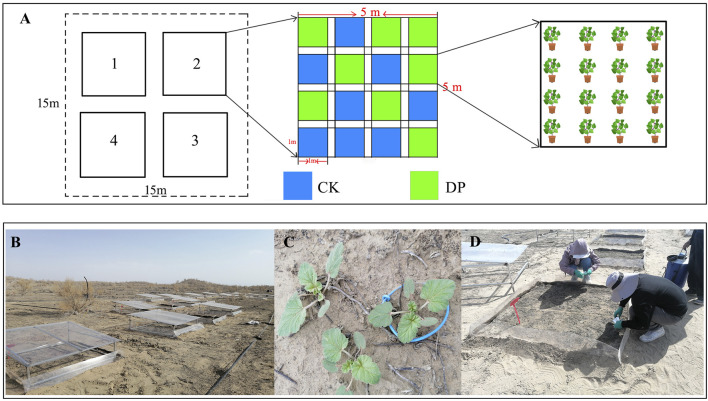 FIGURE 1
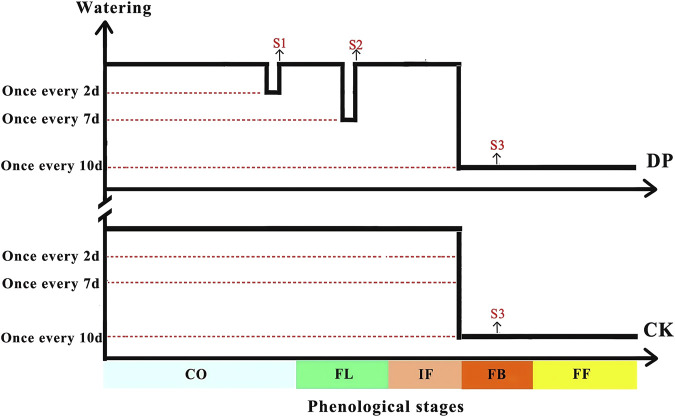 FIGURE 2
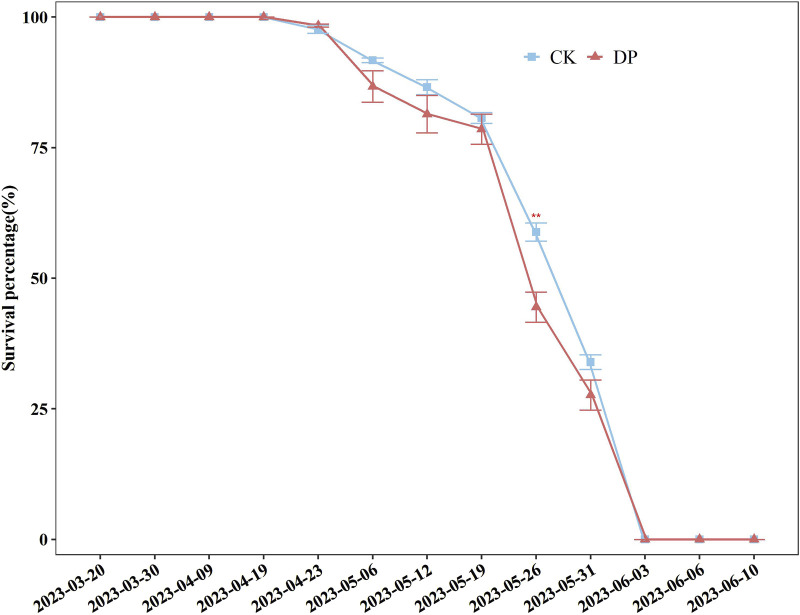 FIGURE 3
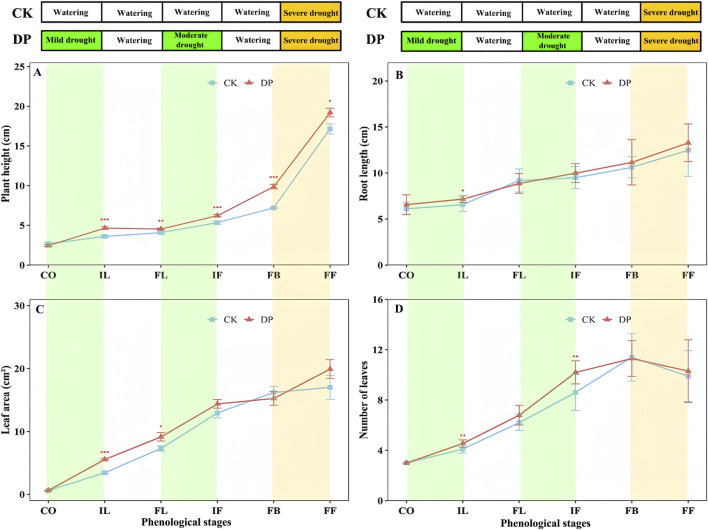 FIGURE 4
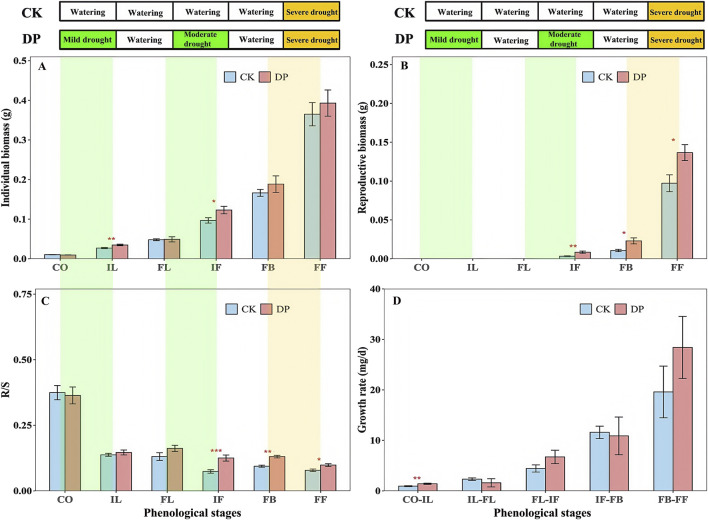 FIGURE 5
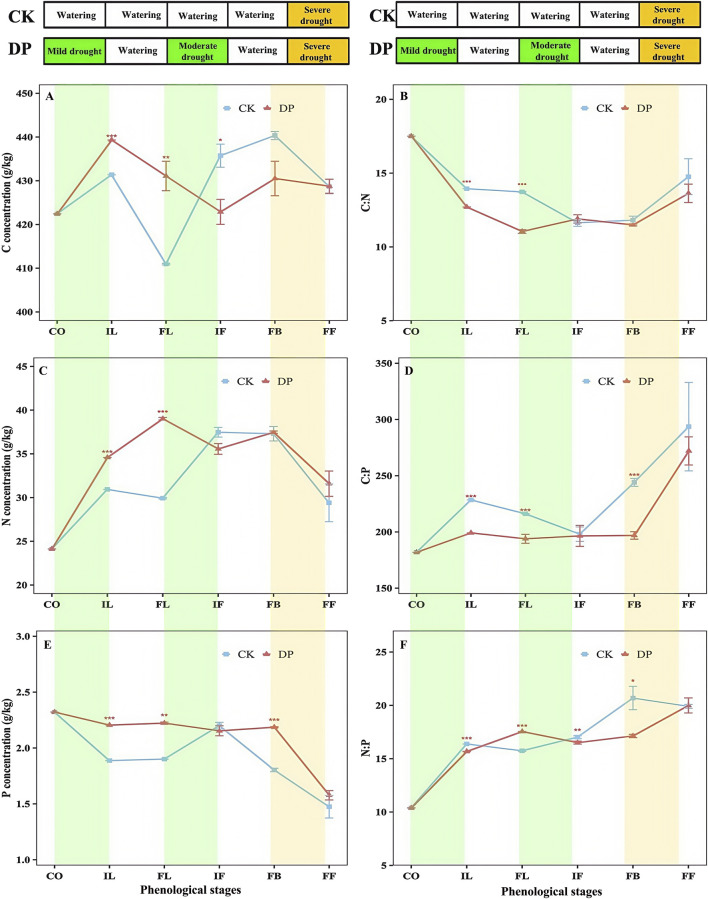 FIGURE 6
| Phenological stages | CK | SD | DP | SD |
|---|---|---|---|---|
| Cotyledon stage | 78.00 days | 0.00 | 78.00 days | 0.00 |
| Initial leaf expansion stage | 88.00 days | 0.00 | 88.00 days | 0.00 |
| Full leaf expansion stage | 112.25 days | 0.70 | 107.00 days | 0.50 |
| Initial flowering stage | 124.63 days | 0.38 | 121.50 days | 0.46 |
| Full blooming stage | 131.50 days | 0.63 | 128.63 days | 0.60 |
| Initial fruiting stage | 132.13 days | 0.74 | 127.38 days | 0.89 |
| Full fruiting stage | 143.00 days | 0.96 | 139.25 days | 1.03 |
| Withering stage | 152.63 days | 0.63 | 147.63 days | 0.75 |
| Life history | 74.63 days | 0.63 | 69.63 days | 0.75 |
| Index | Factor | df | F | P |
|---|---|---|---|---|
| Plant height | Treatment | 1 | 49.769 | <0.001 |
| Phenological stage | 5 | 819.905 | <0.001 | |
| Treatment * Phenological stage | 5 | 7.065 | <0.001 | |
| Root length | Treatment | 1 | 13.078 | <0.001 |
| Phenological stage | 5 | 240.614 | <0.001 | |
| Treatment * Phenological stage | 5 | 1.301 | 0.269 | |
| Number of leaves | Treatment | 1 | 0.454 | 0.502 |
| Phenological stage | 5 | 70.933 | <0.001 | |
| Treatment * Phenological stage | 5 | 2.590 | 0.030 | |
| Leaf area | Treatment | 1 | 2.450 | 0.120 |
| Phenological stage | 5 | 71.862 | <0.001 | |
| Treatment * Phenological stage | 5 | 1.289 | 0.274 | |
| Individual biomass | Treatment | 1 | 6.459 | 0.012 |
| Phenological stage | 5 | 127.398 | <0.001 | |
| Treatment * Phenological stage | 5 | 2.149 | 0.065 | |
| R/S | Treatment | 1 | 7.607 | 0.007 |
| Phenological stage | 5 | 106.120 | <0.001 | |
| Treatment * Phenological stage | 5 | 1.146 | 0.341 | |
| Reproductive biomass | Treatment | 1 | 13.422 | 0.001 |
| Phenological stage | 2 | 186.096 | <0.001 | |
| Treatment * Phenological stage | 2 | 4.053 | 0.023 | |
| Growth rate | Treatment | 4 | 146.208 | <0.001 |
| Phenological stage | 1 | 2.024 | 0.158 | |
| Treatment * Phenological stage | 4 | 0.680 | 0.608 | |
| C | Treatment | 1 | 17.880 | <0.001 |
| Phenological stage | 5 | 20.665 | <0.001 | |
| Treatment * Phenological stage | 5 | 12.749 | <0.001 | |
| N | Treatment | 1 | 83.056 | <0.001 |
| Phenological stage | 5 | 23.896 | <0.001 | |
| Treatment * Phenological stage | 5 | 43.957 | <0.001 | |
| P | Treatment | 1 | 115.404 | <0.001 |
| Phenological stage | 5 | 75.809 | <0.001 | |
| Treatment * Phenological stage | 5 | 18.665 | <0.001 | |
| C:N | Treatment | 1 | 12.393 | 0.002 |
| Phenological stage | 5 | 55.059 | <0.001 | |
| Treatment * Phenological stage | 5 | 3.313 | 0.020 | |
| C:P | Treatment | 1 | 23.876 | <0.001 |
| Phenological stage | 5 | 47.162 | <0.001 | |
| Treatment * Phenological stage | 5 | 3.028 | 0.029 | |
| N:P | Treatment | 1 | 13.951 | 0.002 |
| Phenological stage | 5 | 443.606 | <0.001 | |
| Treatment * Phenological stage | 5 | 30.558 | <0.001 |
| Index | Treatment | CO-IL | IL-FL | FL-IF | IF-FB | FB-FF |
|---|---|---|---|---|---|---|
| C | CK | 1.15 | 2.66 | 3.28 | 0.91 | 1.55 |
| DP | 2.15 | 1.34 | 1.54 | 1.59 | 1.11 | |
| N | CK | 13.53 | 1.83 | 12.39 | 2.94 | 15.03 |
| DP | 19.50 | 6.61 | 5.40 | 3.43 | 10.41 | |
| P | CK | 11.31 | 0.40 | 8.16 | 11.01 | 12.95 |
| DP | 2.82 | 0.63 | 2.85 | 2.40 | 17.88 | |
| C:N | CK | 12.40 | 0.89 | 9.28 | 3.48 | 15.92 |
| DP | 17.42 | 7.71 | 5.01 | 3.31 | 10.82 | |
| C:P | CK | 12.44 | 3.05 | 5.16 | 11.59 | 13.72 |
| DP | 4.97 | 1.95 | 3.37 | 3.19 | 17.91 | |
| N:P | CK | 24.52 | 2.20 | 4.33 | 11.26 | 4.04 |
| DP | 22.22 | 6.16 | 3.38 | 2.18 | 8.80 |
| Index | Treatment | Plant height | Root length | Number of leaves | Leaf area |
|---|---|---|---|---|---|
| Individual biomass | CK | 0.912*** | 0.856*** | 0.615*** | 0.805*** |
| DP | 0.929*** | 0.844*** | 0.71*** | 0.864*** |
Peer Reviews
No public reviews on file for this paper yet. If you reviewed it on a platform where reviews are public (OpenReview, ICLR, NeurIPS, ICML), you can paste yours below so the community can read it here.
Videos
No videos yet. Explain this paper in a talk, walkthrough, or lecture? Add one.
Taxonomy
TopicsPlant Water Relations and Carbon Dynamics · Plant responses to water stress · Tree Root and Stability Studies
1 Introduction
Drought is expected to increase in frequency, severity, and duration in the future because of global warming, which will pose serious threats to plant survival, growth, and regeneration (Lin et al., 2014; Huang et al., 2015a). Many studies have indicated that drought can affect multiple life history stages of plants, such as by decreasing germination percentage, increasing seedling mortality, and altering biomass allocation (Zia et al., 2021; Walters et al., 2023; Zhang et al., 2023; Brunet, et al., 2024). However, some researchers have found that plants can adopt various strategies to cope with drought exposure, including changes in root configuration, reduced leaf area, regulation of antioxidant accumulation, and ratios of C, N, and P (Guo et al., 2023; Fuente et al., 2023; Haghpanah et al., 2024). In particular, when plants are rewatered after an initial drought, they often show an overcompensation effect and improve their adaptability to drought stress (Hofer et al., 2017; Gao et al., 2024). Therefore, it is crucial to investigate the effects of drought pretreatment on plants in the context of global climate change.
Plants subjected to drought pretreatment may exhibit coping strategies compared to those that have experienced a single drought event (Haider et al., 2024). Consequently, numerous scholars have explored the effects of drought pretreatment on plants from multiple perspectives, including morphological changes, biomass allocation, and stoichiometry composition. For example, Gao et al. (2024) found that the root length of maize seedlings increased by 21.05% after drought rewatering, enhancing the ability of maize seedlings to adapt to drought stress following two cycles of drought rewatering treatments. Lv et al. (2024) also found that drought pretreatment not only increased the number of small vascular bundles, altered the shape and density of stomata, and enhanced water use efficiency in potatoes, but also increased the amount and rate of dry biomass transport, thereby reducing the adverse effects of drought stress on potato tubers. Another study from the perspective of the content and ratios of stoichiometry also found that the content of N in different organs and P in the fine roots of Pinus yunnanensis seedlings increased after rewatering with light drought, moderate drought, and severe drought treatments, while the C:N ratio decreased (Liu et al., 2024). These findings indicate that drought pretreatment can increase the root length of maize seedlings and the dry biomass of potatoes, altering the allocation of stoichiometric composition through an overcompensated effect. However, most studies have focused on crops or tree species, with relatively little research on the effects of drought pretreatment on desert herbs in arid environment.
The frequency and severity of drought events are increasingly influenced by global climate change, particularly in arid and semiarid regions (Ghannoum, 2009; Hosseinizadeh et al., 2015). In the temperate desert ecosystems of Central Asia, ephemeral plants play crucial roles in windbreaks and sand fixation, stabilising moving sand dunes, and protecting agricultural lands from sand encroachment (Sun et al., 2008; Mu et al., 2021; Lu et al., 2022). Moreover, these plants primarily rely on snowmelt and rainfall in early spring for rapid growth, completing their life history before the onset of hot and dry summers, and characterising them as typical drought-avoidant species (Mu et al., 2021). Consequently, ephemeral plants are considered ideal materials for studying plant responses to drought stress (Chen et al., 2019a; Mu et al., 2021). In particular, E. oxyrhinchum is the dominant ephemeral plant in the Gurbantunggut Desert (Mu et al., 2021). It germinates in March-April, flowers in April-May, and fruits in May-June, completing its life history in 2–3 months (Zhang and Chen, 2002; Wang and Zhang, 2010; Zhang et al., 2022a; Zhang et al., 2022b). This life strategy of E. oxyrhinchum enables it to evade extreme summer temperatures in arid regions. During the growing season of E. oxyrhinchum, soil moisture from snowmelt and spring rainfall exhibited a fluctuating downward trend, with soil dryness gradually increasing (Chen et al., 2019a). Studies have indicated that the soil water content in early spring typically remains above 10%, and by the end of its life history, it can drop to less than 4% (Chen et al., 2019a). Other studies have shown that plants often increase the allocation of belowground biomass and alter their leaf morphology, transitioning from deeply lobed to entirely palmate leaves under drought conditions (Chen et al., 2019b). Based on the drought-escaping characteristics of ephemeral plants and the dynamic trends of soil water content in the Gurbantunggut Desert, we propose the first hypothesis: E. oxyrhinchum reduces its survival percentage, enhances drought tolerance, and triggers compensatory effects on morphology and biomass accumulation.
Furthermore, Carbon (C), nitrogen (N), and phosphorus (P) are essential for plant growth and physiological activities (Lu et al., 2023). Plants adapt to environmental changes through coordination among the elements in their bodies, which reflects the relationship between plants and their environment (Jiang et al., 2023). Accordingly, we proposed the second hypothesis: E. oxyrhinchum subjected to drought pretreatment will exhibit significant increases in the concentration of C, N, and P in leaves. To validate these hypotheses, we conducted a pre-drought experiment in the Gurbantunggut Desert to assess the effect of drought pretreatment on survival, phenology, morphology, biomass, and stoichiometric characteristics of E. oxyrhinchum. Therefore, this study provides a theoretical and practical basis for the adaptive evolution and conservation of ephemeral plants in desert environments.
2 Materials and methods
2.1 Study area
The study area is located on the southern edge of the Gurbantunggut Desert in Northwest China. The Gurbantunggut Desert, characterised by a typical temperate continental arid climate, is the largest stabilised and semi-stabilised desert in China (Chen et al., 2019c; Lu et al., 2022; Zhang et al., 2022b). The mean annual temperature varies from 6°C to 10°C, with extreme high temperatures over 40°C (Liu et al., 2020a). The annual potential evaporation can exceed 2,000 mm, and the annual precipitation in the central region of the desert is only 70–100 mm, which mainly occurs in winter and spring (Liu et al., 2020a; Lu et al., 2022). Natural conditions in the Gurbantunggut Desert are extremely harsh and susceptible to human activity and extreme climatic events. However, compared with other desert regions in China, herbaceous plants in the Gurbantunggut Desert are relatively abundant in spring, especially in ephemeral plant communities (Erfan et al., 2023). E. oxyrhinchum is a typical annual ephemeral plant found in the Gurbantunggut Desert. It contributes to more than 50% of the aboveground productivity of ephemeral plants, is the dominant species in the Gurbantunggut Desert, and plays a crucial role in the desert ecosystem of China (Zang et al., 2020).
2.2 Research methods
2.2.1 Drought pretreatment and field data collection
The field experimental plot is located at the southern edge of the Gurbantunggut Desert (44°26′N, 87°54′E), which was established in September 2015. Firstly, in order to prevent interference from wildlife and humans, we have established reinforced bilateral fences. Secondly, we have installed PVC light-transmitting and rain-sheltering equipment, it can be used to block the interference of natural precipitation. Finally, a 15 m × 15 m plot with relatively flat terrain and no distribution of E. oxyrhinchum was selected within the aforementioned field plot. A randomized block design was used, with four large plots (5 m × 5 m) spaced 3 m apart. Within each large plot, 16 small plots (1 m × 1 m) were set up, with 8 plots designated for control treatment and 8 plots for drought pretreatment (Figures 1A, B). A 5 mm thick water-impermeable membrane was used between the large and small plots to prevent water seepage.
Experimental design (A), PVC light-transmitting and rain-sheltering equipment (B), Erodium oxyrhinchum seedlings (C) and sample collection (D) in the field. Note: Control treatment, CK; Drought pretreatment, DP.
Considering the average precipitation (102 mm) during the growth season of ephemeral plants in the Gurbantunggut desert over the past decade, we conducted an experiment of drought pretreatment by controlling watering frequency on the basis of complete rain cover. For the control treatment (CK): watering once every 2 days during the cotyledon, leaf expansion, and initial flowering stages, and once every 10 days during the full booming, fruiting and withering stages, with each watering amount of 8 mm (calculated based on the average watering amount of the life history and phenological transition time of E. oxyrhinchum). The cumulative watering volume for the control treatment was approximately 104 mm. For the drought pretreatment (DP): watering once every 4 days during the cotyledon stage to simulate mild drought, watering once every 7 days during the full leaf expansion stage to simulate moderate drought, and once every 10 days during the full blooming, fruiting and withering stages to simulate severe drought (Figure 2). And once every 2 days during other phenological stages consistent with the control treatment (Figure 2). The cumulative watering amount was about 56 mm.
Experimental design of drought pretreatment for the desert ephemeral plant Erodium oxyrhinchum. Note: Control treatment, CK; Drought pretreatment, DP; Cotyledon stage, CO; Full leaf expansion stage, FL; Initial flowering stage, IF; Full blooming stage, FB; Full fruiting stage, FF; Mild drought, S1; Moderate drought, S2; Severe drought, S3.
Plant samples were collected at different phenological stages of E. oxyrhinchum: the cotyledon stage (29 March), initial leaf expansion stage (mid-April), full leaf expansion stage (late April), initial flowering stage (early May), full booming stage (mid-May), and full fruiting stage (late May). Whole plants were preserved in water bags and transported to the laboratory for analysis, and the leaves of E. oxyrhinchum were preserved in liquid nitrogen to determine the stoichiometric indicators (Figures 1C, D).
2.2.2 Plant phenology investigation and measurement of morphology, biomass, and stoichiometric indicators
2.2.2.1 Phenology survey
For each treatment, the number of days from 1 January 2023 to the germination, leafing, blooming, fruiting, and withering stages was calculated. These data served as the phenological metrics for subsequent analyses.
2.2.2.2 Morphology and biomass traits
As the plants grew, their traits (plant height, leaf area, root length, and number of leaves) were measured. We measured the leaf area of fresh leaves using an LI-COR 3000 leaf area meter. After the plant traits were measured, the plants in all treatments were harvested and separated into roots, stems, leaves, and reproductive organs (flowers, fruits, and seeds). The roots were carefully washed free of soil. Plant samples were blanched in an oven at 105°C for 30 min before drying at 70°C to a consistent weight. The plant organs were weighed using an electronic balance (OHAUS, Pine Brook, NJ, United States, 0.0001 g). Individual biomass (IB) was determined by adding the aboveground biomass (AGB) and belowground biomass (BGB), and the root to shoot ratio (R/S) was computed as the ratio of belowground to aboveground biomass.
2.2.2.3 Stoichiometric measurement
Mature leaves from the upper section of E. oxyrhinchum were dried and ground into powder using a ball mill for stoichiometric analysis. The C and N concentrations in the leaves were determined using an elemental analyser (EA3000, Italy), and the P concentration was determined using the molybdenum-antimony colorimetric method.
2.3 Statistical analysis
The survival percentage of E. oxyrhinchum was analysed using independent sample t-tests with a significance level of 0.05, and Levene’s test was used to confirm the homogeneity of variance. In addition, independent sample t-tests (consistent with the survival percentage analysis method) and two-way ANOVA were used to analyse plant height, root length, number of leaves, leaf area, individual biomass, reproductive biomass, root to shoot ratio, growth rate, and stoichiometric characteristics. The coefficient of variation (CV) was employed to examine the variability of leaf C, N, and P concentration and their ratios throughout the sampling period: 0≤CV<15% shows weak variability, 15%≤CV<35% indicates moderate variability, and CV ≥ 35% indicates high variability. Data analysis was conducted using SPSS27.0, and graphical representations were generated using R-4.3.2.
3 Results
3.1 The effects of drought pretreatment on the phenology and survival percentage of E. oxyrhinchum
Statistical analysis revealed that the phenological stages of E. oxyrhinchum under drought pretreatment were significantly earlier than those under the control treatment (p < 0.001, Table 1). Specifically, under drought pretreatment, the full leaf expansion stage occurred 5.25 ± 1.2 days earlier, the initial flowering stage 3.13 ± 0.84 days earlier, the initial fruiting stage 4.75 ± 1.63 days earlier, and the withering stage 5 ± 1.38 days earlier than that of control treatment (Table 1). Notably, the entire life history of E. oxyrhinchum under drought pretreatment were also significant shorter than that of control treatment: DP (69.63 ± 0.75 days) < CK (74.63 ± 0.63 days).
On 20 March 2023 the seeds of E. oxyrhinchum exhibited an explosive germination strategy, with seedlings appearing uniform before entering the cotyledon stage (Figure 3). The survival percentages of E. oxyrhinchum in the control and drought treatments did not significantly decrease from the cotyledon stage to April 19. After the full leaf expansion stage, the survival percentage of E. oxyrhinchum under drought pretreatment showed an earlier and faster decline than that of the control treatment (Figure 3). By the end of May, plants exposed to the drought pretreatment rapidly entered the withering stage. By early June, E. oxyrhinchum had completed its reproductive output and ended its life history between the control treatment and drought pretreatment (Figure 3).
*Effects of drought pretreatment on the survival percentage of Erodium oxyrhinchum. Note: Control treatment, CK; Drought pretreatment, DP; *p < 0.05, **p < 0.01, **p < 0.001.
3.2 The effects of drought pretreatment on the morphological traits of E. oxyrhinchum
The results of the two-way ANOVA indicated significant differences in terms of plant height, root length, leaf area, and leaf number of E. oxyrhinchum at different phenological stages (p < 0.001, Table 2). There were significant differences between the control and drought treatments in terms of plant height and root length (p < 0.05, Table 2); however, no significant differences were observed in leaf number (p = 0.502, Table 2) or leaf area (p = 0.12, Table 2). Furthermore, there was a significant interaction effect between drought treatment and phenological stage on plant height and leaf number (p < 0.05, Table 2).
The height, root length, and leaf area of E. oxyrhinchum in the control and drought treatments increased gradually with the phenological stage (Figure 4). Prior to the fruiting stage, the number of leaves increases. From the initial leaf expansion stage to the full fruiting stage, plant height under drought pretreatment was significantly higher than that of the control treatment (p < 0.05, Figure 4). During the initial leaf expansion stage, root length under drought pretreatment was significantly longer than that of the control treatment. At the initial leaf expansion and flowering stages, the number of leaves under the drought pretreatment was significantly higher than that of the control treatment, but the difference did not reach a significant level during the full blooming and fruiting stages.
*Effects of drought pretreatment on the plant height (A), root length (B), leaf area (C), and number of leaves (D) of Erodium oxyrhinchum. Note: Control treatment, CK; Drought pretreatment, DP; Cotyledon stage, CO; Initial leaf expansion stage, IL; Full leaf expansion stage, FL; Initial flowering stage, IF; Full blooming stage, FB; Full fruiting stage, FF; *p < 0.05, **p < 0.01, **p < 0.001.
3.3 The effects of drought pretreatment on biomass accumulation and allocation of Erodium oxyrhinchum
According to the results of the two-way ANOVA, the individual biomass, reproductive biomass, and growth rate of E. oxyrhinchum showed significantly increasing trends, but the R/S exhibited a significantly decreasing trend as the plants grew (p < 0.001, Table 2). Similarly, there were significant differences in the individual biomass, root to shoot ratio, and reproductive biomass of E. oxyrhinchum between the control and drought treatments (p < 0.05, Table 2). Throughout the reproductive season, the reproductive biomass under the drought pretreatment was consistently higher than that under the control treatment (Figure 5). Specifically, the reproductive biomass under drought pretreatment during the full fruiting stage was 1.41 times than that of the control. From the perspective of the entire life history, the individual biomass of E. oxyrhinchum under the drought pretreatment was greater than that of the control treatment (Figure 5). For example, during initial leaf expansion, the individual biomass of E. oxyrhinchum under the drought treatment was 1.29 times than that of the control treatment.
*Effects of drought pretreatment on the individual biomass (A), reproductive biomass (B), R/S (C), growth rate (D) of Erodium oxyrhinchum. Note: Control treatment, CK; Drought pretreatment, DP; Cotyledon stage, CO; Initial leaf expansion stage, IL; Full leaf expansion stage, FL; Initial flowering stage, IF; Full blooming stage, FB; Full fruiting stage, FF; *p < 0.05, **p < 0.01, **p < 0.001.
3.4 The effects of drought pretreatment on the C, N, and P stoichiometry characteristics of E. oxyrhinchum
Two-way ANOVA revealed significant differences in the stoichiometric characteristics and ratios of C: N, and P in the leaves of E. oxyrhinchum between the control and drought treatments (p < 0.001, Table 2). Similarly, from the perspective of the entire life history, significant differences in the stoichiometric characteristics and C: N, and P in the leaves of E. oxyrhinchum were observed at different phenological stages (p < 0.01). From the initial leaf expansion stage to the full leaf expansion stage, the C concentration in the leaves of E. oxyrhinchum under drought pretreatment was significantly higher than that in the control treatment (Figure 6A). However, at the initial flowering and full blooming stages, the C concentration under drought pretreatment was significantly lower than that of the control treatment. In addition, the N concentration in the leaves of E. oxyrhinchum exhibited a trend of initially increased and then decreased (Figure 6C). Before the initial flowering stage, the N concentration in the leaves of E. oxyrhinchum under the drought pretreatment was significantly higher than that in the control treatment. Similarly, from the perspective of the entire life history, the P concentration in the leaves of E. oxyrhinchum under drought pretreatment was significantly higher than that in the control treatment (Figure 6E).
*Effects of drought pretreatment on the C, N, and P stoichiometric characteristics of Erodium oxyrhinchum. Note: C concentration (A); C:N ratio (B); N concentration (C); C:P ratio (D); P concentration (E); N:P ratio (F); Control treatment, CK; Drought pretreatment, DP; Cotyledon stage, CO; Initial leaf expansion stage, IL; Full leaf expansion stage, FL; Initial flowering stage, IF; Full blooming stage, FB; Full fruiting stage, FF; *p < 0.05, **p < 0.01, **p < 0.001.
The C: N ratio in the leaves of E. oxyrhinchum initially decreased and then increased as the phenological stage progressed, whereas the C:P and N:P exhibited an increasing trend. From the cotyledon stage to the full leaf expansion stage, the C: N in the leaves of E. oxyrhinchum under drought pretreatment was significantly lower than that in the control treatment (p < 0.001, Figure 6B). From the perspective of the entire life history, the C:P in the leaves of E. oxyrhinchum under drought pretreatment was also significantly lower than that in the control treatment (Figure 6D). Similarly, from the cotyledon stage to the full blooming stage, the N:P under the drought pretreatment was significantly lower than that under the control treatment (p < 0.05, Figure 6F).
From the perspective of the entire life history, the N and P concentration in the leaves of E. oxyrhinchum exhibited greater variation than the C concentration. Specifically, the coefficient of variation for C concentration in the leaves of E. oxyrhinchum between the control treatment and drought pretreatment was less than 5%, indicating weak variation (Table 3). However, from the full blooming stage to the full fruiting stage, the coefficient of variation for the N concentration under the control treatment and the P concentration under the drought pretreatment was greater than 15%, indicating moderate variation.
4 Discussion
This study aimed to investigate the effects of drought pretreatment on the survival, phenology, morphology, biomass, and stoichiometric characteristics of E. oxyrhinchum in the Gurbantunggut Desert. The results indicated that E. oxyrhinchum exposed to drought pretreatment exhibited significantly earlier phenological stages and lower survival percentages, and the reproductive biomass and individual biomass were significantly greater than those of the control treatment, partially supporting the first hypothesis. Furthermore, plants exposed to drought pretreatment needed to absorb more phosphorus than those exposed to the control treatment, but the differences in C and N in leaves did not reach a significant level, thus partially confirming the second hypothesis.
4.1 Effects of drought pretreatment on the phenology and survival percentage of E. oxyrhinchum
Phenology represents cyclical changes in vegetation and is a sensitive biological indicator of climate change (Li et al., 2021). This study revealed that the phenological stages of E. oxyrhinchum subjected to drought pretreatment were markedly accelerated. For instance, the full leaf expansion stage under drought pretreatment was 5.25 ± 1.2 days earlier than that of the control treatment. Early leafing allows plants to initiate photosynthesis sooner, thereby enhancing biomass accumulation (Ganjurjav et al., 2021; Amini et al., 2023; Wu and Yang, 2024). Similarly, the onset of flowering and fruiting of E. oxyrhinchum under drought pretreatment also occurred significantly earlier than in the control treatment. This may be because earlier leafing under drought pretreatment induced plants to enter the reproductive stage. Previous studies also have indicated that desert ephemeral plants employ a “drought escape strategy” by accelerating phenological stages to complete life history (Franks, 2011; Ding et al., 2022). These findings not only highlight the positive response of ephemeral plants to drought stress but also demonstrate that drought pretreatment can accelerate the rapid transitions of phenological stages, thereby influencing the life history of ephemeral plants.
The survival percentage reflects the adaptability of plants to environmental stress and is a valuable indicator of drought resistance in seedlings (He et al., 2024; Chen et al., 2025). In this study, the survival percentage of E. oxyrhinchum from March 20 to April 19 did not show a significant decrease trend, but the survival percentage of E. oxyrhinchum significantly decline after the full leaf expansion stage. The survival percentage of E. oxyrhinchum under drought pretreatment exhibited a faster and earlier declining trend than that of the control treatment. With the rapid growth of E. oxyrhinchum, the difference in survival percentage may be related to the decrease in soil water content and intensification of intraspecific competition. Similarly, Guo et al. (2020) investigated the combined effects of drought and intraspecific competition on the growth of C. lanceolata, and the results indicated that intense competition imposed by neighbours was a great threat to the survival of young C. lanceolata plants under prolonged drought. Furthermore, the trend in soil water content revealed lower moisture levels under drought pretreatment (Supplementary Figure 1), further suggesting intensified intraspecific competition among plants. Therefore, ephemeral plants usually adopt a strategy of decreasing their survival percentage, reducing intraspecific competition, and shortening their life history to cope with intense drought stress.
4.2 Effects of drought pretreatment on the morphological and biomass traits of E. oxyrhinchum
Plants respond to environmental stress by adjusting their morphological traits and biomass allocation (Freschet et al., 2018; Geleta et al., 2024). Our study demonstrated that plants exposed to drought pretreatment showed more significant morphological changes than those in the control treatment (Figure 4). Specifically, from the initial leaf expansion to the full blooming stage, the plant height of E. oxyrhinchum under the drought pretreatment was significantly higher than that of the control treatment. Additionally, during the initial leaf expansion and flowering stages, the number of leaves under the drought pretreatment was significantly higher than that in the control treatment. The root length of E. oxyrhinchum under drought pretreatment was also significantly greater than that of the control treatment during the initial leaf expansion stage. This suggests that ephemeral plants under drought pretreatment could prioritise resource allocation to their roots, allowing them to extend deeper or wider soil layers to obtain more water and nutrients and improve their adaptability. Similarly, Xu et al. (2023) found that drought stress prompted Alhagi sparsifolia to allocate more resources for root growth, thereby enhancing its survival and adaptability in desert environments.
The positive correlation between morphological traits and biomass has been validated extensively (Lu et al., 2014; Chen et al., 2019b). In this study, correlation analysis also revealed a positive correlation between plant height, root length, leaf area, and leaf number, and the individual biomass of E. oxyrhinchum (Table 4). In addition, we found that the individual and reproductive biomass of E. oxyrhinchum under drought pretreatment was significantly higher than that of the control treatment. This suggests that moderate drought stress did not significantly decrease the biomass of E. oxyrhinchum but rather promoted its growth of E. oxyrhinchum, demonstrating an overcompensation effect. Similarly, in agricultural practices, managers often apply mild short-term drought stress to specific crop root zones, inducing a stress response through alternating partial root-zone irrigation, thereby promoting biomass accumulation and improving yield (Consoli et al., 2017; Fu et al., 2017; Liu et al., 2020b; Wang et al., 2024). The persistence of annual plant populations depends entirely on seed production (Lan and Zhang, 2008). In this study, drought pretreatment significantly increased the reproductive output of E. oxyrhinchum, which is likely related to the accelerated transition of ephemeral plants from vegetative to reproductive growth under drought stress. In the early spring in the Gurbantunggut Desert, soil moisture undergoes a gradual change from high to low, indicating that drought stress continues to intensify (Huang et al., 2015b; Chen et al., 2019d; Lu et al., 2022). To ensure population persistence, ephemeral plants must complete their reproductive output before the onset of extreme drought or hot summers (Mu et al., 2021; Lu et al., 2022). Therefore, the overcompensation effect in E. oxyrhynchum under drought stress is an important strategy for population persistence and community stability in the Gurbantunggut Desert.
4.3 Effects of drought pretreatment on the C, N, and P stoichiometric characteristics of E. oxyrhinchum
C, N, and P are essential nutrients that play critical roles in plant growth and development, influencing key physiological and ecological processes such as photosynthesis, transpiration, and reproductive growth (Zhang et al., 2021; Costa et al., 2024). Our study revealed that the leaf C concentration under drought pretreatment was significantly higher than that of the control treatment during the initial and full leaf expansion stages. This suggests that drought pretreatment increases C accumulation in the early stages of growth, which is likely because plants adjust their energy storage structure under drought conditions to maintain survival and growth. A study on tropical plant seedlings found that plants allocate limited carbon resources to nonstructural carbohydrates under drought stress, which is beneficial for maintaining normal metabolic requirements and rapid recovery after drought stress (O’Brien et al., 2014). Additionally, the coefficient of variation for leaf C concentration under the control and drought treatments was less than 5%. This may be because carbon is a fundamental element of plant structure, and the C concentration in leaves generally remains relatively stable. Our study showed that the leaf N concentration of E. oxyrhinchum in the control and drought treatments exhibited a trend of first increased and then decreased. This may be because the growth rate of the leaves reached its maximum and required higher nitrogen absorption to synthesise proteins before the flowering stage. However, as plants grow, more N is allocated to the reproductive organs, resulting in a relative decrease in the leaf N concentration. In addition, the leaf P concentration under drought pretreatment was significantly higher than that of the control treatment. This may be due to the enhanced resistance and overcompensation effects in plants exposed to drought stress, which require more phosphorus for rRNA synthesis to support plant growth (Elser et al., 2010).
The leaf N:P ratio can be used as an indicator to assess whether plant productivity is limited by nutrients (Yuan et al., 2011; Wang et al., 2014; Lu et al., 2023). Generally, it is accepted that when N:P < 14, plant growth is more limited by nitrogen, when 14 < N:P < 16, plant growth is simultaneously limited by nitrogen and phosphorus, and when N:P > 16, phosphorus becomes the primary limiting factor for plant growth (Güsewell and Koerselman, 2002; Sardans et al., 2012; Yang et al., 2018). Our study found that leaf N:P under drought pretreatment was less than 14 during the cotyledon stage, 14 < N:P < 16 during the initial leaf expansion stage, and N:P > 16 from the full leaf expansion stage to the full fruiting stage (Figure 6F). Similarly, the leaf N:P in the control treatment was greater than 16 from the leaf expansion stage to the full fruiting stage. These findings indicated that the growth of E. oxyrhinchum during the cotyledon stage was primarily limited by N. After the initial leaf expansion stage, N and P limit plant growth simultaneously. The effect of P on plant growth gradually increased during the full leaf expansion, flowering, and fruiting stages. Therefore, it is necessary to optimise ecological restoration measures based on the nutritional needs of plants and improve the effectiveness of restoration.
5 Conclusion
Plants are often exposed to various degrees of drought under natural conditions, which are likely to affect their growth and development. Our study revealed that E. oxyrhinchum exposed to drought stress significantly accelerated the transition of phenological stages and shortened its life history. Meanwhile, the survival percentage of E. oxyrhinchum under drought pretreatment significantly decreased but showed overcompensation effects on morphological traits and biomass accumulation. This indicates that ephemeral desert plants exhibit a trade-off between survival and growth when subjected to drought stress. In addition, from the perspective of stoichiometric characteristics, E. oxyrhinchum subjected to drought pretreatment required more phosphorus to enhance its resistance to severe drought in the Gurbantunggut desert. Therefore, this study provides novel insights into the restoration of desert ecosystems based on plant nutritional requirements in the context of climate change.
The reference list from the paper itself. Each links out to its DOI / PubMed record.
- 1Amini A.Majidi M. M.Mokhtari N.Ghanavati M. (2023). Drought stress memory in a germplasm of synthetic and common wheat: antioxidant system, physiological and morphological consequences. Sci. Rep. 13 (1), 8569. 10.1038/s 41598-023-35642-2 37237176 PMC 10220003 · doi ↗ · pubmed ↗
- 2Brunet J.Inouye D. W.Rankin E. E. W.Giannini T. C. (2024). Global change aggravates drought, with consequences for plant reproduction. Ann. Bot., mcae 186. 10.1093/aob/mcae 186 PMC 1180594739692585 · doi ↗ · pubmed ↗
- 3Chen C. J.Bao M. F.Wang W. H.Shang J. H.Zeng Y. X.Sha X. D. (2025). Current situation and prospects for drought-resistance breeding in Medicago sativa . Acta Prataculturae Sin. 34 (3), 204. 10.11686/cyxb 2024105 · doi ↗
- 4Chen Y. F.Cao Q. M.Li D. X.Liu H. L.Zhang D. Y. (2019 d). Effects of temperature and light on seed germination of ephemeral plants in the Gurbantunggut Desert, China: implications for vegetation restoration. J. Arid Land 11, 916–927. 10.1007/s 40333-019-0027-4 · doi ↗
- 5Chen Y. F.Shi X.Zhang L. W.Baskin J. M.Baskin C. C.Liu H. L. (2019 c). Effects of increased precipitation on the life history of spring- and autumn-germinated plants of the cold desert annual Erodium oxyrhynchum (Geraniaceae). Ao B PLANTS 11 (2), plz 004. 10.1093/aobpla/plz 004 30881621 PMC 6410494 · doi ↗ · pubmed ↗
- 6Chen Y. F.Zhang L. W.Shi X.Ban Y.Liu H. L.Zhang D. Y. (2019 b). Life history responses of spring-and autumn-germinated ephemeral plants to increased nitrogen and precipitation in the Gurbantunggut Desert. Sci. Total Environ. 659, 756–763. 10.1016/j.scitotenv.2018.12.368 31096405 · doi ↗ · pubmed ↗
- 7Chen Y. F.Zhang L. W.Shi X.Liu H. L.Zhang D. Y. (2019 a). Life history responses of two ephemeral plant species to increased precipitation and nitrogen in the Gurbantunggut Desert. Peer J 7 (4), e 6158. 10.7717/peerj.6158 30648013 PMC 6330950 · doi ↗ · pubmed ↗
- 8Consoli S.Stagno F.Vanella D.Boaga J.Cassiani G.Roccuzzo G. (2017). Partial root-zone drying irrigation in orange orchards: effects on water use and crop production characteristics. Eur. J. Agron. 82, 190–202. 10.1016/j.eja.2016.11.001 · doi ↗