Correction: Ordered mesoporous zirconium oxophosphate supported tungsten oxide solid acid catalysts: the improved Brønsted acidity for benzylation of anisole
Zhichao Miao, Huahua Zhao, Huanling Song, Lingjun Chou

TL;DR
This paper corrects a previously published study on a solid acid catalyst used for anisole benzylation.
Contribution
The correction addresses errors or omissions in the original paper's findings or methodology.
Findings
The original study's claims about the catalyst's acidity and performance were revised.
Clarifications or corrections were made to the experimental procedures or results.
Abstract
Correction for ‘Ordered mesoporous zirconium oxophosphate supported tungsten oxide solid acid catalysts: the improved Brønsted acidity for benzylation of anisole’ by Zhichao Miao et al., RSC Adv., 2014, 4, 22509–22519, https://doi.org/10.1039/C4RA02809K.
Genes, proteins, chemicals, diseases, species, mutations and cell lines named across the full text — each resolved to its canonical identifier and authoritative record.
Click any figure to enlarge with its caption.
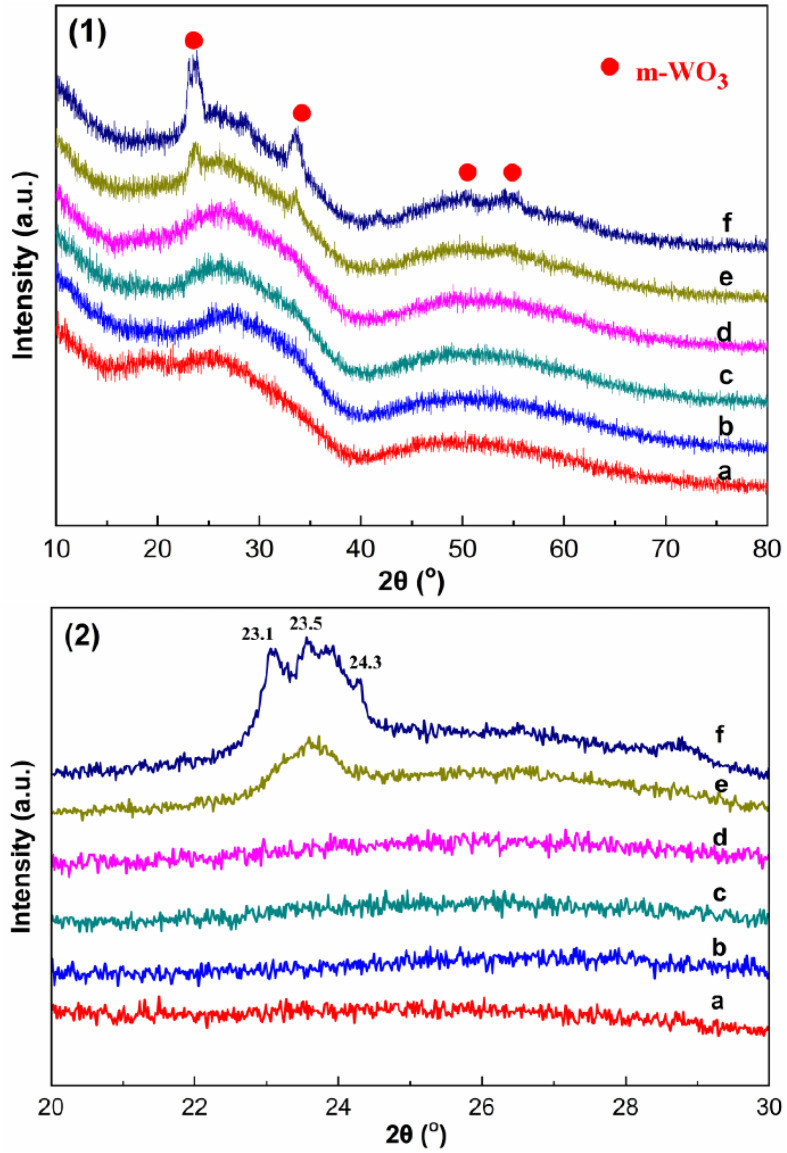 Figure 1
Peer Reviews
No public reviews on file for this paper yet. If you reviewed it on a platform where reviews are public (OpenReview, ICLR, NeurIPS, ICML), you can paste yours below so the community can read it here.
Videos
No videos yet. Explain this paper in a talk, walkthrough, or lecture? Add one.
Taxonomy
TopicsPolyoxometalates: Synthesis and Applications · Chemical Synthesis and Characterization · Chemical Synthesis and Reactions
The authors regret an error in Fig. 3 in the original manuscript.
In Fig. 3(2) in the original manuscript, the XRD patterns of sample c (15 wt% WO_3_/M-ZrPO) and d (20 wt% WO_3_/M-ZrPO) were mistakenly duplicated. Fig. 3(2) is a partial (20–30°) magnification of Fig. 3(1), and when Fig. 3(1) was prepared, the data of sample d (20 wt% WO_3_/M-ZrPO) was mistakenly copied twice, resulting in data duplication.
A corrected Fig. 3 is provided below.
An independent expert has viewed the raw data and corrected figure and has concluded that the data are consistent with the discussions and conclusions presented.
The Royal Society of Chemistry apologises for these errors and any consequent inconvenience to authors and readers.