Prevalence, Knowledge, Attitudes, and Perceptions About E-Cigarette Smoking Among Students in the Dental Fields in Jordan
Suhair R. Obeidat, Zain A. Malkawi, Omar F. Khabour, Amani Gh. AlSa'di

TL;DR
This study explores e-cigarette use among Jordanian dental students, finding that many believe e-cigarettes are less harmful than regular cigarettes despite knowing their health risks.
Contribution
The study provides new insights into e-cigarette prevalence and perceptions among dental students in Jordan, a previously under-researched group.
Findings
16% of Jordanian dental students reported e-cigarette use.
Most users believed e-cigarettes are less harmful than regular cigarettes.
Two-thirds of students expressed concern about e-cigarettes' general health effects.
Abstract
Introduction: Tobacco use is common in Jordan, with electronic cigarettes (e-cigarettes) becoming more prevalent, especially among the youth. Despite this trend, very few studies have been conducted on e-cigarette use among dental students, who should be more informed about the consequences of e-cigarette use on oral health. This study aimed at assessing the prevalence, knowledge, attitude, and perception of e-cigarette smoking among Jordanian dental students with respect to its effects on oral health. Methods: The study utilized a cross-sectional survey method and used a convenient sampling approach. The study included 645 students from Dentistry Schools in Jordan. Results: The most popular smoking type among participants was waterpipe. A total of 16% of students reported smoking e-cigarettes. The majority of e-cigarette users reported initiation of smoking at 17–18 years of age.…
Genes, proteins, chemicals, diseases, species, mutations and cell lines named across the full text — each resolved to its canonical identifier and authoritative record.
Click any figure to enlarge with its caption.
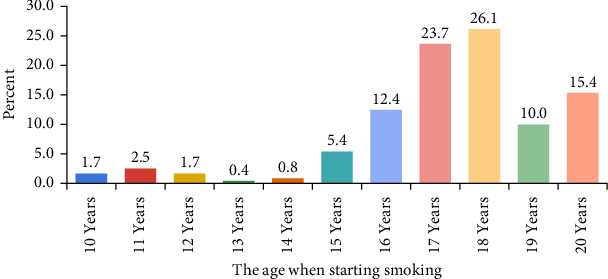 Figure 1
- —Deanship of Research, Jordan University of Science and Technology
Peer Reviews
No public reviews on file for this paper yet. If you reviewed it on a platform where reviews are public (OpenReview, ICLR, NeurIPS, ICML), you can paste yours below so the community can read it here.
Videos
No videos yet. Explain this paper in a talk, walkthrough, or lecture? Add one.
Taxonomy
TopicsSmoking Behavior and Cessation · Alcohol Consumption and Health Effects
1. Introduction
Smoking is one of the biggest public health problems affecting the world today and a preventable cause of premature death. Electronic cigarettes (e-cigarettes) are a new class of nicotine products that began to emerge between 2006 and 2009 [1]. Smoking is rapidly increasing in developing countries, including Jordan [2–4]. For this reason, Jordan adopted the “National Tobacco Control Strategy for 2017–2019,” which relies on the World Health Organization's tobacco control measures and aims to reduce smoking in Jordan by about a third in 2025 [5].
E-cigarette use is marketed as a healthier/less toxic way to tobacco products [6]. An e-cigarette (vaping) is an electric device that heats a liquid mixture containing nicotine to produce an aerosol, which is then inhaled by users in a way that mimics traditional tobacco smoking. There are many types of electronic smoking, such as vape pens and vaporizers, which are called “electronic nicotine delivery systems (ENDSs)” [7]. Many conventional tobacco users have turned to e-cigarettes to quit smoking. In addition, e-cigarettes are increasingly popular among adolescents and young adults [8].
The liquid used in e-cigarettes contains two humectants: propylene glycol and glycerin [9]. Oxidation and decomposition of the propylene glycol and glycerin in e-liquid by heating leads to the formation of several harmful compounds, including formaldehyde, acetaldehyde, and acrolein [10]. These compounds have toxic effects, as reported by several studies [11–13]. For example, formaldehyde and acetaldehyde are classified as probable carcinogenic to humans. While acrolein is a powerful cardiovascular agent and also causes lung injury and nasal allergies [13, 14].
A report in 2019 by Beauval et al. [9] found that e-cigarette use leads to a higher level of nicotine dependence than traditional tobacco smoking. Furthermore, studies reported that e-cigarettes cause more addiction among adolescents and young adults than traditional cigarettes [14–16]. The addictive nature of e-cigarettes is related to nicotine content and preference factors (such as flavors). However, the majority of e-cigarette users believe that their health would be better if they vape instead of tobacco smoking [17].
To better characterize factors associated with e-cigarette use, studies should focus on populations in which e-cigarette use is common. Therefore, the aim of the current study is to examine the prevalence, knowledge and attitude of e-cigarette users among students of dentistry, dental hygiene, and dental technology in Jordan.
2. Methodology
A cross-sectional survey approach was used to investigate the knowledge, beliefs, and attitudes of Jordanian dental, dental hygiene, and dental technology students toward e-cigarette smoking. Institutional Review Board approval was obtained at the Jordan University of Science and Technology (JUST) before conducting the study (IRB reference: 15/153/2022). Data were collected anonymously, and thus, the privacy and confidentiality of the participants were maintained. Participation in the study was voluntary and informed consent was taken in accordance with JUST regulations.
A questionnaire was distributed using a convenient sampling technique to all registered Jordanian students (levels 2–5) from dental-related academic programs, including the Departments of Dentistry, Dental Hygiene, and Dental Technology at JUST. Those in the first year are not included because they are taking core university courses. Students were recruited from classrooms, teaching laboratories, practical clinics, and student breakouts.
The questionnaire was divided into sections, including participant demographics (age, gender, school year, academic achievement, personal income, and marital status), e-cigarette smoking status (types, magnitude of use, history of use), and perceptions, knowledge, and attitudes toward e-cigarette smoking. The questionnaire was revised by expert colleagues to check its clarity, and relevance. In addition, the validity and reliability of the questionnaire were tested by applying it to a sample of 20 students. Reliability was tested and confirmed using a Cronbach's α > 0.80. An online cover page was used to explain the purpose and the importance of the study to participants and to provide instructions for completing the questionnaire correctly. The questionnaire included ~50 questions in a multiple-choice format. Participants took 12–20 min to complete and return the questionnaire.
2.1. Data Handling and Statistical Analysis
Data were analyzed using Statistical Package for the Social Sciences (Chicago, IL, USA). Frequencies and percentages were generated. In addition, the Pearson Chi-square test was used appropriately to compare subgroups. Multivariable binary logistic regression was performed to examine predictors associated with e-cigarette smoking use. Odds ratios (ORs) and 95% confidence intervals (CIs) were estimated from the models. The significance level was set at (p < 0.05).
3. Results
A total of 645 students filled out the questionnaire. The majority of students were female (68.8%), from the Department of Dentistry (76.7%), and had a family income of >1000 Jordan dinars per month (Table 1). Nearly two-thirds of the sample came from northern Jordan (Table 1).
3.1. Oral Hygiene Status of the Study Sample
About 8.0% of the sample reported experiencing halitosis, with a significantly higher incidence among the e-cigarette smokers compared to the nonsmokers (p < 0.01). Similar findings were found for dental caries and tooth loss due to caries/periodontal disease (p < 0.01, Table 2).
3.2. Smoking History Among Study Sample
Approximately 37.0% of students had tried waterpipe smoking, followed by e-cigarettes (24.2%) and traditional cigarettes (21.4%). The prevalence of current smoking among the sample was 33.0% (Table 3). The most common type of current smoking among students was waterpipe (24.0%), followed by e-cigarettes (16.0%) and traditional cigarettes (9.6%) (Table 3).
3.3. E-Cigarettes Smoking Status Among Study Population
The majority of smokers reported smoking initiation using waterpipes (27%) (Table 3). About 50% of student smokers admitted that they started smoking between the ages of 17 and 18 (Figure 1). A smaller percentage of students reported smoking at an earlier age, ranging from 10 to 16 years. Specifically, initiation begins at a lower rate around 10–11 years of age (1.65% and 2.5%, respectively), gradually increasing through early adolescence and reaching 12.44% by age 16 (Figure 1). The data also shows a decline in smoking initiation after the age of 18 years. This suggests that most students who choose to smoke have already done so in late adolescence or early adulthood.
The results showed that 16% of students reported their current use of e-cigarette smoking, with the majority (70%) starting this type of smoking for a period ranging from 1 to 3 years and after giving it a try (67.0%, Table 4). In addition, about 50% of users believe that e-cigarettes are less harmful than traditional smoking. Moreover, most users reported that their source of knowledge about e-cigarettes was from their friends and social media (Table 4).
The Pennsylvania E-Cigarette Dependence Index indicates that 46% of e-cigarette users show a moderate level of dependence. Nearly half (52%) of e-cigarette smokers reported an intention to quit smoking, with most of them reported that the health effect of e-cigarettes was the primary reason for their desire to quit smoking. Other reasons cited by the study sample for quitting smoking were that e-cigarettes are addictive and that they are expensive (Table 4).
As for nonsmokers, about half of them attributed the reason for not smoking to religious reasons, while the majority of students (74.3%) said that they do not use e-cigarettes because of their health effects.
3.4. E-Cigarettes Beliefs and Perceptions and Knowledge
The majority of the study sample stated that they believe that e-cigarettes are more likely to cause addiction (87.4%) and are a public health concern (78%). In addition, the majority reported that e-cigarettes smoking should be prohibited at work and public places (Table 5). Moreover, the results revealed that about two-thirds (67.1%) had good knowledge regarding e-cigarette smoking and its negative impact on oral health (Table 5).
Multivariate analysis of factors associated with e-cigarette smoking was investigated and found that gender, student beliefs, and total knowledge were significant factors affecting the e-cigarettes smoking habit (Table 6). Specifically, male students were seven times more likely than female students to be e-cigarette smokers (OR = 7.248, 95% CI = 3.99–13.17, p < 0.01). Compared with students who believed that e-cigarette use was a public health concern, those who did not believe this assumption were 2.7 times more likely to smoke e-cigarettes (OR = 2.738, 95% CI = 1.468–5.108, p < 0.01). Students who reported that they did not believe in the regulation of e-cigarettes in public places were 2.2 times more likely to smoke e-cigarettes than those who did (OR = 2.234, 95% CI = 1.255–3.975, p < 0.01, Table 6). Students with poor knowledge (<50) about the negative impact of e-cigarettes on oral health were twice as likely to smoke compared to those with better knowledge (OR = 2.16, 95% CI = 1.042–4.478, p=0.038, Table 6).
4. Discussion
There is a lack of conducted studies about the prevalence and risk indicators of e-cigarettes among Jordanian universities' students. The limitations and weakness of the current study were that it was conducted during a short time due to the lack of time by using the convenient sample technique instead of using simple random sampling technique or other types of randomized base methods, which may affect the generalization of the results to the target group. Not only that, but also, the studies that use the self-structured questionnaire may have subjective answers that differ from one society to another, and if we compare the current results with results in other societies, we will find it difficult to make such comparisons due to the difference in the composition of the society, the mentality of the society, the method of collecting samples, the method of statistical analysis and other factors.
The purpose of this study was to evaluate the use, perceptions, knowledge, and attitude of e-cigarette smoking among Jordanian dental students. The study found that 16% of the study sample admitted to smoking e-cigarettes, the majority of whom were males, and the most common type of smoking among students was waterpipe. A multinational survey conducted among dental students from various countries found that the prevalence of e-cigarette use was high and was related to country and gender [18]. For example, studies conducted among dental students in Saudi Arabia found that 26%–43% of participants had ever used e-cigarettes, with higher percentages among males [19, 20]. A study conducted among university students aged 18–24 years in New Zealand found that daily e-cigarette use was significantly higher in males than among females [21]. The gender difference in smoking habits is often attributed to different social, cultural, and marketing factors. In Jordan and most Arab countries, smoking is considered less acceptable for females than for males.
Notably, e-cigarette smokers in our study reported higher rates of oral health problems, including halitosis, tooth decay, and tooth loss, underscoring the potential harmful effects of e-cigarette use on dental health. This result is consistent with previous studies that indicated the negative health effects of e-cigarettes on oral health. For example, Alhajj et al. [18] noted that e-cigarette users reported a significantly higher prevalence of dry mouth and black tongue, which was attributed to the high viscosity of the e-liquid promoting colonization of Streptococcus mutans, a major causative agent of dental caries. According to a fact sheet published by the International Dental Federation (FDI), there is not enough data to establish a direct link between poor oral health conditions and e-cigarette use. However, recent systematic evaluations have shown that the most common effects on oral health are gum disease and mouth and throat irritation [22]. Epidemiological studies highlight concerns about dry mouth, irritation, and gum disease. In addition, microbiological studies have suggested that e-cigarette users have a distinct microbiome, and there is some evidence that this may be more pathogenic compared to nonusers [23].
Regarding students' knowledge of e-cigarettes, a noteworthy finding is that more than 50% of e-cigarette smokers believe that e-cigarettes are less harmful than traditional smoking, indicating the influence of public perception and advertising on their choices. In a similar way, a study conducted among university students in Jordan revealed various motivations for their early adoption of e-cigarettes. Reasons included efforts to stop smoking traditional cigarettes, fascination with e-cigarettes, and the belief that e-cigarettes represent a less risky alternative to traditional smoking [7]. In another study, students in the colleges of public health, pharmacy, and nursing at the University of Arkansas in the United States showed that there is a significant correlation between the use of e-cigarettes to quit smoking, the belief that they are less harmful than traditional tobacco, and the preference for less regulation over e-cigarettes, with actual consumption of e-cigarettes [24]. E-cigarette manufacturers and marketers often claim that their products are less harmful than traditional cigarettes. These claims can lead students to believe that e-cigarettes are a healthy option. Peer pressure and social influence play a significant role. If students see their friends or peers using e-cigarettes and perceive it as a socially acceptable or safer choice, they may be more inclined to try it.
In addition, our results also showed that more than 50% of e-cigarette users expressed their intention to quit smoking, primarily due to the harmful effects of e-cigarettes on health and the addictive nature of these products. It is essential that individuals acknowledge the potential health risks associated with e-cigarettes. The percentage of US adults who believe e-cigarettes are as dangerous as or more harmful than traditional cigarettes rose significantly between 2012 and 2017 [25].
Regarding students' attitudes, beliefs, and perceptions, the majority of students believed that e-cigarettes were addictive and considered e-cigarette use to be a public health concern. The majority supported regulating e-cigarettes in workplaces and public places. In addition, students who had better knowledge about the negative effects of e-cigarettes on oral health were less likely to smoke, underscoring the role of awareness and education in shaping behavior. In the same context, a study conducted among college students in the United States revealed that the perception of harm associated with e-cigarettes was significantly lower among individuals who used cigarettes exclusively or both cigarettes and other substances compared to those who did not use anything [26]. It appears that individuals who use e-cigarettes may not be fully aware of the potential risks that come with their use. Health organizations and professionals often emphasize the addictive properties of nicotine found in e-cigarettes. Warnings about addiction and its impact on health can reinforce these beliefs among students. Schools and colleges offering educational programs about the dangers of e-cigarettes can influence students' understanding. Accurate, evidence-based information can dispel myths and contribute to the perception of e-cigarettes as addictive and harmful.
The findings of the present study emphasize the immediate need for having stronger public health policies and educational programs on e-cigarette use among students and the general population at large, and there is an apparent need for training on the health risks of e-cigarettes so that future dental professionals can properly advice patients.
The cross-sectional nature, the convenient sampling approach, reliance on self-reporting data, and the study being carried out at a single institution imply caution in generalizing the results. In the future, longitudinal studies combined with diverse populations and clinical health assessments should be integrated to determine better long-term health outcomes from e-cigarette use. Furthermore, qualitative work could be undertaken to understand why e-cigarettes are so popular. Intervention research then needs to address the best methods to reduce consumption and encourage smoking cessation. These are critical steps necessary to achieve evidence-based public health strategies to reduce e-cigarette prevalence among young adults.
5. Conclusion
The results of the current study highlight some of the factors that influence e-cigarette use among dental students in Jordan. It is recommended that educational programs should be developed to increase awareness among students about the potential health risks associated with the use of e-cigarettes, including nicotine dependence. In addition, regulations should be implemented to control the use of e-cigarettes in public places and workplaces. The results can be used in interventions that target e-cigarette use among university students.
The reference list from the paper itself. Each links out to its DOI / PubMed record.
- 1Szumilas K. Szumilas P. Grzywacz A. Wilk A. The Effects of e-Cigarette Vapor Components on the Morphology and Function of the Male and Female Reproductive Systems: A Systematic Review. International Journal of Environmental Research and Public 20201717 p. 615210.3390/ijerph 17176152 PMC 750468932847119 · doi ↗ · pubmed ↗
- 2Tubaishat R. S. Malkawi Z. A. Albashaireh Z. S. The Influence of Different Factors on the Oral Health Status of Smoking and Nonsmoking Adults The Journal of Contemporary Dental 201314473173710.5005/jp-journals-10024-13922-s 2.0-8489340669324309356 · doi ↗ · pubmed ↗
- 3Al-Tammemi A. A. B. Tobacco Epidemic in Jordan: The Time to Act Is Now Global Health Promotion 20222929710110.1177/1757975921102618134269113 · doi ↗ · pubmed ↗
- 4World Health Organization WHO Report on the Global Tobacco Epidemic 2015: Raising Taxes on Tobacco 2015 World Health Organization
- 5Marquez P. V. Krasovsky K. Andreeva T. Jordan-Overview of Tobacco Use, Tobacco Control Legislation and Taxation 2019
- 6Barakat M. Assaf A. M. Thiab S. Perception of Adults Toward Electronic Cigarettes: A Cross-Sectional Study from Jordan. Primary Health Care Research & Development 202122, e 310.1017/S 1463423621000062 PMC 805746433504409 · doi ↗ · pubmed ↗
- 7Al-Sawalha N. A. Almomani B. A. Mokhemer E. Al-Shatnawi S. F. Bdeir R. E-cigarettes Use Among University Students in Jordan: Perception and Related Knowledge P Lo S One 20211612 p. e 02620903497219610.1371/journal.pone.0262090 PMC 8719738 · doi ↗ · pubmed ↗
- 8NIDA Vaping Devices (Electronic Cigarettes) Drug Facts 2020 January 8. Retrieved from https://nida.nih.gov/publications/drugfacts/vaping-devices-electronic-cigarettes on 2022, September 27