Comparative genomics of Mycobacterium avium subsp. hominissuis strains within a group of captive lowland tapirs
Hanka Brangsch, Sandra Marcordes, Anne Busch, Michael Weber, Silver A. Wolf, Torsten Semmler, Dirk Höper, Sten Calvelage, Jörg Linde, Stefanie A. Barth

TL;DR
This study analyzed Mycobacterium avium subsp. hominissuis strains from sick tapirs and their enclosure, revealing high genomic variability due to homologous recombination.
Contribution
The study introduces a new cgMLST scheme and highlights the impact of homologous recombination on strain relationships in MAH.
Findings
Genomic differences between MAH strains were exceptionally high, ranging from 841 to 11,166 SNPs.
Two plasmids were found to be highly conserved across all four MAH strains.
Homologous recombination significantly influenced strain relationships, affecting SNP-based analyses.
Abstract
Within a group of three captive lowland tapirs (Tapirus terrestris) suffering from clinically apparent mycobacteriosis, non-tuberculous Mycobacterium avium subsp. hominissuis (MAH) strains were isolated from the animals and the tapir’s enclosure. Based on MIRU-VNTR findings, which identified two closely related INMV profiles (124 and 246), a micro-evolutionary event was assumed, and four available MAH strains were submitted to whole genome sequencing (short- and long-read technologies). Surprisingly, the differences based on single nucleotide polymorphisms (SNPs) were exceptionally high between the four strains, i.e., between 841 and 11,166 bases, due to a strong impact of homologous recombination. Thus, an ad hoc core genome multilocus sequence typing (cgMLST) scheme was created and pangenome analysis was conducted for determining the genomic similarity between the strains. The INMV246…
Genes, proteins, chemicals, diseases, species, mutations and cell lines named across the full text — each resolved to its canonical identifier and authoritative record.
Click any figure to enlarge with its caption.
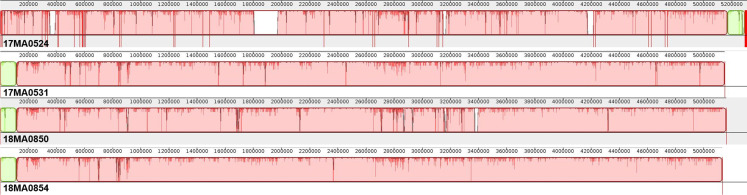 Figure 1
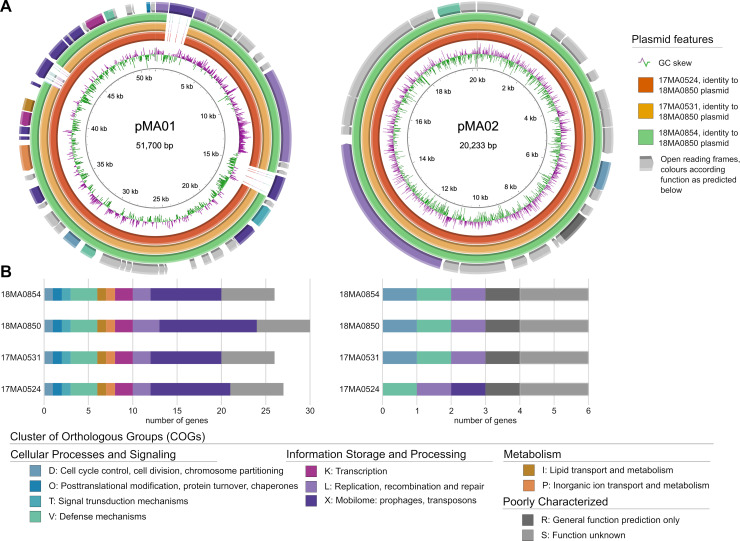 Figure 2
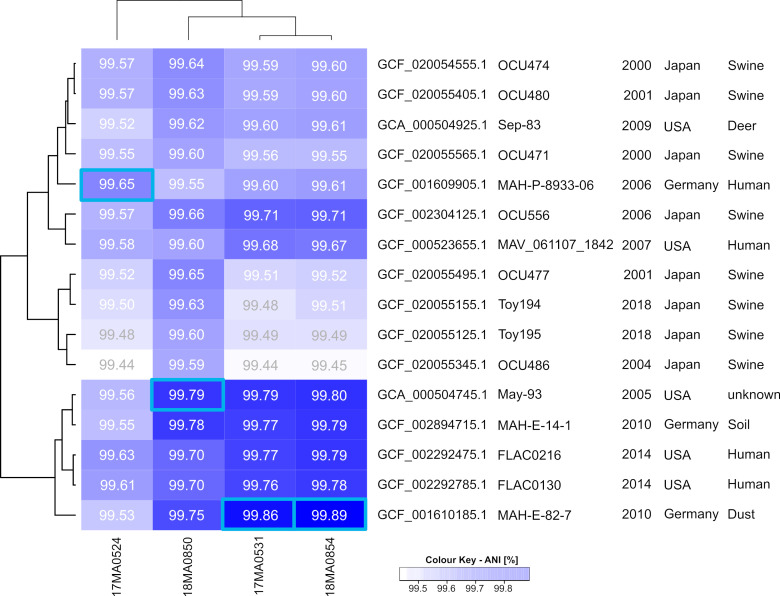 Figure 3
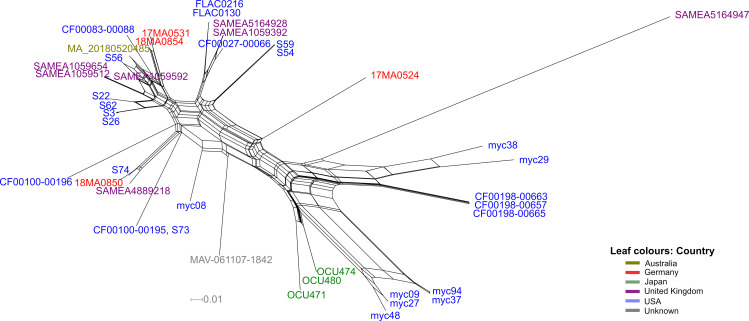 Figure 4
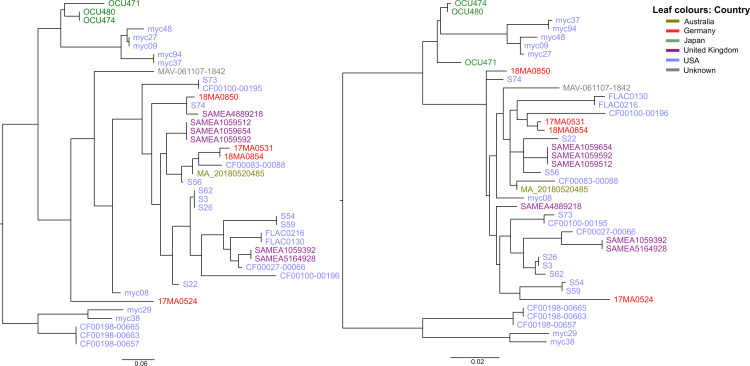 Figure 5
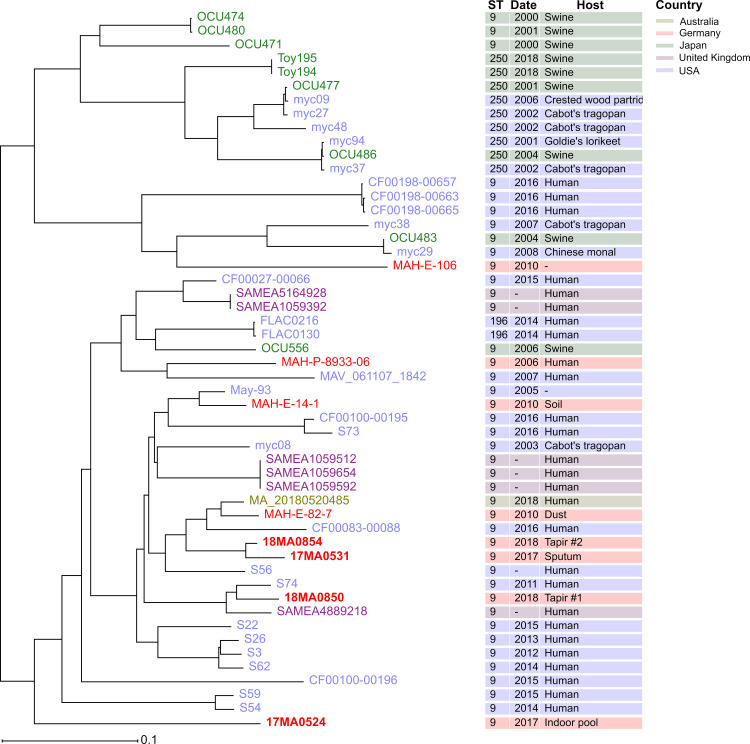 Figure 6
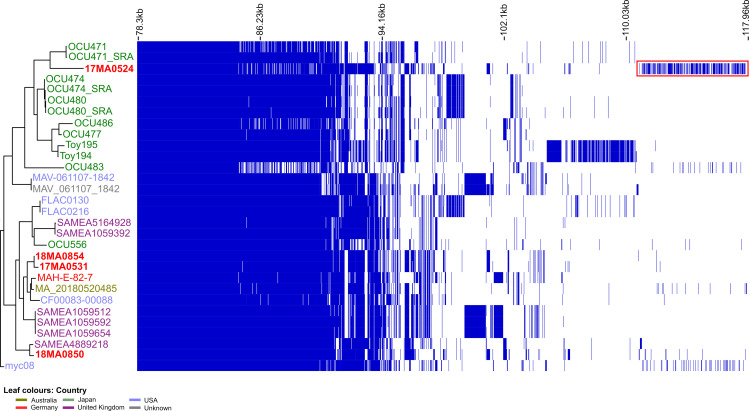 Figure 7
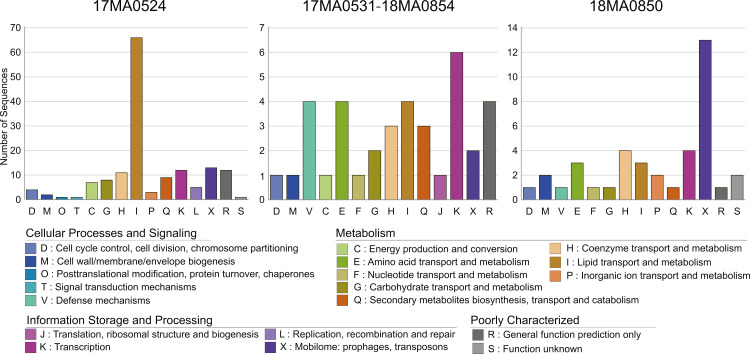 Figure 8
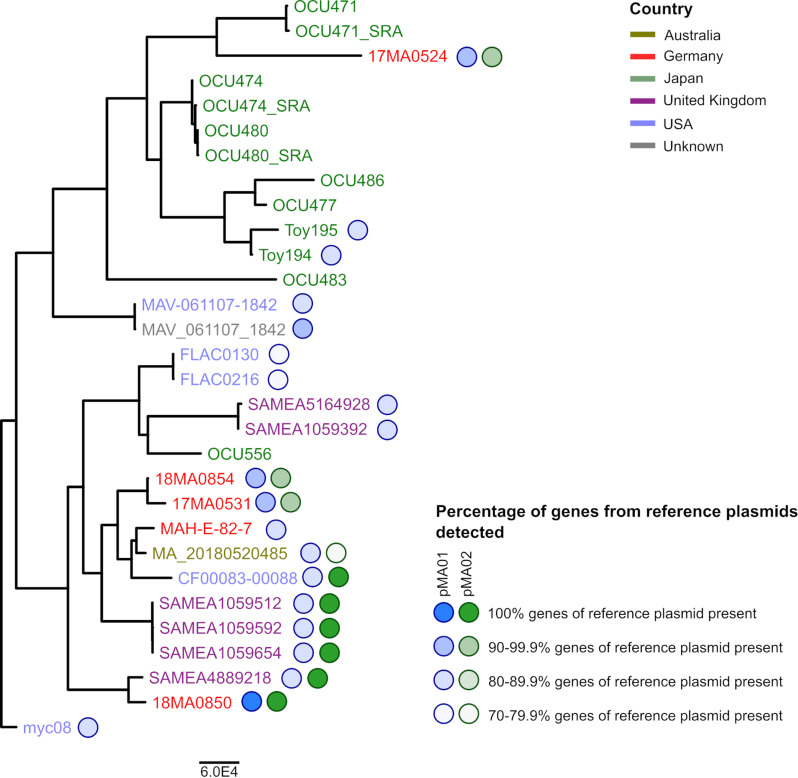 Figure 9
 Figure 10
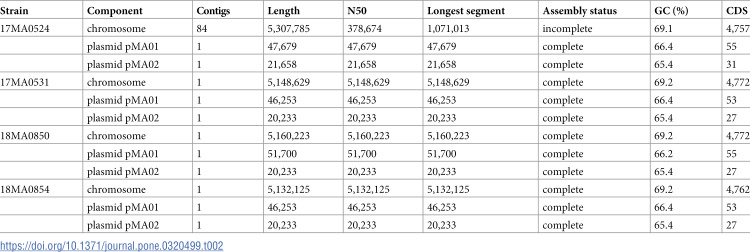 Figure 11
 Figure 12
Peer Reviews
No public reviews on file for this paper yet. If you reviewed it on a platform where reviews are public (OpenReview, ICLR, NeurIPS, ICML), you can paste yours below so the community can read it here.
Videos
No videos yet. Explain this paper in a talk, walkthrough, or lecture? Add one.
Taxonomy
TopicsMycobacterium research and diagnosis · Genomics and Phylogenetic Studies · Microbial infections and disease research