The correlation between plasma cortisol levels and scores of psychological scales among patients with recurrent depressive disorder in Vietnam
Tuan Van Nguyen, Eric Hahn, Thi Minh Tam Ta, Thi Phuong Mai Nguyen, Hoa Thi Nguyen, Quynh Thi Pham, Duc Minh Nguyen, Thi Thuy Chuyen Dieu, Thi Phuong Thao Nguyen, Ngan Thi Vuong, Tung Son Vu

TL;DR
This study in Vietnam found that cortisol levels in patients with recurrent depression decreased during treatment and were initially linked to higher psychological distress scores.
Contribution
The study provides new insights into cortisol dynamics and psychological scales in Vietnamese patients with recurrent depressive disorder.
Findings
High cortisol levels in patients with recurrent depression decreased after four weeks of treatment.
Morning cortisol levels at baseline correlated with higher anxiety and depression scores.
No cortisol-scale correlations were observed after four weeks of treatment.
Abstract
We aimed to examine levels of plasma cortisol in the morning and evening before and after standardised treatment, and analyze the correlation between these levels and scores of psychological assessment scales among patients with recurrent depressive disorder (PRDD) in Vietnam. From January 2020 to December 2021, a cross-sectional study was carried out at the National Institute of Mental Health in Bach Mai Hospital. After using a convenience sampling method, 109 consecutive patients met our criteria were recruited. We measured and analysed plasma cortisol levels in all participants at baseline (T0), two weeks after treatment (T1) and four weeks after treatment (T2). Spearman correlation was applied to assess the correlations between plasma cortisol at six different time and scores of six psychological assessment scales including HAM-D, HAM-A, BDI, SAS, DASS, and MMSE. Among 109 PRDD,…
Genes, proteins, chemicals, diseases, species, mutations and cell lines named across the full text — each resolved to its canonical identifier and authoritative record.
Click any figure to enlarge with its caption.
 Figure 1
 Figure 2
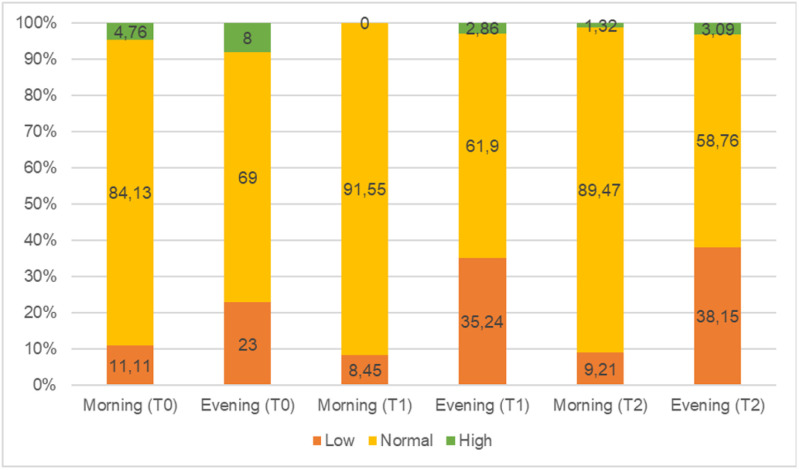 Figure 3
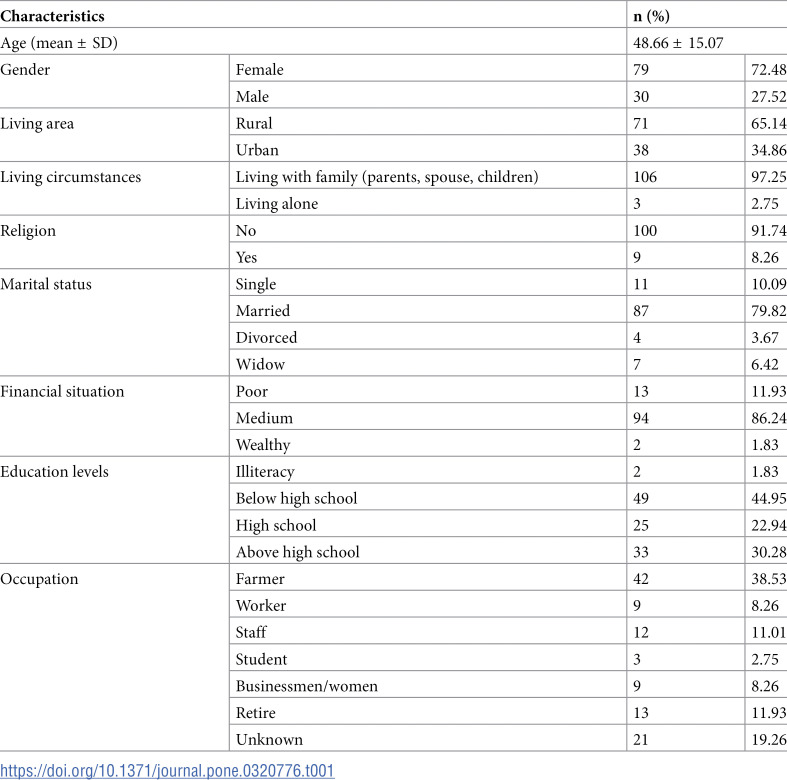 Figure 4
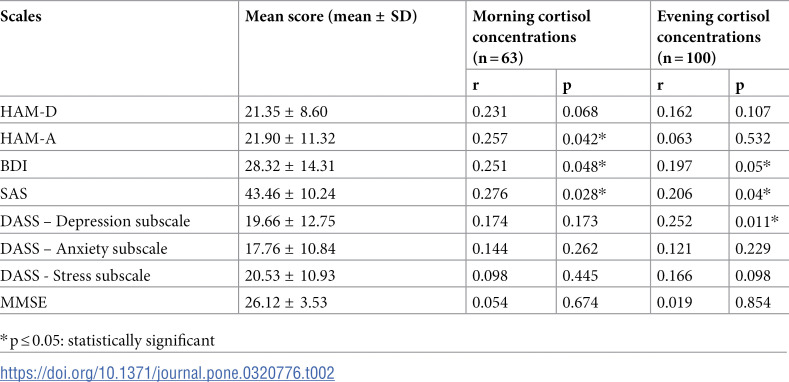 Figure 5
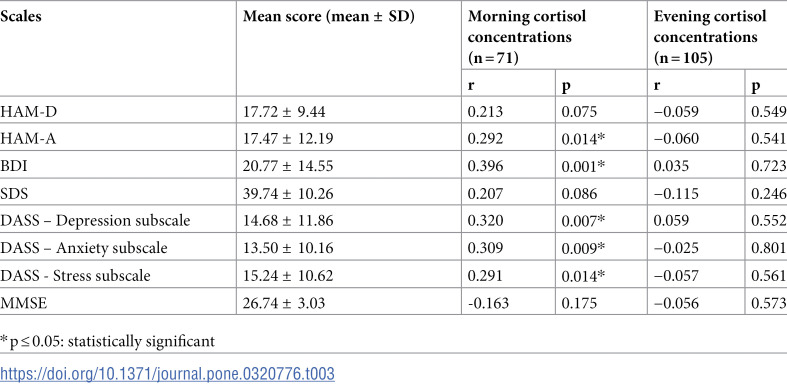 Figure 6
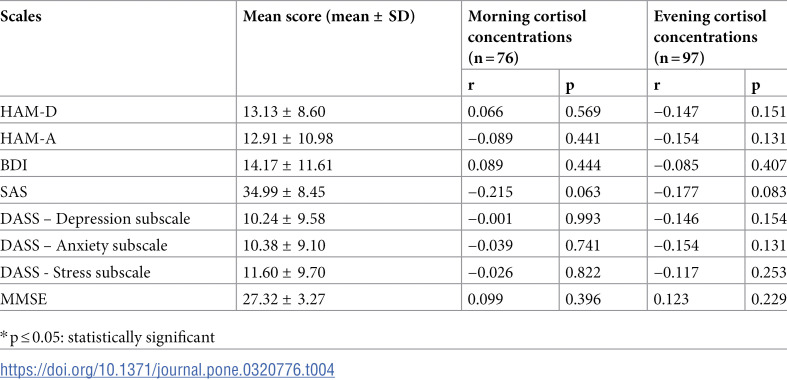 Figure 7
Peer Reviews
No public reviews on file for this paper yet. If you reviewed it on a platform where reviews are public (OpenReview, ICLR, NeurIPS, ICML), you can paste yours below so the community can read it here.
Videos
No videos yet. Explain this paper in a talk, walkthrough, or lecture? Add one.
Taxonomy
TopicsStress Responses and Cortisol · Tryptophan and brain disorders · Maternal Mental Health During Pregnancy and Postpartum