Pupillary responses to bright and dark stimuli in individuals with autism spectrum disorders
Tomoe Hayakawa, Shun Nakano, Naoko Inada, Ayako Saneyoshi, Masaki Tsujita, Shinichiro Kumagaya, Naoto Hara

TL;DR
This study explores how people with autism spectrum disorders react to bright and dark lights through their pupil responses, finding differences in dilation speed and size.
Contribution
The study identifies a faster early dilation response in the dark for individuals with ASD, suggesting a sympathetic nervous system issue.
Findings
ASD individuals showed significantly faster early dilation in dark conditions compared to typically developing individuals.
Pupil diameters were larger in the dim state for both groups, but only the TD group showed reduced diameters in Experiment 2.
Hypersensitive ASD individuals had larger pupil diameters in dim states and rapid dilation in dark conditions.
Abstract
Individuals with autism spectrum disorders (ASD) often exhibit difficulties in sensory processing, including visual hypersensitivity such as photophobia. This study investigates the neural mechanisms underlying photophobia in participants with ASD by analyzing pupillary responses. To achieve this, we examined the amplitude and velocity gradient (latency) of these responses. Pupillary responses were recorded using an eye-tracking system in participants with ASD (n = 17) and typically developing (TD) (n = 23). Stimuli alternated between bright (89.03 cd/m2) and dark (0.07 cd/m2) conditions following a dim state (2.75 cd/m2) with intervals of five seconds in Experiment 1 and 30 seconds in Experiment 2. The sensory profile test (AASP-J) showed that hypersensitivity was significantly defined in the ASD group than in the TD group. The pupillary response in the ASD group often featured…
Genes, proteins, chemicals, diseases, species, mutations and cell lines named across the full text — each resolved to its canonical identifier and authoritative record.
Click any figure to enlarge with its caption.
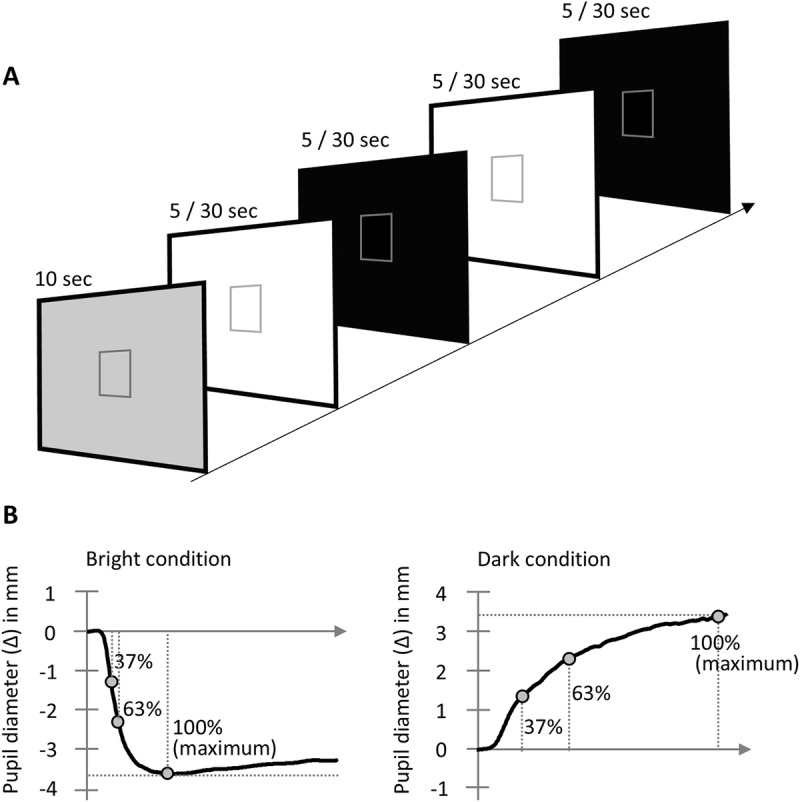 Figure 1
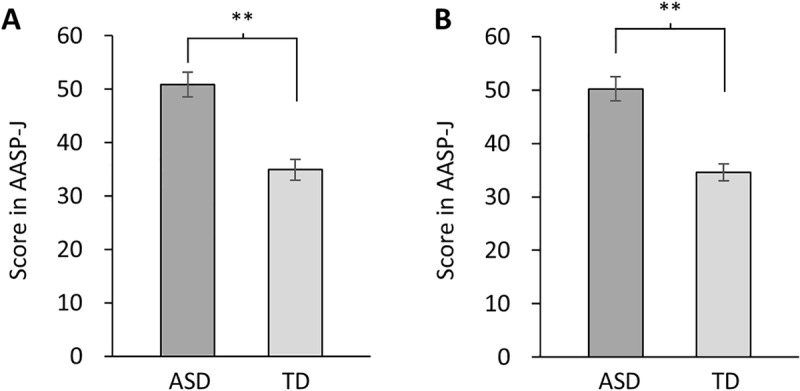 Figure 2
 Figure 3
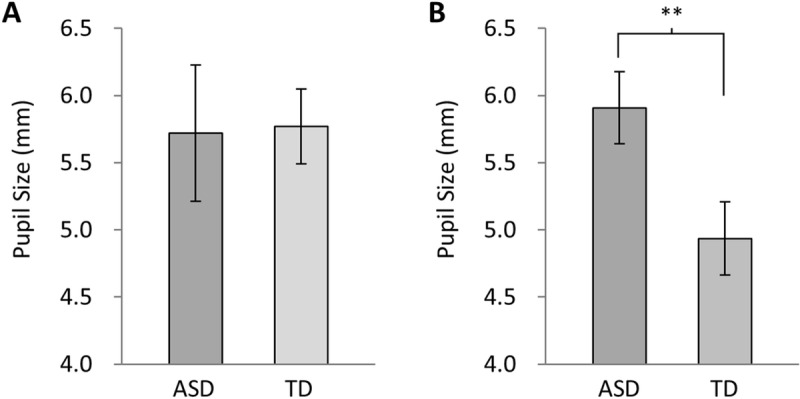 Figure 4
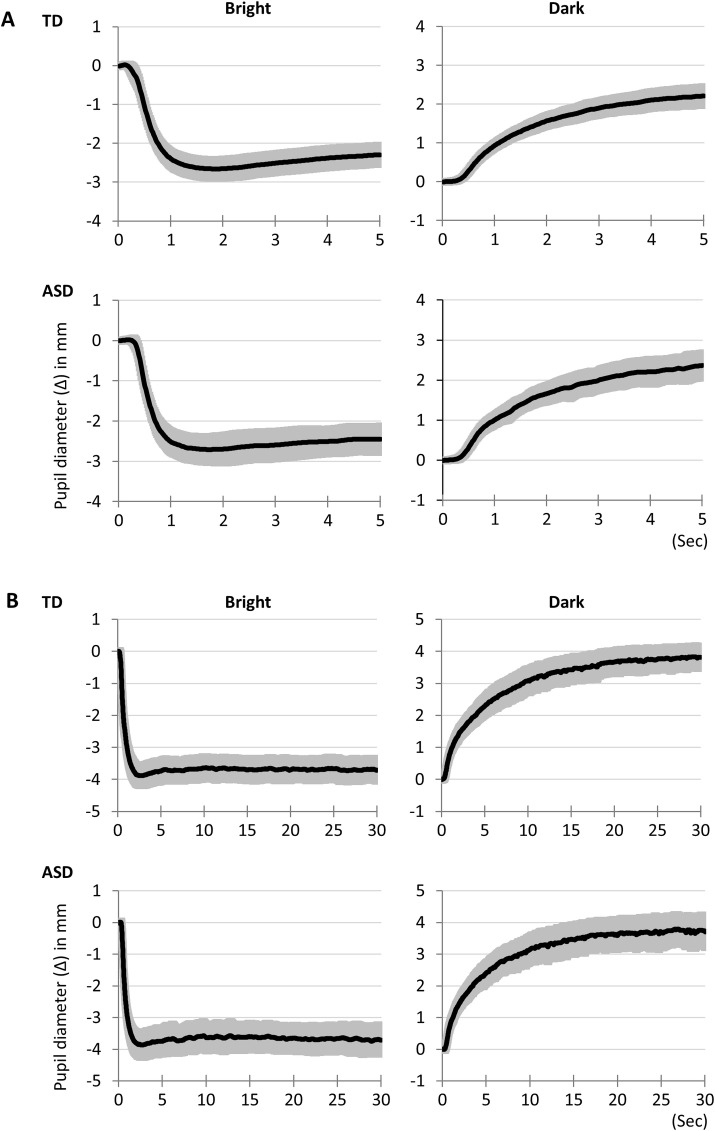 Figure 5
 Figure 6
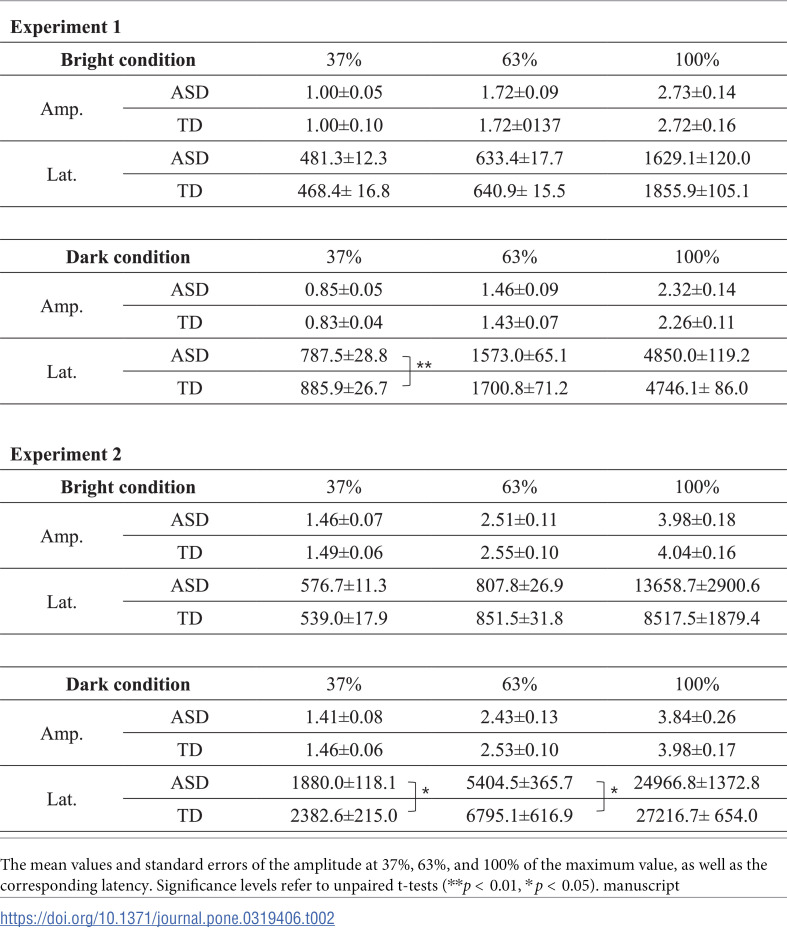 Figure 7
Peer Reviews
No public reviews on file for this paper yet. If you reviewed it on a platform where reviews are public (OpenReview, ICLR, NeurIPS, ICML), you can paste yours below so the community can read it here.
Videos
No videos yet. Explain this paper in a talk, walkthrough, or lecture? Add one.
Taxonomy
TopicsAutism Spectrum Disorder Research · Obsessive-Compulsive Spectrum Disorders · Tactile and Sensory Interactions