The sensor histidine kinase PhcS participates in the regulation of quorum sensing-dependent virulence genes in Ralstonia pseudosolanacearum strain OE1-1
Wakana Senuma, Masayuki Tsuzuki, Chika Takemura, Yuki Terazawa, Akinori Kiba, Kouhei Ohnishi, Kenji Kai, Yasufumi Hikichi

TL;DR
This study shows how the sensor histidine kinase PhcS helps control virulence in a plant pathogen through quorum sensing, both with and without a specific signaling molecule.
Contribution
The study reveals that PhcS contributes to PhcA regulation both via 3-OH MAME sensing and independently through PhcK.
Findings
PhcS autophosphorylation at H230 is essential for PhcA activation and QS-dependent virulence.
H230Q substitution in PhcS reduces phcA expression and causes loss of virulence.
PhcK and PhcS regulate phcA through distinct mechanisms, with PhcS playing a dual role.
Abstract
Ralstonia pseudosolanacearum strain OE1-1 secretes methyl 3-hydroxymyristate (3-OH MAME) as a quorum-sensing (QS) signal. Strain OE1-1 senses the chemical by the sensor histidine kinase PhcS, leading to the activation of the LysR family transcriptional regulator PhcA. The activated PhcA controls the expression of QS-dependent genes responsible for QS-regulated phenotypes including virulence. The autophosphorylation of the histidine at amino acid position 230 (H230-PhcS) in PhcS following the 3-OH MAME sensing is required for the PhcA activation. The alternative sensor histidine kinase PhcK is involved in the regulation of phcA, which is independent of 3-OH MAME sensing. Furthermore, the H230Q-PhcS substitution of H230-PhcS with glutamine significantly decreases phcA expression. However, how PhcK and PhcS regulate phcA expression remains unclear. To elucidate the mechanisms of the phcA…
Genes, proteins, chemicals, diseases, species, mutations and cell lines named across the full text — each resolved to its canonical identifier and authoritative record.
Click any figure to enlarge with its caption.
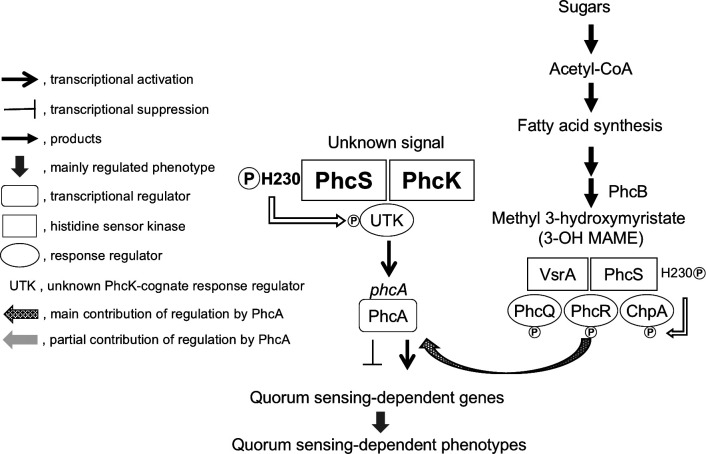 Figure 1
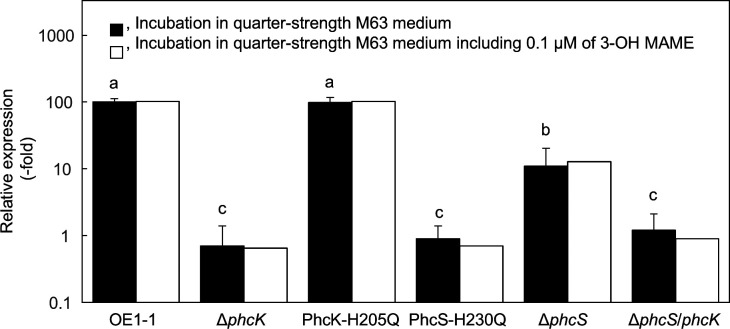 Figure 2
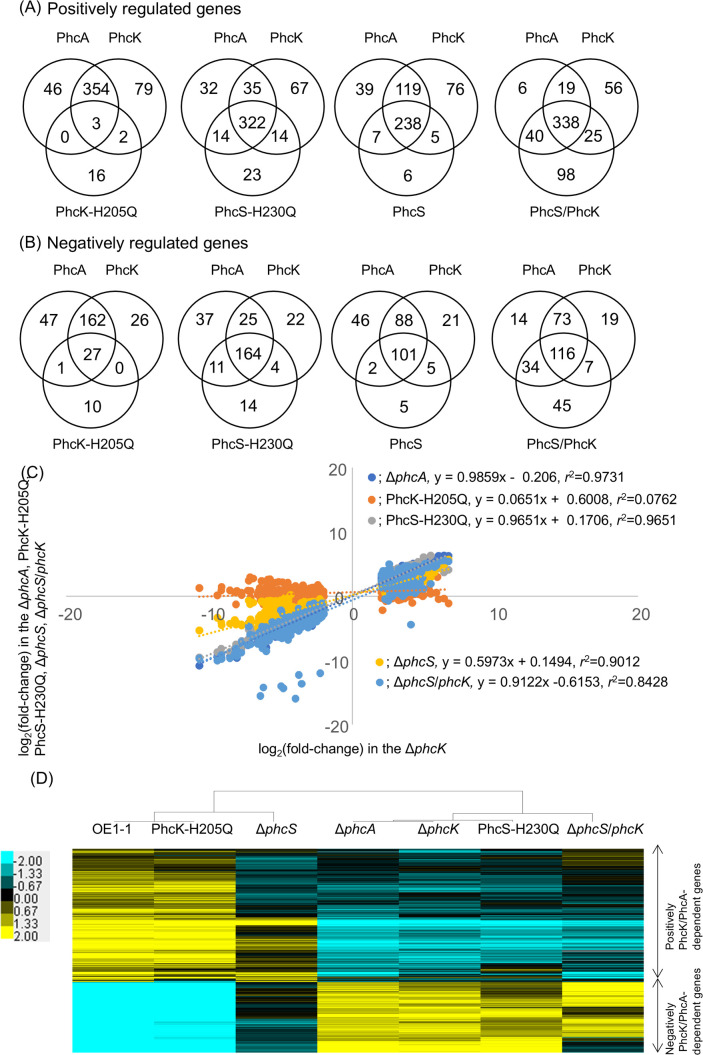 Figure 3
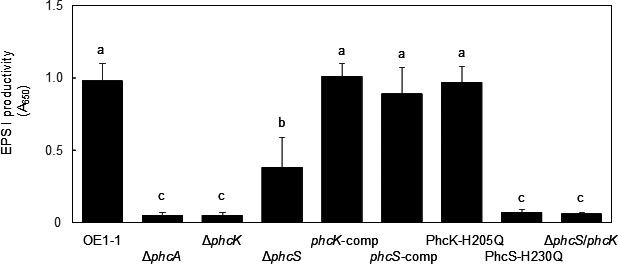 Figure 4
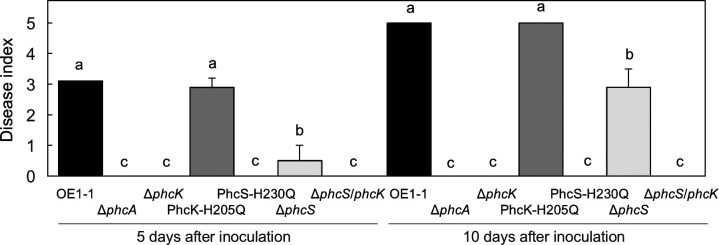 Figure 5
Peer Reviews
No public reviews on file for this paper yet. If you reviewed it on a platform where reviews are public (OpenReview, ICLR, NeurIPS, ICML), you can paste yours below so the community can read it here.
Videos
No videos yet. Explain this paper in a talk, walkthrough, or lecture? Add one.
Taxonomy
TopicsPlant Pathogenic Bacteria Studies · Plant-Microbe Interactions and Immunity · Bacterial biofilms and quorum sensing