A novel function of short cationic peptide FP-CATH9 without antimicrobial activity reverses resistance to minocycline in common multidrug-resistant gram-negative bacteria
Yingqi Tang, Jiye Liu, Jiani Yan, Zhixiong Xie, Lipeng Zhong

TL;DR
A short cationic peptide called FP-CATH9 helps minocycline work better against drug-resistant gram-negative bacteria by increasing antibiotic accumulation inside the bacteria.
Contribution
FP-CATH9 is a novel non-antimicrobial peptide that reverses minocycline resistance in gram-negative bacteria by inhibiting efflux pumps.
Findings
FP-CATH9 showed dose-dependent sensitization of minocycline against multidrug-resistant gram-negative bacteria.
FP-CATH9 increased intracellular minocycline accumulation, as shown by ethidium bromide efflux tests.
In vivo tests showed an 80% protective effect of FP-CATH9 combined with minocycline in infected Galleria mellonella larvae.
Abstract
The increase in bacterial resistance to minocycline and other tetracyclines poses a serious threat to global public health. Because the development of new antibiotics has proven problematic, antibiotic sensitization therapy is now an effective coping strategy. While antimicrobial peptides generally exhibit broad-spectrum antibacterial activity and good biocompatibility, naturally truncated portions of antimicrobial peptides (such as snake cathelicidin) often do not exhibit antimicrobial activity, and their function remains unknown. FP-CATH9 is a short cationic peptide derived from FP-CATH (snake cathelicidin antimicrobial peptide) with an amphiphilic α-helical structure and no discernible antibacterial activity. However, FP-CATH9 was previously found to significantly enhance the activity of minocycline against gram-negative bacteria. In the present paper, clinically relevant…
Genes, proteins, chemicals, diseases, species, mutations and cell lines named across the full text — each resolved to its canonical identifier and authoritative record.
Click any figure to enlarge with its caption.
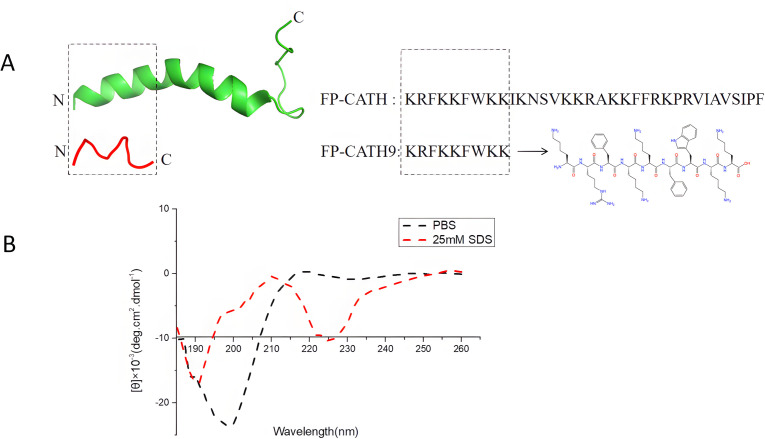 Figure 1
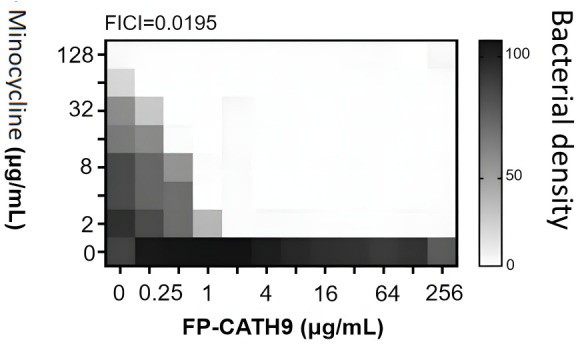 Figure 2
 Figure 3
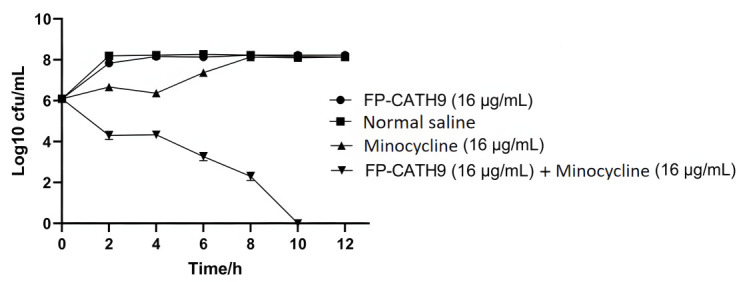 Figure 4
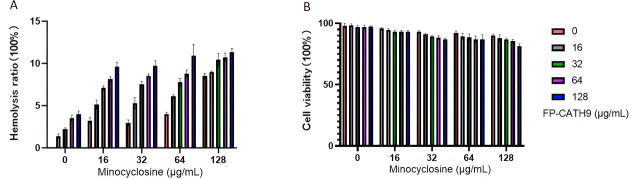 Figure 5
 Figure 6
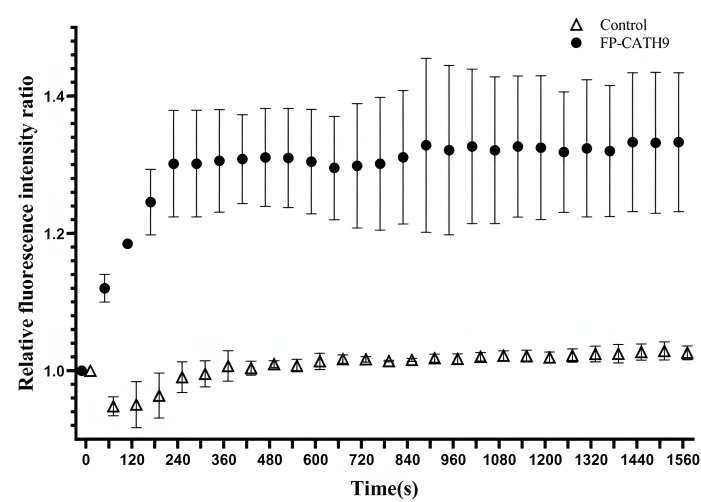 Figure 7
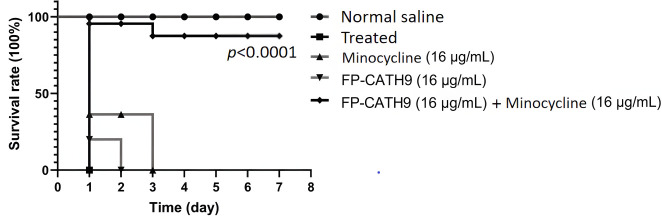 Figure 8
Peer Reviews
No public reviews on file for this paper yet. If you reviewed it on a platform where reviews are public (OpenReview, ICLR, NeurIPS, ICML), you can paste yours below so the community can read it here.
Videos
No videos yet. Explain this paper in a talk, walkthrough, or lecture? Add one.
Taxonomy
TopicsAntimicrobial Peptides and Activities · Aquaculture disease management and microbiota · Invertebrate Immune Response Mechanisms