Frequency and risk factors of psychological distress among individuals with epilepsy before and during the outbreak of the SARS-CoV-2 Omicron variant in China: an online questionnaire survey
Xiaoting Hao, Qi Zhang, Chenxi Zhong, Enzhi Li, Yingqi Jiang, Jiajun Xu, Yuanyuan Li, Dong Zhou, Bo Yan

TL;DR
The study found that the Omicron variant of SARS-CoV-2 increased psychological distress in people with epilepsy, especially those with low income or uncontrolled seizures.
Contribution
The study identifies new risk factors for psychological distress in people with epilepsy during the Omicron outbreak.
Findings
Psychological distress in people with epilepsy increased significantly during the Omicron outbreak.
Low household income (<5000 RMB) and uncontrolled seizures were key risk factors for psychological distress.
Seizure onset within 30 days before assessment predicted both distress and its worsening during the outbreak.
Abstract
The COVID-19 pandemic substantially increases the risk of severe psychological distress among people with epilepsy (PWE), especially those with monthly household income < 5000 RMB or with uncontrolled seizures. Patients with Kessler scores > 12 should consult a psychiatrist, especially during major disasters. This study was aimed to compare the frequency of psychological distress among Chinese PWE before and during the outbreak of the SARS-CoV-2 Omicron variant, and to identify risk factors for such distress. In this prospective study, we collected sociodemographic data of PWE aged > 14 years, who were treated at our center during December 1 to 15, 2022. All participants completed the 6-item Kessler Psychological Distress Scale before the outbreak and again during the outbreak. Health visitors who were unrelated to those patients during the outbreak were included as a control.…
Genes, proteins, chemicals, diseases, species, mutations and cell lines named across the full text — each resolved to its canonical identifier and authoritative record.
Click any figure to enlarge with its caption.
 Figure 1
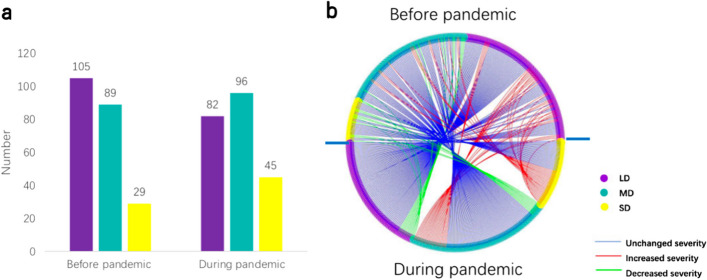 Figure 2
Peer Reviews
No public reviews on file for this paper yet. If you reviewed it on a platform where reviews are public (OpenReview, ICLR, NeurIPS, ICML), you can paste yours below so the community can read it here.
Videos
No videos yet. Explain this paper in a talk, walkthrough, or lecture? Add one.
Taxonomy
TopicsEpilepsy research and treatment · Long-Term Effects of COVID-19 · Multiple Sclerosis Research Studies